







You’ve secured your product.
You’ve set up authentication.
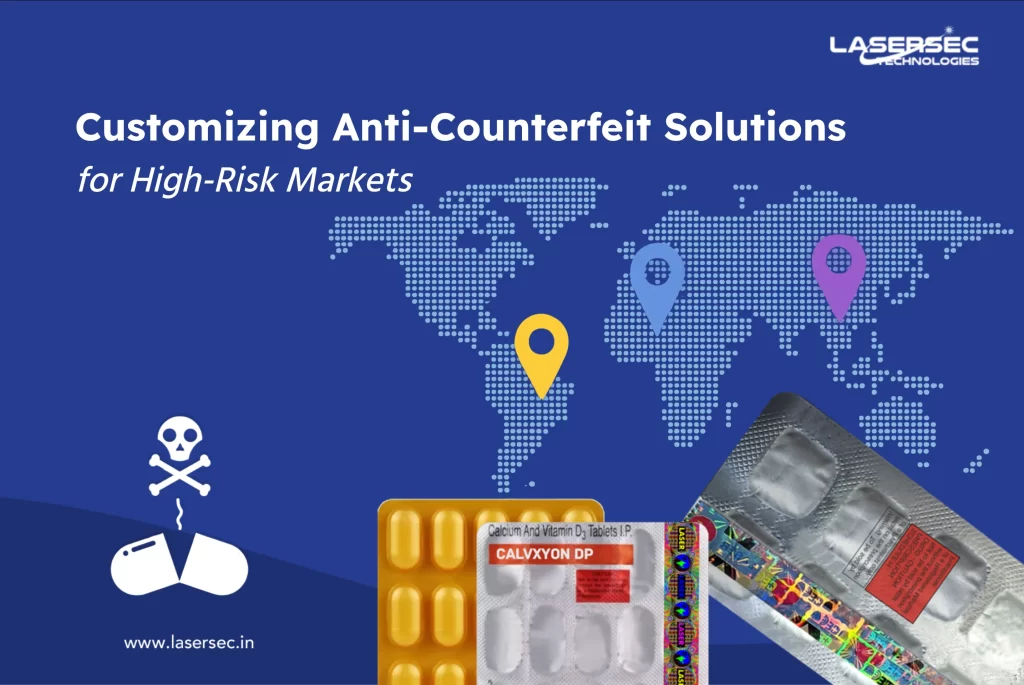
But somehow, fakes are still slipping through—especially in markets like India, Africa, and Latin America.
Why?
Because one-size-fits-all protection doesn’t work in a world where every region plays by different rules.
In high-risk markets, the threats aren’t just common—they’re constantly evolving. For global brands, the key isn’t just stronger protection. It’s smarter, localized protection that meets people where they are.
Your brand may be global, but the challenges you face aren’t:
- India – Counterfeit medicines often enter through informal supply chains in semi-urban and rural regions.
- Africa – Fake electronics and unauthorized imports disrupt trusted retail networks, often due to weak enforcement.
- LATAM – Counterfeit FMCG products share shelf space with genuine ones, confusing customers and weakening trust.
Each region needs more than just a label or code—it needs context-aware solutions that align with how local consumers buy, verify, and trust.
You care about your product. Your customers should feel that—whether they’re in a remote village or a bustling market.
A generic solution may look good on paper, but in practice, it often fails:
1. Assumes strict enforcement exists everywhere (it doesn’t)
2. Relies on stable internet (not always available)
3. Expects every consumer to understand how to verify (many don’t)

If your strategy doesn’t meet local realities, it can’t truly protect your product—or your promise.
Real Protection, Tailored for India, Africa and Latin America
In India’s semi-urban and rural areas, simplicity is key.
- A breakable seal, paired with a GS1-compliant scannable QR or SMS code, allows patients to verify authenticity in seconds—even without an app.
- Pharmacies use a lightweight Track & Trace dashboard to log stock movement and report suspicious entries instantly.
- Multilingual alerts ensure the system works for non-English speakers.
Africa’s mobile-first environment presents unique opportunities:
- Brands use scratch-off serial codes verified through WhatsApp—no separate app or internet login required.
- Distributors are equipped with basic handheld scanners or mobile verification tools to validate products at every checkpoint.
- Real-time alerts flag suspicious batches, enabling fast containment.
In Latin America’s open markets, brand trust is everything:
- Products carry tamper-evident labels embedded with dynamic QR codes that offer rewards or authenticity tips upon scanning.
- Customers can instantly check if a product is genuine while engaging with the brand.
- Campaigns create awareness, making verification part of the everyday purchase habit.
What Should You Be Asking?
- What’s really happening in each of your key markets?
- Are you protecting your riskiest product lines first?
- Can your end customer easily verify your product?
- Do your tools adapt to local behaviors and tech access?
If you’re unsure—it’s time to rethink the approach.
The Difference It Makes
- Fakes drop where protection fits the environment
- Consumers feel seen and empowered
- Local teams feel equipped, not overwhelmed
- Your brand stays respected and trusted, even in tough markets
This isn’t about spending more—it’s about spending smarter.
When your anti-counterfeit strategy aligns with real market conditions, you do more than block counterfeiters—you build long-term trust.
Because in the end, effective protection isn’t just a technical system.
It’s a message: We understand your market. We respect your safety.
At Lasersec Technologies, we design region-specific anti-counterfeit solutions that blend holographic security, track & trace, and phygital engagement tools. From SMS-based verification to WhatsApp-integrated checks, we help global brands stay a step ahead—with no guesswork.