




Lasersec Technologies

Your Guide to Anti-Counterfeiting

Tag: Pharmaceutical packaging

Tag: Pharmaceutical packaging

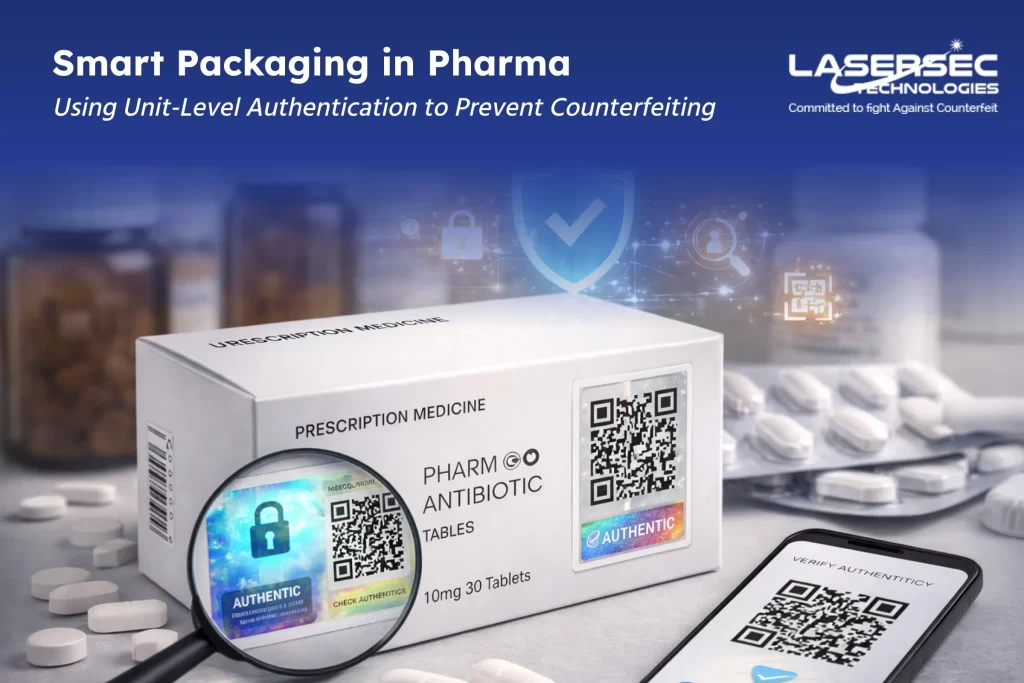
Pharmaceutical packaging security has become a critical concern for drug manufacturers worldwide. Unit-level authentication is now the smartest way to protect every package across the supply chain.

At each stage, verifying the authenticity of the medicine becomes essential.

In many markets, counterfeit drugs and unauthorized repackaging continue to challenge pharmaceutical supply chains. Packaging may appear genuine, yet without reliable authentication systems, it can be difficult to confirm whether the medicine is authentic.

This is why pharmaceutical companies are increasingly implementing unit-level authentication systems.

Unit-level authentication assigns a unique identity to every individual product unit, allowing manufacturers, regulators, and pharmacies to verify authenticity instantly through secure authentication technologies such as QR code authentication and Track & Trace systems.

By enabling verification at the smallest packaging level, pharmaceutical companies can significantly reduce the risk of counterfeit medicines entering the market.

The Growing Risks of Counterfeit and Repacked Medicines

Pharmaceutical products move through complex supply chains before reaching patients. These supply chains often involve multiple intermediaries such as distributors, wholesalers, and retailers.

This complexity creates opportunities for unauthorized activities, including counterfeit drug circulation and repackaging of genuine medicines.

Some common risks include:

  • Counterfeit medicines replicating genuine packaging using security hologram stickers
  • Unauthorized repackaging of original medicines
  • Reuse of genuine packaging for fake products
  • Diversion of products into unintended markets
  • Difficulty verifying authenticity at pharmacy level

These activities not only affect pharmaceutical companies but also create serious risks for patient safety.

Consequences can include:

  • Reduced trust in pharmaceutical brands
  • Regulatory compliance issues
  • Distribution channel conflicts
  • Potential health risks for patients

Without reliable authentication systems, detecting these issues early becomes extremely difficult.

What Is Unit-Level Authentication in Pharmaceutical Packaging

Unit-level authentication means assigning a unique, traceable identity to every individual medicine package.

Instead of identifying products only by batch numbers or carton-level codes, each unit receives its own authentication marker.

This is typically implemented using technologies such as:

Each identifier is connected to secure manufacturing and distribution data.

When the code is scanned, the system can instantly verify:

  • Whether the product is genuine
  • The manufacturing origin
  • Batch and production information
  • Whether the code has been duplicated

This enables reliable product verification throughout the supply chain.

How Unit-Level Authentication Prevents Fake Repackaging

One of the most common challenges in pharmaceutical markets is fake repackaging.

In this scenario, counterfeiters reuse genuine packaging materials or create look-alike packaging to insert counterfeit medicines.

Without authentication, these fake products may appear legitimate.

Unit-level authentication prevents this by ensuring that each product unit has a unique identity supported by technologies like QR code holograms.

If a counterfeiter attempts to copy or reuse a code, the authentication system can detect:

  • Duplicate code scans
  • Invalid product records
  • Suspicious verification locations

This allows manufacturers and regulators to quickly identify counterfeit activity and take corrective action. By making every package individually verifiable, unit-level authentication significantly reduces the risk of fake repackaging.

Preventing Product Diversion with Unit-Level Verification

Product diversion occurs when genuine medicines are redirected from their intended distribution markets into unauthorized regions.

This can disrupt pricing structures, violate distribution agreements, and create regulatory complications.

Unit-level authentication helps detect diversion by linking each product unit to specific manufacturing and distribution data through systems like Track & Trace technology.

When the product is scanned, the system can verify:

  • The intended market for the product
  • Whether it appears in an unexpected location
  • Whether the product has already been verified elsewhere

If the product is detected outside its authorized distribution channel, the system can immediately flag the activity. This visibility allows pharmaceutical companies to investigate unauthorized distribution and maintain better control over global supply chains.

Strengthening Pharmaceutical Compliance and Traceability

Many regulatory frameworks now require pharmaceutical manufacturers to implement serialization and traceability systems. Authorities expect companies to demonstrate the ability to verify product authenticity and track medicines across the supply chain.

Unit-level authentication supports these regulatory goals by enabling:

  • Individual product serialization
  • End-to-end supply chain traceability
  • Authentication verification at distribution points
  • Faster investigation of suspicious products

These capabilities help regulators confirm product legitimacy during inspections and market surveillance.For pharmaceutical companies operating in global markets, unit-level authentication also strengthens compliance with evolving regulatory standards using solutions such as Track & Trace systems.

Improving Patient Trust Through Product Verification

Patients rely on medicines to protect their health, which makes trust essential in the pharmaceutical industry. However, patients often cannot visually distinguish between genuine and counterfeit medicines if packaging looks similar.

Unit-level authentication enables pharmacies and even patients to verify medicines quickly using smartphone-based authentication tools. By scanning a secure QR code or authentication marker such as QR code authentication labels, users can confirm whether the product is genuine.

This level of transparency helps:

  • Improve patient confidence in medicines
  • Reduce circulation of counterfeit drugs
  • Strengthen trust in pharmaceutical brands
  • Support safer healthcare outcomes

How We Support Unit-Level Authentication in Pharmaceutical Packaging

At Lasersec Technologies, we provide advanced anti-counterfeit packaging solutions designed to help pharmaceutical manufacturers implement reliable unit-level authentication systems.

Our solutions integrate secure packaging technologies with digital authentication platforms using:

By embedding these technologies directly into pharmaceutical packaging, we help manufacturers create secure authentication systems that protect medicines across the entire supply chain. To explore more, visit our Pharma Solutions.

Why Unit-Level Authentication Is Essential for Modern Pharmaceutical Packaging

Pharmaceutical supply chains are becoming increasingly complex, and the risks associated with counterfeit medicines continue to grow. Unit-level authentication provides a powerful solution by enabling every medicine package to be individually verified.

This approach helps pharmaceutical companies detect counterfeit activity, prevent product diversion, and maintain greater visibility across their supply chains. Most importantly, it helps ensure that genuine medicines reach pharmacies and patients safely. In today’s pharmaceutical industry, unit-level authentication is no longer optional.  It is a critical foundation for protecting product integrity, regulatory compliance, and patient trust.
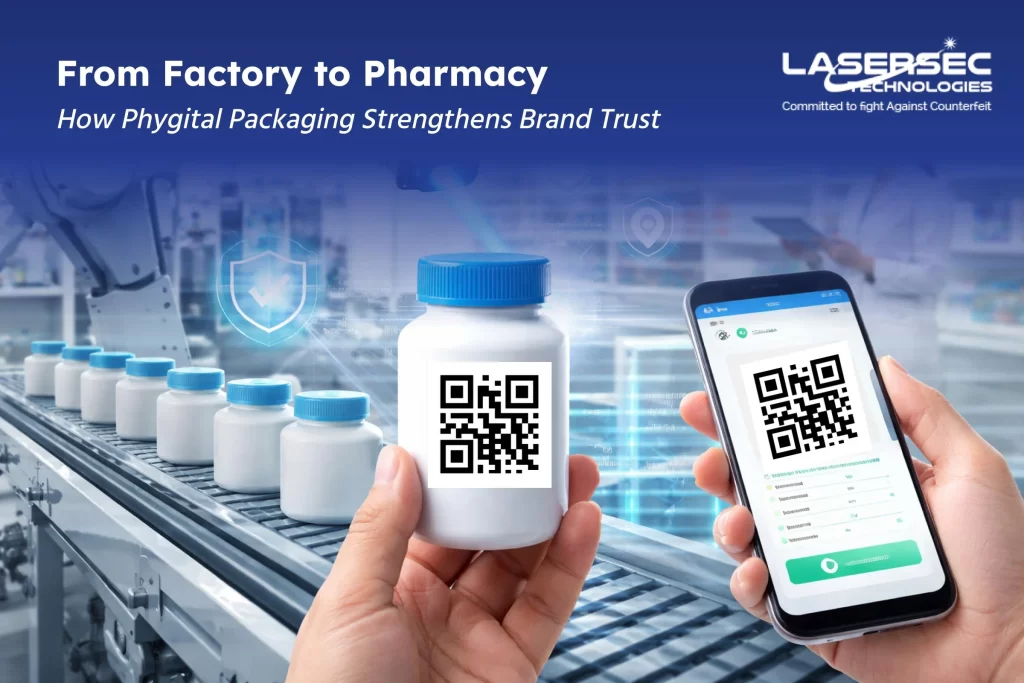
Phygital packaging system connecting factory to pharmacy for brand trust

A pharmaceutical product leaves the manufacturing facility only after passing strict quality checks, regulatory approvals, and packaging inspections. Every batch is verified, sealed, and prepared for distribution through authorized supply chains.

But once the product enters the market, maintaining control becomes more challenging. Pharmaceutical companies must rely on distributors, pharmacies, and healthcare providers to ensure the medicine reaching patients is genuine.

In many markets, counterfeit medicines and unauthorized distribution make this difficult. Packaging may appear authentic, yet visual inspection alone cannot always confirm whether the product is legitimate.

This is why pharmaceutical manufacturers are increasingly adopting phygital packaging solutions. By combining secure physical packaging features with digital verification technologies, phygital packaging enables products to be authenticated instantly through smartphone scanning.

This approach strengthens product security, improves transparency, and helps pharmaceutical companies maintain trust from the factory to the pharmacy.

The Growing Risk of Counterfeit Medicines in Pharmaceutical Supply Chains

Pharmaceutical supply chains often involve multiple intermediaries before a product reaches the patient.

These may include:

  • Manufacturers
  • Exporters
  • Distributors
  • Wholesalers
  • Pharmacies

Each stage introduces potential risks related to counterfeiting or unauthorized product diversion.

Common threats include:

  • Counterfeit medicines replicating genuine packaging using security hologram stickers
  • Unauthorized resale through unapproved distributors
  • Product diversion into unintended markets
  • Repackaging or relabeling of pharmaceutical products
  • Difficulty verifying authenticity at the pharmacy level
These risks create serious consequences for pharmaceutical companies.

They can result in:

  • Patient safety concerns
  • Regulatory compliance challenges
  • Distributor conflicts
  • Brand reputation damage
  • Financial losses from counterfeit circulation

Without reliable authentication systems, confirming product authenticity becomes extremely difficult once medicines leave the manufacturing facility.

Why Traditional Pharmaceutical Packaging Security Is No Longer Enough

Traditional pharmaceutical packaging includes elements such as printed labels, barcodes, batch numbers, and expiry information. These features help identify products and support logistics, but they were not designed to prevent modern counterfeiting.

Today, counterfeiters can replicate packaging designs with increasing accuracy. Even simple security labels can sometimes be visually imitated if they are not supported by authentication systems.

Traditional packaging elements can often be:

  • Copied or reproduced
  • Reprinted on counterfeit products
  • Removed and applied to fake packaging
  • Visually replicated using advanced printing technologies

Even standard holographic labels without authentication layers may not provide sufficient protection against modern counterfeiting.

Because of this, appearance alone cannot reliably confirm authenticity.

This is why pharmaceutical companies are moving toward multi-layered packaging security systems that combine physical anti-counterfeit features with digital verification.

What Is Phygital Packaging in the Pharmaceutical Industry

Phygital packaging integrates physical packaging security with digital authentication systems to create a stronger protection mechanism.

Instead of relying only on visual security features, phygital packaging adds a digital verification layer directly to the product packaging.

In pharmaceutical packaging, this often includes:

Each product unit receives a unique digital identity linked to secure manufacturing and distribution data.

When the code is scanned, the authentication system can instantly verify:

  • Whether the product is genuine
  • Where the product was manufactured
  • The production batch details
  • The intended distribution market

This transforms pharmaceutical packaging into a secure authentication point for verifying product legitimacy.

How Phygital Packaging Enables Patient-Level Product Verification

One of the most valuable advantages of phygital packaging is that it allows verification directly at the pharmacy or patient level.

When a medicine package includes a secure hologram integrated with a QR code authentication or authentication marker, users can verify the product by scanning the code with a smartphone.

The system checks the unique identifier against secure product records and confirms authenticity instantly.

If suspicious activity occurs, such as duplicate scans or verification from unexpected regions, the system can immediately flag potential counterfeit or diversion risks.

This enables:

  • Pharmacists to verify medicines before dispensing
  • Patients to confirm product authenticity
  • Regulators to investigate suspicious products
  • Pharmaceutical companies to monitor verification activity

By enabling verification at the point of use, phygital packaging significantly reduces the chances of counterfeit medicines reaching patients.

Supporting Pharmaceutical Compliance and Regulatory Requirements

Pharmaceutical regulations around the world are increasingly focused on improving traceability and product authentication.

Many markets now require manufacturers to implement systems that support:

  • Product serialization
  • Track and Trace capability
  • Supply chain transparency
  • Authentication verification

Phygital packaging helps meet these expectations by integrating physical anti-counterfeit packaging with digital authentication systems such as Track & Trace solutions.

These systems enable regulators and supply chain partners to verify:

  • Product origin
  • Manufacturing authenticity
  • Batch integrity
  • Distribution pathways

Authentication capabilities also improve inspection efficiency by providing instant verification during regulatory checks.

For pharmaceutical companies operating across global markets, this transparency strengthens compliance and improves regulatory confidence.

Protecting Pharmaceutical Brand Trust Through Secure Packaging

Trust plays a critical role in the pharmaceutical industry. Patients, healthcare professionals, and regulators must have confidence that medicines are safe and genuine.

When counterfeit medicines appear in the market, they can quickly damage both patient safety and brand credibility.

Phygital packaging helps pharmaceutical companies protect brand trust by enabling reliable product authentication.

Secure holographic packaging such as security holograms combined with digital verification allows genuine products to be distinguished quickly from counterfeit copies.

This capability helps:

  • Prevent counterfeit medicines from circulating undetected
  • Strengthen trust among healthcare professionals
  • Protect pharmaceutical brand reputation
  • Ensure patients receive genuine medicines

Over time, authentication systems reinforce long-term trust in pharmaceutical products.

Improving Pharmaceutical Supply Chain Visibility with Phygital Authentication

Pharmaceutical manufacturers often have limited visibility once products leave the factory.

Phygital authentication systems improve supply chain transparency by generating verification records whenever products are scanned using Track & Trace technology.

These records allow pharmaceutical companies to:

  • Monitor product movement across regions
  • Detect unauthorized distribution channels
  • Identify suspicious verification patterns
  • Investigate potential counterfeit activity
  • Improve supply chain oversight

This visibility allows companies to identify risks earlier and respond quickly before counterfeit products spread widely in the market.

Phygital authentication shifts supply chain protection from reactive response to proactive prevention.

How We Support Secure Phygital Packaging for Pharmaceutical Brands

At Lasersec Technologies, we provide advanced anti-counterfeit packaging solutions designed for pharmaceutical manufacturers operating in complex global markets.

Our phygital packaging solutions combine secure physical packaging with digital authentication technologies, including:

By integrating these technologies directly into pharmaceutical packaging, we help manufacturers create reliable product authentication systems that work across the entire supply chain.

Our solutions help pharmaceutical companies:

  • Prevent counterfeit medicines
  • Enable pharmacy-level product authentication
  • Strengthen regulatory compliance
  • Protect brand reputation
  • Improve global supply chain visibility

To explore industry-specific solutions, visit our Pharma anti-counterfeit solutions page.

Strengthening Pharmaceutical Trust from Factory to Pharmacy

Pharmaceutical supply chains continue to grow more complex, and the risks associated with counterfeit medicines remain significant.

Phygital packaging offers a powerful solution by combining secure holographic packaging with digital authentication technologies. This approach enables instant product verification, improves supply chain transparency, and strengthens compliance with evolving regulations.

Most importantly, it helps ensure that genuine medicines reach pharmacies and patients safely.In today’s pharmaceutical industry, phygital packaging is not just a packaging innovation. It has become an essential strategy for protecting patient safety, brand integrity, and long-term trust in pharmaceutical products.

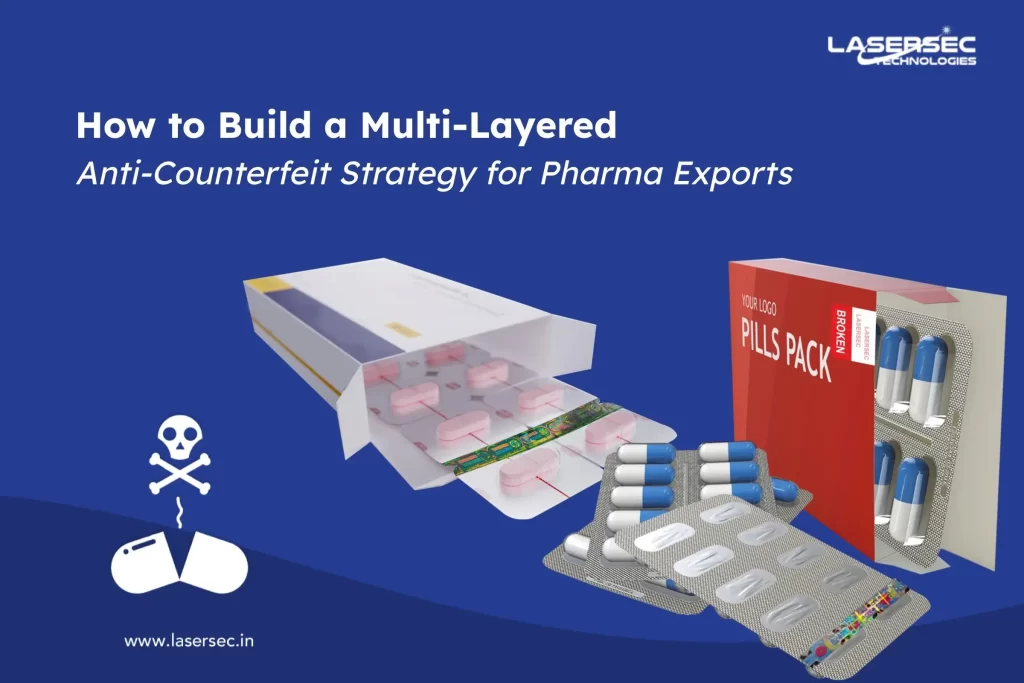
How to Build a Multi-Layered Anti-Counterfeit Strategy for Pharma Exports

Exporting pharma products? Here’s how to create a robust, multi-layered security system that protects your brand and saves lives.

In the pharmaceutical industry, counterfeit products aren’t just a financial threat—they endanger lives. As a pharma exporter, your responsibility goes beyond compliance; you must safeguard your products against the increasingly sophisticated methods counterfeiters use.

According to the World Health Organization (WHO), 1 in 10 medical products in low- and middle-income countries is substandard or falsified—a statistic that underscores the urgent need for robust anti-counterfeit strategies. To protect your brand, your reputation, and most importantly, patient safety, a multi-layered anti-counterfeit approach is essential.

Why a Multi-Layered Protection Strategy Is Critical

Counterfeit medicines harm more than just profits—they jeopardize public health, create regulatory nightmares, and damage trust in your brand. When exporting, your products pass through multiple hands, each presenting a new vulnerability.

A multi-layered protection system is designed to eliminate these vulnerabilities by implementing multiple lines of defense—ensuring that if one fails, others will catch the threat. Each layer acts as a backup, strengthening the security of your pharmaceutical products.

Step-by-Step: Building a Strong Anti-Counterfeit Strategy

Step 1: Use Visible Security Features to Deter Fakes at First Glance

Visible security features are the first line of defense. These can include:

  • Holograms
  • Color-shifting inks
  • Tamper-evident packaging

These elements make it easy for customs officers, pharmacists, and even consumers to instantly verify product authenticity.

Tip : Use tamper-evident labels that leave visible traces if tampered with. This acts as a clear deterrent.

Step 2: Add Hidden Layers with Covert Features

Covert features are invisible to the naked eye but offer high-security authentication. Examples include:

  • UV or infrared inks
  • Microtext
  • Forensic taggants

These are extremely difficult to replicate and require specialized tools for verification.

Tip : Keep details about covert features confidential within your trusted network.

Step 3: Leverage Digital Authentication Technologies

Digital tools increase traceability and consumer confidence. Common options:

  • Serialized QR codes
  • Data matrix barcodes
  • GS1-compliant identifiers

Scanning these codes allows quick, real-time verification across the supply chain.

Scenario : A customs officer scans a QR code and instantly verifies authenticity—preventing delays and rejections.

Step 4: Enable Real-Time Tracking and Traceability

A robust Track & Trace system helps you monitor your pharma exports at every stage. Key components include:

  • Serialization
  • Geo-tagging
  • Real-time alerts for irregularities
Example : A product meant for Kenya ends up in Brazil—your system flags the diversion immediately, allowing fast intervention.

Step 5: Train and Empower Your Supply Chain Partners

Everyone from distributors to customs officers should know how to verify your anti-counterfeit features.

Tip : A short training video or printed guide can significantly boost awareness and reduce risks.

Why Multi-Layered Anti-Counterfeit Protection Works

 1. Increased Trust and Long-Term Relationships:

Exporters with proven anti-counterfeit measures build confidence and retain global buyers.

 2. Compliance with Global Standards:

A layered strategy ensures compliance with regulations like FMD (EU), DSCSA (U.S.), and WHO guidelines.

3. Operational Efficiency:

Better verification reduces customs delays and ensures smoother cross-border movement.

4. Future-Proofing Your Supply Chain:

As counterfeiters evolve, your strategy can evolve too—thanks to scalable, adaptable security layers.

Don’t Wait for a Crisis—Act Now

Counterfeiters are becoming more sophisticated. Waiting for a breach can result in financial losses, regulatory penalties, and brand damage.

No product should leave your facility without strong anti-counterfeit protection.

At Lasersec Technologies, we help pharma exporters build strong anti-counterfeit strategies using visible labels, hidden markers, and digital tools that work in real-world supply chains.

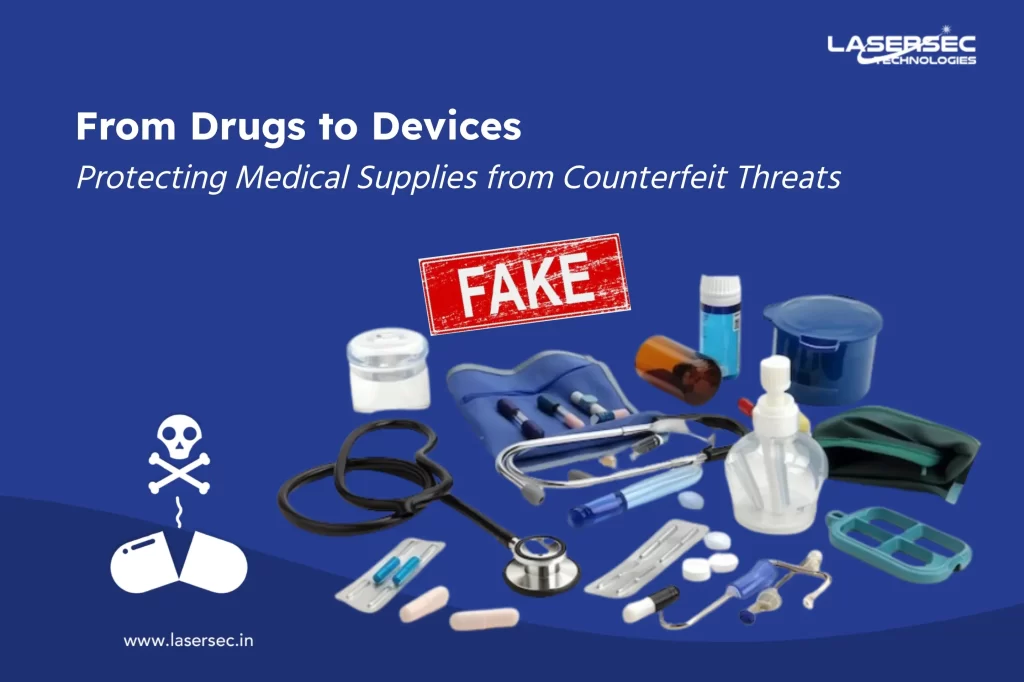
The healthcare industry faces an ever-growing challenge: the proliferation of counterfeit products. While much attention is given to counterfeit medications, the scope of this problem extends far beyond drugs. Medical devices, testing kits, hospital supplies, and even personal protective equipment (PPE) are also vulnerable to counterfeiting, posing significant risks to patient safety and regulatory compliance. 

As counterfeiters become more sophisticated, it’s crucial to adopt comprehensive anti-counterfeiting strategies that encompass the full spectrum of healthcare products. Medical devices, from life-saving machines to simple diagnostic tools, play an essential role in healthcare delivery.

However, the rise in counterfeit devices has led to devastating consequences, including malfunctioning equipment, inaccurate diagnoses, and even loss of life. Counterfeit medical devices are often difficult to distinguish from genuine ones, making it even more challenging to detect their presence within supply chains. Whether it’s a faulty pacemaker, a defective blood pressure cuff, or a substandard ventilator, these products undermine the trust that healthcare professionals and patients place in medical technology.

Beyond drugs and devices, hospital supplies such as syringes, needles, and surgical instruments are at risk. Counterfeit versions of these critical items are often subpar in quality, which can result in dangerous complications during procedures or inadequate treatment of patients. With a global shortage of medical supplies exacerbated by the pandemic, counterfeit goods have infiltrated even the most trusted supply chains.

Counterfeit Solutions for Healthcare

The solution to the widespread issue of counterfeit healthcare products lies in a multi-faceted approach. Anti-counterfeiting technologies such as holographic patterns, tamper-evident packaging, and QR code authentication can be integrated into medical products to ensure their authenticity. These technologies help create a unique identity for each product, allowing consumers and healthcare professionals to verify the product’s origin and integrity.

Track-and-trace systems have also become increasingly important in healthcare. By integrating blockchain-enabled verification into supply chains, the movement of products from manufacturers to consumers can be monitored in real-time. This not only helps identify counterfeit goods but also ensures compliance with regulatory standards.

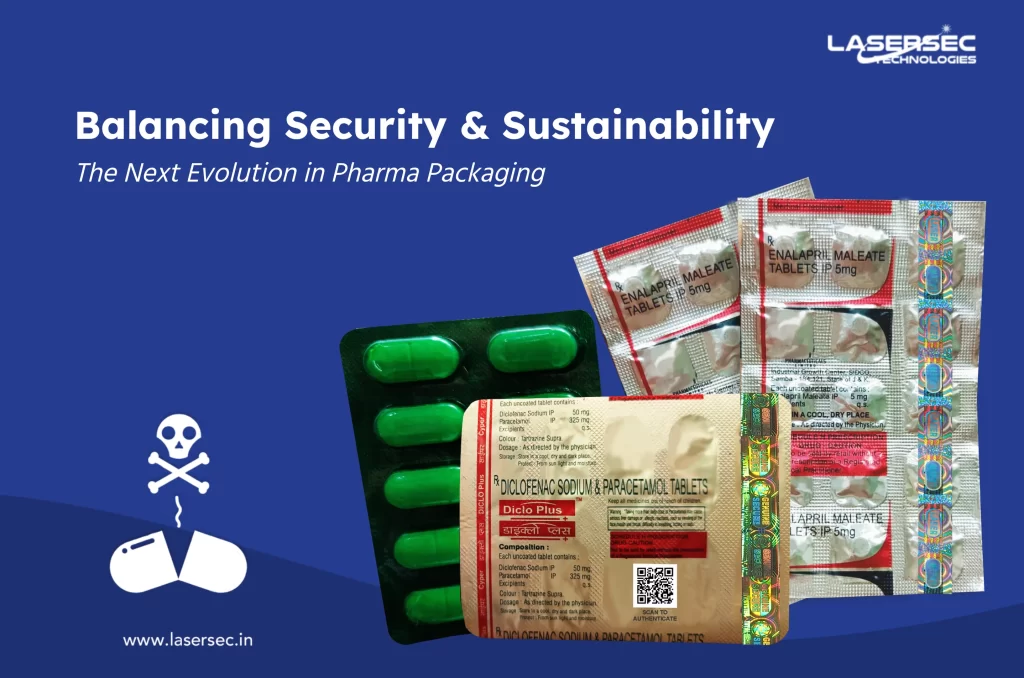
As the fight against counterfeit products intensifies, packaging technology plays a pivotal role in safeguarding the integrity of medical supplies. Eco-friendly foils and biodegradable packaging solutions provide an added layer of protection while aligning with the growing emphasis on sustainable business practices. These solutions not only offer security features like holograms and tamper-evident seals but also address environmental concerns, helping the healthcare industry reduce its carbon footprint without compromising on safety.

At Lasersec Technologies, we are dedicated to offering cutting-edge, sustainable packaging solutions that protect your brand and ensure product authenticity. Our biodegradable, eco-conscious holographic foils are crafted to meet the evolving needs of the healthcare industry while upholding the highest security standards.

We invite you to explore our range of innovative anti-counterfeiting solutions and discover how our eco-friendly foils can strengthen your packaging strategies. Reach out to us today for more information or to request a personalized demo. Together, we can safeguard the integrity of healthcare products and contribute to a safer, more sustainable future.

For more details, contact us at mktg@lasersec.in or call +91-9810213127.

As a pharmaceutical manufacturer, you understand that packaging plays a vital role in ensuring product safety and brand protection. But here’s an important question:

Are your foils as sustainable as they are secure?

With sustainability no longer a buzzword but a necessity, the industry is shifting towards eco-friendly packaging solutions. Governments, regulators, and consumers are all demanding greener alternatives that reduce waste and carbon footprints. However, when it comes to security foils in pharmaceutical packaging, balancing sustainability and anti-counterfeiting measures is a challenge.

So, how can your packaging stay both secure and environmentally responsible?


What Are Sustainable Security Foils?

Sustainable security foils integrate advanced anti-counterfeiting features while using eco-conscious materials and energy-efficient production methods. These foils aim to:

  • Reduce environmental impact while maintaining security standards.
  • Meet evolving regulatory requirements for sustainable packaging.
  • Enhance consumer trust by demonstrating a commitment to sustainability.

How Sustainable Foils Enhance Security Printing

  • With Recyclable & Eco-Friendly Materials – These foils use responsibly sourced materials and low-impact production methods to minimize waste while ensuring durability. However, due to regulatory constraints, full recyclability is still evolving in the pharmaceutical sector.

  • With Holographic Security Features – Sustainable foils incorporate high-tech holographic patterns that are extremely difficult to replicate. This enhances product authenticity and protects against counterfeiting.

  • With Tamper-Evident Protection – Tamper-evident foils provide visible signs of interference, ensuring safety against theft, contamination, or fraud.

  • With QR Code Authentication & Digital Verification – Foils can integrate QR codes to enable instant authentication by consumers and regulators, adding another layer of protection.

  • With Track-and-Trace Compatibility – These foils can seamlessly work with track-and-trace systems to monitor pharmaceutical products throughout the supply chain. However, material compatibility with traceability technologies needs careful consideration.


Why Make the Shift?

Switching to sustainable foils offers multiple benefits:

  • Regulatory Compliance: With stricter guidelines such as EU Packaging Directive, India’s EPR policies, and FDA sustainability regulations, manufacturers must adapt to avoid penalties.

  • Consumer Trust & Market Appeal: Consumers prefer brands that prioritize sustainability—green packaging enhances brand loyalty.

  • Cost Savings in the Long Run: Energy-efficient production reduces operational costs without compromising security.


Partner with Lasersec Technologies for Sustainable Solutions

At Lasersec Technologies, we are committed to developing innovative, sustainable security foils that protect pharmaceutical brands while supporting global sustainability efforts. Our advanced holographic foils, tamper-evident labels, and track-and-trace solutions help manufacturers achieve both security and sustainability goals.

📩 Ready to explore eco-conscious security foils?
Contact us at mktg@lasersec.in or call +91-9810213127 to learn more.