





Lasersec Technologies

Counterfeit Drugs, Genuine Solutions!

Fake medications still remain the topmost concern in the global pharmaceutical industry. Currently, in the intricate global economy, augmentation of online transactions and complex pharmaceutical supply chains has made it even more difficult to detect such counterfeit drugs.

The pharmaceutical industry is battling simultaneously against counterfeit drugs thriving online, and also in hospitals and pharmacies. These counterfeit drugs not only affect the reputation of the drug manufacturers and cause sales loss, but they are very much dangerous to our health too.

The Imitation Spoon Is Full!

Although, the magnitude of India’s counterfeit drugs industry is still unknown, what is definite is that the situation needs immediate intervention and proper resources to stop such practices.
Presently, India has only around 1,200 drug inspectors to oversee the drug manufacturing companies that number somewhere amongst 6,000 and 15,000.
The good news is that; today, the industry is steadfast to control the problem of law enforcement; international organizations, pharmaceutical executives, and policymakers are employing a number of strong and effective strategies that are decreasing and curbing the extent of counterfeit drugs that move into users’ homes.

THE FOLLOWING ANTI-COUNTERFEIT STRATEGIES ARE QUITE PREVALENT THESE DAYS

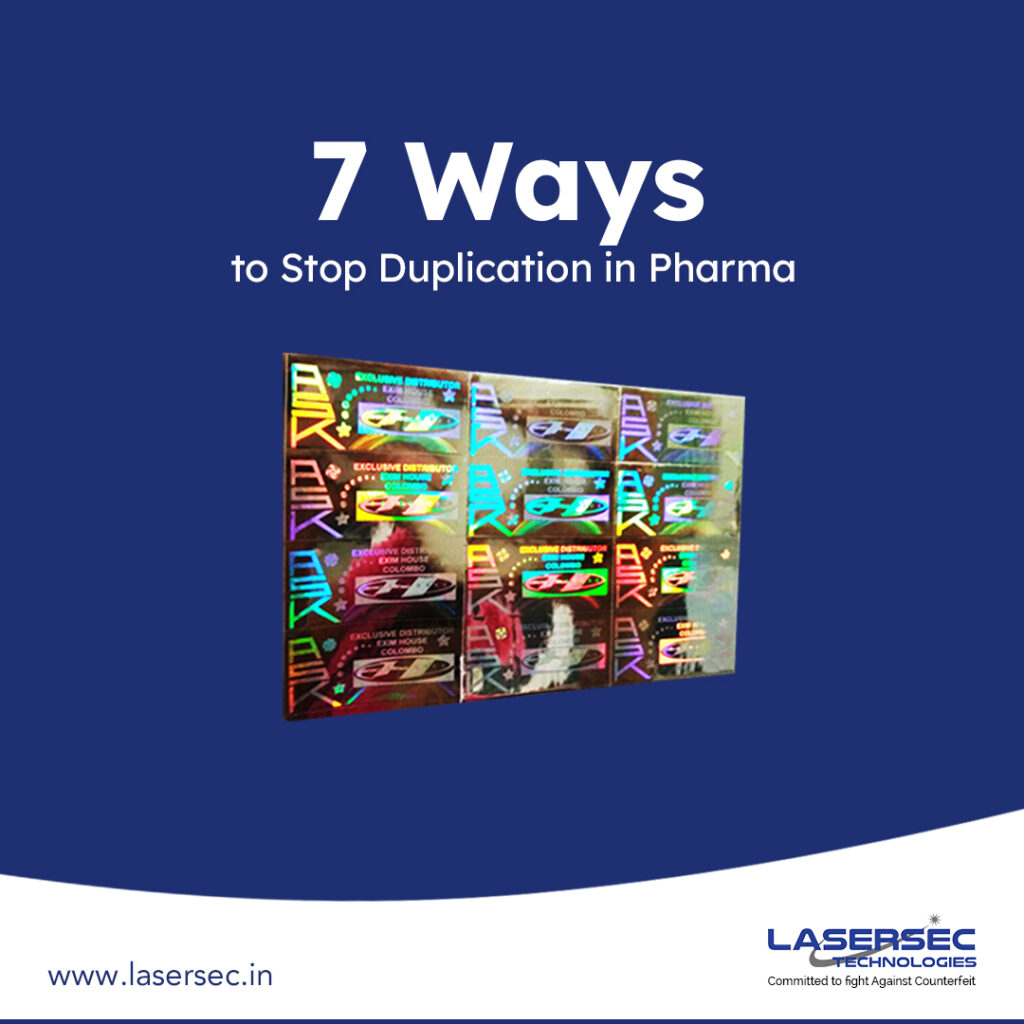
  1. Holograms
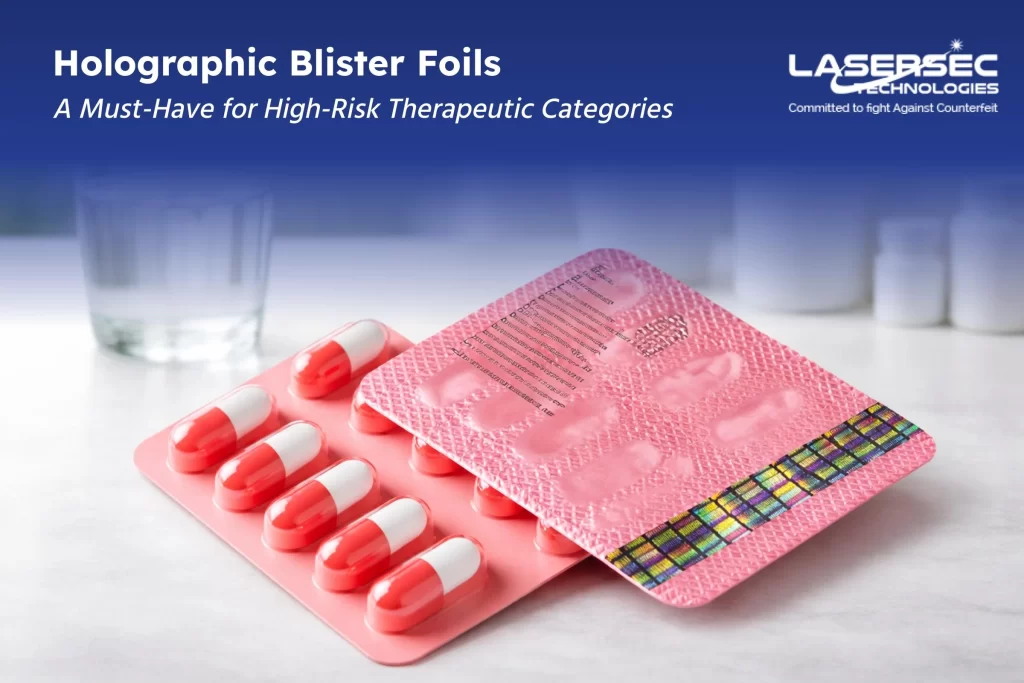
    Holograms can integrate three-layered safety features and become the most potent defense against faking. Holograms can offer apparent first-line validation with hidden features like micro text, UV-sensitive, scrambled images, or other dedicated inks that provide next line substantiation for trained inspectors and proper decrypting tools.
  2. Tamper-Resistant Packing
    The drug packaging is having a barrier for the entry or there is an indicator; which, if ruptured or absent, would offer audible or visible evidence to customers that tampering or meddling has occurred. For example, shrinkable bands and seals, breakable caps, film wrappers, blister packs, tape seals, etc.
  3. Global Trade Item Number (GTIN)
    In this method, a 14/13/12/8 numerically unique identification code is allocated by the manufacturer according to the GS1 allocation rules for products, or services, or trade items. It is created from a prefix from the name of the company allotted by GS1, a check digit, and an item reference number entitled by the company.

  4. Serialized Global Trade Item Number (sGTIN)
    This process includes creating a unique identification number to classify a specific product, by affixing a serial number to the GTIN of the item.

  5. Pedigree
    This is a kind of track and trace technology. It is an electronic file or a paper document that archives the particulars of circulation of a prescription drug from the manufacturer via wholesale dealings, till it is received by the distributor, which is generally a physician or a pharmacist. The individual receiving a pedigree together with the drug consignment must validate that every documented distribution took place and that the information related to the drug specification like manufacturing date and lot number is accurate. This system is intended to ascertain that prescription drugs cannot be side-tracked or substituted easily with counterfeit drugs.

  6. Mass Serialization
    This comprises the procedures of producing, coding, and authenticating the unique identity of individual drugs. Without this, the legitimacy and authenticity of the pedigree link only to the lot number comprising thousands of bottles. When serialization is united with track and trace method, it assists in the tracking of drugs through the supply chain and permits for planned identification of drugs for withdrawal.
  7. Data Carriers
    These are graphical structures used to communicate the drug identifiers and related information in the system and/or human decipherable format. A tag, label, or mark, applied at the production base depicts them. Computer decipherable formats comprise two dimensional (2D), linear barcodes and radio frequency identifier (RFID) tags.

Drug counterfeiting is a vital problem addressed by a number of countries. And the unfortunate truth is that counterfeiting drugs are hard to eradicate, and the popularity of the e-commerce and internet too are posing new challenges and threats to the drug manufacturers and governing authorities.

Although the figures will differ, WHO assesses that almost 10% of all drugs are counterfeit. But the good news is that the whole industry continues to work collaboratively and make prodigious progressions in restricting the problem. Profounder partnerships augmented co-operation, and more sharing of the resource will assist in keeping the patients safe and the fakers behind the bars.

The government has become more and more proactive in stopping counterfeiting. The Indian drug controller general has recommended a modification of the Drugs and Cosmetics Act requiring that every single drug manufacturer in the country should have a 2D barcode and a unique identification code and on the packaging, whereby, genuineness can be certified by text message. The state drug controllers are conducting surprise inspections to check the quality of the drug on a monthly basis.

And in such inspections, samples are withdrawn from pharmacies, government hospitals, and wholesalers and appropriate actions under the drugs and Cosmetics Act, 1940, are taken against the manufacturers. Recently, the Health Ministry has appointed 200 drug inspectors to keep a check, particularly on counterfeit medicines.

To avoid penalties, cancellation of licenses, prosecutions under drugs and Cosmetics Act, 1940, and piracy of drugs, the manufacturers should adopt and implement new technologies and new initiatives. For more information, log on to www.lasersec.in
Share :

Related Blogs

How Indian Pharma Exporters Can Prepare for EU’s New Digital Packaging Rules

The European Union’s upcoming Digital Product Passport (DPP) and serialization requirements, effective from 2026, are transforming how pharmaceuticals are packaged and traced across the supply chain. For Indian pharma exporters, this means digital-ready packaging is no longer optional — it’s essential for market access, compliance, and trust.

So, how can packaging evolve fast enough to meet these expectations?
The answer lies in QR codes and tamper-evident labels — two smart technologies that bring traceability, authenticity, and transparency directly onto the pack.

1. The New EU Challenge: Digital Transparency at Every Level

Under the EU Eco-design for Sustainable Products Regulation (ESPR), every product entering the EU — including pharmaceuticals — must carry a Digital Product Passport (DPP). This digital record links each pack to verified data such as product origin, batch, composition, and regulatory certifications.

However, achieving compliance requires:

  • Unit-level serialization
  • Scannable digital identifiers
  • Tamper-proof packaging integrity

That’s where smart labeling comes into play.

2. QR Codes: Your Gateway to Digital Product Passports

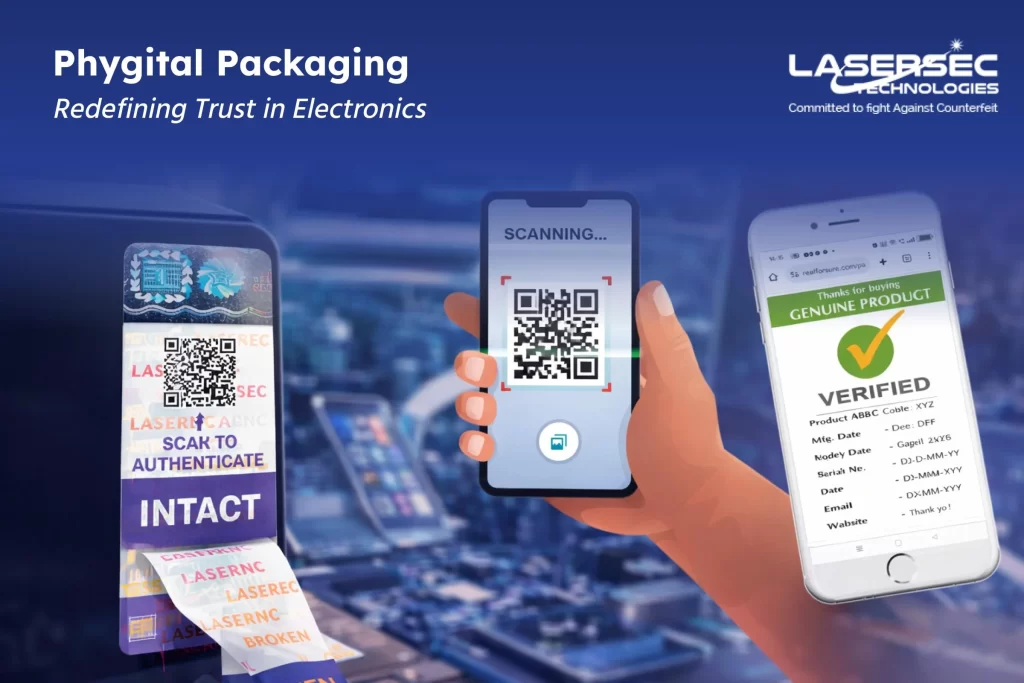
QR codes have evolved far beyond simple barcodes. Modern secure and dynamic QR codes allow real-time verification, linking every individual pack to its digital passport in the cloud.

With secure QR codes, pharma exporters can:

  • Connect each product to a verified DPP record
  • Enable instant verification for customs officials, distributors, and patients
  • Detect counterfeits or unauthorized diversions
  • Track exports throughout the EU supply chain
When integrated with serialization, these QR codes become digital fingerprints — unique, tamper-evident, and compliant with EU’s interoperability standards.

3. Tamper-Evident Labels: The Physical Layer of Trust

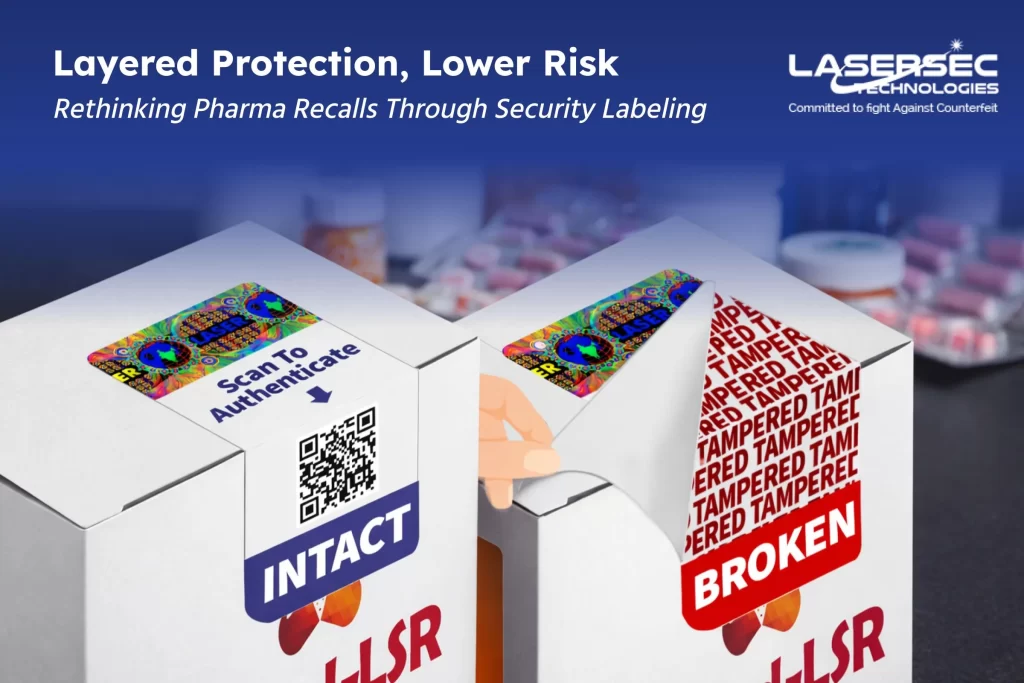
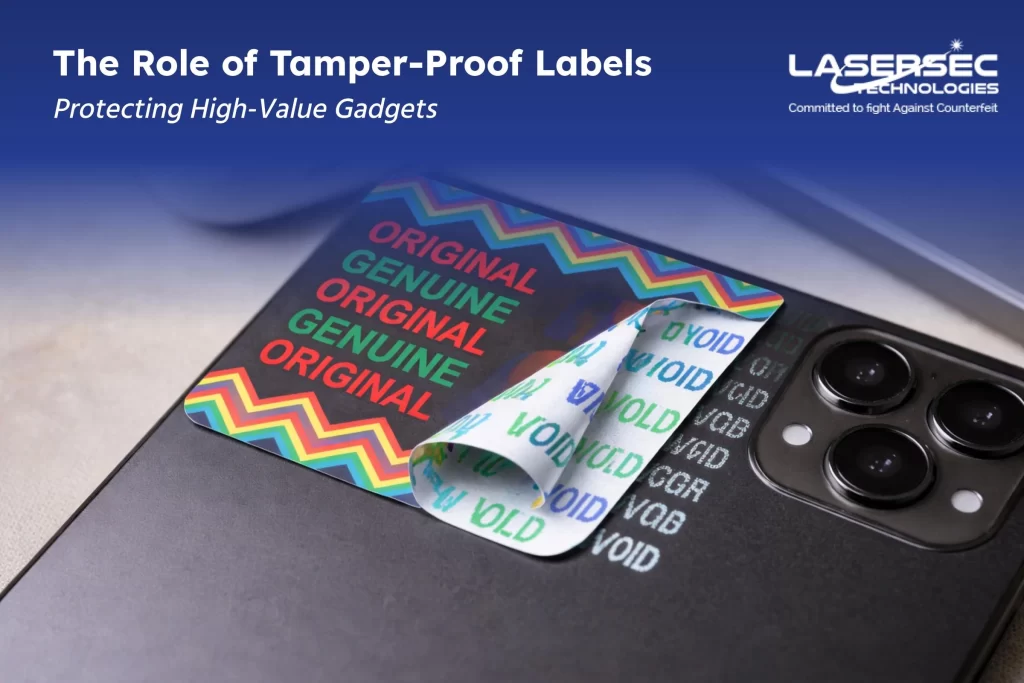
While QR codes protect digital identity, tamper-evident labels safeguard physical authenticity. These labels reveal visible signs — such as “VOID” marks or holographic breaks — if anyone tries to remove or alter them.

Why they’re essential for compliance:

  • They ensure product integrity during transit
  • Serve as proof of non-interference and genuine origin
  • Complement serialization and DPP data by confirming physical security
Together, tamper-evident and QR-enabled labels bridge the physical and digital worlds, creating a robust defense against counterfeiting and regulatory breaches.

4. How These Technologies Work Together

When integrated, QR codes and tamper-evident labels deliver a two-tier protection model:

LayerFunctionBenefit
Digital Layer (QR Code)Links each pack to live data and DPPEnables authentication and traceability
Physical Layer (Tamper-Evident Label)Shows visible signs of tamperingEnsures product safety and compliance integrity

This hybrid approach enables exporters to prove compliance instantly — both digitally and physically — meeting EU’s dual requirement of traceability and security.

5. Implementation Blueprint for Exporters

To align with the EU’s 2026 standards, Indian exporters should begin adopting these steps today:

  • Adopt Dynamic QR Codes:
    Implement secure, serialized QR codes linked to live cloud databases or blockchain.
  • Upgrade Labeling Infrastructure:
    Ensure your packaging lines support tamper-evident label application and QR code printing at the unit level.
  • Integrate with Track & Trace Systems:
    Synchronize label data with your ERP or MES to enable full supply chain visibility.
  • Partner with Trusted Solution Providers:
    Choose technology partners experienced in anti-counterfeit, serialization, and pharma-grade packaging.

6. Beyond Compliance: Building Trust and Value

Compliance may be the starting point, but smart labeling delivers much more:

  • Builds trust with regulators, distributors, and patients
  • Enhances brand reputation through transparency
  • Reduces counterfeit and recall risks
  • Positions your company as a future-ready exporter
By embracing smart packaging now, Indian pharma manufacturers can turn regulatory pressure into a competitive advantage.

Secure, Smart, and Ready for 2026

The EU’s digital packaging regulations are reshaping global pharma trade — and Indian exporters who act early will lead the way. By combining secure QR codes and tamper-evident labels, you can ensure every shipment is authentic, traceable, and regulation-ready.

At Lasersec Technologies, we specialize in pharma-grade anti-counterfeit solutions — from dynamic QR codes to tamper-evident holographic labels and complete Track & Trace integration. Let’s help you make your exports compliant, secure, and globally trusted.

Future-proof your packaging — one secure label at a time.

Customizing Anti-Counterfeit Solutions for High-Risk Markets

You’ve secured your product.
You’ve set up authentication.
But somehow, fakes are still slipping through—especially in markets like India, Africa, and Latin America.

Why?

Because one-size-fits-all protection doesn’t work in a world where every region plays by different rules.

In high-risk markets, the threats aren’t just common—they’re constantly evolving. For global brands, the key isn’t just stronger protection. It’s smarter, localized protection that meets people where they are.

Your brand may be global, but the challenges you face aren’t:

  • India – Counterfeit medicines often enter through informal supply chains in semi-urban and rural regions.
  • Africa – Fake electronics and unauthorized imports disrupt trusted retail networks, often due to weak enforcement.
  • LATAM – Counterfeit FMCG products share shelf space with genuine ones, confusing customers and weakening trust.

Each region needs more than just a label or code—it needs context-aware solutions that align with how local consumers buy, verify, and trust.

You care about your product. Your customers should feel that—whether they’re in a remote village or a bustling market.

A generic solution may look good on paper, but in practice, it often fails:
1. Assumes strict enforcement exists everywhere (it doesn’t)
2. Relies on stable internet (not always available)
3. Expects every consumer to understand how to verify (many don’t)

If your strategy doesn’t meet local realities, it can’t truly protect your product—or your promise.

Real Protection, Tailored for India, Africa and Latin America

In India’s semi-urban and rural areas, simplicity is key.

  • A breakable seal, paired with a GS1-compliant scannable QR or SMS code, allows patients to verify authenticity in seconds—even without an app.
  • Pharmacies use a lightweight Track & Trace dashboard to log stock movement and report suspicious entries instantly.
  • Multilingual alerts ensure the system works for non-English speakers.

Africa’s mobile-first environment presents unique opportunities:

  • Brands use scratch-off serial codes verified through WhatsApp—no separate app or internet login required.
  • Distributors are equipped with basic handheld scanners or mobile verification tools to validate products at every checkpoint.
  • Real-time alerts flag suspicious batches, enabling fast containment.

In Latin America’s open markets, brand trust is everything:

  • Products carry tamper-evident labels embedded with dynamic QR codes that offer rewards or authenticity tips upon scanning.
  • Customers can instantly check if a product is genuine while engaging with the brand.
  • Campaigns create awareness, making verification part of the everyday purchase habit.

What Should You Be Asking?

  • What’s really happening in each of your key markets?
  • Are you protecting your riskiest product lines first?
  • Can your end customer easily verify your product?
  • Do your tools adapt to local behaviors and tech access?

If you’re unsure—it’s time to rethink the approach.

The Difference It Makes

  • Fakes drop where protection fits the environment
  • Consumers feel seen and empowered
  • Local teams feel equipped, not overwhelmed
  • Your brand stays respected and trusted, even in tough markets

This isn’t about spending more—it’s about spending smarter.

When your anti-counterfeit strategy aligns with real market conditions, you do more than block counterfeiters—you build long-term trust.

Because in the end, effective protection isn’t just a technical system.
It’s a message: We understand your market. We respect your safety.

At Lasersec Technologies, we design region-specific anti-counterfeit solutions that blend holographic security, track & trace, and phygital engagement tools. From SMS-based verification to WhatsApp-integrated checks, we help global brands stay a step ahead—with no guesswork.