





Lasersec Technologies

Your Guide to Anti-Counterfeiting

Author: Vikas Bhatnagar

Author: Vikas Bhatnagar

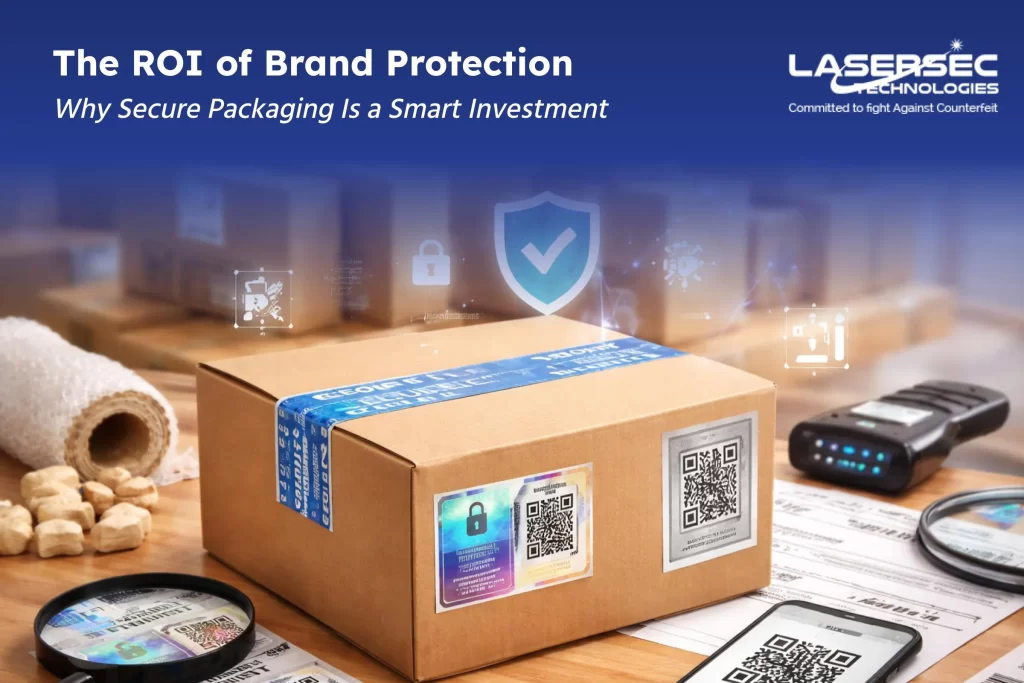
ROI of secure packaging showing cost savings and brand protection

For many manufacturers, brand protection is often viewed as a cost rather than an investment.

Security labels, holographic features, and authentication technologies may appear as additional expenses in packaging budgets. When production volumes are high and margins are tightly managed, companies sometimes question whether these protections are truly necessary.

However, the real cost of counterfeiting often becomes visible only after damage has already occurred.

Counterfeit products do not just affect short-term revenue. They can disrupt distributor networks, damage brand reputation, create regulatory complications, and erode customer trust. In some industries, counterfeit products can even pose serious safety risks.

This is why forward-thinking manufacturers increasingly treat secure packaging and brand protection technologies as strategic investments rather than operational costs.

When implemented correctly, secure packaging delivers measurable returns by preventing revenue loss, protecting brand value, and strengthening supply chain control using solutions like security hologram stickers and Track & Trace systems.

The Hidden Financial Impact of Counterfeit Products

Counterfeiting has become a global challenge across industries including pharmaceuticals, electronics, FMCG, automotive spare parts, and apparel.

While counterfeit products may look similar to genuine ones, their impact on legitimate manufacturers can be significant.

Common consequences include:

  • Direct loss of product sales
  • Price erosion due to counterfeit competition
  • Distributor conflicts in affected markets
  • Increased warranty claims or complaints
  • Customer distrust toward the brand

In many cases, counterfeit products also damage the brand’s long-term reputation.

Consumers who unknowingly purchase counterfeit products often associate poor quality or safety concerns with the original brand. Even if the manufacturer is not responsible, the perception of the brand can suffer.

These indirect costs are often far greater than the initial revenue losses caused by counterfeit sales.

Why Counterfeiting Damages More Than Just Revenue

When counterfeit products enter the market, the impact extends beyond lost sales.

Counterfeiting can create several operational and strategic risks for manufacturers:

  • Regulatory complications if counterfeit products violate safety standards
  • Distributor relationship conflicts when unauthorized products appear in protected markets
  • Loss of market control due to parallel trade or diversion
  • Damage to brand credibility among customers and retailers
  • Increased investigation and enforcement costs

In industries such as pharmaceuticals or food products, counterfeit goods can also pose serious safety risks to consumers.

When customers lose confidence in a brand’s authenticity, rebuilding that trust can take years.

For this reason, the financial impact of counterfeiting should be evaluated not only in terms of lost units, but also in terms of long-term brand damage.

How Secure Packaging Protects Product Authenticity

Secure packaging introduces protective features that make it significantly more difficult for counterfeiters to replicate genuine products.

Instead of relying solely on standard labels or printed information, manufacturers can integrate anti-counterfeit packaging technologies directly into the product packaging.

These technologies may include:

Each of these elements strengthens the ability to verify whether a product is genuine.

When combined with authentication systems, packaging can provide unit-level product verification, allowing distributors, retailers, or consumers to confirm authenticity instantly.

The Business Value of Authentication and Verification Systems

Secure packaging becomes even more powerful when integrated with digital authentication platforms.

Authentication systems allow manufacturers to verify products through digital scanning technologies such as QR codes or serialization platforms.

This enables companies to:

  • Confirm whether a product is genuine
  • Detect duplicate or suspicious authentication attempts
  • Identify unauthorized product distribution
  • Track product movement across markets
  • Monitor potential counterfeiting activity
By transforming packaging into a verification tool, manufacturers gain better visibility across their supply chains using systems like Track & Trace technology.

This helps companies move from reacting to counterfeit incidents toward proactively preventing them.

Measuring the Return on Investment of Brand Protection

The return on investment (ROI) of brand protection comes from both prevented losses and long-term brand value protection.

Secure packaging investments help manufacturers recover value in several ways:

Revenue Protection

  • Prevents counterfeit products from capturing legitimate market share
  • Protects pricing integrity in key markets
  • Maintains revenue across authorized distribution networks

Brand Reputation Protection

  • Preserves customer trust in product authenticity
  • Prevents negative experiences caused by counterfeit products
  • Maintains brand credibility across markets

Operational Risk Reduction

  • Reduces supply chain disputes caused by diversion or parallel trade
  • Improves product traceability
  • Supports regulatory verification and inspections
When these factors are considered together, the financial value of brand protection often exceeds the cost of implementing secure packaging technologies.

Strengthening Supply Chain Control Through Secure Packaging

Manufacturers often lose visibility over products once they leave the production facility.

Secure packaging combined with authentication systems helps restore that visibility.

By enabling verification at different points in the supply chain through solutions like QR code authentication and Track & Trace systems, companies can:

  • Detect suspicious product movement
  • Identify unauthorized distributors
  • Monitor market-level product activity
  • Investigate potential counterfeit hotspots
This level of transparency strengthens supply chain control and allows manufacturers to respond quickly when irregularities appear.

How We Support Brand Protection Through Secure Packaging

At Lasersec Technologies, we provide advanced anti-counterfeit packaging solutions designed to help manufacturers protect their brands and products across global markets.

Our solutions integrate security features directly into packaging using technologies such as:

These technologies help manufacturers create reliable authentication systems that protect products throughout the supply chain. To explore industry-specific applications, visit ourIndustry Solutions Gallery.

Why Brand Protection Is a Strategic Business Investment

Counterfeiting continues to grow across industries, creating serious risks for manufacturers and brand owners.

Treating brand protection as an optional expense can expose companies to significant financial and reputational damage.

Secure packaging solutions provide a proactive approach to preventing these risks.

By combining anti-counterfeit packaging technologies with authentication systems, manufacturers can protect product integrity, strengthen market trust, and maintain control across their distribution networks.

In the long term, investing in secure packaging is not simply a cost of packaging. It is a strategic investment in protecting brand value, customer trust, and sustainable business growth.

Phygital packaging system connecting factory to pharmacy for brand trust

A pharmaceutical product leaves the manufacturing facility only after passing strict quality checks, regulatory approvals, and packaging inspections. Every batch is verified, sealed, and prepared for distribution through authorized supply chains.

But once the product enters the market, maintaining control becomes more challenging. Pharmaceutical companies must rely on distributors, pharmacies, and healthcare providers to ensure the medicine reaching patients is genuine.

In many markets, counterfeit medicines and unauthorized distribution make this difficult. Packaging may appear authentic, yet visual inspection alone cannot always confirm whether the product is legitimate.

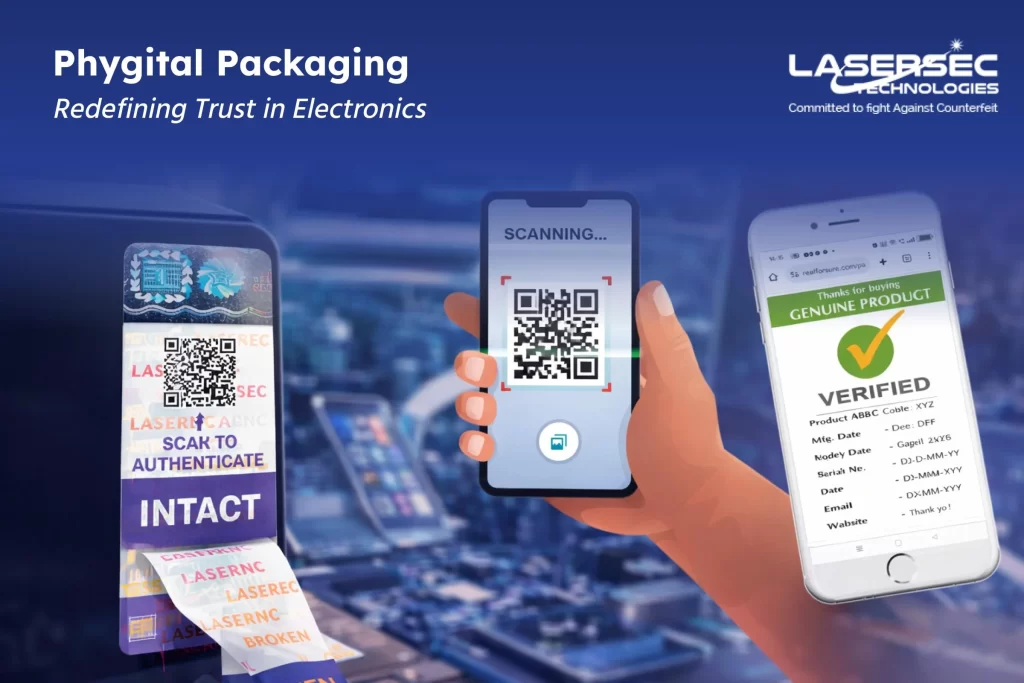
This is why pharmaceutical manufacturers are increasingly adopting phygital packaging solutions. By combining secure physical packaging features with digital verification technologies, phygital packaging enables products to be authenticated instantly through smartphone scanning.

This approach strengthens product security, improves transparency, and helps pharmaceutical companies maintain trust from the factory to the pharmacy.

The Growing Risk of Counterfeit Medicines in Pharmaceutical Supply Chains

Pharmaceutical supply chains often involve multiple intermediaries before a product reaches the patient.

These may include:

  • Manufacturers
  • Exporters
  • Distributors
  • Wholesalers
  • Pharmacies

Each stage introduces potential risks related to counterfeiting or unauthorized product diversion.

Common threats include:

  • Counterfeit medicines replicating genuine packaging using security hologram stickers
  • Unauthorized resale through unapproved distributors
  • Product diversion into unintended markets
  • Repackaging or relabeling of pharmaceutical products
  • Difficulty verifying authenticity at the pharmacy level
These risks create serious consequences for pharmaceutical companies.

They can result in:

  • Patient safety concerns
  • Regulatory compliance challenges
  • Distributor conflicts
  • Brand reputation damage
  • Financial losses from counterfeit circulation

Without reliable authentication systems, confirming product authenticity becomes extremely difficult once medicines leave the manufacturing facility.

Why Traditional Pharmaceutical Packaging Security Is No Longer Enough

Traditional pharmaceutical packaging includes elements such as printed labels, barcodes, batch numbers, and expiry information. These features help identify products and support logistics, but they were not designed to prevent modern counterfeiting.

Today, counterfeiters can replicate packaging designs with increasing accuracy. Even simple security labels can sometimes be visually imitated if they are not supported by authentication systems.

Traditional packaging elements can often be:

  • Copied or reproduced
  • Reprinted on counterfeit products
  • Removed and applied to fake packaging
  • Visually replicated using advanced printing technologies

Even standard holographic labels without authentication layers may not provide sufficient protection against modern counterfeiting.

Because of this, appearance alone cannot reliably confirm authenticity.

This is why pharmaceutical companies are moving toward multi-layered packaging security systems that combine physical anti-counterfeit features with digital verification.

What Is Phygital Packaging in the Pharmaceutical Industry

Phygital packaging integrates physical packaging security with digital authentication systems to create a stronger protection mechanism.

Instead of relying only on visual security features, phygital packaging adds a digital verification layer directly to the product packaging.

In pharmaceutical packaging, this often includes:

Each product unit receives a unique digital identity linked to secure manufacturing and distribution data.

When the code is scanned, the authentication system can instantly verify:

  • Whether the product is genuine
  • Where the product was manufactured
  • The production batch details
  • The intended distribution market

This transforms pharmaceutical packaging into a secure authentication point for verifying product legitimacy.

How Phygital Packaging Enables Patient-Level Product Verification

One of the most valuable advantages of phygital packaging is that it allows verification directly at the pharmacy or patient level.

When a medicine package includes a secure hologram integrated with a QR code authentication or authentication marker, users can verify the product by scanning the code with a smartphone.

The system checks the unique identifier against secure product records and confirms authenticity instantly.

If suspicious activity occurs, such as duplicate scans or verification from unexpected regions, the system can immediately flag potential counterfeit or diversion risks.

This enables:

  • Pharmacists to verify medicines before dispensing
  • Patients to confirm product authenticity
  • Regulators to investigate suspicious products
  • Pharmaceutical companies to monitor verification activity

By enabling verification at the point of use, phygital packaging significantly reduces the chances of counterfeit medicines reaching patients.

Supporting Pharmaceutical Compliance and Regulatory Requirements

Pharmaceutical regulations around the world are increasingly focused on improving traceability and product authentication.

Many markets now require manufacturers to implement systems that support:

  • Product serialization
  • Track and Trace capability
  • Supply chain transparency
  • Authentication verification

Phygital packaging helps meet these expectations by integrating physical anti-counterfeit packaging with digital authentication systems such as Track & Trace solutions.

These systems enable regulators and supply chain partners to verify:

  • Product origin
  • Manufacturing authenticity
  • Batch integrity
  • Distribution pathways

Authentication capabilities also improve inspection efficiency by providing instant verification during regulatory checks.

For pharmaceutical companies operating across global markets, this transparency strengthens compliance and improves regulatory confidence.

Protecting Pharmaceutical Brand Trust Through Secure Packaging

Trust plays a critical role in the pharmaceutical industry. Patients, healthcare professionals, and regulators must have confidence that medicines are safe and genuine.

When counterfeit medicines appear in the market, they can quickly damage both patient safety and brand credibility.

Phygital packaging helps pharmaceutical companies protect brand trust by enabling reliable product authentication.

Secure holographic packaging such as security holograms combined with digital verification allows genuine products to be distinguished quickly from counterfeit copies.

This capability helps:

  • Prevent counterfeit medicines from circulating undetected
  • Strengthen trust among healthcare professionals
  • Protect pharmaceutical brand reputation
  • Ensure patients receive genuine medicines

Over time, authentication systems reinforce long-term trust in pharmaceutical products.

Improving Pharmaceutical Supply Chain Visibility with Phygital Authentication

Pharmaceutical manufacturers often have limited visibility once products leave the factory.

Phygital authentication systems improve supply chain transparency by generating verification records whenever products are scanned using Track & Trace technology.

These records allow pharmaceutical companies to:

  • Monitor product movement across regions
  • Detect unauthorized distribution channels
  • Identify suspicious verification patterns
  • Investigate potential counterfeit activity
  • Improve supply chain oversight

This visibility allows companies to identify risks earlier and respond quickly before counterfeit products spread widely in the market.

Phygital authentication shifts supply chain protection from reactive response to proactive prevention.

How We Support Secure Phygital Packaging for Pharmaceutical Brands

At Lasersec Technologies, we provide advanced anti-counterfeit packaging solutions designed for pharmaceutical manufacturers operating in complex global markets.

Our phygital packaging solutions combine secure physical packaging with digital authentication technologies, including:

By integrating these technologies directly into pharmaceutical packaging, we help manufacturers create reliable product authentication systems that work across the entire supply chain.

Our solutions help pharmaceutical companies:

  • Prevent counterfeit medicines
  • Enable pharmacy-level product authentication
  • Strengthen regulatory compliance
  • Protect brand reputation
  • Improve global supply chain visibility

To explore industry-specific solutions, visit our Pharma anti-counterfeit solutions page.

Strengthening Pharmaceutical Trust from Factory to Pharmacy

Pharmaceutical supply chains continue to grow more complex, and the risks associated with counterfeit medicines remain significant.

Phygital packaging offers a powerful solution by combining secure holographic packaging with digital authentication technologies. This approach enables instant product verification, improves supply chain transparency, and strengthens compliance with evolving regulations.

Most importantly, it helps ensure that genuine medicines reach pharmacies and patients safely.In today’s pharmaceutical industry, phygital packaging is not just a packaging innovation. It has become an essential strategy for protecting patient safety, brand integrity, and long-term trust in pharmaceutical products.

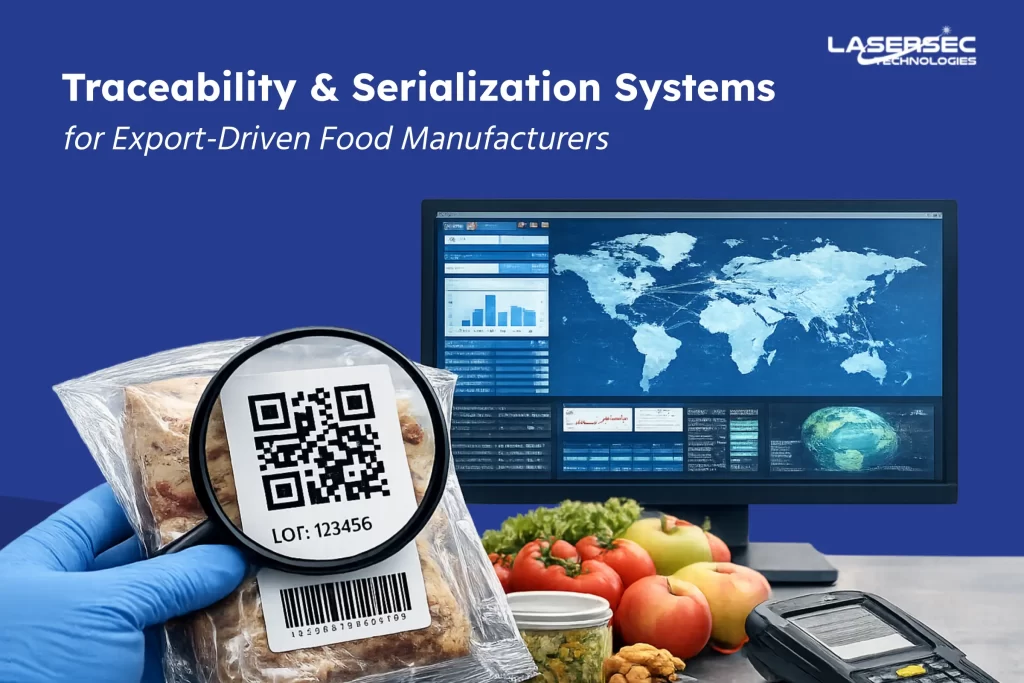
Food authentication technology preventing fake imports and parallel trade in global supply chains

A shipment leaves your facility after months of production planning, quality checks, and export compliance preparation. Every detail has been verified. The product meets international food safety standards, documentation is complete, and authorized distributors are ready.

But weeks later, an unexpected issue arises.

Your distributor reports seeing your product in a country where it was never authorized to be sold. In another instance, customs officials question the authenticity of a shipment carrying your brand name. The packaging appears genuine, but verification is unclear.

This is the growing reality of counterfeit food products, parallel imports, and unauthorized distribution. These risks do more than disrupt a single shipment. They affect regulatory compliance, distributor trust, pricing integrity, and long-term brand reputation.

This is why food authentication solutions have become essential for exporters. Authentication transforms packaging into a secure, verifiable identity system that protects products across global supply chains using technologies like QR code authentication and Track & Trace systems.

Understanding the Rising Risk of Fake Imports and Parallel Trade in Food Exports

As food products move through international supply chains, they pass through multiple intermediaries, distributors, logistics providers, and retailers. This complexity creates opportunities for unauthorized activities such as:

  • Parallel imports into unauthorized countries
  • Relabeling products for resale in different markets
  • Distribution of expired or compromised products
  • Counterfeit food products replicating genuine packaging using security hologram stickers
  • Unauthorized resale outside approved distributor networks

These activities are increasing globally due to sophisticated packaging replication techniques and fragmented supply chain visibility.

For food exporters, the consequences are significant:

  • Loss of brand control
  • Regulatory compliance risks
  • Distributor conflicts
  • Consumer safety concerns
  • Financial and reputational damage

Without a reliable product authentication system, it becomes extremely difficult to verify whether a product is genuine, where it originated, and how it entered a specific market.

Why Traditional Packaging and Labels Cannot Prevent Counterfeit Food Products

Traditional packaging elements such as printed labels, barcodes, and batch numbers were designed for identification and logistics—not for security and authentication.

These elements can be easily:

  • Copied
  • Reprinted
  • Duplicated
  • Reapplied to counterfeit products

Even standard holographic labels without secure authentication layers can be visually imitated if not integrated with verification technologies.

Counterfeiters can replicate packaging visually, making manual inspection unreliable.

Regulators, distributors, and retailers cannot confirm authenticity based on appearance alone. This creates delays, uncertainty, and compliance risks during export inspections and market verification.

Modern global food exports require secure authentication systems that provide instant, verifiable proof of product authenticity through solutions such as tamper-evident labels and QR code anti-counterfeit labels.

What Is Food Authentication and How Food Authentication Systems Work

Food authentication is a secure process that assigns a unique, traceable identity to each product unit. This identity is integrated directly into packaging using secure authentication technologies such as:

  • Serialized QR codes
  • Unique identification codes
  • Secure digital authentication markers
  • Tamper-evident and anti-counterfeit packaging features like tamper proof hologram stickers

Each authentication code is unique and linked to secure product data, including:

  • Manufacturing origin
  • Production batch information
  • Export destination
  • Product identity and verification status

When the authentication code is scanned, the system instantly verifies whether the product is genuine through secure platforms such as Track & Trace authentication systems.

If duplicate codes appear, or if products are detected in unauthorized markets, the system immediately identifies potential counterfeit or parallel trade activity.

This transforms packaging into an active brand protection and verification tool.

How Food Authentication Prevents Parallel Imports and Unauthorized Distribution

Parallel trade occurs when genuine products are diverted from authorized supply chains and resold in unauthorized markets. This disrupts pricing structures, violates distribution agreements, and creates regulatory complications.

Food authentication solutions prevent parallel imports by enabling unit-level verification using secure packaging such as QR code holograms and anti-counterfeit labels.

Each product unit can be verified to confirm:

  • Whether it was intended for a specific export market
  • Whether it has been duplicated or counterfeited
  • Whether it has been diverted to an unauthorized region
  • Whether the product identity matches manufacturing records

For example, if a product intended for export to one country is scanned in a different region, authentication systems immediately detect the discrepancy.

This allows exporters and brand owners to identify unauthorized distribution channels and take corrective action quickly.

Authentication restores control over products even after they leave the manufacturing facility.

Supporting Export Compliance and Regulatory Requirements with Authentication

Food exporters must comply with strict international regulations related to product origin, safety, traceability, and authenticity.

Regulatory authorities increasingly expect manufacturers to demonstrate supply chain transparency and authentication capability through secure systems such as Track & Trace solutions.

Food authentication systems support compliance by enabling regulators to verify:

  • Product origin
  • Manufacturing authenticity
  • Batch integrity
  • Export destination verification
Authentication provides instant, verifiable proof that the product is genuine and compliant.

This reduces customs delays, improves inspection efficiency, and strengthens regulatory confidence.

It also demonstrates that exporters are implementing proactive brand protection and compliance measures.

How Food Authentication Protects Brand Reputation and Consumer Trust

Brand reputation is one of the most valuable assets for food exporters. However, counterfeit or diverted products can quickly damage consumer confidence—even when the manufacturer is not responsible.

Consumers cannot distinguish between genuine and counterfeit products if packaging appears identical without secure authentication features like security holograms or tamper-evident packaging labels.

Authentication enables distributors, retailers, and consumers to verify product authenticity instantly.

This prevents counterfeit products from circulating undetected and ensures consumers receive genuine, safe products.

Over time, authentication strengthens brand credibility and builds long-term trust across global markets.

Improving Food Supply Chain Visibility with Product Authentication Systems

One of the biggest challenges exporters face is limited visibility after products leave the manufacturing facility.

Food authentication systems improve supply chain transparency by creating verification records whenever a product is scanned through systems such as Track & Trace technology.

This enables exporters to:

  • Monitor product movement across markets
  • Detect unauthorized distribution
  • Identify suspicious activity
  • Prevent counterfeit infiltration
  • Improve supply chain control

This visibility allows faster response to potential risks and prevents widespread distribution of counterfeit or diverted products.

Authentication shifts supply chain management from reactive damage control to proactive prevention.

Why Food Authentication Solutions Are Essential for Modern Food Exporters

Global food trade continues to expand, but so do risks related to counterfeit imports, parallel trade, and unauthorized resale.

Authentication provides critical protection by enabling:

  • Unit-level product verification
  • Anti-counterfeit packaging security using holographic labels and security holograms
  • Supply chain authentication
  • Export compliance support
  • Brand protection across international markets

Authentication transforms packaging into a secure, verifiable proof of authenticity.

It protects exporters, distributors, regulators, and consumers alike.

How We Supports Secure Food Authentication and Brand Protection

At Lasersec Technologies, we provide advanced food authentication and anti-counterfeit packaging solutions designed to protect exporters operating in global markets.

Our solutions integrate secure, unique identifiers directly into packaging, using technologies such as QR code holograms, tamper-evident labels, and Track & Trace authentication systems, enabling reliable product authentication and supply chain verification.

These authentication systems help exporters:

  • Prevent counterfeit food products
  • Detect parallel imports and diversion
  • Strengthen export compliance
  • Protect brand 
  • Improve global supply chain visibility

By combining secure physical packaging with authentication technologies, we help brands maintain control, transparency, and trust throughout the product lifecycle.

To explore relevant solutions for this sector, visit our FMCG anti-counterfeit solutions page.

Strengthening Global Food Export Security Through Authentication

As counterfeit food products and parallel trade continue to rise, authentication has become a critical component of export security and brand protection.

Food authentication systems provide verifiable product identity, improve supply chain transparency, and support regulatory compliance through technologies like secure holographic labels and Track & Trace authentication.

They help ensure that genuine products reach authorized markets safely and securely.

Most importantly, authentication protects brand reputation, consumer safety, and long-term export success.

In today’s global food industry, authentication is no longer optional. It is an essential foundation for secure, compliant, and trusted international food distribution.

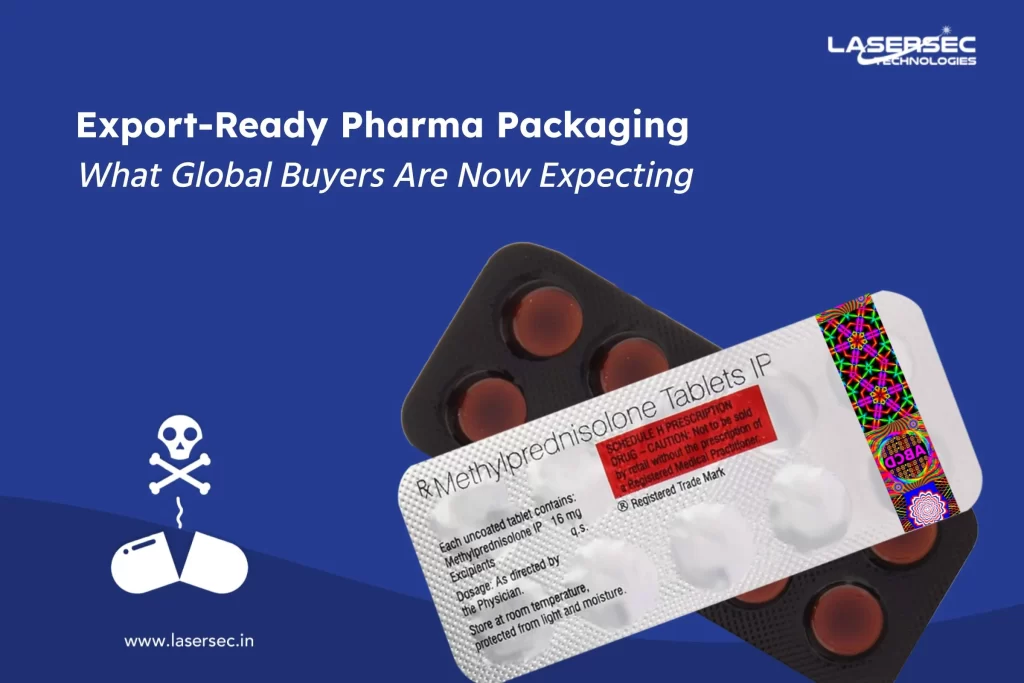
Export-Ready Pharma Packaging- What Global Buyers Are Now Expecting

You’ve secured the order, production is complete, and your shipment is ready to move. But then, just before dispatch, your buyer asks:

“Does your packaging meet serialization and scan-based proof requirements?”

Imagine losing a million-dollar contract — not because of your medicine, but because your packaging failed to inspire trust. This is the reality many exporters face today. For global buyers, packaging has become the deciding factor between smooth delivery and a deal falling apart.

Why Packaging Standards Are Now Non-Negotiable

Global buyers are under pressure from regulators, distributors, and patients. They must ensure every product they source is traceable, authentic, and tamper-proof. That means export-ready packaging is no longer optional — it’s the foundation of international trade.

Key compliance must-haves include:

  • Track & Trace Systems – complete product visibility across the supply chain
  • Serialization – unique identifiers that meet global compliance norms
  • Tamper-Evident Features – seals or packaging that immediately reveal interference
  • Scan-Based Proof – QR codes or secure markings enabling instant authentication

Without these, buyers see risk — and in today’s market, risk means rejection. It’s not just about checking compliance boxes. Buyers want reassurance that:

  • Their shipments won’t face customs delays due to packaging gaps
  • They won’t be caught in regulatory disputes in importing countries
  • They can confidently show stakeholders a secure supply chain
For exporters, this transforms packaging into a proof of credibility. It’s no longer just a container — it’s part of your business reputation.

Regional Buyer Expectations: One Size Doesn’t Fit All

Every region enforces its own regulations. Understanding them isn’t just smart — it’s survival.

RegionKey Packaging ExpectationsWhat It Means for Exporters
European Union (EU)Strict serialization under the FMD (Falsified Medicines Directive) with database-driven verification.Packs must be registered and verifiable via EU hub. Non-compliant shipments are rejected at borders.
United StatesDSCSA (Drug Supply Chain Security Act) requires interoperability and traceability beyond serialization.Exporters must ensure their systems “talk” with US buyers’ systems for seamless data exchange.
Middle East & AfricaHigh counterfeit risks demand visible tamper-evidence + secure scan codes.Buyers expect seals and markings they can verify instantly at distributor level.

According to the WHO, 1 in 10 medical products in low- and middle-income countries is substandard or falsified — highlighting why MEA and APAC buyers demand extra layers of security.

Before shipping, ask yourself:

  • Does every pack carry a unique, scannable serialization code?
  • Is there a tamper-evident seal that cannot be replaced unnoticed?
  • Can my systems generate and share serialization data with buyers?
  • Do I have scan-based proof of authenticity ready for customs or audits?

If the answer is “no” to any of these, your packaging isn’t truly export-ready.

Indian pharma is globally respected for high-quality medicines. But as regulations tighten, packaging standards are becoming the new benchmark for trust.

Those who adapt quickly — with serialization, secure QR codes, and tamper-evident solutions — will stand out as reliable partners. On the other hand, exporters who delay risk losing contracts, not because of product quality, but because their packaging didn’t pass the credibility test.

Global buyers are no longer asking if your packaging is compliant — they’re asking how quickly you can prove it.

Export-ready packaging is now a business advantage, not just a compliance step. For exporters preparing to expand globally, investing in the right packaging solutions is no longer optional.

Because in today’s market, packaging isn’t just protecting your product — it’s protecting your growth.

At Lasersec Technologies, we partner with pharma exporters to ensure their packaging meets global serialization, traceability, and anti-counterfeit standards — helping you ship with confidence and win global trust.

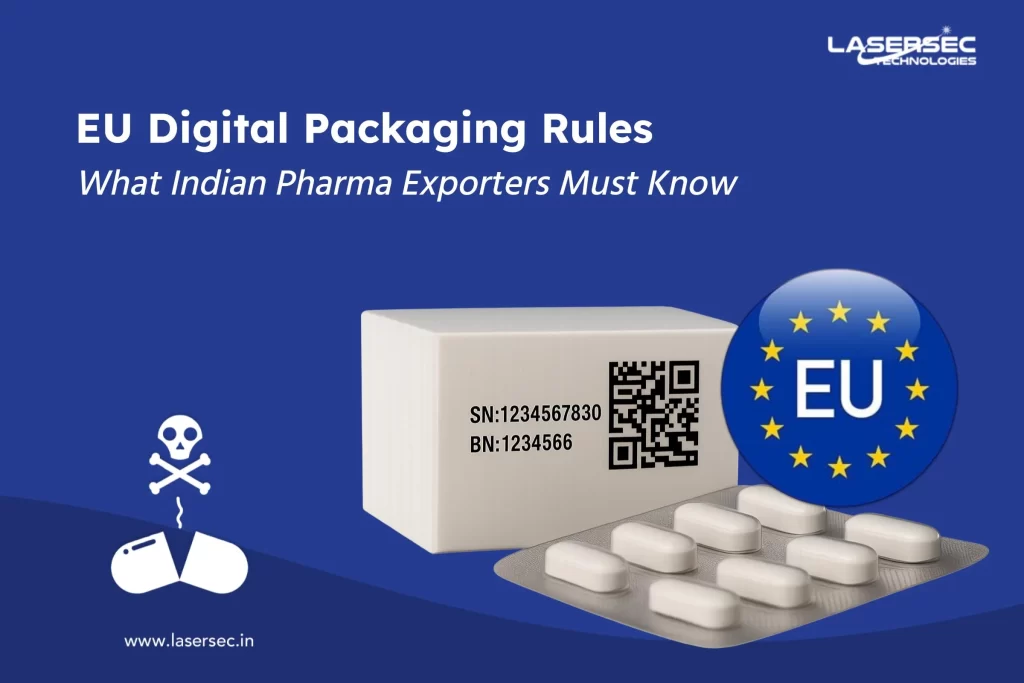
How Indian Pharma Exporters Can Prepare for EU’s New Digital Packaging Rules

The European Union’s upcoming Digital Product Passport (DPP) and serialization requirements, effective from 2026, are transforming how pharmaceuticals are packaged and traced across the supply chain. For Indian pharma exporters, this means digital-ready packaging is no longer optional — it’s essential for market access, compliance, and trust.

So, how can packaging evolve fast enough to meet these expectations?
The answer lies in QR codes and tamper-evident labels — two smart technologies that bring traceability, authenticity, and transparency directly onto the pack.

1. The New EU Challenge: Digital Transparency at Every Level

Under the EU Eco-design for Sustainable Products Regulation (ESPR), every product entering the EU — including pharmaceuticals — must carry a Digital Product Passport (DPP). This digital record links each pack to verified data such as product origin, batch, composition, and regulatory certifications.

However, achieving compliance requires:

  • Unit-level serialization
  • Scannable digital identifiers
  • Tamper-proof packaging integrity

That’s where smart labeling comes into play.

2. QR Codes: Your Gateway to Digital Product Passports

QR codes have evolved far beyond simple barcodes. Modern secure and dynamic QR codes allow real-time verification, linking every individual pack to its digital passport in the cloud.

With secure QR codes, pharma exporters can:

  • Connect each product to a verified DPP record
  • Enable instant verification for customs officials, distributors, and patients
  • Detect counterfeits or unauthorized diversions
  • Track exports throughout the EU supply chain
When integrated with serialization, these QR codes become digital fingerprints — unique, tamper-evident, and compliant with EU’s interoperability standards.

3. Tamper-Evident Labels: The Physical Layer of Trust

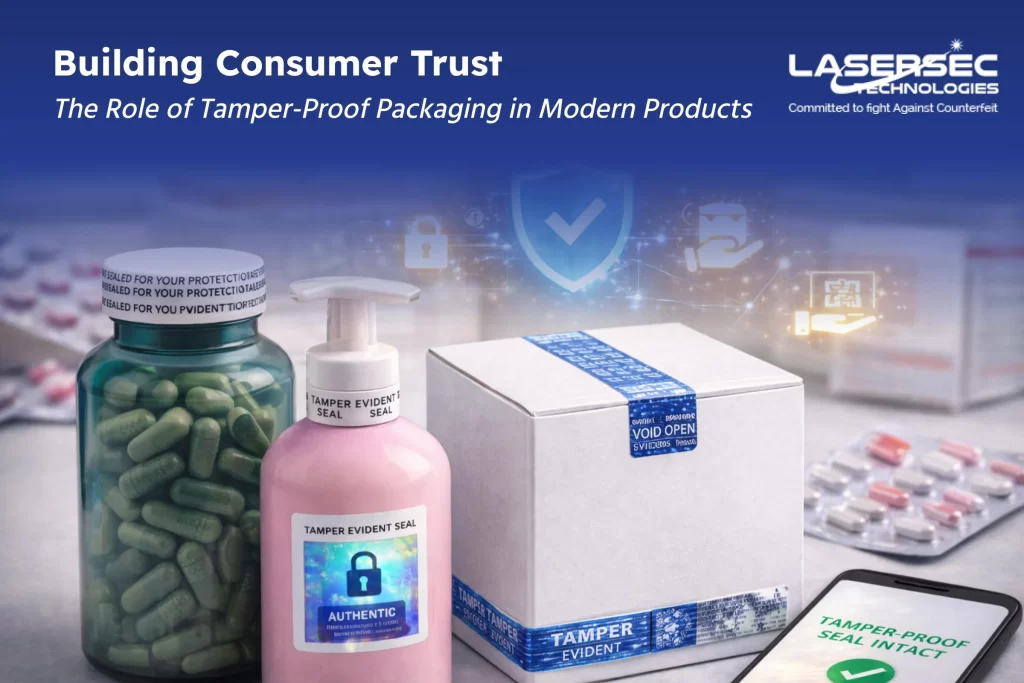
While QR codes protect digital identity, tamper-evident labels safeguard physical authenticity. These labels reveal visible signs — such as “VOID” marks or holographic breaks — if anyone tries to remove or alter them.

Why they’re essential for compliance:

  • They ensure product integrity during transit
  • Serve as proof of non-interference and genuine origin
  • Complement serialization and DPP data by confirming physical security
Together, tamper-evident and QR-enabled labels bridge the physical and digital worlds, creating a robust defense against counterfeiting and regulatory breaches.

4. How These Technologies Work Together

When integrated, QR codes and tamper-evident labels deliver a two-tier protection model:

LayerFunctionBenefit
Digital Layer (QR Code)Links each pack to live data and DPPEnables authentication and traceability
Physical Layer (Tamper-Evident Label)Shows visible signs of tamperingEnsures product safety and compliance integrity

This hybrid approach enables exporters to prove compliance instantly — both digitally and physically — meeting EU’s dual requirement of traceability and security.

5. Implementation Blueprint for Exporters

To align with the EU’s 2026 standards, Indian exporters should begin adopting these steps today:

  • Adopt Dynamic QR Codes:
    Implement secure, serialized QR codes linked to live cloud databases or blockchain.
  • Upgrade Labeling Infrastructure:
    Ensure your packaging lines support tamper-evident label application and QR code printing at the unit level.
  • Integrate with Track & Trace Systems:
    Synchronize label data with your ERP or MES to enable full supply chain visibility.
  • Partner with Trusted Solution Providers:
    Choose technology partners experienced in anti-counterfeit, serialization, and pharma-grade packaging.

6. Beyond Compliance: Building Trust and Value

Compliance may be the starting point, but smart labeling delivers much more:

  • Builds trust with regulators, distributors, and patients
  • Enhances brand reputation through transparency
  • Reduces counterfeit and recall risks
  • Positions your company as a future-ready exporter
By embracing smart packaging now, Indian pharma manufacturers can turn regulatory pressure into a competitive advantage.

Secure, Smart, and Ready for 2026

The EU’s digital packaging regulations are reshaping global pharma trade — and Indian exporters who act early will lead the way. By combining secure QR codes and tamper-evident labels, you can ensure every shipment is authentic, traceable, and regulation-ready.

At Lasersec Technologies, we specialize in pharma-grade anti-counterfeit solutions — from dynamic QR codes to tamper-evident holographic labels and complete Track & Trace integration. Let’s help you make your exports compliant, secure, and globally trusted.

Future-proof your packaging — one secure label at a time.

How Tamper Evident Packaging and Track & Trace Strengthen Anti-Counterfeiting Measures

You trust the seal. So does your customer.
But what if both can be faked?

In today’s hyper-competitive and counterfeit-prone market, trust is no longer a given—it must be earned, secured, and verifiable. One compromised product doesn’t just mean financial loss. It means broken trust, customer complaints, and reputational damage.

For quality assurance teams, brand managers, and packaging heads, the challenge is clear: protecting your product is protecting your brand.

The Dual-Layer Security Model

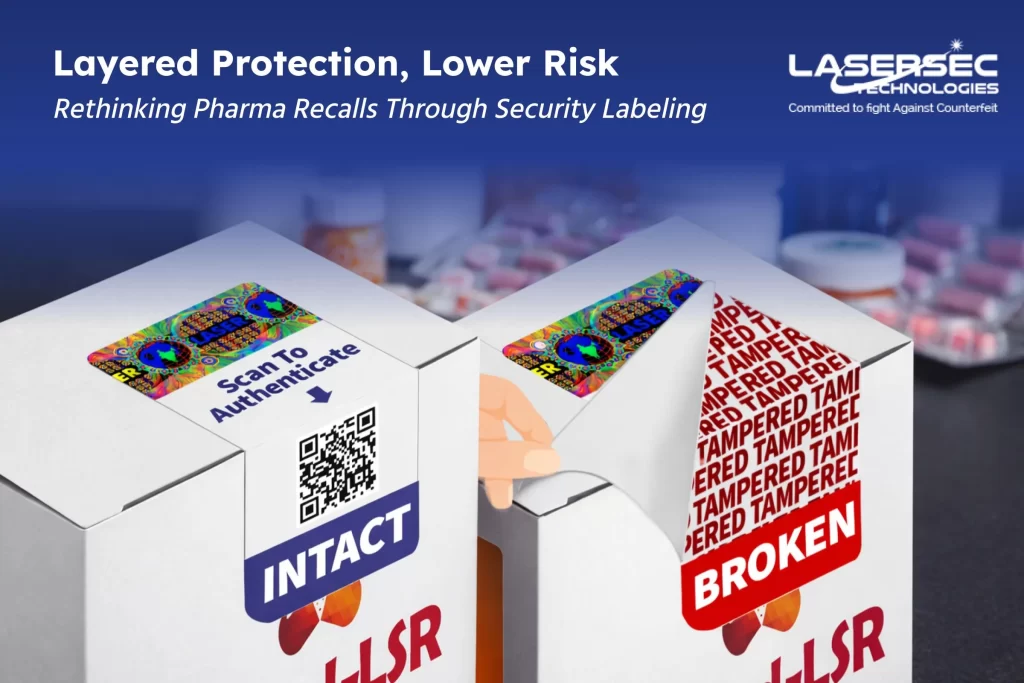
Forward-thinking brands are now adopting a two-pronged security approach: Tamper-Evident Packaging + Track & Trace Technology
One is a physical deterrent. The other is a digital watchdog. Together, they form a resilient shield against fraud.

1. What These Tools Actually Do

Tamper-Evident Packaging

These packaging elements display clear signs of interference.
Think broken seals, VOID labels, or peeled films—immediate red flags for both consumers and supply chain teams.

2. Track & Trace Systems

Every unit is assigned a unique serialized identity, often through GS1 barcodes or QR codes.
Each scan updates the unit’s journey from production to retail, enabling full traceability and real-time monitoring through secure platforms.

Bonus: Advanced T&T systems now integrate with cloud-based dashboards, AI-based alerts, and mobile authentication tools.

Relying on only one method is like locking your front door but leaving the windows wide open.

  • Tamper seals can be replicated.
  • Digital codes can be copied.

But when combined:
Physical evidence + Digital validation = A failsafe authentication system that’s far harder to breach.

Real Time Impacts

  1. Pharmaceuticals: A sealed pack and a scannable QR code validate medication at the pharmacy. Brands using serialization aligned with DSCSA/EU FMD have reduced counterfeit reports and met compliance faster.
  2. Electronics: With encrypted QR codes and tamper seals, brands can detect unauthorized resellers and trace diversion to the source. Less warranty fraud and tighter market control.
  3. FMCG & Personal Care: A beauty brand added tamper-evident seals and scannable codes after fake products emerged online. 38% drop in complaints, increased repurchase rates, and renewed customer trust.

Why This Approach Works

  • Visible Proof:
    Customers know if the product has been tampered with.
  • Digital Traceability:
    Brands know exactly where and when a breach occurred.
  • Rapid Response:
    Identify and contain supply chain risks in real time.
  • Compliance-Ready:
    Stay ahead of evolving global regulations.
  • Brand Loyalty:
    Build trust through transparency, safety, and action.

You don’t need a massive overhaul.

Start small like:

  • Apply tamper-evident holographic labels to premium or high-risk SKUs.
  • Add QR codes connected to a secure backend system.
  • Educate your distributors and customers on scanning and verification.

Then, scale as your confidence and ROI grow.

Your Packaging Is More Than a Box

It’s your handshake, your promise, your presence in places you can’t be.

With tamper-evident packaging and track & trace working in tandem, your packaging becomes a:

  • Silent Guardian
  • Smart Communicator
  • Powerful Brand Asset

Let’s Build Smarter, Safer Packaging – Together

At Lasersec Technologies, we specialize in merging physical security with digital intelligence. Our solutions are tailored for pharma, electronics, FMCG, automotive, and consumer brands looking to stay ahead of counterfeiting risks.

The Shift from Traditional Labels to Interactive Packaging: What Brands Need to Know

Ever held a medicine pack and wondered—is this real? Is it safe?

Your customers, pharmacists, and regulators are asking the same questions every day. And the answers often begin not with a product demo or a marketing campaign—but with what’s printed, sealed, or embedded on your packaging.

We’re entering a new era—where the label isn’t just a sticker. It’s a source of truth.

The shift from traditional labels to interactive packaging is redefining how pharmaceutical brands build credibility, deliver transparency, and protect their reputation.

Why Traditional Labels Aren’t Enough Anymore

For decades, a logo, a batch number, or a hologram gave a basic sense of authenticity. But today’s pharmaceutical buyers, regulators, and patients are more informed and more skeptical. They want proof, not promises—and they want it instantly.

Consumers, pharmacists, and regulators now ask:

  • Where was this product made?
  • Is it safe to use?
  • Has it been tampered with or copied?
  • Can I trace it to the source?
A static label can’t answer these. And in an age where counterfeiting, unauthorized distribution, and regulatory audits are rising—relying only on traditional packaging methods puts patients, companies, and supply chains at risk.

What Is Interactive Packaging?

Interactive packaging blends physical labels with digital intelligence. It enables a smartphone scan—via QR code, NFC chip, dynamic watermark, or serialized code—to unlock detailed product data, authentication, and personalized content.

It offers visibility beyond the box.

Through secure and unique digital triggers (often integrated with traceability platforms), brands can:

  • Verify authenticity instantly
  • Show manufacturing details, batch numbers, expiry dates, and certifications
  • Share dosage guides, patient education, and usage instructions
  • Deliver loyalty programs or pharmacist rewards
  • Start direct engagement with patients or healthcare providers
Unlike generic codes, modern systems use dynamic serialization or cloud-linked markers that are nearly impossible to duplicate—raising the bar for counterfeiters and aligning with regulations like DSCSA, EU FMD, and TGA guidelines.

Why More Brands Are Making the Switch

The shift to interactive packaging isn’t just a technology upgrade—it’s a strategic response to life-critical risks, regulatory demands, and patient safety.

  • Authentication:
    Allows pharmacists and patients to verify medicines instantly.
  • Recall readiness:
    Offers real-time traceability and rapid product recalls if needed.
  • Transparency:
    Provides batch-level tracking and supply chain visibility.
  • Engagement:
    Enables direct patient education, feedback, and loyalty programs.
It transforms packaging from a passive layer into a smart, compliant, and protective communication tool.

The Trend Backed by Numbers

According to Research and Markets, the global smart packaging market is expected to reach USD 43.6 billion by 2030, driven by the need for secure product authentication and patient trust.

A recent study shows that 81% of consumers are more likely to trust brands that offer transparency through scannable packaging.

In the pharmaceutical industry, this trust isn’t just a competitive advantage—it’s a regulatory and ethical responsibility.

From Confusion to Confidence

A leading pharmaceutical company faced a surge in counterfeit antibiotics in regional markets. Patients and pharmacists began raising safety concerns, and regulatory bodies flagged potential supply chain gaps.

The solution?

The company implemented secure, serialized QR codes on every blister pack and bottle. Each scan by a pharmacist or consumer provided instant product verification, manufacturing details, and patient instructions.

The impact:

  • Sharp decline in counterfeit complaints
  • Increased confidence among distributors and pharmacies
  • Stronger regulatory compliance and brand trust

Thinking About the Shift?

You don’t need to overhaul your entire product portfolio at once. Begin small, scale smart.

  • Choose a product line – Start with high-risk or export-oriented SKUs.
  • Define your purpose – Focus on authentication, traceability, or patient engagement.
  • Select the right technology – Use encrypted, copy-proof serialization.
  • Design it well – Make it seamless within your existing packaging.
  • Track engagement – Monitor scans, locations, and recall readiness.
Interactive packaging platforms can integrate with your ERP, WMS, and pharma track & trace systems to provide unit-level traceability—from production to the patient’s hand.

The Label Is No Longer Just a Label

In the pharmaceutical industry, packaging isn’t just protection—it’s proof.

Interactive packaging helps pharma brands move from saying “Trust us” to confidently showing why they’re trustworthy—meeting regulatory demands, protecting patients, and building real-world credibility.

Every scan is more than just a check—it’s a chance to:

  • Win patient trust
  • Engage directly with consumers and healthcare providers
  • Protect your products and comply with regulations

When trust, safety, and compliance are at stake, make your packaging your strongest proof point. At Lasersec Technologies, we help pharmaceutical companies bridge this gap—from static to smart, from uncertain to verified.

We design secure, compliant packaging solutions that protect your medicines, engage your supply chain, and elevate your brand.

Why Egypt’s Pharma Industry Needs Next-Gen Anti-Counterfeiting Solutions

Counterfeit medicines remain one of the biggest threats to Egypt’s healthcare system. Patients depend on genuine drugs not only for recovery but often for survival — yet fake medicines continue to circulate, undermining both trust and safety.

According to the Egyptian Drug Authority (EDA), counterfeit medicines make up nearly 10% of the local market in some therapeutic categories.  

These fakes are often disguised with packaging that looks identical to genuine products, making detection extremely difficult for pharmacists and patients.

The consequences are severe:

  • Reduced treatment effectiveness
  • Dangerous health risks
  • Erosion of public trust in brands and the healthcare system
For Egypt’s rapidly expanding pharmaceutical industry — one of the largest in MENA — counterfeiting is no longer a small-scale issue. It’s a national challenge that demands stronger, smarter solutions.

Why Old Defenses Fail

Traditional methods like basic holograms or packaging updates are no longer enough. Counterfeiters are adapting quickly, often staying just one step behind. Pharma companies in Egypt need solutions that go beyond packaging — ensuring authenticity is protected across the entire supply chain.

Next-Gen Anti-Counterfeiting Solutions for Pharma in Egypt

At Lasersec Technologies, we’ve developed advanced anti-counterfeiting solutions designed to tackle the exact challenges Egypt’s pharma sector faces today:

1. Secure QR Codes for Instant Verification :

Give patients and pharmacists the power to instantly verify authenticity with a smartphone scan. This creates transparency and trust at the point of purchase.

2. Serialization & Track-and-Trace (GS1 Standards):

Ensure every pack carries a unique code, providing unit-level visibility from manufacturer to pharmacy. This strengthens regulatory compliance and blocks counterfeit infiltration.

3. Phygital Security Features for Tamper-Proof Packaging:

A powerful combination of physical security elements (holograms, special inks, tamper-evident labels) with digital verification ensures packaging is nearly impossible to replicate.

Together, these solutions protect patients, brands, and supply chains — ensuring only genuine medicines reach the hands of consumers.

Why Egypt Needs to Act Now

With exports on the rise, Egyptian pharmaceutical companies must meet international compliance norms to compete globally. Beyond regulations, the real need is trust — both at home and abroad.

Companies that adopt next-gen anti-counterfeiting today will:

  • Become pioneers of safety and reliability in Egypt’s pharma market.
  • Win stronger patient loyalty through visible safety measures.
  • Improve global competitiveness by aligning with international standards.

Showcasing Next-Gen Anti-Counterfeiting at Egypt’s Pharma Exhibition

At the recent exhibition in Cairo, Lasersec Technologies had the opportunity to showcase our next-gen anti-counterfeiting solutions to Egypt’s pharma leaders. Through live demonstrations of secure QR codes, serialization, and phygital features, we highlighted how brands can strengthen patient trust and safeguard supply chains.

The response reinforced one thing clearly: Egypt’s pharma industry is ready to embrace advanced solutions to fight counterfeiting and lead with confidence in both local and global markets.

Moving Forward: Partnering with Egypt’s Pharma Industry

For those who couldn’t attend or want to continue the discussion, our team is here to help. Whether you need a detailed consultation, solution roadmap, or samples tailored to your products, we’re ready to support you.

Because protecting patients — and protecting your brand — is not just a one-time exhibition showcase, it’s a long-term partnership.

QR Codes vs Holograms: What Works Best for Product Authentication?

In a world flooded with counterfeits and cautious consumers, product authentication is no longer optional—it’s essential. Brands today face the growing challenge of proving that their products are genuine.

Two powerful tools lead the fight: QR codes and holograms. But here’s the truth—it’s not about choosing one over the other. The strongest brands use both to build layers of trust and security.

The Real Problem: Proving What’s Genuine

Think about this:

A customer scans the code on your product but lands on a counterfeit website.  In seconds, you don’t just lose a sale—you lose their trust.

Counterfeit threats are real and rising:

  • Fake chargers.
  • Diluted skincare.
  • Counterfeit medicines.
Each fake puts your customers at risk and damages your brand’s reputation. Customers no longer accept promises—they demand proof. That’s where smart authentication solutions step in.

QR Codes: Instant Digital Authentication

QR codes are like digital keys. One quick scan can unlock:

  • Product origin and supply chain journey.
  • Manufacturing and packaging dates.
  • Serial numbers and unique IDs.
  • Loyalty programs, customer feedback, or recall alerts.

Benefits:

  • Instant scanning with smartphones
  • Enables track and trace
  • Connects to real-time, dynamic information
  • Boosts post-purchase engagement
But Beware: QR codes can be copied by counterfeiters if not properly secured.

Holograms: Immediate Physical Proof

Holograms are visual security tools. Their shine, texture, and complexity make them almost impossible to duplicate.

Benefits:

  • Tamper-evident, adding immediate trust
  • Easy visual verification in stores
  • Adds premium appeal to packaging
  • Works without smartphones or internet
But Note: Holograms don’t store traceable or dynamic data.

The Smartest Solution: Combine Both for Maximum Security

The smartest brands are moving beyond “either-or.” They combine QR codes and holograms for multi-layered protection.

ScenarioBest SolutionWhy
In-store purchasesHologram + QR CodeImmediate visual check and scannable proof
E-commerce ordersQR Code + HologramDigital traceability with physical security
High-value pharma & electronicsQR Code + HologramFull track & trace + tamper-evident packaging
Luxury goods & collectiblesHologram + QR CodePremium appearance + consumer engagement
Customer loyalty campaignsQR CodeDirects buyers to secure apps, rewards, and feedback portals


Why You Should Always Use Both

  • Holograms protect the packaging.
  • QR codes confirm traceability and digital proof.

Together, they:

  • Strengthen your product’s first impression.
  • Provide layered security across the supply chain.
  • Protect both your physical goods and digital authenticity.

You’re not just safeguarding products—you’re securing:

  • Customer trust
  • Brand value
  • Supply chain integrity

Authentication is more than a feature—it’s your brand’s promise.

Trust Isn’t Automatic—You Have to Build It

  • QR Codes – Digital trust and smart traceability
  • Holograms – Visual security and tamper protection
  • Together – The strongest anti-counterfeit shield

At Lasersec Technologies, we specialize in tailored, multi-layered anti-counterfeiting solutions that protect your brand at every touchpoint—from the factory floor to the consumer’s hand. Ready to secure your products with next-gen authentication?