







For many manufacturers, brand protection is often viewed as a cost rather than an investment.
Security labels, holographic features, and authentication technologies may appear as additional expenses in packaging budgets. When production volumes are high and margins are tightly managed, companies sometimes question whether these protections are truly necessary.
However, the real cost of counterfeiting often becomes visible only after damage has already occurred.
Counterfeit products do not just affect short-term revenue. They can disrupt distributor networks, damage brand reputation, create regulatory complications, and erode customer trust. In some industries, counterfeit products can even pose serious safety risks.
This is why forward-thinking manufacturers increasingly treat secure packaging and brand protection technologies as strategic investments rather than operational costs.
When implemented correctly, secure packaging delivers measurable returns by preventing revenue loss, protecting brand value, and strengthening supply chain control using solutions like security hologram stickers and Track & Trace systems.
The Hidden Financial Impact of Counterfeit Products
Counterfeiting has become a global challenge across industries including pharmaceuticals, electronics, FMCG, automotive spare parts, and apparel.
While counterfeit products may look similar to genuine ones, their impact on legitimate manufacturers can be significant.
Common consequences include:
- Direct loss of product sales
- Price erosion due to counterfeit competition
- Distributor conflicts in affected markets
- Increased warranty claims or complaints
- Customer distrust toward the brand
In many cases, counterfeit products also damage the brand’s long-term reputation.
Consumers who unknowingly purchase counterfeit products often associate poor quality or safety concerns with the original brand. Even if the manufacturer is not responsible, the perception of the brand can suffer.
These indirect costs are often far greater than the initial revenue losses caused by counterfeit sales.
Why Counterfeiting Damages More Than Just Revenue
When counterfeit products enter the market, the impact extends beyond lost sales.
Counterfeiting can create several operational and strategic risks for manufacturers:
- Regulatory complications if counterfeit products violate safety standards
- Distributor relationship conflicts when unauthorized products appear in protected markets
- Loss of market control due to parallel trade or diversion
- Damage to brand credibility among customers and retailers
- Increased investigation and enforcement costs
In industries such as pharmaceuticals or food products, counterfeit goods can also pose serious safety risks to consumers.
When customers lose confidence in a brand’s authenticity, rebuilding that trust can take years.
For this reason, the financial impact of counterfeiting should be evaluated not only in terms of lost units, but also in terms of long-term brand damage.
How Secure Packaging Protects Product Authenticity
Secure packaging introduces protective features that make it significantly more difficult for counterfeiters to replicate genuine products.
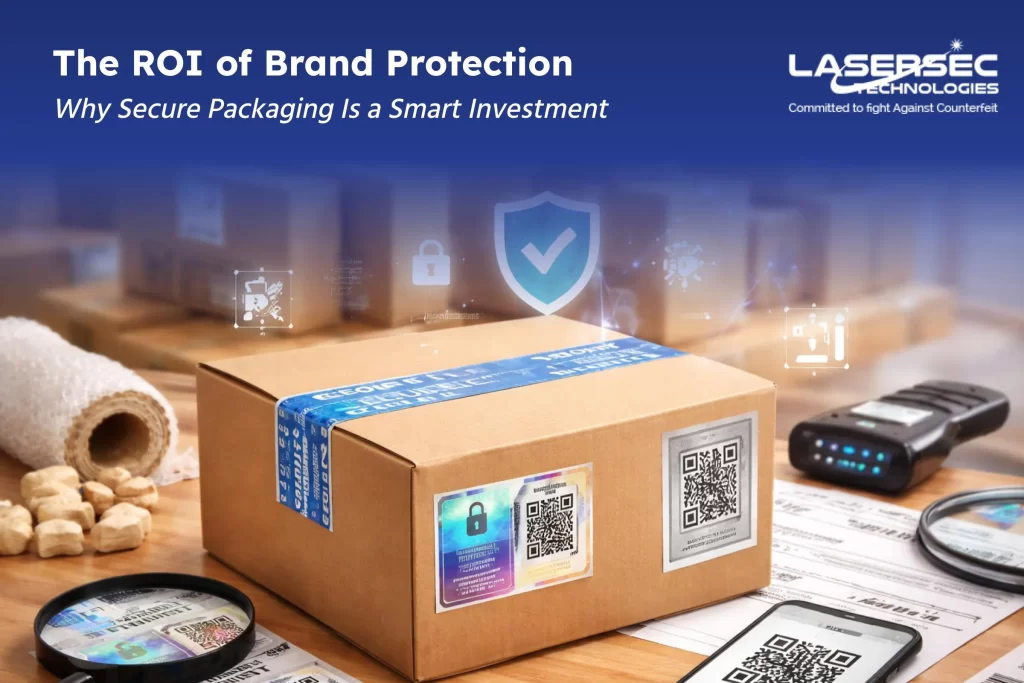
Instead of relying solely on standard labels or printed information, manufacturers can integrate anti-counterfeit packaging technologies directly into the product packaging.
These technologies may include:
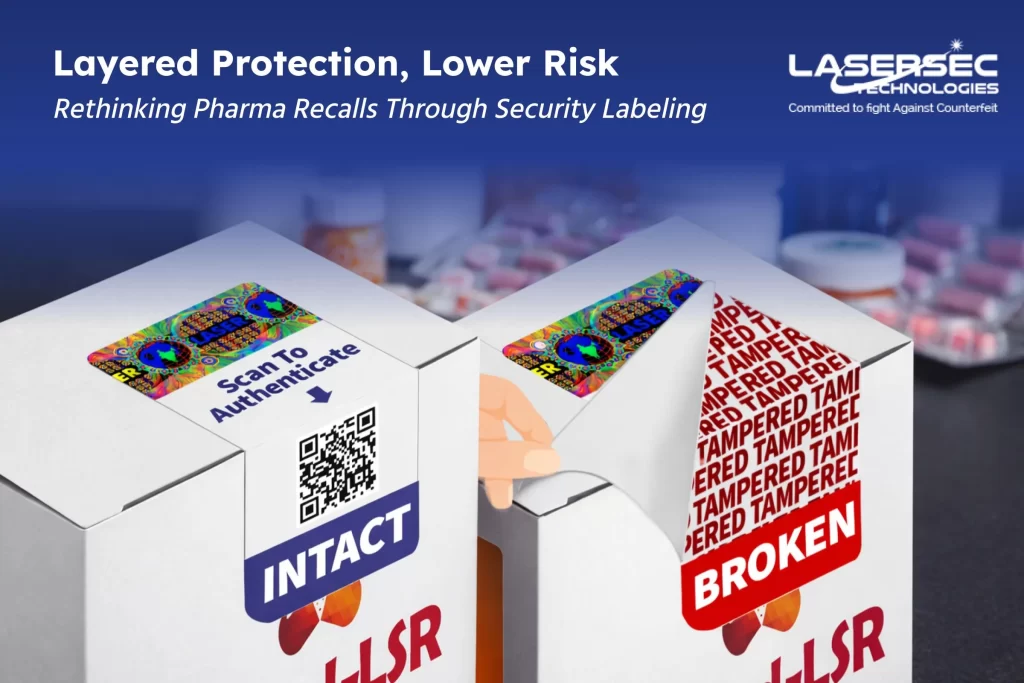
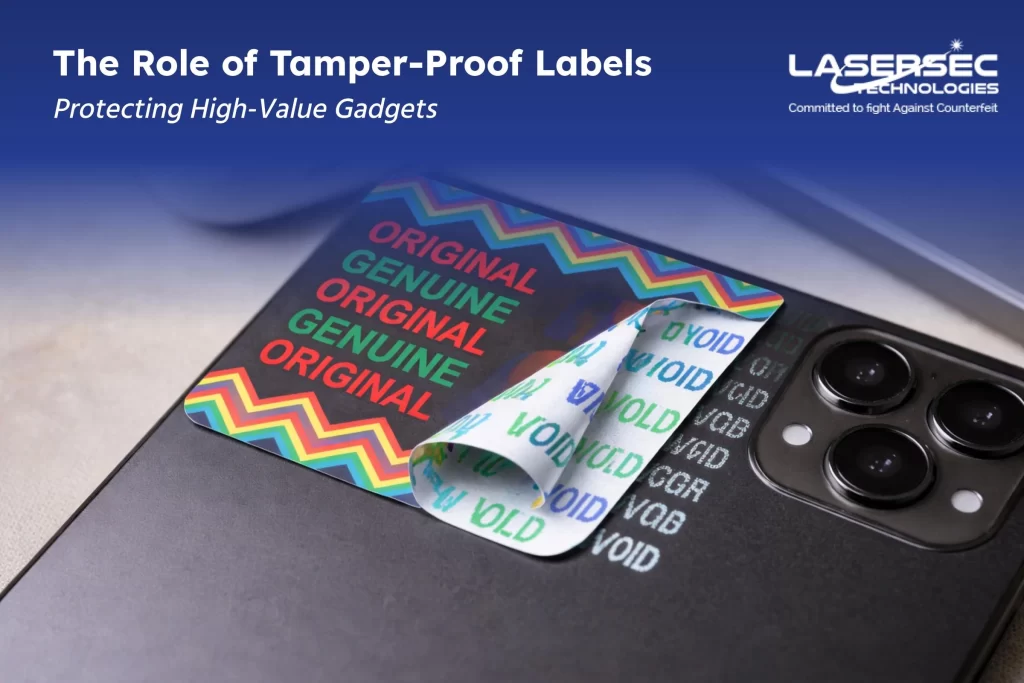
- Security hologram labels
- Tamper-evident packaging features
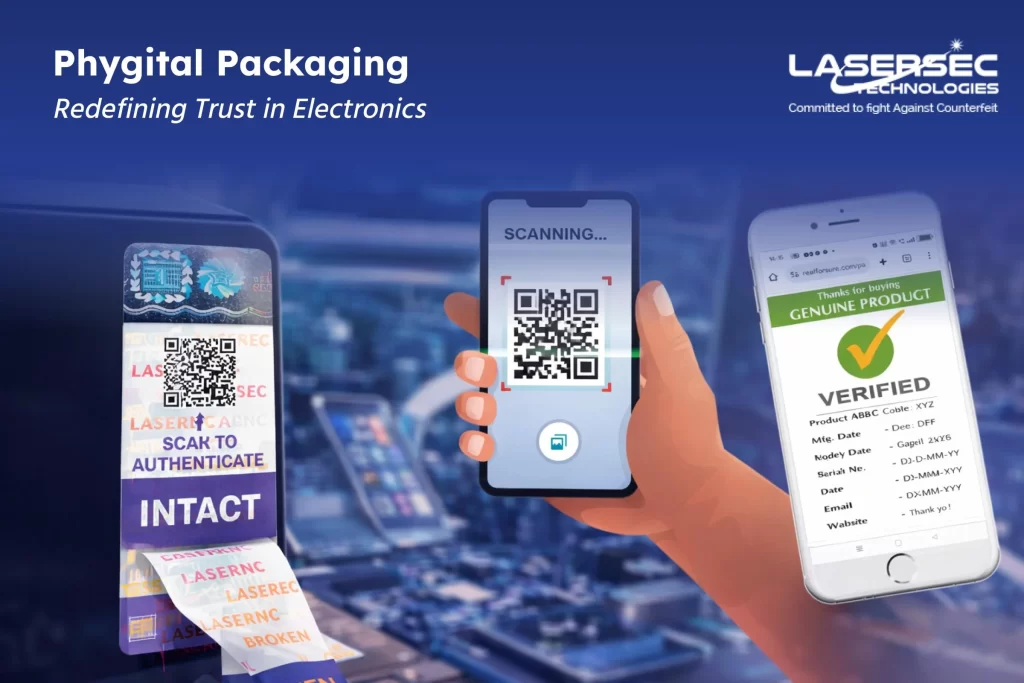
- Serialized QR code authentication
- Unique product identification codes
- Track & Trace verification systems
Each of these elements strengthens the ability to verify whether a product is genuine.
When combined with authentication systems, packaging can provide unit-level product verification, allowing distributors, retailers, or consumers to confirm authenticity instantly.
The Business Value of Authentication and Verification Systems
Secure packaging becomes even more powerful when integrated with digital authentication platforms.
Authentication systems allow manufacturers to verify products through digital scanning technologies such as QR codes or serialization platforms.
This enables companies to:
- Confirm whether a product is genuine
- Detect duplicate or suspicious authentication attempts
- Identify unauthorized product distribution
- Track product movement across markets
- Monitor potential counterfeiting activity
By transforming packaging into a verification tool, manufacturers gain better visibility across their supply chains using systems like Track & Trace technology.
This helps companies move from reacting to counterfeit incidents toward proactively preventing them.
Measuring the Return on Investment of Brand Protection
The return on investment (ROI) of brand protection comes from both prevented losses and long-term brand value protection.
Secure packaging investments help manufacturers recover value in several ways:
Revenue Protection
- Prevents counterfeit products from capturing legitimate market share
- Protects pricing integrity in key markets
- Maintains revenue across authorized distribution networks
Brand Reputation Protection
- Preserves customer trust in product authenticity
- Prevents negative experiences caused by counterfeit products
- Maintains brand credibility across markets
Operational Risk Reduction
- Reduces supply chain disputes caused by diversion or parallel trade
- Improves product traceability
- Supports regulatory verification and inspections
When these factors are considered together, the financial value of brand protection often exceeds the cost of implementing secure packaging technologies.
Strengthening Supply Chain Control Through Secure Packaging
Manufacturers often lose visibility over products once they leave the production facility.
Secure packaging combined with authentication systems helps restore that visibility.
By enabling verification at different points in the supply chain through solutions like QR code authentication and Track & Trace systems, companies can:
- Detect suspicious product movement
- Identify unauthorized distributors
- Monitor market-level product activity
- Investigate potential counterfeit hotspots
This level of transparency strengthens supply chain control and allows manufacturers to respond quickly when irregularities appear.
How We Support Brand Protection Through Secure Packaging
At Lasersec Technologies, we provide advanced anti-counterfeit packaging solutions designed to help manufacturers protect their brands and products across global markets.
Our solutions integrate security features directly into packaging using technologies such as:
- Security hologram labels
- Tamper-evident holographic packaging
- QR code authentication systems
- Serialized product identifiers
- Track & Trace verification platforms
These technologies help manufacturers create reliable authentication systems that protect products throughout the supply chain. To explore industry-specific applications, visit ourIndustry Solutions Gallery.
Why Brand Protection Is a Strategic Business Investment
Counterfeiting continues to grow across industries, creating serious risks for manufacturers and brand owners.
Treating brand protection as an optional expense can expose companies to significant financial and reputational damage.
Secure packaging solutions provide a proactive approach to preventing these risks.
By combining anti-counterfeit packaging technologies with authentication systems, manufacturers can protect product integrity, strengthen market trust, and maintain control across their distribution networks.
In the long term, investing in secure packaging is not simply a cost of packaging. It is a strategic investment in protecting brand value, customer trust, and sustainable business growth.