




A pharmaceutical product begins its journey inside a controlled manufacturing environment where every process is carefully monitored.
The formulation is verified, production batches are documented, and packaging operations follow strict regulatory protocols. Once the medicine is packaged, it begins moving through warehouses, distributors, logistics partners, pharmacies, and healthcare facilities before reaching patients.
However, the moment a product leaves the manufacturing facility, visibility often becomes limited.
Without strong traceability systems, pharmaceutical companies may struggle to monitor product movement across global supply chains. This lack of visibility creates opportunities for counterfeit infiltration, product diversion, and unauthorized distribution.
To address these risks, pharmaceutical manufacturers are increasingly adopting Track & Trace technology combined with secure packaging solutions.
By integrating serialization, tamper-evident packaging, and digital product identities, Track & Trace systems enable manufacturers to secure the pharmaceutical life cycle—from the packaging strip to the pharmacy shelf.
Why End-to-End Traceability Is Critical in Modern Pharmaceutical Supply Chains
The pharmaceutical supply chain is one of the most complex and tightly regulated supply networks in the world.
Medicines often move across multiple countries and pass through various intermediaries including:
- Manufacturing facilities
- Packaging lines
- Distribution warehouses
- Export and import channels
- Regional distributors
- Pharmacies and healthcare providers
At each stage, the product may face risks such as:
- Counterfeit drug infiltration
- Unauthorized parallel trade
- Repackaging or relabeling
- Diversion to unapproved markets
Without reliable traceability systems, identifying where a product originated or how it entered a specific market becomes extremely difficult.
This is why global regulatory frameworks increasingly require serialization and Track & Trace systems that allow medicines to be tracked throughout their life cycle.
The Limitations of Traditional Pharmaceutical Packaging
Traditional pharmaceutical packaging primarily focuses on protecting the product from environmental exposure such as moisture, contamination, or physical damage.
While this is essential for product stability, conventional packaging alone cannot provide full supply chain visibility.
Standard packaging elements such as:
- Printed batch numbers
- bar codes
- Product labeling
- Packaging artwork
are designed for identification and logistics rather than authentication and traceability.
These elements can be copied or replicated by counterfeiters, making it difficult to confirm product authenticity based solely on visual inspection.
To secure modern pharmaceutical supply chains, packaging must evolve beyond protection and become a source of verifiable product identity.
What Is Track & Trace Technology in Pharmaceutical Packaging
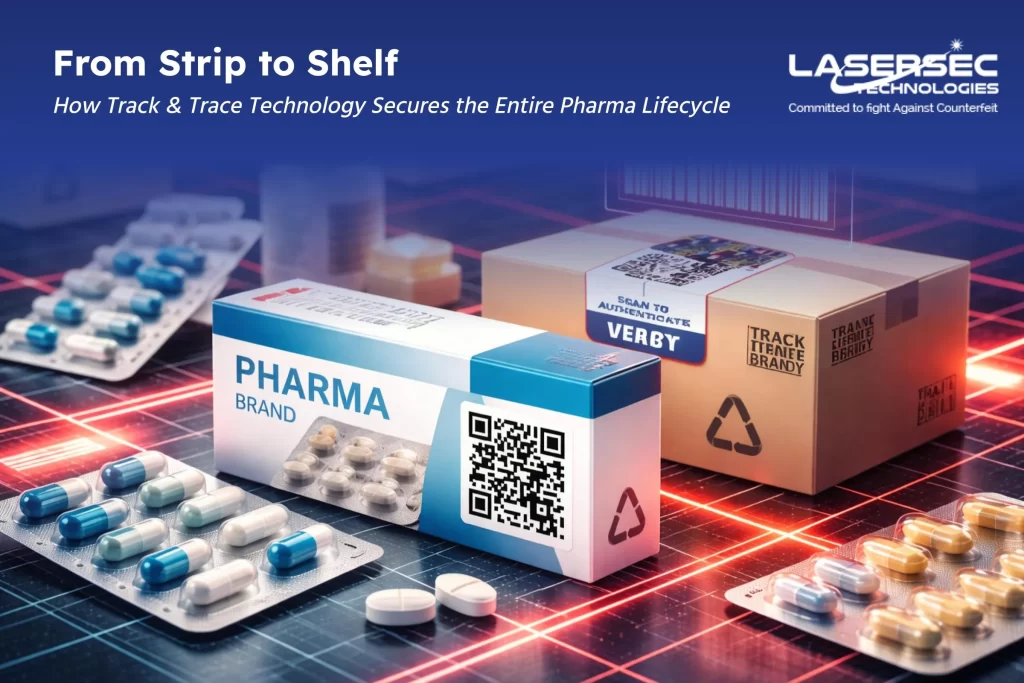
Track & Trace technology enables pharmaceutical manufacturers to assign a unique digital identity to every product unit.
This identity is typically created through serialization during the packaging process.
Serialized identifiers may include:
- Unique QR codes
- Data Matrix codes
- Alphanumeric product identifiers
Each code is linked to a secure database containing product information such as:
- Manufacturing origin
- Batch and production details
- Packaging line information
- Distribution records
Every time the product moves through the supply chain and the code is scanned, the system records a verification event. This creates a transparent history of the product’s movement from production to final delivery.
From Strip to Shelf: How Track & Trace Secures Each Stage of the life cycle
Track & Trace systems secure the pharmaceutical life cycle by providing visibility at every stage of product movement.
The process begins during primary packaging, such as blister strips or strip foils, where serialization codes may be applied or linked to the packaging unit.
During secondary packaging, serialized codes are integrated into cartons or labels that carry the product identity.
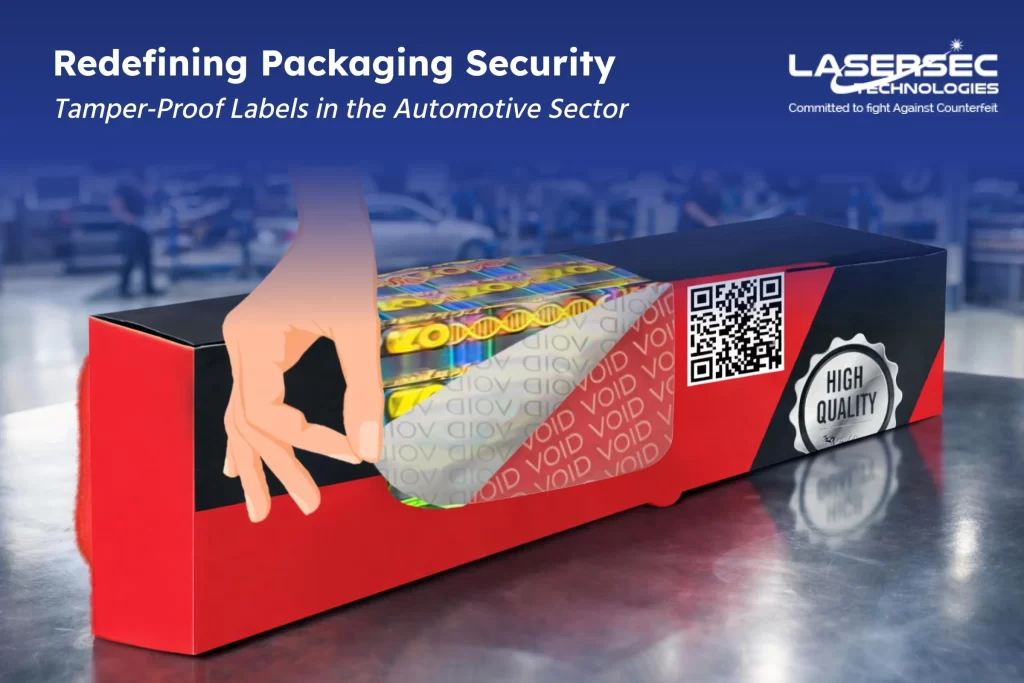
At this stage, tamper-evident packaging features are often added to ensure that the product cannot be opened or altered without detection.
As the product moves through warehouses and distribution channels, each scan event confirms that the product remains authentic and within authorized supply networks.
By the time the medicine reaches pharmacies or healthcare providers, its complete traceability record can be verified through the Track & Trace system.
The Role of Tamper-Evident Packaging in life cycle Security
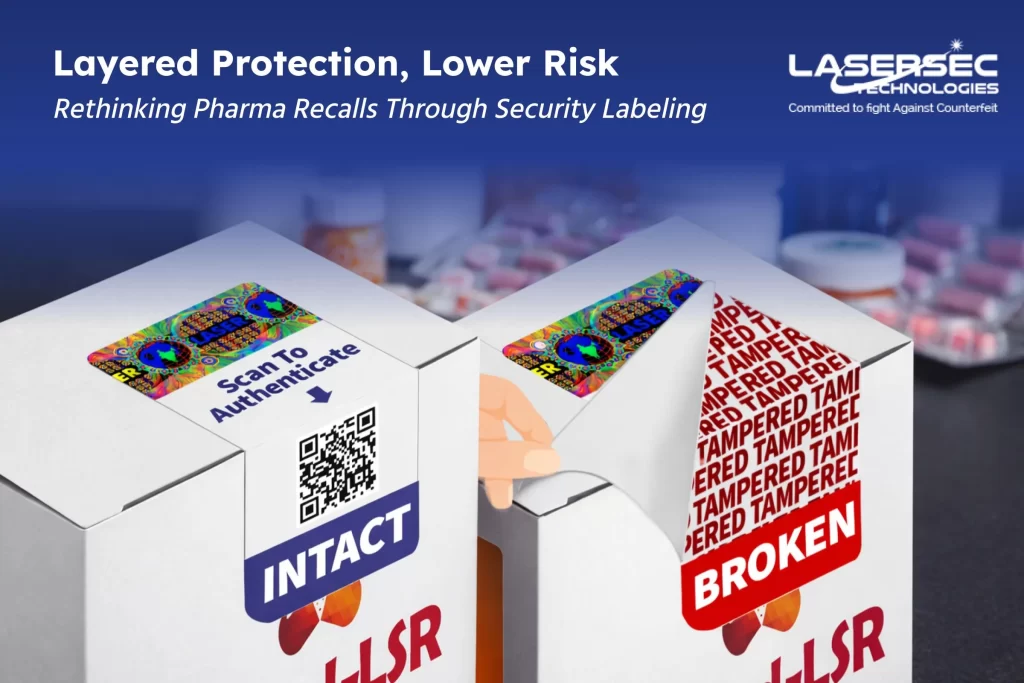
While Track & Trace technology provides digital visibility, tamper-evident packaging ensures physical product integrity.
Tamper-evident features reveal if packaging has been opened, altered, or manipulated after leaving the manufacturing facility.
These features may include:
If tampering occurs, the packaging clearly indicates interference, allowing distributors and regulators to identify compromised products quickly.
When combined with serialization, tamper-evident packaging provides both physical protection and digital verification.
Understanding the Role of Digital Twins in Pharmaceutical Traceability
A key concept in modern Track & Trace systems is the creation of a digital twin for each pharmaceutical product unit.
A digital twin is a digital representation of a physical product that exists within a secure data environment.
When a serialized product is packaged, its digital twin is created within the authentication platform.
This digital identity contains important information including:
- Manufacturing records
- Packaging data
- Supply chain verification history
- Product authentication status
Whenever the product code is scanned, the system verifies whether the physical product matches its digital twin.
If discrepancies appear—such as duplicate codes or scans in unauthorized regions—the system immediately flags potential counterfeit activity. This allows manufacturers to detect risks early and respond quickly.
Strengthening Regulatory Compliance with Track & Trace Systems
Regulatory agencies around the world are increasingly requiring pharmaceutical companies to implement traceability systems.
These requirements are designed to improve transparency, prevent counterfeit drugs, and protect patient safety.
Track & Trace systems help manufacturers meet these regulatory expectations by enabling:
- Unit-level serialization
- Supply chain verification
- Product authentication
- Rapid recall management
- Distribution monitoring
When regulators or inspectors need to verify a product’s origin or authenticity, the system can provide instant verification data. This strengthens regulatory confidence and reduces compliance risks.
Why Pharmaceutical Manufacturers Are Upgrading to End-to-End Traceability
Pharmaceutical manufacturers are increasingly moving toward integrated packaging and traceability systems rather than relying on isolated security measures.
End-to-end Track & Trace systems provide several strategic benefits:
- Strong protection against counterfeit drug infiltration
- Real-time visibility across supply chains
- Faster identification of unauthorized distribution
- Improved recall management capabilities
- Stronger compliance with global regulatory requirements
By combining serialization, tamper-evident packaging, and authentication systems, manufacturers can secure their products throughout the entire life cycle.
How Lasersec Technologies Supports End-to-End Pharmaceutical Security
At Lasersec Technologies, we provide integrated pharmaceutical packaging and authentication solutions designed to support end-to-end product security.
Our technologies combine secure packaging features, serialization-ready labeling, holographic authentication elements, and Track & Trace systems to create a comprehensive pharmaceutical protection framework.
These solutions help pharmaceutical manufacturers:
- Implement reliable product serialization
- Protect packaging through tamper-evident technologies
- Enable secure authentication through QR-based verification
- Improve supply chain monitoring
- Strengthen regulatory compliance and brand protection
By integrating physical packaging security with digital traceability systems, we help pharmaceutical companies maintain full control over their products from manufacturing to patient delivery.