






Lasersec Technologies

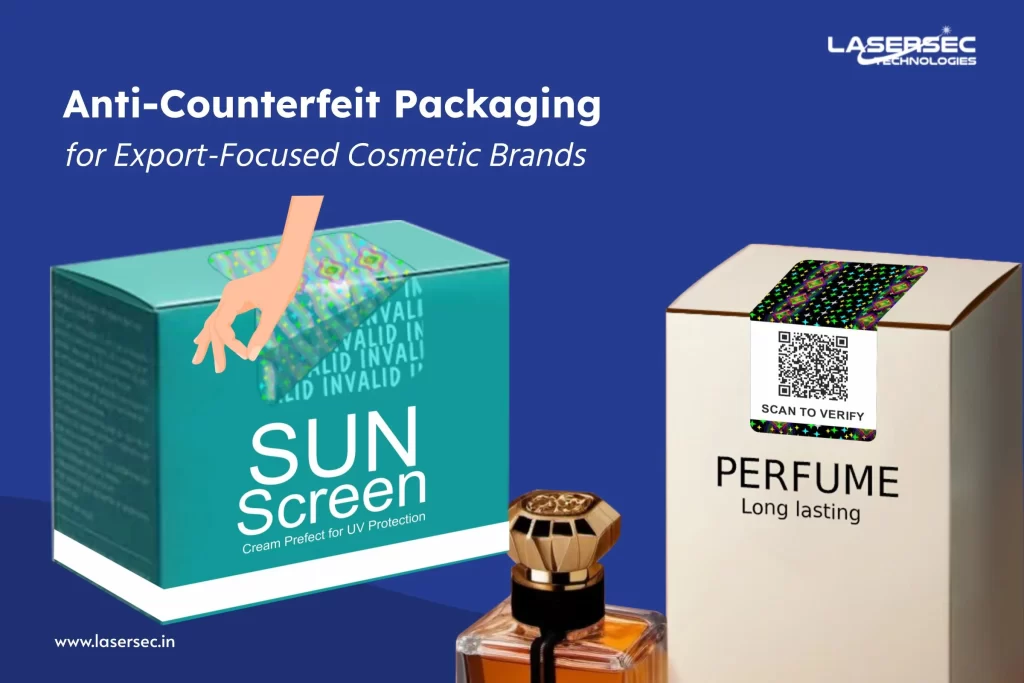
Anti-counterfeit packaging for export-focused cosmetic brands ensuring product authenticity

Exporting cosmetic products reflects growth, global acceptance, and rising consumer trust. However, international markets also bring stricter regulatory requirements and increased counterfeiting risks. Today, cosmetic exporters must ensure their packaging not only protects the product but also proves its authenticity and compliance.

Anti-counterfeit packaging has become essential for cosmetic brands expanding globally. It protects products from duplication and tampering, supports regulatory compliance, and ensures safe distribution across complex international supply chains.

What Is Anti-Counterfeit Packaging in Cosmetic Exports?

Anti-counterfeit packaging refers to the integration of security features such as holographic labels,tamper-evident seals,destructible labels, and digital authentication codes to prevent product duplication, tampering, and unauthorized replacement.

These packaging authentication solutions help cosmetic exporters:

  • Verify product authenticity across supply chains
  • Prevent counterfeit cosmetic products from entering markets
  • Ensure compliance with international packaging regulations
  • Protect consumers from unsafe or fake formulations
  • Strengthen brand protection and global credibility
Secure packaging acts as the first layer of defense against counterfeiting.

Why Secure Cosmetic Packaging Is Critical for Export Markets

Exported cosmetic products pass through multiple checkpoints, including customs authorities, distributors, warehouses, and retailers. At every stage, packaging serves as proof of product authenticity and integrity.

Without anti-counterfeit packaging, cosmetic brands may face:

  • Customs clearance delays or shipment rejection
  • Regulatory compliance issues
  • Product substitution or tampering risks
  • Authentication challenges for distributors
  • Increased exposure to counterfeit activities
Secure packaging helps regulators and partners quickly verify product authenticity, ensuring smoother export processes.

Counterfeiting Risks in Global Cosmetic Distribution

Counterfeit cosmetic products are a growing global concern, especially for premium and export-focused brands. High demand and complex supply chains create opportunities for counterfeiters to introduce fake products.

Common counterfeiting methods include:

  • Replicating cosmetic packaging designs
  • Refilling original containers with unauthorized formulations
  • Reusing genuine packaging for counterfeit products
  • Replacing products during storage or transit

These incidents can result in financial losses, shipment rejection, regulatory penalties, and long-term damage to brand reputation.

Anti-counterfeit packaging solutions help prevent these risks by making tampering visible and duplication difficult.

Key Anti-Counterfeit Packaging Solutions for Cosmetic Brands

Effective cosmetic anti-counterfeit packaging uses multiple security features to provide layered protection.

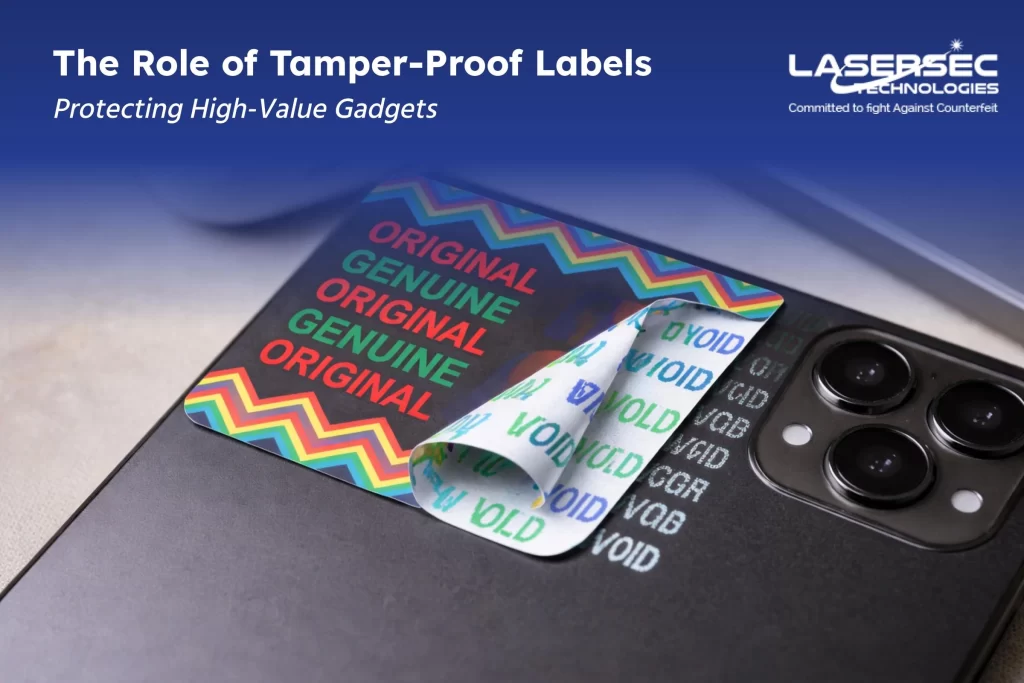
1. Tamper-Evident Labels and Seals

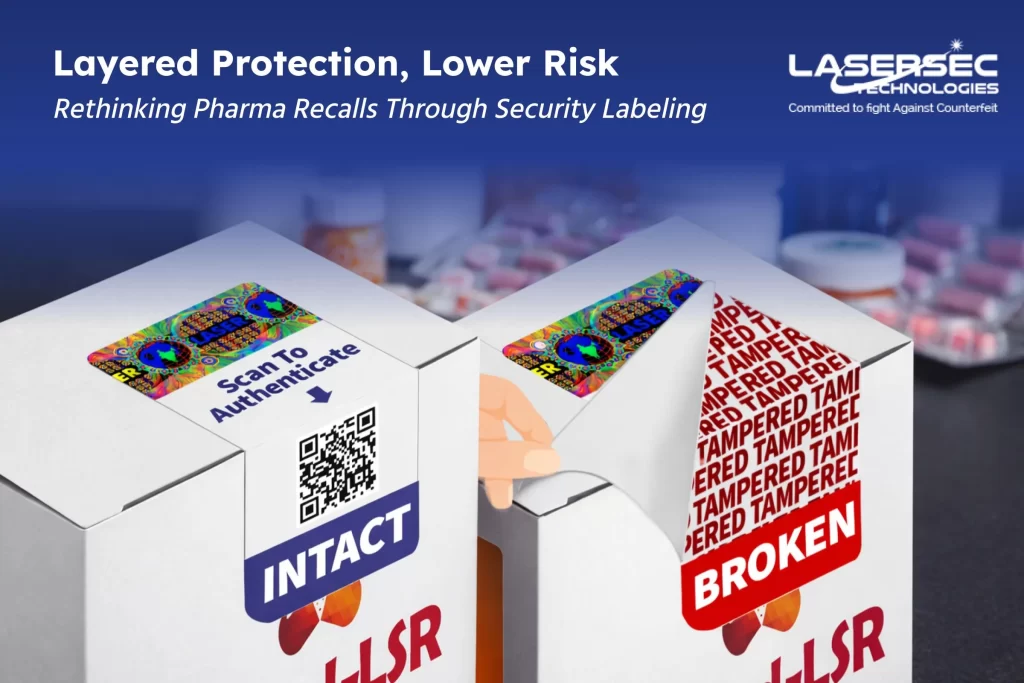
Tamper-evident labels provide visible proof if a product has been opened or altered. These seals break, tear, or show visible damage when tampered with.

Benefits include:

  • Immediate tamper detection
  • Increased consumer confidence
  • Improved regulatory compliance
  • Protection against unauthorized access

Tamper-evident labels are widely used on cosmetic bottles, jars, and cartons.

2. Holographic Security Labels

Holographic security labels are highly effective anti-counterfeit packaging solutions due to their complex optical structure, which is difficult to replicate.

Key advantages include:

  • Instant visual authentication
  • Strong counterfeit deterrence
  • Improved brand protection
  • Easy verification by distributors and regulators

Security holograms enhance both authentication and brand credibility.

3. Void and Destructible Labels

Void labels and destructible labels prevent unauthorized removal or reuse. When tampered with, they leave behind a permanent mark or break apart.

These features help:

  • Prevent label reuse
  • Detect tampering instantly
  • Maintain packaging integrity
  • Protect against product substitution

They are especially useful for cosmetic cartons and sealed packaging.

4. QR Codes and Digital Authentication

QR code-based authentication enables real-time product verification. Distributors, regulators, and consumers can scan codes to confirm authenticity.

Benefits include:

  • Improved supply chain traceability
  • Fast and reliable authentication
  • Increased transparency
  • Enhanced brand protection

Digital authentication strengthens anti-counterfeit protection throughout global distribution.

Supporting Compliance with International Cosmetic Regulations

Global cosmetic markets increasingly require packaging that supports authentication, safety, and traceability. Regulatory authorities expect cosmetic brands to implement preventive measures against tampering and counterfeiting.

Anti-counterfeit packaging helps cosmetic exporters:

  • Meet international packaging authentication requirements
  • Strengthen product traceability
  • Reduce customs inspection delays
  • Improve regulatory compliance readiness
  • Demonstrate commitment to consumer safety
Secure packaging simplifies regulatory verification and supports smoother export operations.

Protecting Cosmetic Brand Reputation in Global Markets

When cosmetic brands enter new markets, packaging plays a critical role in building trust. Any counterfeit or tampered product can damage brand credibility and consumer confidence.

Anti-counterfeit packaging helps brands:

  • Ensure only genuine products reach customers
  • Protect products across unfamiliar supply chains
  • Strengthen distributor confidence
  • Maintain brand integrity globally
  • Support long-term market expansion
Secure packaging reinforces trust among regulators, distributors, and consumers.

Anti-Counterfeit Packaging Solutions for Cosmetic Exporters

Implementing anti-counterfeit packaging solutions helps cosmetic brands strengthen product security and compliance across international markets. These solutions integrate with existing packaging formats while providing clear authentication and tamper evidence.

Security packaging enables cosmetic exporters to:

  • Prevent counterfeiting and product tampering
  • Improve authentication across supply chains
  • Support global regulatory compliance
  • Protect brand reputation and product integrity
  • Ensure safe and secure international distribution
By securing packaging, cosmetic brands reduce export risks and improve operational reliability.

How Lasersec Technologies Supports Cosmetic Brands with Secure Export Packaging

At Lasersec Technologies, we help cosmetic brands strengthen export readiness through advanced anti-counterfeit packaging solutions designed for global distribution. Our expertise includes holographic security labels, tamper-evident seals, destructible labels, and secure QR code authentication—each engineered to prevent tampering, enable product authentication, and support regulatory compliance.

Our solutions integrate seamlessly with existing cosmetic packaging formats while providing visible and verifiable protection across the supply chain. This helps brands reduce the risk of shipment rejection, improve authentication confidence among distributors and regulators, and protect product integrity in international markets.

By combining physical security features with authentication technologies, we enable cosmetic exporters to build trust, meet compliance expectations, and protect their brand reputation across global markets. You can also explore our complete anti-counterfeit product portfolio or contact our team for guidance.
Share :

Related Blogs

Phygital Loyalty Programs: Building Consumer Trust through Genuine Rewards

A shopper picks up your product from a neighborhood store. They scan the pack, expecting a reward — loyalty points, cashback, or a small surprise.

But what if the same reward has already been claimed using a counterfeit version of your product?

For FMCG brands operating in high-volume, price-sensitive markets, this is no longer a rare edge case. It is a growing reality that is quietly forcing loyalty programs to evolve.

Today, phygital loyalty programs are emerging as a critical solution — ensuring that consumer rewards are unlocked only through genuine, authenticated FMCG products.

Loyalty in FMCG Is Built on Trust, Not Just Rewards

In fast-moving consumer goods, loyalty is driven by habit, availability, and confidence. Consumers repeatedly choose brands they trust — brands that feel fair, reliable, and transparent.

However, when loyalty programs can be exploited:

  • Genuine consumers feel cheated
  • Counterfeit products benefit from real promotions
  • Marketing spends increase without proportional growth
Over time, promotional excitement turns into doubt. And once trust erodes, loyalty weakens.

This is why FMCG brand loyalty programs must prioritize fairness and authenticity, not just engagement metrics.

Why Traditional Loyalty Programs Fail in FMCG Environments

Most conventional loyalty programs rely on printed QR codes, alphanumeric codes, or digital coupons. While these methods increase participation, they introduce serious vulnerabilities.

Common issues include:

  • Codes being copied, shared, or resold
  • Multiple redemptions from a single code
  • Rewards claimed without a genuine product purchase
For FMCG brands running nationwide or multi-country campaigns, this results in:
  • Misallocated rewards and promotional leakage
  • Inaccurate campaign performance data
  • Increased scrutiny from finance and audit teams

The challenge is not loyalty itself — it is verifying who truly deserves the reward.

What Is a Phygital Loyalty Program?

A phygital loyalty program connects physical product authentication with digital consumer engagement.

Unlike traditional systems, phygital loyalty ensures that:

  1. The physical product is authenticated first
  2. Authenticity is verified through a secure scan
  3. Rewards are unlocked only after verification
By linking product authentication and loyalty rewards, FMCG brands ensure that incentives flow only from genuine products.

This approach builds directly on track and trace authentication systems and transforms loyalty from a volume-driven tactic into a trust-driven strategy.

A Better Loyalty Experience for FMCG Consumers

From the consumer’s perspective, phygital loyalty feels simple yet reassuring.

A single scan provides:

  • Instant confirmation that the product is genuine
  • Access to loyalty rewards or offers
  • Brand-backed product information and guidance

That moment of reassurance matters.

In everyday FMCG categories — food, beverages, personal care, home essentials — this subtle confirmation strengthens confidence and encourages repeat purchases.

Authenticity becomes part of the consumer experience, not an afterthought.

How Phygital Loyalty Helps FMCG Brand and Marketing Teams

For internal stakeholders, phygital loyalty programs deliver measurable value.

They help FMCG brands:

  • Protect promotional budgets from misuse
  • Ensure rewards reach genuine buyers
  • Improve campaign ROI measurement
  • Capture clean, reliable engagement data
When loyalty rewards are tied to secure product authentication technologies, campaigns become auditable, defensible, and scalable.

Loyalty stops being a risk — and starts becoming a strategic asset.

Counterfeiting Is a Mass-Market FMCG Problem

Counterfeiting is no longer limited to premium or luxury categories. In FMCG supply chains, counterfeit products move quickly and blend easily with genuine stock.

When promotions are attached to unauthenticated products, counterfeit circulation accelerates.

Phygital loyalty programs help FMCG brands:

  • Discourage counterfeit participation in campaigns
  • Reduce misuse of brand-funded incentives
  • Reinforce trust at the point of purchase

This is particularly critical in emerging markets across Asia, Africa, the Middle East, and Latin America, where volume, price sensitivity, and complex distribution networks increase risk.

How Lasersec Technologies Enables Phygital Loyalty

At Lasersec Technologies, we help FMCG brands integrate product authentication with loyalty programs through scalable phygital solutions.

Our approach combines:

  • Physical security features embedded into packaging
  • Secure scan-based authentication technologies
  • Digital systems that integrate seamlessly with loyalty platforms

These solutions are built using advanced anti-counterfeit packaging technologies and digital validation layers.

The result is a loyalty ecosystem where rewards are unlocked only through genuine FMCG products — protecting consumers, campaigns, and brand equity.

How Phygital Loyalty Helps FMCG Brand and Marketing Teams

For internal stakeholders, phygital loyalty programs deliver measurable value.

They help FMCG brands:

  • Protect promotional budgets from misuse
  • Ensure rewards reach genuine buyers
  • Improve campaign ROI measurement
  • Capture clean, reliable engagement data

When loyalty rewards are tied to secure product authentication, campaigns become auditable, defensible, and scalable.

Loyalty stops being a risk — and starts becoming a strategic asset.

How Phygital Authentication Powers Secure Loyalty Programs

Phygital loyalty programs only work when the product itself is verified as genuine. Without secure authentication, rewards can still be misused through counterfeit products.

At Lasersec Technologies, phygital authentication is built by integrating physical and digital security into a single, connected ecosystem. This includes holographic foils, tamper-evident seals, dynamic QR codes, and track-and-trace systems embedded directly into FMCG packaging.

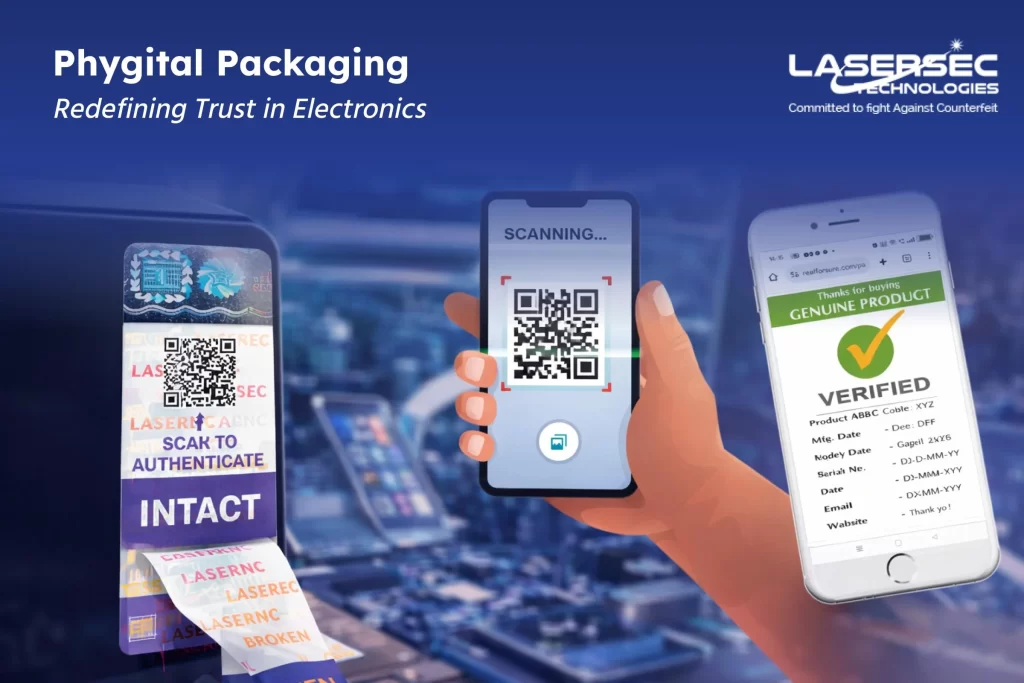
Each consumer scan first confirms product authenticity and packaging integrity. Only after successful verification are loyalty rewards unlocked. This prevents duplicate claims, code copying, and reward misuse linked to counterfeit products.

By connecting authentication with loyalty systems, FMCG brands create a transparent, secure, and controlled reward environment — one where incentives are triggered only by genuine products.

Counterfeiting Is a Mass-Market FMCG Problem

Counterfeiting is no longer limited to premium or luxury categories. In FMCG supply chains, counterfeit products move quickly and blend easily with genuine stock.

When promotions are attached to unauthenticated products, counterfeit circulation accelerates.

Phygital loyalty programs help FMCG brands:

  • Discourage counterfeit participation in campaigns
  • Reduce misuse of brand-funded incentives
  • Reinforce trust at the point of purchase

This is particularly critical in emerging markets across Asia, Africa, the Middle East, and Latin America, where high volumes and complex distribution networks increase exposure.

Why Phygital Loyalty Is the Future of FMCG Engagement

As counterfeit risks rise and consumers demand transparency, loyalty programs must evolve.

Phygital loyalty programs enable FMCG brands to:

  • Build long-term consumer trust
  • Reduce promotional fraud
  • Strengthen brand credibility across markets
  • Create fair, data-driven engagement systems

Loyalty is not built by giving more rewards.

It is built by ensuring that the right rewards reach the right consumers — through genuine products.

When authenticity comes first, trust follows naturally. And when trust is sustained, loyalty lasts — across products, campaigns, and years.

Partner with Us to Build a Phygital Future

Whether you’re in pharma, FMCG, apparel, electronics, or automotive, Lasersec Technologies helps your brand stay ahead of counterfeit threats. Connect with us for a consultation or demo to experience how our Phygital Authentication  solutions can transform your brand protection strategy.

Email: mktg@lasersec.in | Phone: +91-9810213127

Phygital authentication technology enhancing brand security

Spotting a fake is easy — until it’s your brand on the line.

In today’s fast-paced digital marketplace, counterfeiters are smarter, faster, and more organized than ever. They replicate packaging, clone QR codes, and even build fake websites that mirror authentic ones.

Relying on a single layer of protection is no longer enough. What brands need today is a smarter, connected, and traceable defense system.

That’s exactly where Phygital Authentication steps in — a seamless blend of physical security and digital verification that ensures every product remains genuine, trackable, and trusted.

What Is Phygital Authentication?

The word “Phygital” combines physical + digital.

It’s the next evolution in brand protection and anti-counterfeiting technology.

Imagine combining:

  • Physical features such as holograms, tamper-evident seals, or unique labels, with
  • Digital tools such as secure QR codes, NFC tags, or blockchain links.

Together, these create a two-factor authentication system for products:

  • Physical layer: Provides instant, visible proof of authenticity.
  • Digital layer: Enables real-time online verification, tracking, and analytics.
This powerful combination makes verification intuitive, transparent, and nearly impossible to replicate.

Why Every Industry Needs to Go Phygital

Counterfeiting is no longer limited to luxury or pharma — it’s now a multi-industry threat. From FMCG and automobile parts to electronics and apparel, fake products infiltrate every market, damaging brand reputation and consumer trust.

  • A consumer could unknowingly buy a fake skincare product that looks identical to the real one.
  • A patient could receive a counterfeit medicine, risking serious health consequences.
  • A dealer might end up stocking duplicate machine parts, affecting equipment performance.

Phygital Authentication helps track products from factory to shelf, offering end-to-end supply chain visibility. It empowers brands to identify, trace, and stop counterfeit products — before they reach consumers.

The Power of Combining Physical and Digital Security

Phygital Authentication strengthens brand protection through dual assurance:

  • Physical identifiers (holograms, foils, tamper seals) → provide instant visual confirmation.
  • Digital identifiers (unique QR codes, serialized data, blockchain records) → enable live product authentication and data analytics.

Result: A powerful, tamper-resistant system that ensures authenticity, traceability, and accountability across the entire product lifecycle.

Each scan tells a story — one of trust, transparency, and technology working hand-in-hand.

Beyond Counterfeit Protection — Building Consumer Trust

Phygital Authentication isn’t only about protecting brands; it’s about creating genuine connections.

When customers scan a product and instantly verify its authenticity — or receive personalized information, rewards, or thank-you notes — it turns a simple purchase into an emotional experience. This sense of assurance and appreciation builds lasting loyalty and brand trust.

In an era of endless choices, trust isn’t optional — it’s your strongest advantage.

Future-Proofing Brand Protection

Counterfeiters are evolving — but so is technology.

Phygital Authentication ensures brands stay one step ahead with scalable, intelligent, and data-driven protection.

By merging physical security features with digital intelligence, brands unlock:

  • Real-time product traceability
  • Anti-counterfeiting analytics
  • Consumer engagement opportunities
  • Regulatory compliance support

This makes it not just a security solution — but a strategic investment in long-term brand integrity.

The future of anti-counterfeiting isn’t about choosing between physical or digital — it’s about merging both.

Phygital Authentication represents the next leap in brand protection, enabling businesses to:

  • Secure every product
  • Strengthen customer confidence
  • Ensure full supply chain transparency

How Lasersec Technologies Powers Phygital Authentication

At Lasersec Technologies, we integrate cutting-edge physical and digital security to deliver true Phygital Authentication. Our portfolio includes holographic foils, tamper-evident seals, dynamic QR codes, and track-and-trace systems — all designed to create a connected, secure, and transparent product ecosystem. Each solution is customized to meet your industry’s compliance needs while strengthening brand integrity and consumer trust.

Partner with Us to Build a Phygital Future

Whether you’re in pharma, FMCG, apparel, electronics, or automotive, Lasersec Technologies helps your brand stay ahead of counterfeit threats. Connect with us for a consultation or demo to experience how our Phygital Authentication  solutions can transform your brand protection strategy.