We're leading manufacturer of anti-counterfeit solutions and
safeguard brands across industries with cutting-edge security
solutions that prevent counterfeiting and ensure product
authenticity.
Designer labeled products!! We love to own them. The urge to buy and own a high-end designer product can cost thousands of dollars. The counterfeit goods are at a rise because there is an increasing demand to own them. Even a crooked stitching or an off logo doesn’t stop the consumers from buying them.
It’s hard to believe that only low-income groups purchase fake products. Even the high-income users are more inclined to but a genuine fake product which saves them a lot of dollars. This scenario is observed in both developing and developed countries.
After all, counterfeits are also improving on their quality looking into an increasing customer base. Although consumers agree that copying someone else’s work is unethical but still knowingly they purchase fake products.
The following could be the main reasons for doing so:
1. Passion to follow the fashion: In this era of fashion, everyone wants to be ahead of the others and follow the latest trends. Nobody wants to look outdated. This need to be in line with the latest fashion creates a demand to buy the easily affordable counterfeits. And as per the economic law, demand creates the supply.
2. Saves Your Money: One of the major reasons for the consumers to buy a fake product is that you save a lot of money. Some people feel that the money they save on buying a counterfeit can be utilized on some other important decisions of their lives like paying an insurance premium, going on a holiday etc.
3. Consumers don’t care: Consumers don’t care whether they are buying a fake or an original product. What matters is that even a high end costly unaffordable product is made available to those who can’t even dream of them.
4. They are not aware: Fake products are now everywhere. Sometimes it’s hard to differentiate between what’s original and what’s fake. This is because of the strong distribution network of the counterfeits and their improving quality. Sometimes, consumers buy counterfeits online thinking they purchased an original one on heavy discounts. Their realization comes to existence when they actually receive the product.
Although consumers are thinking only about saving their money, what they are not aware of is that the money which they are spending to purchase a fake product could be utilized to support criminal activity or terrorism.
After all, buying a fake product seems like you are fooling yourself by owning something which you can’t afford. Instead own something which you can afford, at least you will have mental satisfaction that what you are doing is ETHICAL!
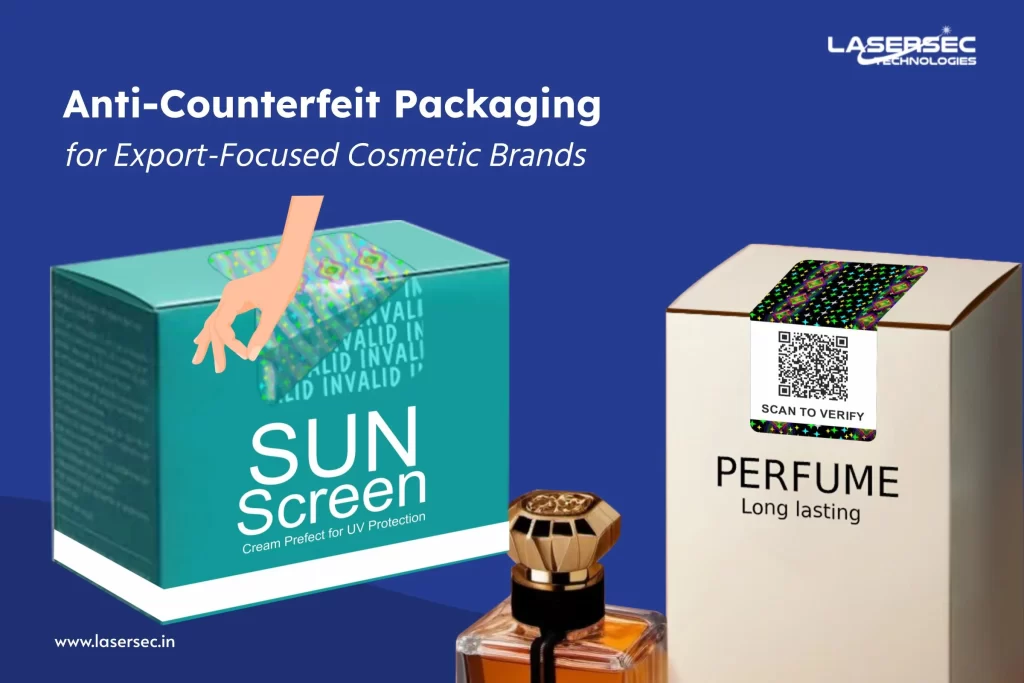
Exporting cosmetic products reflects growth, global acceptance, and rising consumer trust. However, international markets also bring stricter regulatory requirements and increased counterfeiting risks. Today, cosmetic exporters must ensure their packaging not only protects the product but also proves its authenticity and compliance.
Anti-counterfeit packaging has become essential for cosmetic brands expanding globally. It protects products from duplication and tampering, supports regulatory compliance, and ensures safe distribution across complex international supply chains.
What Is Anti-Counterfeit Packaging in Cosmetic Exports?
These packaging authentication solutions help cosmetic exporters:
Verify product authenticity across supply chains
Prevent counterfeit cosmetic products from entering markets
Ensure compliance with international packaging regulations
Protect consumers from unsafe or fake formulations
Strengthen brand protection and global credibility
Secure packaging acts as the first layer of defense against counterfeiting.
Why Secure Cosmetic Packaging Is Critical for Export Markets
Exported cosmetic products pass through multiple checkpoints, including customs authorities, distributors, warehouses, and retailers. At every stage, packaging serves as proof of product authenticity and integrity.
Without anti-counterfeit packaging, cosmetic brands may face:
Counterfeiting Risks in Global Cosmetic Distribution
Counterfeit cosmetic products are a growing global concern, especially for premium and export-focused brands. High demand and complex supply chains create opportunities for counterfeiters to introduce fake products.
Common counterfeiting methods include:
Replicating cosmetic packaging designs
Refilling original containers with unauthorized formulations
Reusing genuine packaging for counterfeit products
Replacing products during storage or transit
These incidents can result in financial losses, shipment rejection, regulatory penalties, and long-term damage to brand reputation.
Key Anti-Counterfeit Packaging Solutions for Cosmetic Brands
Effective cosmetic anti-counterfeit packaging uses multiple security features to provide layered protection.
1. Tamper-Evident Labels and Seals
Tamper-evident labels provide visible proof if a product has been opened or altered. These seals break, tear, or show visible damage when tampered with.
Holographic security labels are highly effective anti-counterfeit packaging solutions due to their complex optical structure, which is difficult to replicate.
Void labels and destructible labels prevent unauthorized removal or reuse. When tampered with, they leave behind a permanent mark or break apart.
These features help:
Prevent label reuse
Detect tampering instantly
Maintain packaging integrity
Protect against product substitution
They are especially useful for cosmetic cartons and sealed packaging.
4. QR Codes and Digital Authentication
QR code-based authentication enables real-time product verification. Distributors, regulators, and consumers can scan codes to confirm authenticity.
Benefits include:
Improved supply chain traceability
Fast and reliable authentication
Increased transparency
Enhanced brand protection
Digital authentication strengthens anti-counterfeit protection throughout global distribution.
Supporting Compliance with International Cosmetic Regulations
Global cosmetic markets increasingly require packaging that supports authentication, safety, and traceability. Regulatory authorities expect cosmetic brands to implement preventive measures against tampering and counterfeiting.
Meet international packaging authentication requirements
Strengthen product traceability
Reduce customs inspection delays
Improve regulatory compliance readiness
Demonstrate commitment to consumer safety
Secure packaging simplifies regulatory verification and supports smoother export operations.
Protecting Cosmetic Brand Reputation in Global Markets
When cosmetic brands enter new markets, packaging plays a critical role in building trust. Any counterfeit or tampered product can damage brand credibility and consumer confidence.
Anti-counterfeit packaging helps brands:
Ensure only genuine products reach customers
Protect products across unfamiliar supply chains
Strengthen distributor confidence
Maintain brand integrity globally
Support long-term market expansion
Secure packaging reinforces trust among regulators, distributors, and consumers.
Anti-Counterfeit Packaging Solutions for Cosmetic Exporters
Implementing anti-counterfeit packaging solutions helps cosmetic brands strengthen product security and compliance across international markets. These solutions integrate with existing packaging formats while providing clear authentication and tamper evidence.
Security packaging enables cosmetic exporters to:
Prevent counterfeiting and product tampering
Improve authentication across supply chains
Support global regulatory compliance
Protect brand reputation and product integrity
Ensure safe and secure international distribution
By securing packaging, cosmetic brands reduce export risks and improve operational reliability.
How Lasersec Technologies Supports Cosmetic Brands with Secure Export Packaging
Our solutions integrate seamlessly with existing cosmetic packaging formats while providing visible and verifiable protection across the supply chain. This helps brands reduce the risk of shipment rejection, improve authentication confidence among distributors and regulators, and protect product integrity in international markets.
By combining physical security features with authentication technologies, we enable cosmetic exporters to build trust, meet compliance expectations, and protect their brand reputation across global markets. You can also explore our complete anti-counterfeit product portfolio or contact our team for guidance.
A consumer picks up a bottle of cooking oil, a pack of biscuits, or a personal care product from a store shelf. Before checking the price or brand, there is a quiet, instinctive question:
Has this product been opened before?
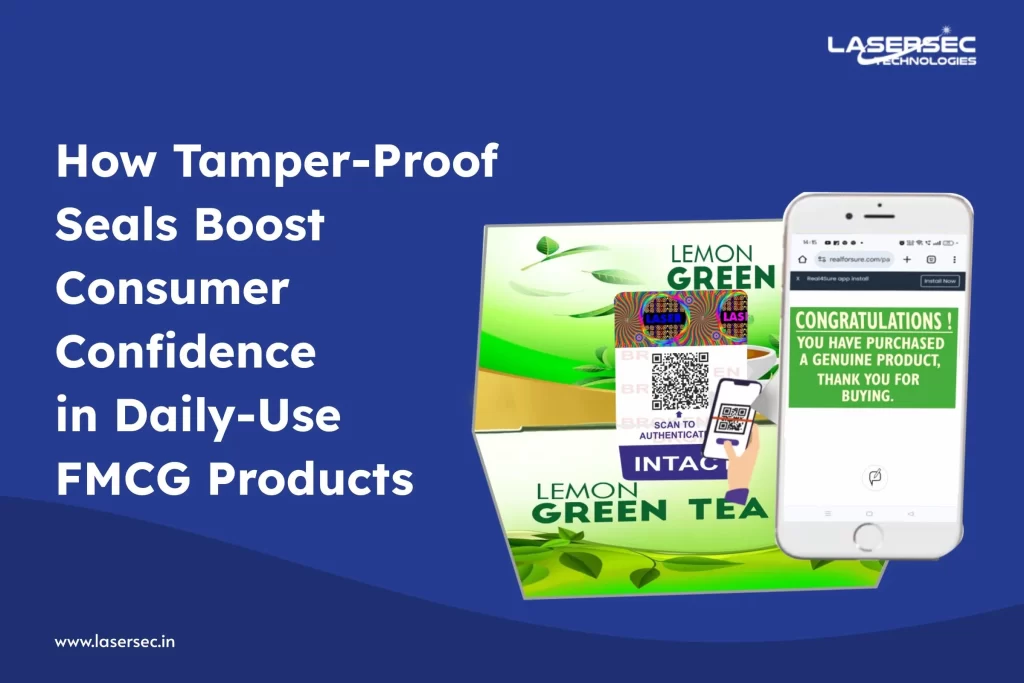
In the FMCG sector, where products are consumed daily and often immediately, consumer trust is built in seconds. Tamper-proof seals play a decisive role in this moment. They provide visible proof of product safety, protect hygiene, and reassure consumers that the brand has taken responsibility seriously.
For FMCG brand owners, packaging professionals, and quality teams, tamper-evident packaging is no longer optional. It is a foundational element of consumer confidence and brand protection.
Why Tamper Evidence Is Critical in the FMCG Industry
Fast-moving consumer goods directly affect health, hygiene, and everyday well-being. Even a small doubt about product integrity can lead to immediate rejection.
Without effective tamper-proof packaging, brands face risks such as:
Loss of consumer trust at the point of purchase
Product rejection at first use
Brand damage amplified through social media and word of mouth
Regulatory and retailer compliance challenges
Unlike durable goods, FMCG products allow no margin for uncertainty. A broken seal, loose cap, or unclear opening mechanism can raise concerns about contamination, adulteration, or prior use.
Tamper-evident seals eliminate this uncertainty by providing clear, irreversible evidence of first opening.
What Are Tamper-Proof Seals and How Do They Work?
Tamper-proof seals are packaging features designed to make any unauthorized opening immediately visible and impossible to reverse without detection.
Common tamper-evident packaging mechanisms used in FMCG include:
Peel-off seals with irreversible damage indicators
Once opened, these mechanisms cannot return to their original state. This simple principle—open once, show forever—is what makes tamper-proof seals so effective for consumer safety and trust.
How Tamper-Proof Seals Reassure Consumers at the Point of Purchase
Consumers may not understand packaging technology, but they clearly understand visual safety cues.
Tamper-evident packaging reassures consumers by offering:
Immediate visual confirmation that the product is untouched
Clear break-to-open indicators signaling first use
A consistent safety experience across batches and retail locations
This reassurance is especially important in high-sensitivity FMCG categories such as:
Food and beverages
Dairy and edible oils
Personal care and cosmetics
Home hygiene and cleaning products
Baby care and wellness items
In these segments, visible packaging safety directly influences buying decisions.
Maintaining Product Safety and Hygiene Across the Supply Chain
From manufacturing facilities to retail shelves, FMCG products pass through multiple touchpoints. Tamper-proof seals act as a silent guardian throughout this journey.
They help brands:
Detect unauthorized access during transportation and storage
Prevent product substitution, refilling, or partial usage
Reduce contamination and mishandling risks
Maintain hygiene until final consumption
For quality assurance and compliance teams, tamper-evident packaging provides a built-in control mechanism—one that complements audits, inspections, and process controls.
Protecting Brand Reputation in a Competitive FMCG Market
Brand reputation in FMCG is fragile and hard-earned. A single safety incident—real or perceived—can undo years of trust.
Tamper-proof seals support brand protection by:
Demonstrating accountability and transparency
Reducing the risk of counterfeit or refilled products entering the market
Supporting regulatory and retailer packaging requirements
Reinforcing a brand’s commitment to consumer well-being
When consumers repeatedly experience sealed, safe, and reliable packaging, trust becomes habitual—and brand loyalty follows.
Tamper Evidence as a Brand Trust Signal
Modern consumers expect brands to anticipate risks, not react to them. Tamper-proof seals send a subtle but powerful message:
This brand has prioritised your safety before you even asked.
For packaging and brand protection leaders, tamper evidence goes beyond compliance. It becomes a visible signal of responsibility, quality, and care—values that increasingly influence consumer choice.
Building Consumer Confidence Beyond the First Use
Consumer confidence does not end at the point of purchase. It extends to the moment of opening, daily usage, and repeat buying decisions.
A well-designed tamper-proof seal ensures that:
The first interaction reinforces trust
Product safety expectations are consistently met
Consumers feel confident repurchasing the same brand
In a category defined by frequent replacement and intense competition, this consistency is what separates trusted FMCG brands from forgettable ones.
Final Thoughts: Small Seal, Lasting Impact on FMCG Brands
Tamper-proof seals may appear simple, but their impact on FMCG packaging security is significant. They safeguard product integrity, protect hygiene, support compliance, and—most importantly—build consumer confidence where it matters most.
For FMCG brands focused on long-term trust, safety, and sustainable growth, investing in effective tamper-evident packaging is not merely a regulatory step. It is a strategic decision that strengthens the relationship between the brand and the consumer—one seal at a time.
How Lasersec Technologies Supports Smarter Packaging Security
Partner with Lasersec Technologies for Trusted FMCG Packaging
From food and personal care to hygiene and wellness products, Lasersec Technologies works with FMCG brands to build packaging systems that consumers can trust at first glance. Connect with our team to explore how tamper-evident and phygital packaging can strengthen your brand protection strategy.
A pharmaceutical product moves through years of research, regulatory approvals, clinical validation, and strict manufacturing protocols before it reaches patients.
For critical therapeutic categories such as oncology medicines, anti-infectives, and psychotropic drugs, the stakes are even higher. These medicines are often life-saving, tightly regulated, and distributed through controlled supply chains.
Yet despite these safeguards, counterfeit drugs continue to infiltrate global pharmaceutical markets.
In many cases, counterfeit products replicate packaging so closely that visual inspection alone cannot identify the difference. A blister pack may appear genuine while the tablets inside are ineffective, contaminated, or entirely fake.
For manufacturers of high-risk medicines, this creates a serious challenge. Traditional packaging is no longer sufficient to protect products against sophisticated counterfeiting operations.
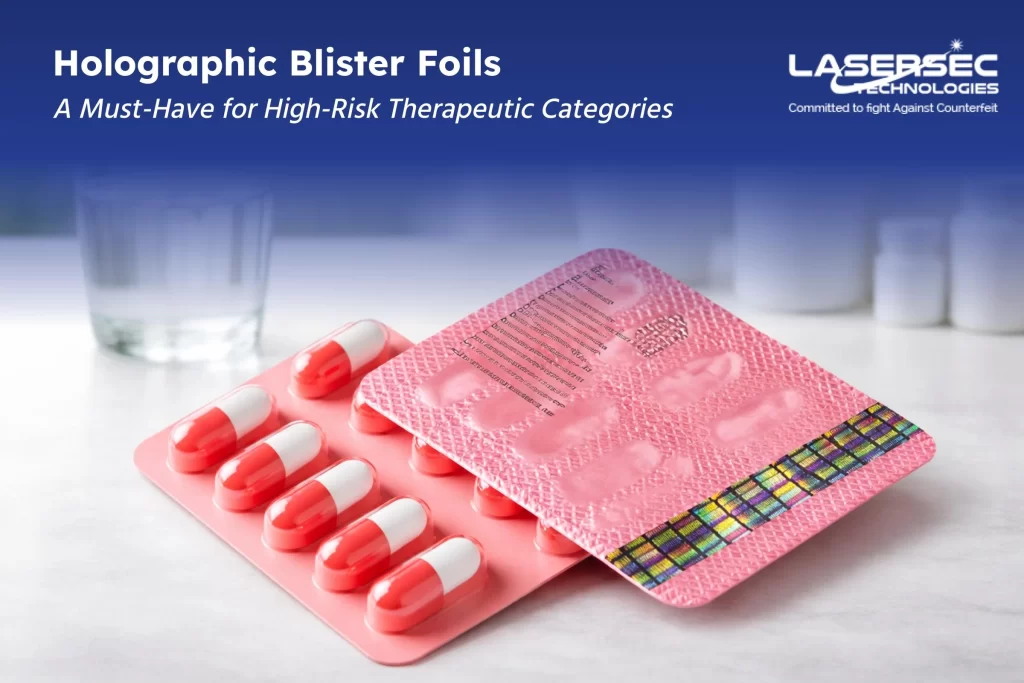
This is why holographic blister foils have emerged as a critical pharmaceutical packaging security solution. By integrating advanced holographic security directly into blister packaging, manufacturers can significantly strengthen product authentication, supply chain integrity, and patient safety.
Why High-Risk Therapeutic Categories Are Prime Targets for Counterfeit Drugs
Counterfeit pharmaceutical products do not affect all drug categories equally. Certain therapeutic segments are more vulnerable due to their high value, global demand, and critical medical importance.
These include:
Oncology drugs
Anti-infective medications such as antibiotics and antivirals
Psychotropic and controlled substances
Specialty and high-value prescription medicines
Counterfeiters often target these medicines because they command higher prices and move through complex international supply chains.
In some cases, counterfeiters attempt to replicate genuine packaging using advanced printing techniques. Without strong security features integrated into packaging, distinguishing genuine products from counterfeits becomes extremely difficult.
The consequences can be severe:
Patients receiving ineffective or dangerous treatments
Regulatory violations and recalls
Loss of trust among healthcare providers
Significant financial and reputational damage for pharmaceutical companies
For high-risk therapeutic categories, packaging security becomes an essential part of patient protection and regulatory compliance.
The Limitations of Standard Blister Packaging in Preventing Counterfeits
Blister packaging has long been a preferred format for pharmaceutical products due to its ability to protect tablets from moisture, contamination, and tampering.
However, standard blister foils without advanced security features primarily serve a protective function, not a security function.
Traditional blister packaging elements such as:
Printed foil designs
Batch numbers
Standard barcodes
Basic branding elements
can be replicated with increasing accuracy using modern printing technologies.
This allows counterfeiters to produce visually convincing packaging that can enter distribution channels unnoticed.
Even trained distributors or pharmacists may struggle to identify counterfeit products if packaging lacks secure authentication features.
As counterfeit methods become more sophisticated, pharmaceutical manufacturers require packaging solutions that provide visible, verifiable, and difficult-to-replicate security layers such as pharma holographic labels.
What Makes Holographic Blister Foils a Powerful Anti-Counterfeiting Solution
Holographic blister foils incorporate advanced optical security elements directly into pharmaceutical packaging materials.
These holographic effects are created using specialized technologies that produce complex light diffraction patterns which are extremely difficult to replicate using conventional printing methods.
Unlike standard foil designs, holographic blister foils include multi-layered security structures that provide both visual authentication and tamper resistance.
Key characteristics include:
Complex holographic patterns that cannot be easily duplicated
Dynamic visual effects visible under light movement
Secure bonding to blister packaging that reveals tampering
These features transform blister packaging from a passive protective layer into an active anti-counterfeit security system.
Healthcare professionals, distributors, and regulators can visually confirm authenticity while manufacturers benefit from stronger packaging protection.
Protecting Oncology Medicines with Secure Holographic Blister Foils
Oncology drugs represent one of the most critical and valuable pharmaceutical segments globally.
These medicines are often expensive, lifesaving, and distributed across multiple international markets. Their high value makes them frequent targets for counterfeiting networks.
Counterfeit oncology drugs can have devastating consequences because patients rely on these treatments during life-threatening conditions.
Holographic blister foils help protect oncology medicines by providing:
A highly visible authentication feature on each blister pack
Packaging elements that are extremely difficult for counterfeiters to reproduce
Compatibility with serialization and track-and-trace systems
This ensures that genuine medicines reach hospitals, pharmacies, and patients without interference from counterfeit supply chains.
Securing Anti-Infective Drugs Against Counterfeit Distribution
Anti-infective medications such as antibiotics and antivirals are widely used across healthcare systems and are frequently distributed across international markets.
Because of their global demand, these medicines are particularly vulnerable to counterfeit manufacturing and unauthorized resale.
The distribution of counterfeit anti-infective drugs contributes to serious public health risks, including ineffective treatment and antimicrobial resistance.
Holographic blister foils add a powerful security layer by making packaging authentication easier at multiple points in the supply chain.
Distributors, pharmacists, and regulatory authorities can visually confirm that the blister packaging includes genuine security features before the product reaches patients.
Enhancing Security for Psychotropic and Controlled Substances
Psychotropic medications and controlled drugs are among the most tightly regulated pharmaceutical categories.
These medicines require strict monitoring to prevent misuse, diversion, or illegal distribution.
However, counterfeit versions of these products continue to appear in illegal markets.
Holographic blister foils help pharmaceutical manufacturers strengthen packaging security by ensuring that:
Genuine products include identifiable holographic authentication elements
Counterfeit copies are easier to detect
Tampering or repackaging attempts become visible
By integrating security features directly into blister packaging materials, manufacturers create a stronger defense against both counterfeiting and product diversion.
Combining Holographic Blister Foils with Track & Trace Authentication
While holographic security provides strong visual protection, combining it with digital verification systems creates an even more powerful anti-counterfeit framework.
Modern pharmaceutical brand protection strategies often combine secure packaging technologies with Track & Trace systems.
When holographic blister foils are integrated with serialized QR codes or authentication identifiers, manufacturers gain the ability to:
Verify product authenticity instantly
Track product movement across supply chains
Detect duplicate or suspicious codes
Identify unauthorized market diversion
This hybrid approach creates both physical security and digital traceability, significantly improving pharmaceutical supply chain protection.
Why High-Risk Pharmaceutical Manufacturers Are Adopting Holographic Blister Foils
Pharmaceutical companies manufacturing high-risk medicines are increasingly prioritizing packaging security as part of their broader brand protection and compliance strategies.
Holographic blister foils offer several important advantages:
Strong visual authentication that is difficult to replicate
Integration with serialization and Track & Trace technologies
Tamper-evident packaging protection
Enhanced regulatory confidence
Improved distributor and patient trust
These benefits make holographic blister foils an effective packaging security solution for manufacturers producing high-value or life-critical medicines.
How Lasersec Technologies Supports Secure Pharmaceutical Packaging
At Lasersec Technologies, we specialize in advanced pharmaceutical anti-counterfeit packaging solutions designed to protect high-risk medicines across global markets.
Our holographic blister foil solutions integrate complex holographic security with high-quality pharmaceutical packaging materials, enabling manufacturers to strengthen packaging authentication without disrupting production processes.
These solutions are part of our broader pharmaceutical industry solutions and help companies:
Prevent counterfeit drug infiltration
Protect high-risk therapeutic categories
Strengthen supply chain security
Improve packaging authentication
Support regulatory compliance
By combining advanced holographic technologies with secure packaging design, we help pharmaceutical brands safeguard both their products and their patients.
Taking Pharmaceutical Packaging Security Forward
As counterfeiting methods grow more sophisticated, the need for advanced packaging security is no longer optional — it is a critical requirement for manufacturers of high-risk medicines. Holographic blister foils represent a proven, scalable, and highly effective solution that addresses both the physical and digital dimensions of product authentication.
At Lasersec Technologies, we remain committed to continuous innovation in anti-counterfeit pharmaceutical packaging, helping manufacturers stay ahead of emerging threats while maintaining full regulatory compliance.
Meet Us at CPhI InnoPack Pharma Confex 2026
We are excited to share thatLasersec Technologies will be participating as an Exhibit Partner at the 15th Annual CPhI InnoPack Pharma Confex — one of India’s most significant platforms for pharmaceutical packaging innovation and industry collaboration.
If you are exploring how holographic blister foils or advanced anti-counterfeit packaging solutions can strengthen your product security, this is an excellent opportunity to connect with our team directly and see our latest technologies up close.
Visit us at Booth No. F1 on 18–19 June 2026 at Sahara Star, Mumbai, and let us help you find the right packaging security solution for your therapeutic category.
Across many industries today, product safety and authenticity have become critical priorities for regulators, manufacturers, and consumers.
From pharmaceuticals and food products to cosmetics and electronics, companies are expected to ensure that their products reach customers without interference or tampering. However, global supply chains often involve multiple distributors, logistics providers, and retailers before a product reaches the end user.
This complexity creates opportunities for product tampering, repackaging, and counterfeit substitution.
To address these risks, regulators around the world increasingly require tamper-evident or tamper-proof packaging systems that clearly indicate whether a product has been opened or altered.
Tamper-proof packaging has therefore evolved from being a packaging enhancement to becoming a global compliance standard for product safety and brand protection using solutions like tamper proof hologram stickers and tamper-evident labels.
The Growing Importance of Tamper-Evident Packaging
Consumers today expect transparency and safety when purchasing products, especially those that affect health or personal use.
If packaging shows signs of tampering, customers immediately question the product’s safety and authenticity.
Because of this, tamper-evident packaging has become a critical requirement across many sectors.
Tamper-evident packaging solutions help ensure that:
Consumers can identify potential tampering quickly
These protections provide an important safety layer for both manufacturers and consumers.
When tampering can be easily detected, the risk of unsafe or counterfeit products reaching the market is significantly reduced.
Industries Where Tamper-Proof Packaging Is Becoming Mandatory
Regulatory authorities and industry standards organizations are increasingly encouraging or mandating tamper-evident packaging in several sectors.
Some of the most prominent industries include:
1. Pharmaceuticals
Pharmaceutical regulators worldwide require packaging systems that protect medicines from tampering and counterfeit substitution.
Tamper-evident seals, serialized packaging, and authentication labels such as pharma holographic labels help ensure that medicines reaching patients remain safe and genuine.
2. Food and Beverage
Food safety regulations often require packaging that clearly shows whether a product has been opened before purchase.
Tamper-evident caps, seals, and labels help prevent contamination and protect consumer health. Explore more in our FMCG anti-counterfeit solutions.
3. Cosmetics and Personal Care
Cosmetic brands increasingly use tamper-evident packaging to assure consumers that products have not been opened or altered before purchase.
This helps maintain product safety and brand credibility.
4. Electronics and Consumer Goods
High-value electronics and accessories are frequently targeted by counterfeiters or repackagers.
Tamper-evident labels help ensure products remain sealed and authentic throughout distribution. Learn more in our Electronics industry solutions.
How Tamper-Proof Packaging Prevents Counterfeiting and Repackaging
Tamper-proof packaging introduces visible or structural indicators that show whether a product has been opened or altered.
Unlike traditional packaging seals, tamper-evident security features cannot be removed or reapplied without leaving clear signs of interference.
Common tamper-evident packaging technologies include:
Security hologram stickers integrated into packaging using security holograms
These features make it extremely difficult for counterfeiters to open packages, replace the contents, and reseal them without detection.
As a result, tamper-proof packaging acts as a first line of defense against product tampering and counterfeit substitution.
Supporting Regulatory Compliance Through Secure Packaging
Governments and regulatory bodies are increasingly strengthening packaging requirements to improve product safety and traceability.
Many regulatory frameworks now emphasize:
Tamper-evident packaging requirements
Product authentication mechanisms
Supply chain transparency
Protection against counterfeit products
Tamper-proof packaging supports these requirements by providing a clear visual indication if a product has been interfered with.
This allows regulators, distributors, and retailers to quickly identify suspicious products during inspections.
For manufacturers exporting products across international markets, implementing tamper-evident packaging also helps demonstrate proactive compliance with global safety standards.
Strengthening Consumer Trust Through Tamper-Evident Protection
Consumer trust plays a critical role in purchasing decisions.
If customers suspect that a product has been opened, altered, or replaced, they are unlikely to use it and may avoid the brand entirely.
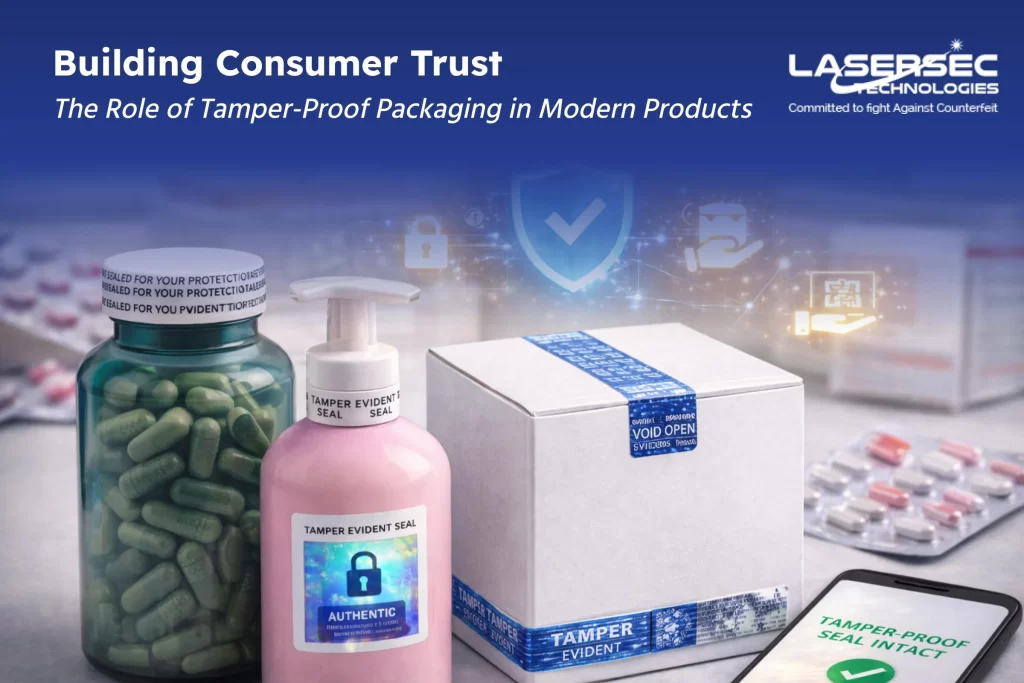
Tamper-evident packaging provides a simple but powerful reassurance mechanism.
When consumers see intact security seals or holographic labels such as hologram stickers, they gain confidence that the product has not been compromised.
This helps manufacturers:
Strengthen customer confidence in product safety
Reduce complaints related to product tampering
Protect brand credibility in competitive markets
Improve customer loyalty over time
Visible packaging security features also signal that the brand takes product protection seriously.
Combining Tamper-Proof Packaging with Authentication Technologies
While tamper-evident packaging prevents unauthorized opening, combining it with digital authentication technologies further strengthens product security.
For example, tamper-evident labels can be integrated with:
This combination enables both physical protection and digital verification.
Even if a product is tampered with or copied, authentication systems can help detect suspicious activity and identify counterfeit products quickly.
Together, these layers provide stronger protection across the entire product lifecycle.
How We Support Tamper-Proof Packaging and Brand Protection
At Lasersec Technologies, we provide advanced anti-counterfeit packaging solutions designed to help manufacturers implement reliable tamper-proof protection.
Our solutions integrate secure packaging features directly into product labels and packaging materials.
By combining physical tamper-evident features with authentication technologies, we help manufacturers strengthen product security across global supply chains.
Why Tamper-Proof Packaging Is Essential in Modern Global Supply Chains
As global supply chains continue to expand, the risks associated with product tampering and counterfeiting are also increasing.
Tamper-proof packaging has become a critical component of modern packaging strategies because it ensures that products reach consumers in their original, uncompromised condition.
By implementing tamper-evident security features, manufacturers can strengthen compliance with global safety standards while protecting both consumers and brand reputation.
In today’s market environment, tamper-proof packaging is no longer optional. It is an essential foundation for product safety, regulatory compliance, and long-term brand protection.
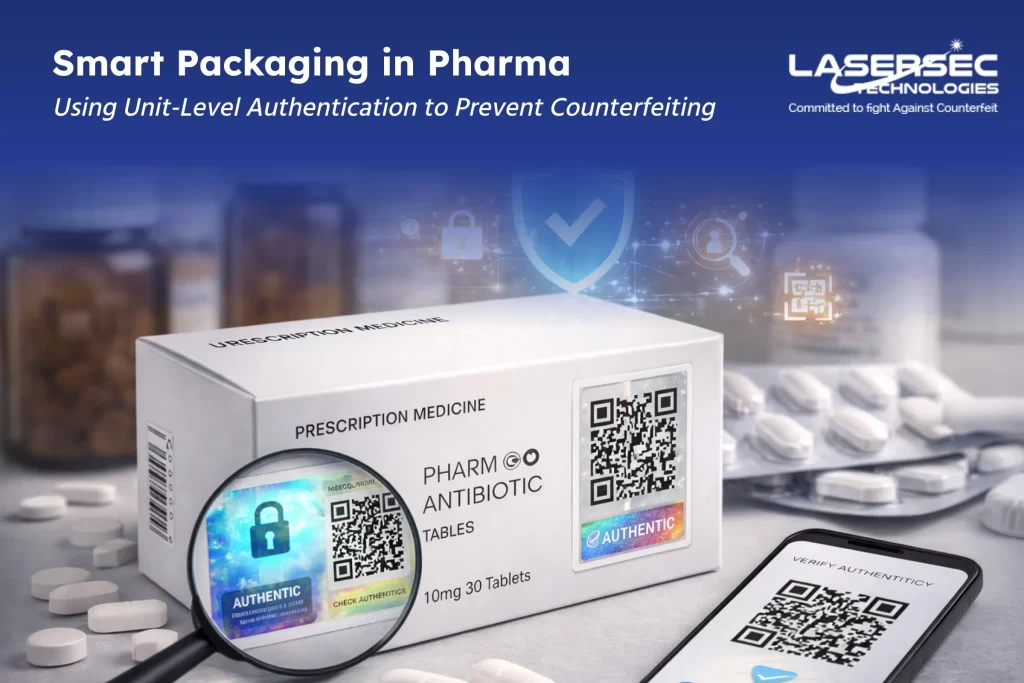
Pharmaceutical packaging security has become a critical concern for drug manufacturers worldwide. Unit-level authentication is now the smartest way to protect every package across the supply chain.
At each stage, verifying the authenticity of the medicine becomes essential.
In many markets, counterfeit drugs and unauthorized repackaging continue to challenge pharmaceutical supply chains. Packaging may appear genuine, yet without reliable authentication systems, it can be difficult to confirm whether the medicine is authentic.
This is why pharmaceutical companies are increasingly implementing unit-level authentication systems.
Unit-level authentication assigns a unique identity to every individual product unit, allowing manufacturers, regulators, and pharmacies to verify authenticity instantly through secure authentication technologies such as QR code authentication and Track & Trace systems.
By enabling verification at the smallest packaging level, pharmaceutical companies can significantly reduce the risk of counterfeit medicines entering the market.
The Growing Risks of Counterfeit and Repacked Medicines
Pharmaceutical products move through complex supply chains before reaching patients. These supply chains often involve multiple intermediaries such as distributors, wholesalers, and retailers.
This complexity creates opportunities for unauthorized activities, including counterfeit drug circulation and repackaging of genuine medicines.
Each identifier is connected to secure manufacturing and distribution data.
When the code is scanned, the system can instantly verify:
Whether the product is genuine
The manufacturing origin
Batch and production information
Whether the code has been duplicated
This enables reliable product verification throughout the supply chain.
How Unit-Level Authentication Prevents Fake Repackaging
One of the most common challenges in pharmaceutical markets is fake repackaging.
In this scenario, counterfeiters reuse genuine packaging materials or create look-alike packaging to insert counterfeit medicines.
Without authentication, these fake products may appear legitimate.
Unit-level authentication prevents this by ensuring that each product unit has a unique identity supported by technologies like QR code holograms.
If a counterfeiter attempts to copy or reuse a code, the authentication system can detect:
Duplicate code scans
Invalid product records
Suspicious verification locations
This allows manufacturers and regulators to quickly identify counterfeit activity and take corrective action. By making every package individually verifiable, unit-level authentication significantly reduces the risk of fake repackaging.
Preventing Product Diversion with Unit-Level Verification
Product diversion occurs when genuine medicines are redirected from their intended distribution markets into unauthorized regions.
This can disrupt pricing structures, violate distribution agreements, and create regulatory complications.
Unit-level authentication helps detect diversion by linking each product unit to specific manufacturing and distribution data through systems like Track & Trace technology.
When the product is scanned, the system can verify:
The intended market for the product
Whether it appears in an unexpected location
Whether the product has already been verified elsewhere
If the product is detected outside its authorized distribution channel, the system can immediately flag the activity. This visibility allows pharmaceutical companies to investigate unauthorized distribution and maintain better control over global supply chains.
Strengthening Pharmaceutical Compliance and Traceability
Many regulatory frameworks now require pharmaceutical manufacturers to implement serialization and traceability systems. Authorities expect companies to demonstrate the ability to verify product authenticity and track medicines across the supply chain.
Unit-level authentication supports these regulatory goals by enabling:
Individual product serialization
End-to-end supply chain traceability
Authentication verification at distribution points
Faster investigation of suspicious products
These capabilities help regulators confirm product legitimacy during inspections and market surveillance.For pharmaceutical companies operating in global markets, unit-level authentication also strengthens compliance with evolving regulatory standards using solutions such as Track & Trace systems.
Improving Patient Trust Through Product Verification
Patients rely on medicines to protect their health, which makes trust essential in the pharmaceutical industry. However, patients often cannot visually distinguish between genuine and counterfeit medicines if packaging looks similar.
Unit-level authentication enables pharmacies and even patients to verify medicines quickly using smartphone-based authentication tools. By scanning a secure QR code or authentication marker such as QR code authentication labels, users can confirm whether the product is genuine.
This level of transparency helps:
Improve patient confidence in medicines
Reduce circulation of counterfeit drugs
Strengthen trust in pharmaceutical brands
Support safer healthcare outcomes
How We Support Unit-Level Authentication in Pharmaceutical Packaging
At Lasersec Technologies, we provide advanced anti-counterfeit packaging solutions designed to help pharmaceutical manufacturers implement reliable unit-level authentication systems.
Our solutions integrate secure packaging technologies with digital authentication platforms using:
By embedding these technologies directly into pharmaceutical packaging, we help manufacturers create secure authentication systems that protect medicines across the entire supply chain. To explore more, visit our Pharma Solutions.
Why Unit-Level Authentication Is Essential for Modern Pharmaceutical Packaging
Pharmaceutical supply chains are becoming increasingly complex, and the risks associated with counterfeit medicines continue to grow. Unit-level authentication provides a powerful solution by enabling every medicine package to be individually verified.
This approach helps pharmaceutical companies detect counterfeit activity, prevent product diversion, and maintain greater visibility across their supply chains. Most importantly, it helps ensure that genuine medicines reach pharmacies and patients safely. In today’s pharmaceutical industry, unit-level authentication is no longer optional. It is a critical foundation for protecting product integrity, regulatory compliance, and patient trust.