




Lasersec Technologies

Your Guide to Anti-Counterfeiting

Category: Anti-Counterfeit Solutions

Category: Anti-Counterfeit Solutions

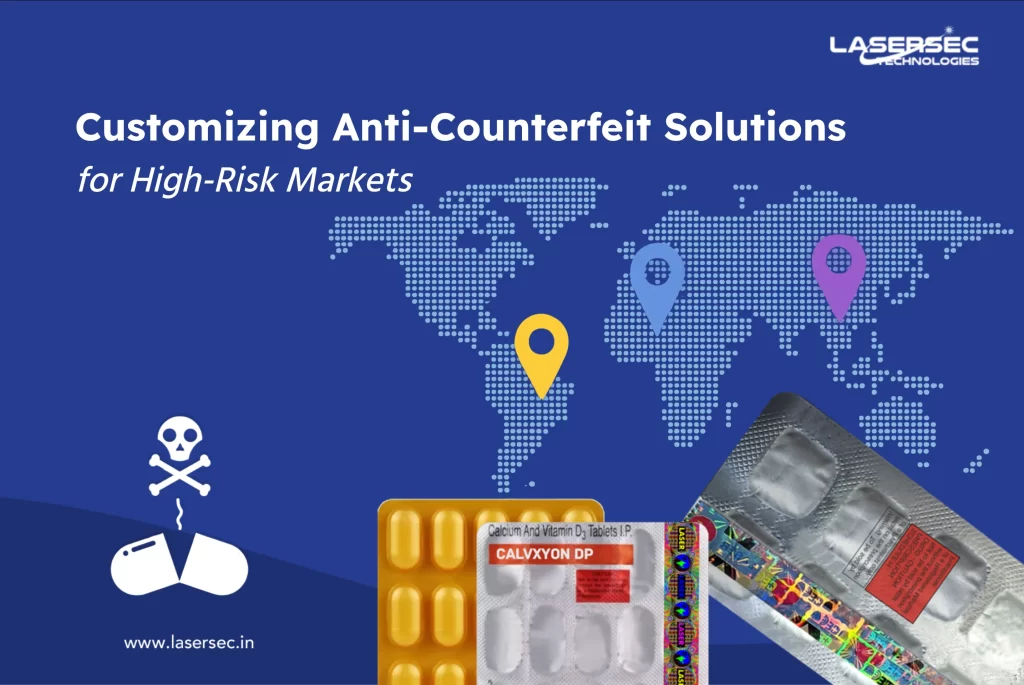
Customizing Anti-Counterfeit Solutions for High-Risk Markets

You’ve secured your product.
You’ve set up authentication.
But somehow, fakes are still slipping through—especially in markets like India, Africa, and Latin America.

Why?

Because one-size-fits-all protection doesn’t work in a world where every region plays by different rules.

In high-risk markets, the threats aren’t just common—they’re constantly evolving. For global brands, the key isn’t just stronger protection. It’s smarter, localized protection that meets people where they are.

Your brand may be global, but the challenges you face aren’t:

  • India – Counterfeit medicines often enter through informal supply chains in semi-urban and rural regions.
  • Africa – Fake electronics and unauthorized imports disrupt trusted retail networks, often due to weak enforcement.
  • LATAM – Counterfeit FMCG products share shelf space with genuine ones, confusing customers and weakening trust.

Each region needs more than just a label or code—it needs context-aware solutions that align with how local consumers buy, verify, and trust.

You care about your product. Your customers should feel that—whether they’re in a remote village or a bustling market.

A generic solution may look good on paper, but in practice, it often fails:
1. Assumes strict enforcement exists everywhere (it doesn’t)
2. Relies on stable internet (not always available)
3. Expects every consumer to understand how to verify (many don’t)

If your strategy doesn’t meet local realities, it can’t truly protect your product—or your promise.

Real Protection, Tailored for India, Africa and Latin America

In India’s semi-urban and rural areas, simplicity is key.

  • A breakable seal, paired with a GS1-compliant scannable QR or SMS code, allows patients to verify authenticity in seconds—even without an app.
  • Pharmacies use a lightweight Track & Trace dashboard to log stock movement and report suspicious entries instantly.
  • Multilingual alerts ensure the system works for non-English speakers.

Africa’s mobile-first environment presents unique opportunities:

  • Brands use scratch-off serial codes verified through WhatsApp—no separate app or internet login required.
  • Distributors are equipped with basic handheld scanners or mobile verification tools to validate products at every checkpoint.
  • Real-time alerts flag suspicious batches, enabling fast containment.

In Latin America’s open markets, brand trust is everything:

  • Products carry tamper-evident labels embedded with dynamic QR codes that offer rewards or authenticity tips upon scanning.
  • Customers can instantly check if a product is genuine while engaging with the brand.
  • Campaigns create awareness, making verification part of the everyday purchase habit.

What Should You Be Asking?

  • What’s really happening in each of your key markets?
  • Are you protecting your riskiest product lines first?
  • Can your end customer easily verify your product?
  • Do your tools adapt to local behaviors and tech access?

If you’re unsure—it’s time to rethink the approach.

The Difference It Makes

  • Fakes drop where protection fits the environment
  • Consumers feel seen and empowered
  • Local teams feel equipped, not overwhelmed
  • Your brand stays respected and trusted, even in tough markets

This isn’t about spending more—it’s about spending smarter.

When your anti-counterfeit strategy aligns with real market conditions, you do more than block counterfeiters—you build long-term trust.

Because in the end, effective protection isn’t just a technical system.
It’s a message: We understand your market. We respect your safety.

At Lasersec Technologies, we design region-specific anti-counterfeit solutions that blend holographic security, track & trace, and phygital engagement tools. From SMS-based verification to WhatsApp-integrated checks, we help global brands stay a step ahead—with no guesswork.

How Tamper Evident Packaging and Track & Trace Strengthen Anti-Counterfeiting Measures

You trust the seal. So does your customer.
But what if both can be faked?

In today’s hyper-competitive and counterfeit-prone market, trust is no longer a given—it must be earned, secured, and verifiable. One compromised product doesn’t just mean financial loss. It means broken trust, customer complaints, and reputational damage.

For quality assurance teams, brand managers, and packaging heads, the challenge is clear: protecting your product is protecting your brand.

The Dual-Layer Security Model

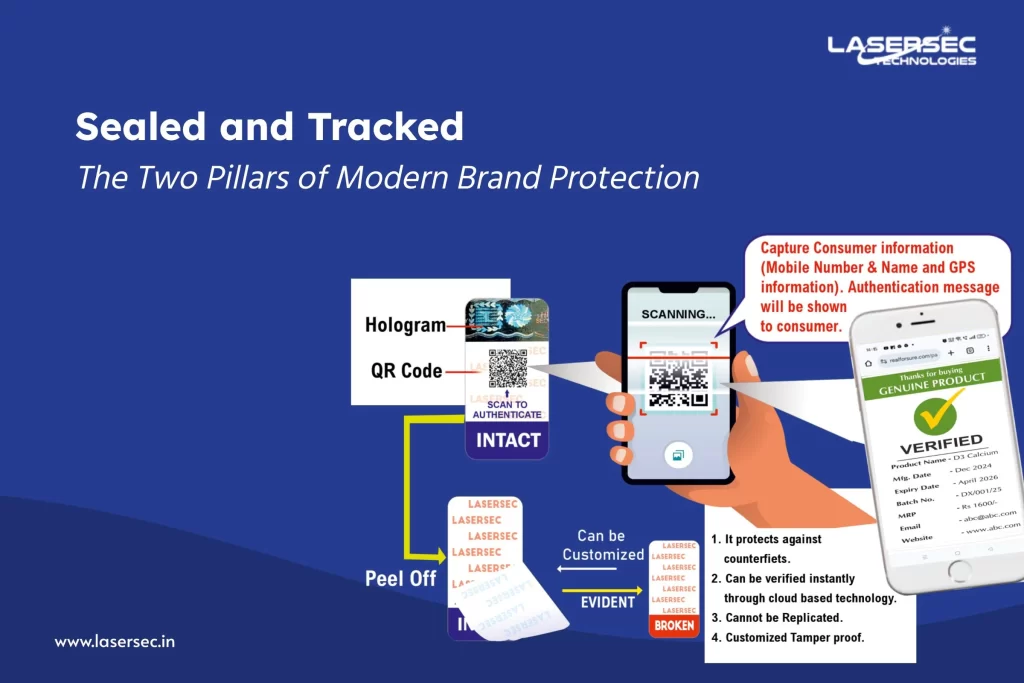
Forward-thinking brands are now adopting a two-pronged security approach: Tamper-Evident Packaging + Track & Trace Technology
One is a physical deterrent. The other is a digital watchdog. Together, they form a resilient shield against fraud.

1. What These Tools Actually Do

Tamper-Evident Packaging

These packaging elements display clear signs of interference.
Think broken seals, VOID labels, or peeled films—immediate red flags for both consumers and supply chain teams.

2. Track & Trace Systems

Every unit is assigned a unique serialized identity, often through GS1 barcodes or QR codes.
Each scan updates the unit’s journey from production to retail, enabling full traceability and real-time monitoring through secure platforms.

Bonus: Advanced T&T systems now integrate with cloud-based dashboards, AI-based alerts, and mobile authentication tools.

Relying on only one method is like locking your front door but leaving the windows wide open.

  • Tamper seals can be replicated.
  • Digital codes can be copied.

But when combined:
Physical evidence + Digital validation = A failsafe authentication system that’s far harder to breach.

Real Time Impacts

  1. Pharmaceuticals: A sealed pack and a scannable QR code validate medication at the pharmacy. Brands using serialization aligned with DSCSA/EU FMD have reduced counterfeit reports and met compliance faster.
  2. Electronics: With encrypted QR codes and tamper seals, brands can detect unauthorized resellers and trace diversion to the source. Less warranty fraud and tighter market control.
  3. FMCG & Personal Care: A beauty brand added tamper-evident seals and scannable codes after fake products emerged online. 38% drop in complaints, increased repurchase rates, and renewed customer trust.

Why This Approach Works

  • Visible Proof:
    Customers know if the product has been tampered with.
  • Digital Traceability:
    Brands know exactly where and when a breach occurred.
  • Rapid Response:
    Identify and contain supply chain risks in real time.
  • Compliance-Ready:
    Stay ahead of evolving global regulations.
  • Brand Loyalty:
    Build trust through transparency, safety, and action.

You don’t need a massive overhaul.

Start small like:

  • Apply tamper-evident holographic labels to premium or high-risk SKUs.
  • Add QR codes connected to a secure backend system.
  • Educate your distributors and customers on scanning and verification.

Then, scale as your confidence and ROI grow.

Your Packaging Is More Than a Box

It’s your handshake, your promise, your presence in places you can’t be.

With tamper-evident packaging and track & trace working in tandem, your packaging becomes a:

  • Silent Guardian
  • Smart Communicator
  • Powerful Brand Asset

Let’s Build Smarter, Safer Packaging – Together

At Lasersec Technologies, we specialize in merging physical security with digital intelligence. Our solutions are tailored for pharma, electronics, FMCG, automotive, and consumer brands looking to stay ahead of counterfeiting risks.

The Shift from Traditional Labels to Interactive Packaging: What Brands Need to Know

Ever held a medicine pack and wondered—is this real? Is it safe?

Your customers, pharmacists, and regulators are asking the same questions every day. And the answers often begin not with a product demo or a marketing campaign—but with what’s printed, sealed, or embedded on your packaging.

We’re entering a new era—where the label isn’t just a sticker. It’s a source of truth.

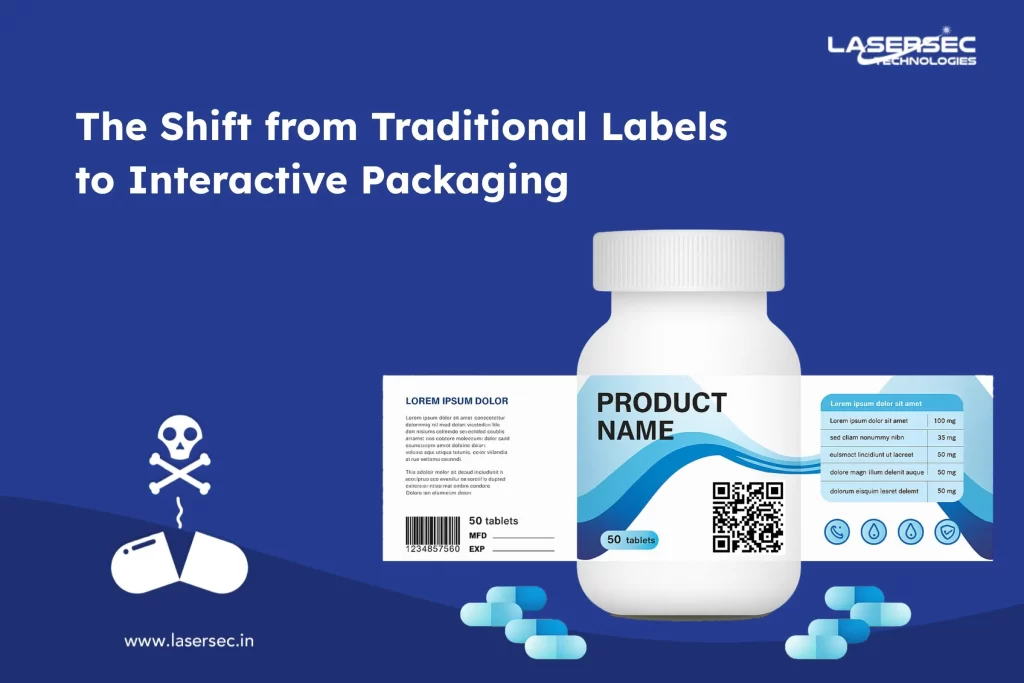
The shift from traditional labels to interactive packaging is redefining how pharmaceutical brands build credibility, deliver transparency, and protect their reputation.

Why Traditional Labels Aren’t Enough Anymore

For decades, a logo, a batch number, or a hologram gave a basic sense of authenticity. But today’s pharmaceutical buyers, regulators, and patients are more informed and more skeptical. They want proof, not promises—and they want it instantly.

Consumers, pharmacists, and regulators now ask:

  • Where was this product made?
  • Is it safe to use?
  • Has it been tampered with or copied?
  • Can I trace it to the source?
A static label can’t answer these. And in an age where counterfeiting, unauthorized distribution, and regulatory audits are rising—relying only on traditional packaging methods puts patients, companies, and supply chains at risk.

What Is Interactive Packaging?

Interactive packaging blends physical labels with digital intelligence. It enables a smartphone scan—via QR code, NFC chip, dynamic watermark, or serialized code—to unlock detailed product data, authentication, and personalized content.

It offers visibility beyond the box.

Through secure and unique digital triggers (often integrated with traceability platforms), brands can:

  • Verify authenticity instantly
  • Show manufacturing details, batch numbers, expiry dates, and certifications
  • Share dosage guides, patient education, and usage instructions
  • Deliver loyalty programs or pharmacist rewards
  • Start direct engagement with patients or healthcare providers
Unlike generic codes, modern systems use dynamic serialization or cloud-linked markers that are nearly impossible to duplicate—raising the bar for counterfeiters and aligning with regulations like DSCSA, EU FMD, and TGA guidelines.

Why More Brands Are Making the Switch

The shift to interactive packaging isn’t just a technology upgrade—it’s a strategic response to life-critical risks, regulatory demands, and patient safety.

  • Authentication:
    Allows pharmacists and patients to verify medicines instantly.
  • Recall readiness:
    Offers real-time traceability and rapid product recalls if needed.
  • Transparency:
    Provides batch-level tracking and supply chain visibility.
  • Engagement:
    Enables direct patient education, feedback, and loyalty programs.
It transforms packaging from a passive layer into a smart, compliant, and protective communication tool.

The Trend Backed by Numbers

According to Research and Markets, the global smart packaging market is expected to reach USD 43.6 billion by 2030, driven by the need for secure product authentication and patient trust.

A recent study shows that 81% of consumers are more likely to trust brands that offer transparency through scannable packaging.

In the pharmaceutical industry, this trust isn’t just a competitive advantage—it’s a regulatory and ethical responsibility.

From Confusion to Confidence

A leading pharmaceutical company faced a surge in counterfeit antibiotics in regional markets. Patients and pharmacists began raising safety concerns, and regulatory bodies flagged potential supply chain gaps.

The solution?

The company implemented secure, serialized QR codes on every blister pack and bottle. Each scan by a pharmacist or consumer provided instant product verification, manufacturing details, and patient instructions.

The impact:

  • Sharp decline in counterfeit complaints
  • Increased confidence among distributors and pharmacies
  • Stronger regulatory compliance and brand trust

Thinking About the Shift?

You don’t need to overhaul your entire product portfolio at once. Begin small, scale smart.

  • Choose a product line – Start with high-risk or export-oriented SKUs.
  • Define your purpose – Focus on authentication, traceability, or patient engagement.
  • Select the right technology – Use encrypted, copy-proof serialization.
  • Design it well – Make it seamless within your existing packaging.
  • Track engagement – Monitor scans, locations, and recall readiness.
Interactive packaging platforms can integrate with your ERP, WMS, and pharma track & trace systems to provide unit-level traceability—from production to the patient’s hand.

The Label Is No Longer Just a Label

In the pharmaceutical industry, packaging isn’t just protection—it’s proof.

Interactive packaging helps pharma brands move from saying “Trust us” to confidently showing why they’re trustworthy—meeting regulatory demands, protecting patients, and building real-world credibility.

Every scan is more than just a check—it’s a chance to:

  • Win patient trust
  • Engage directly with consumers and healthcare providers
  • Protect your products and comply with regulations

When trust, safety, and compliance are at stake, make your packaging your strongest proof point. At Lasersec Technologies, we help pharmaceutical companies bridge this gap—from static to smart, from uncertain to verified.

We design secure, compliant packaging solutions that protect your medicines, engage your supply chain, and elevate your brand.

Why Egypt’s Pharma Industry Needs Next-Gen Anti-Counterfeiting Solutions

Counterfeit medicines remain one of the biggest threats to Egypt’s healthcare system. Patients depend on genuine drugs not only for recovery but often for survival — yet fake medicines continue to circulate, undermining both trust and safety.

According to the Egyptian Drug Authority (EDA), counterfeit medicines make up nearly 10% of the local market in some therapeutic categories.  

These fakes are often disguised with packaging that looks identical to genuine products, making detection extremely difficult for pharmacists and patients.

The consequences are severe:

  • Reduced treatment effectiveness
  • Dangerous health risks
  • Erosion of public trust in brands and the healthcare system
For Egypt’s rapidly expanding pharmaceutical industry — one of the largest in MENA — counterfeiting is no longer a small-scale issue. It’s a national challenge that demands stronger, smarter solutions.

Why Old Defenses Fail

Traditional methods like basic holograms or packaging updates are no longer enough. Counterfeiters are adapting quickly, often staying just one step behind. Pharma companies in Egypt need solutions that go beyond packaging — ensuring authenticity is protected across the entire supply chain.

Next-Gen Anti-Counterfeiting Solutions for Pharma in Egypt

At Lasersec Technologies, we’ve developed advanced anti-counterfeiting solutions designed to tackle the exact challenges Egypt’s pharma sector faces today:

1. Secure QR Codes for Instant Verification :

Give patients and pharmacists the power to instantly verify authenticity with a smartphone scan. This creates transparency and trust at the point of purchase.

2. Serialization & Track-and-Trace (GS1 Standards):

Ensure every pack carries a unique code, providing unit-level visibility from manufacturer to pharmacy. This strengthens regulatory compliance and blocks counterfeit infiltration.

3. Phygital Security Features for Tamper-Proof Packaging:

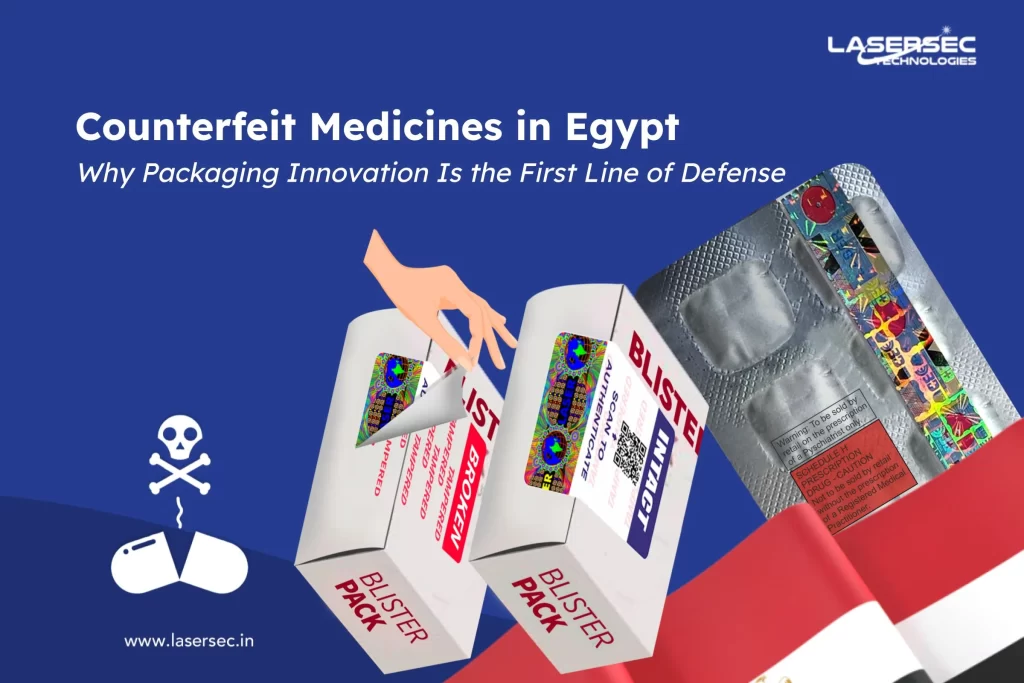
A powerful combination of physical security elements (holograms, special inks, tamper-evident labels) with digital verification ensures packaging is nearly impossible to replicate.

Together, these solutions protect patients, brands, and supply chains — ensuring only genuine medicines reach the hands of consumers.

Why Egypt Needs to Act Now

With exports on the rise, Egyptian pharmaceutical companies must meet international compliance norms to compete globally. Beyond regulations, the real need is trust — both at home and abroad.

Companies that adopt next-gen anti-counterfeiting today will:

  • Become pioneers of safety and reliability in Egypt’s pharma market.
  • Win stronger patient loyalty through visible safety measures.
  • Improve global competitiveness by aligning with international standards.

Showcasing Next-Gen Anti-Counterfeiting at Egypt’s Pharma Exhibition

At the recent exhibition in Cairo, Lasersec Technologies had the opportunity to showcase our next-gen anti-counterfeiting solutions to Egypt’s pharma leaders. Through live demonstrations of secure QR codes, serialization, and phygital features, we highlighted how brands can strengthen patient trust and safeguard supply chains.

The response reinforced one thing clearly: Egypt’s pharma industry is ready to embrace advanced solutions to fight counterfeiting and lead with confidence in both local and global markets.

Moving Forward: Partnering with Egypt’s Pharma Industry

For those who couldn’t attend or want to continue the discussion, our team is here to help. Whether you need a detailed consultation, solution roadmap, or samples tailored to your products, we’re ready to support you.

Because protecting patients — and protecting your brand — is not just a one-time exhibition showcase, it’s a long-term partnership.

What You’ll Experience at Lasersec’s Booth in Pharmaconex 2025

When PharmaConex 2025 opens in Cairo this September, Hall 4, Booth No. J32 won’t just be another exhibition stand—it’ll be your gateway to Egypt’s most advanced pharmaceutical packaging security and compliance solutions.

Egypt’s pharmaceutical sector is evolving fast, with growing demand for serialization, patient safety, and counterfeit prevention. Lasersec Technologies is here to show you—live—how our anti-counterfeit, track & trace, and phygital authentication solutions can protect your brand, patients, and profits.

What You’ll See Up Close

1. Next-Generation Anti-Counterfeit Solutions:

Explore our latest holographic security features designed for instant, in-field authentication. These aren’t just visual effects—they’re engineered with nano-optical structures, covert taggants, and forensic-level markers that make duplication impossible.

A recent partnership with a leading generic drug manufacturer cut counterfeit reports by 78% in just one year.

2. Track & Trace in Action:

Watch live demonstrations of serialization and secure coding integrated seamlessly into a pharmaceutical supply chain. From batch-level aggregation to unit-level GS1-compliant data capture, see how we deliver real-time product visibility, enabling end-to-end traceability from manufacturing through distribution.

Our traceability framework helped a global vaccine brand reduce supply chain discrepancies by 60%.

3. Phygital Authentication:

Discover how we bridge physical packaging with the digital world—allowing every stakeholder in your chain, right down to the patient, to verify authenticity via secure cloud-based checks. Our encrypted QR codes and NFC-enabled labels offer instant access to verification data, patient engagement tools, and even recall alerts—helping you improve safety and brand trust.

Why You’ll Want to Stop By

  • Real Demos – Experience the technology live, not just read about it.
  • Industry Insights – Stay updated on evolving serialization mandates and anti-counterfeit regulations.
  • Custom Solutions – Work directly with our technical experts to solve your packaging and supply chain challenges.

This is not just about seeing products—it’s about exploring how those products can solve your real-world problems, from patient safety to market protection.

Let’s Talk at PharmaConex 2025

We believe innovation matters most when it’s practical, accessible, and tailored to your reality. Whether you want to:

  • Meet global serialization requirements
  • Add tamper-evident and tamper-proof packaging
  • Create digital engagement channels for patients

Yes, our team will be ready to walk you through every step.

Save the Date: 7–9 September 2025
Location: Egypt International Exhibition Center, Cairo
Booth: Lasersec Technologies – Hall 4, #J32

Your brand’s reputation is priceless.
At Pharmaconex 2025, let’s make sure it stays that way.

QR Codes vs Holograms: What Works Best for Product Authentication?

In a world flooded with counterfeits and cautious consumers, product authentication is no longer optional—it’s essential. Brands today face the growing challenge of proving that their products are genuine.

Two powerful tools lead the fight: QR codes and holograms. But here’s the truth—it’s not about choosing one over the other. The strongest brands use both to build layers of trust and security.

The Real Problem: Proving What’s Genuine

Think about this:

A customer scans the code on your product but lands on a counterfeit website.  In seconds, you don’t just lose a sale—you lose their trust.

Counterfeit threats are real and rising:

  • Fake chargers.
  • Diluted skincare.
  • Counterfeit medicines.
Each fake puts your customers at risk and damages your brand’s reputation. Customers no longer accept promises—they demand proof. That’s where smart authentication solutions step in.

QR Codes: Instant Digital Authentication

QR codes are like digital keys. One quick scan can unlock:

  • Product origin and supply chain journey.
  • Manufacturing and packaging dates.
  • Serial numbers and unique IDs.
  • Loyalty programs, customer feedback, or recall alerts.

Benefits:

  • Instant scanning with smartphones
  • Enables track and trace
  • Connects to real-time, dynamic information
  • Boosts post-purchase engagement
But Beware: QR codes can be copied by counterfeiters if not properly secured.

Holograms: Immediate Physical Proof

Holograms are visual security tools. Their shine, texture, and complexity make them almost impossible to duplicate.

Benefits:

  • Tamper-evident, adding immediate trust
  • Easy visual verification in stores
  • Adds premium appeal to packaging
  • Works without smartphones or internet
But Note: Holograms don’t store traceable or dynamic data.

The Smartest Solution: Combine Both for Maximum Security

The smartest brands are moving beyond “either-or.” They combine QR codes and holograms for multi-layered protection.

ScenarioBest SolutionWhy
In-store purchasesHologram + QR CodeImmediate visual check and scannable proof
E-commerce ordersQR Code + HologramDigital traceability with physical security
High-value pharma & electronicsQR Code + HologramFull track & trace + tamper-evident packaging
Luxury goods & collectiblesHologram + QR CodePremium appearance + consumer engagement
Customer loyalty campaignsQR CodeDirects buyers to secure apps, rewards, and feedback portals


Why You Should Always Use Both

  • Holograms protect the packaging.
  • QR codes confirm traceability and digital proof.

Together, they:

  • Strengthen your product’s first impression.
  • Provide layered security across the supply chain.
  • Protect both your physical goods and digital authenticity.

You’re not just safeguarding products—you’re securing:

  • Customer trust
  • Brand value
  • Supply chain integrity

Authentication is more than a feature—it’s your brand’s promise.

Trust Isn’t Automatic—You Have to Build It

  • QR Codes – Digital trust and smart traceability
  • Holograms – Visual security and tamper protection
  • Together – The strongest anti-counterfeit shield

At Lasersec Technologies, we specialize in tailored, multi-layered anti-counterfeiting solutions that protect your brand at every touchpoint—from the factory floor to the consumer’s hand. Ready to secure your products with next-gen authentication?

From Concept to Compliance: How R&D Can Prevent Counterfeiting in Pharma

In the world of healthcare, trust isn’t optional—it’s foundational. When a patient takes medicine, they aren’t just consuming a formulation—they’re placing their lives in the hands of pharmaceutical brands, regulators, and science.

But what happens when that trust is betrayed by counterfeit drugs?

Counterfeit medicines are more than a regulatory challenge; they’re a human crisis. From causing patient harm to disrupting supply chains and damaging brand credibility, the consequences are staggering. That’s why the fight against counterfeiting must begin far earlier than many companies realize—not in the warehouse or the pharmacy, but in the research lab.

Why R&D Is the First Line of Defense

For decades, anti-counterfeit strategies have been reactive—focused on packaging tweaks or post-launch investigations. But by that stage, the product is already in circulation, and risks have multiplied.

Integrating anti-counterfeiting measures at the R&D stage enables pharma companies to design products that are inherently secure. It’s about embedding protection within the DNA of the drug—from formulation to packaging. Early intervention ensures that a product isn’t just therapeutic, but tamper-proof, traceable, and trusted.

The Hidden Dangers of Delayed Protection

Delaying brand protection until after production or during distribution creates opportunities for counterfeiters. Once a fake medicine reaches a patient:

  • Regulatory penalties may follow.
  • Patient safety is compromised.
  • Brand trust takes a lasting hit.
Proactive protection, on the other hand, makes it far harder for bad actors to replicate or manipulate your products. It transforms the product into a self-verifying tool, not just a commodity.

Compliance Begins at the Research Table

With global regulatory frameworks tightening—like EU Falsified Medicines Directive (FMD), U.S. Drug Supply Chain Security Act (DSCSA), and TGA requirements in Australia—companies must demonstrate authenticity, traceability, and security from the outset.

Embedding regulatory compliance during R&D enables:

  • Easier serialization integration
  • Accurate data capture for global traceability
  • Faster approval and fewer redesign costs
When compliance is an afterthought, retrofitting solutions becomes expensive and error-prone. But when it’s embedded in development, it becomes a strength—not a stress.

Cost Today, Savings Tomorrow

Some stakeholders fear that early-stage protection adds unnecessary cost. In reality, the opposite is true.

Preventive measures are far more cost-effective than damage control:

  • A single counterfeit scandal can cost millions in recalls, legal fees, and brand damage.
  • Investing early reduces downstream risks, from litigation to loss of market share.
  • Robust products attract regulatory and consumer confidence—accelerating approvals and adoption.

Advanced anti-counterfeit technologies are now versatile, scalable, and R&D-friendly. By integrating these tools into the development phase, pharma companies create products that are resilient and verifiable:

1. Invisible Security Inks –

Embedded directly on blister packs or tablets for covert verification.

2. Tamper-Evident Packaging –

Custom seals that reveal breaches before reaching the end-user.

3. Blockchain & Track-and-Trace Systems –

Enabling immutable supply chain transparency.

4. Secure QR Codes & Digital Twins –

Real-time authentication via mobile scans.

Lasersec Technologies offers R&D-compatible solutions that support pharma brands in building layered, invisible protection—right from Day One.

Anti-counterfeiting isn’t just a packaging or compliance task—it’s a cross-functional mission. When R&D, compliance, packaging, marketing, and logistics teams collaborate early, the outcomes are:

  • Integrated protection strategies
  • Stronger risk mitigation frameworks
  • Faster innovation cycles

This shared responsibility creates a culture of accountability across the entire product lifecycle.

Looking Ahead: Prevent Early, Not Late

Counterfeiters are using smarter methods—AI-generated packaging, high-res replication, and fake serialization. The pharmaceutical industry must be one step ahead.

Embedding anti-counterfeit strategy during R&D is a future-focused, patient-centric move. It empowers companies to:

  • Reduce regulatory risks
  • Enhance product integrity
  • Build long-term trust

R&D is not just about drug discovery—it’s the first frontier of product protection.

At Lasersec Technologies, we empower pharma brands to build security into science. From secure inks and serialization systems to phygital authentication tools, we help you embed trust into every dose—starting from the concept phase.

Let’s talk.
Reach us at mktg@lasersec.in or call +91-9810213127 to explore R&D-ready brand protection solutions.

How Tamper Evident Features and Track & Trace Work Together

You’ve done everything right—designed a high-quality product, partnered with trusted logistics providers, and shipped on time. But then, your customer receives the package with a broken seal.

Their trust? Shaken.
Your credibility? At risk.

In today’s global supply chain, even a minor breach can trigger major consequences: counterfeit infiltration, customer dissatisfaction, compliance risks, and brand damage.

Supply chain security is no longer just about efficiency—it’s about accountability, visibility, and trust. And trust depends on two critical layers working seamlessly together: Tamper-evident features and Track & trace systems

Why This Matters Now More Than Ever:

Products today pass through complex global routes—manufacturers, warehouses, shipping partners, distribution hubs, and final delivery agents. At any point, a breach or unauthorized access can occur.

Without the right security layers:

  • Customers lose confidence
  • Regulatory compliance is compromised
  • Brands suffer financial and reputational damage
Modern consumers and regulators expect more than promises—they expect proof.

Tamper-Evident Features: Your Physical Line of Defense

Tamper-evident packaging is not just a sticker. It’s a clear, visible indication of whether a product has been opened, altered, or interfered with during transit.

At Lasersec Technologies, our tamper-evident technologies include:

  • Holographic Seals – Visually striking and nearly impossible to replicate
  • Tear Tapes & Perforations – Clearly show signs of interference
  • VOID Labels & Color-Shifting Films – Leave irreversible evidence when peeled
  • Destructible Films – Break apart if removal is attempted

These features:

  • Act as visual deterrents
  • Enable instant detection of tampering
  • Allow quick customer verification at the point of delivery
    But physical security alone isn’t enough.

Track & Trace: Your Digital Layer of Assurance

Track & trace systems digitally log each product unit’s journey—from manufacturing to delivery—offering end-to-end transparency.

Using serialization, QR codes, or RFID, we help you:

  • Track each unit in real time
  • Record timestamps at every node
  • Authenticate products instantly
  • Investigate breaches or recalls with precision

Our systems integrate with ERP, WMS, and cloud platforms to maintain a secure digital chain of custody—across geographies and partners.

Why You Need Both Layers—Not One

Think of it this way:
Tamper-evident features are your lock.
Track & trace is your surveillance camera.

Together, they offer:

  • Proactive protection against tampering and theft
  • End-to-end visibility across the supply chain
  • Data-backed accountability for audits, disputes, and regulatory reviews
  • Legal and compliance support backed by digital proof
    This dual-layered approach doesn’t just protect your product—it protects your brand promise.

Trust Doesn’t Travel Alone—You Have to Send It

  • Tamper-evident features say: “We protected this with care.”
  • Track & trace says: “We know exactly where it’s been.”
  • Together, they say: “You can trust us—physically and digitally.”
    In a risk-filled global landscape, this isn’t optional—it’s essential.

Ready to Secure Your Supply Chain?

At Lasersec Technologies, we help brands implement end-to-end supply chain security—sealing every unit with visible protection and tracking every movement with digital precision. Let’s work together to secure your brand and supply chain from counterfeit threats.

About Lasersec Technologies

We are a leading manufacturer of holographic solutions designed to combat counterfeiting. Our dedicated R&D team continuously seeks innovative solutions, ensuring that all our offerings are original and free from external interference. With successful business alliances in Bangladesh, South Africa, Malaysia, Sri Lanka, Nepal, the United Kingdom, and across Europe, we are committed to enhancing product security worldwide.

How to Build a Multi-Layered Anti-Counterfeit Strategy for Pharma Exports

Exporting pharma products? Here’s how to create a robust, multi-layered security system that protects your brand and saves lives.

In the pharmaceutical industry, counterfeit products aren’t just a financial threat—they endanger lives. As a pharma exporter, your responsibility goes beyond compliance; you must safeguard your products against the increasingly sophisticated methods counterfeiters use.

According to the World Health Organization (WHO), 1 in 10 medical products in low- and middle-income countries is substandard or falsified—a statistic that underscores the urgent need for robust anti-counterfeit strategies. To protect your brand, your reputation, and most importantly, patient safety, a multi-layered anti-counterfeit approach is essential.

Why a Multi-Layered Protection Strategy Is Critical

Counterfeit medicines harm more than just profits—they jeopardize public health, create regulatory nightmares, and damage trust in your brand. When exporting, your products pass through multiple hands, each presenting a new vulnerability.

A multi-layered protection system is designed to eliminate these vulnerabilities by implementing multiple lines of defense—ensuring that if one fails, others will catch the threat. Each layer acts as a backup, strengthening the security of your pharmaceutical products.

Step-by-Step: Building a Strong Anti-Counterfeit Strategy

Step 1: Use Visible Security Features to Deter Fakes at First Glance

Visible security features are the first line of defense. These can include:

  • Holograms
  • Color-shifting inks
  • Tamper-evident packaging

These elements make it easy for customs officers, pharmacists, and even consumers to instantly verify product authenticity.

Tip : Use tamper-evident labels that leave visible traces if tampered with. This acts as a clear deterrent.

Step 2: Add Hidden Layers with Covert Features

Covert features are invisible to the naked eye but offer high-security authentication. Examples include:

  • UV or infrared inks
  • Microtext
  • Forensic taggants

These are extremely difficult to replicate and require specialized tools for verification.

Tip : Keep details about covert features confidential within your trusted network.

Step 3: Leverage Digital Authentication Technologies

Digital tools increase traceability and consumer confidence. Common options:

  • Serialized QR codes
  • Data matrix barcodes
  • GS1-compliant identifiers

Scanning these codes allows quick, real-time verification across the supply chain.

Scenario : A customs officer scans a QR code and instantly verifies authenticity—preventing delays and rejections.

Step 4: Enable Real-Time Tracking and Traceability

A robust Track & Trace system helps you monitor your pharma exports at every stage. Key components include:

  • Serialization
  • Geo-tagging
  • Real-time alerts for irregularities
Example : A product meant for Kenya ends up in Brazil—your system flags the diversion immediately, allowing fast intervention.

Step 5: Train and Empower Your Supply Chain Partners

Everyone from distributors to customs officers should know how to verify your anti-counterfeit features.

Tip : A short training video or printed guide can significantly boost awareness and reduce risks.

Why Multi-Layered Anti-Counterfeit Protection Works

 1. Increased Trust and Long-Term Relationships:

Exporters with proven anti-counterfeit measures build confidence and retain global buyers.

 2. Compliance with Global Standards:

A layered strategy ensures compliance with regulations like FMD (EU), DSCSA (U.S.), and WHO guidelines.

3. Operational Efficiency:

Better verification reduces customs delays and ensures smoother cross-border movement.

4. Future-Proofing Your Supply Chain:

As counterfeiters evolve, your strategy can evolve too—thanks to scalable, adaptable security layers.

Don’t Wait for a Crisis—Act Now

Counterfeiters are becoming more sophisticated. Waiting for a breach can result in financial losses, regulatory penalties, and brand damage.

No product should leave your facility without strong anti-counterfeit protection.

At Lasersec Technologies, we help pharma exporters build strong anti-counterfeit strategies using visible labels, hidden markers, and digital tools that work in real-world supply chains.