








A shipment leaves your facility after months of production planning, quality checks, and export compliance preparation. Every detail has been verified. The product meets international food safety standards, documentation is complete, and authorized distributors are ready.
But weeks later, an unexpected issue arises.
Your distributor reports seeing your product in a country where it was never authorized to be sold. In another instance, customs officials question the authenticity of a shipment carrying your brand name. The packaging appears genuine, but verification is unclear.
This is the growing reality of counterfeit food products, parallel imports, and unauthorized distribution. These risks do more than disrupt a single shipment. They affect regulatory compliance, distributor trust, pricing integrity, and long-term brand reputation.
This is why food authentication solutions have become essential for exporters. Authentication transforms packaging into a secure, verifiable identity system that protects products across global supply chains using technologies like QR code authentication and Track & Trace systems.
Understanding the Rising Risk of Fake Imports and Parallel Trade in Food Exports
As food products move through international supply chains, they pass through multiple intermediaries, distributors, logistics providers, and retailers. This complexity creates opportunities for unauthorized activities such as:
- Parallel imports into unauthorized countries
- Relabeling products for resale in different markets
- Distribution of expired or compromised products
- Counterfeit food products replicating genuine packaging using security hologram stickers
- Unauthorized resale outside approved distributor networks
These activities are increasing globally due to sophisticated packaging replication techniques and fragmented supply chain visibility.
For food exporters, the consequences are significant:
- Loss of brand control
- Regulatory compliance risks
- Distributor conflicts
- Consumer safety concerns
- Financial and reputational damage
Without a reliable product authentication system, it becomes extremely difficult to verify whether a product is genuine, where it originated, and how it entered a specific market.
Why Traditional Packaging and Labels Cannot Prevent Counterfeit Food Products
Traditional packaging elements such as printed labels, barcodes, and batch numbers were designed for identification and logistics—not for security and authentication.
These elements can be easily:
- Copied
- Reprinted
- Duplicated
- Reapplied to counterfeit products
Even standard holographic labels without secure authentication layers can be visually imitated if not integrated with verification technologies.
Counterfeiters can replicate packaging visually, making manual inspection unreliable.
Regulators, distributors, and retailers cannot confirm authenticity based on appearance alone. This creates delays, uncertainty, and compliance risks during export inspections and market verification.
Modern global food exports require secure authentication systems that provide instant, verifiable proof of product authenticity through solutions such as tamper-evident labels and QR code anti-counterfeit labels.
What Is Food Authentication and How Food Authentication Systems Work
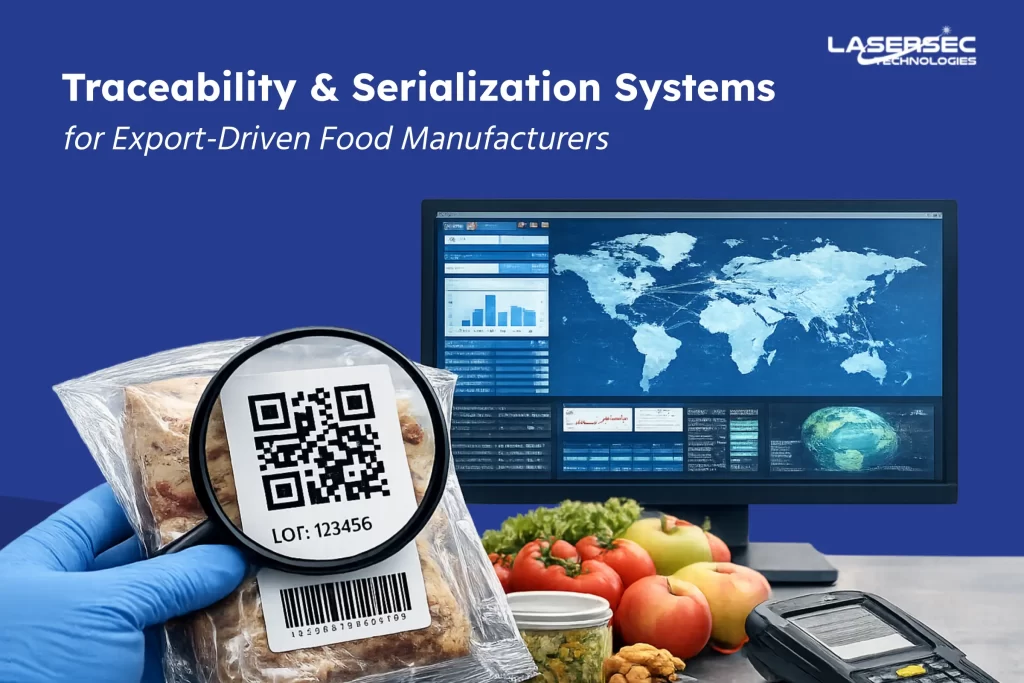
Food authentication is a secure process that assigns a unique, traceable identity to each product unit. This identity is integrated directly into packaging using secure authentication technologies such as:
- Serialized QR codes
- Unique identification codes
- Secure digital authentication markers
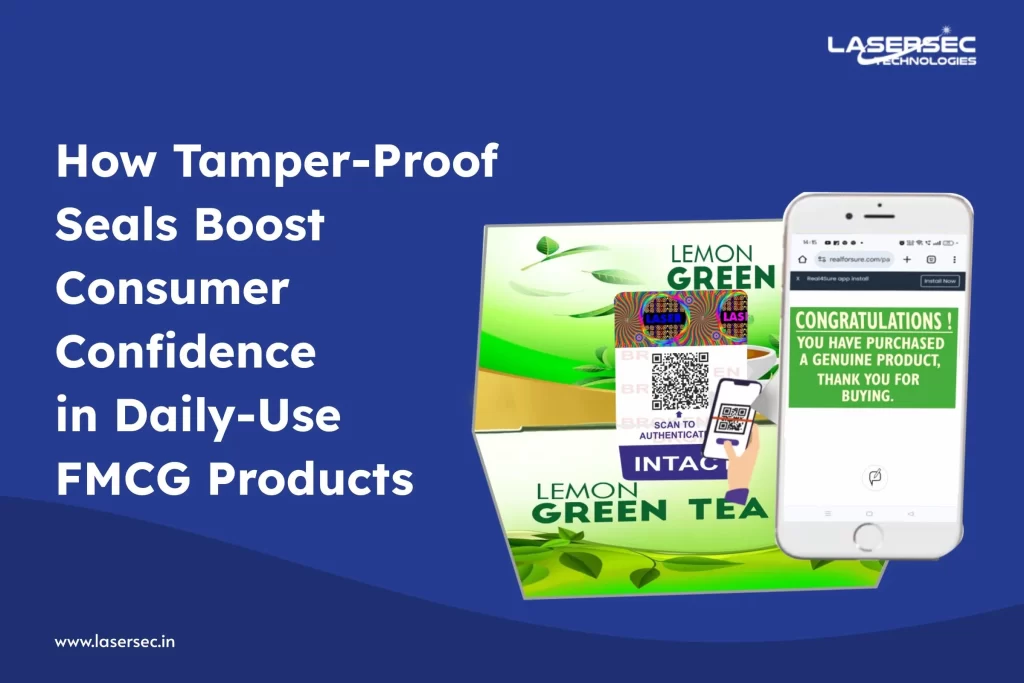
- Tamper-evident and anti-counterfeit packaging features like tamper proof hologram stickers
Each authentication code is unique and linked to secure product data, including:
- Manufacturing origin
- Production batch information
- Export destination
- Product identity and verification status
When the authentication code is scanned, the system instantly verifies whether the product is genuine through secure platforms such as Track & Trace authentication systems.
If duplicate codes appear, or if products are detected in unauthorized markets, the system immediately identifies potential counterfeit or parallel trade activity.
This transforms packaging into an active brand protection and verification tool.
How Food Authentication Prevents Parallel Imports and Unauthorized Distribution
Parallel trade occurs when genuine products are diverted from authorized supply chains and resold in unauthorized markets. This disrupts pricing structures, violates distribution agreements, and creates regulatory complications.
Food authentication solutions prevent parallel imports by enabling unit-level verification using secure packaging such as QR code holograms and anti-counterfeit labels.
Each product unit can be verified to confirm:
- Whether it was intended for a specific export market
- Whether it has been duplicated or counterfeited
- Whether it has been diverted to an unauthorized region
- Whether the product identity matches manufacturing records
For example, if a product intended for export to one country is scanned in a different region, authentication systems immediately detect the discrepancy.
This allows exporters and brand owners to identify unauthorized distribution channels and take corrective action quickly.
Authentication restores control over products even after they leave the manufacturing facility.
Supporting Export Compliance and Regulatory Requirements with Authentication
Food exporters must comply with strict international regulations related to product origin, safety, traceability, and authenticity.
Regulatory authorities increasingly expect manufacturers to demonstrate supply chain transparency and authentication capability through secure systems such as Track & Trace solutions.
Food authentication systems support compliance by enabling regulators to verify:
- Product origin
- Manufacturing authenticity
- Batch integrity
- Export destination verification
Authentication provides instant, verifiable proof that the product is genuine and compliant.
This reduces customs delays, improves inspection efficiency, and strengthens regulatory confidence.
It also demonstrates that exporters are implementing proactive brand protection and compliance measures.
How Food Authentication Protects Brand Reputation and Consumer Trust
Brand reputation is one of the most valuable assets for food exporters. However, counterfeit or diverted products can quickly damage consumer confidence—even when the manufacturer is not responsible.
Consumers cannot distinguish between genuine and counterfeit products if packaging appears identical without secure authentication features like security holograms or tamper-evident packaging labels.
Authentication enables distributors, retailers, and consumers to verify product authenticity instantly.
This prevents counterfeit products from circulating undetected and ensures consumers receive genuine, safe products.
Over time, authentication strengthens brand credibility and builds long-term trust across global markets.
Improving Food Supply Chain Visibility with Product Authentication Systems
One of the biggest challenges exporters face is limited visibility after products leave the manufacturing facility.
Food authentication systems improve supply chain transparency by creating verification records whenever a product is scanned through systems such as Track & Trace technology.
This enables exporters to:
- Monitor product movement across markets
- Detect unauthorized distribution
- Identify suspicious activity
- Prevent counterfeit infiltration
- Improve supply chain control
This visibility allows faster response to potential risks and prevents widespread distribution of counterfeit or diverted products.
Authentication shifts supply chain management from reactive damage control to proactive prevention.
Why Food Authentication Solutions Are Essential for Modern Food Exporters
Global food trade continues to expand, but so do risks related to counterfeit imports, parallel trade, and unauthorized resale.
Authentication provides critical protection by enabling:
- Unit-level product verification
- Anti-counterfeit packaging security using holographic labels and security holograms
- Supply chain authentication
- Export compliance support
- Brand protection across international markets
Authentication transforms packaging into a secure, verifiable proof of authenticity.
It protects exporters, distributors, regulators, and consumers alike.
How We Supports Secure Food Authentication and Brand Protection
At Lasersec Technologies, we provide advanced food authentication and anti-counterfeit packaging solutions designed to protect exporters operating in global markets.
Our solutions integrate secure, unique identifiers directly into packaging, using technologies such as QR code holograms, tamper-evident labels, and Track & Trace authentication systems, enabling reliable product authentication and supply chain verification.
These authentication systems help exporters:
- Prevent counterfeit food products
- Detect parallel imports and diversion
- Strengthen export compliance
- Protect brand
- Improve global supply chain visibility
By combining secure physical packaging with authentication technologies, we help brands maintain control, transparency, and trust throughout the product lifecycle.
To explore relevant solutions for this sector, visit our FMCG anti-counterfeit solutions page.
Strengthening Global Food Export Security Through Authentication
As counterfeit food products and parallel trade continue to rise, authentication has become a critical component of export security and brand protection.
Food authentication systems provide verifiable product identity, improve supply chain transparency, and support regulatory compliance through technologies like secure holographic labels and Track & Trace authentication.
They help ensure that genuine products reach authorized markets safely and securely.
Most importantly, authentication protects brand reputation, consumer safety, and long-term export success.
In today’s global food industry, authentication is no longer optional. It is an essential foundation for secure, compliant, and trusted international food distribution.