





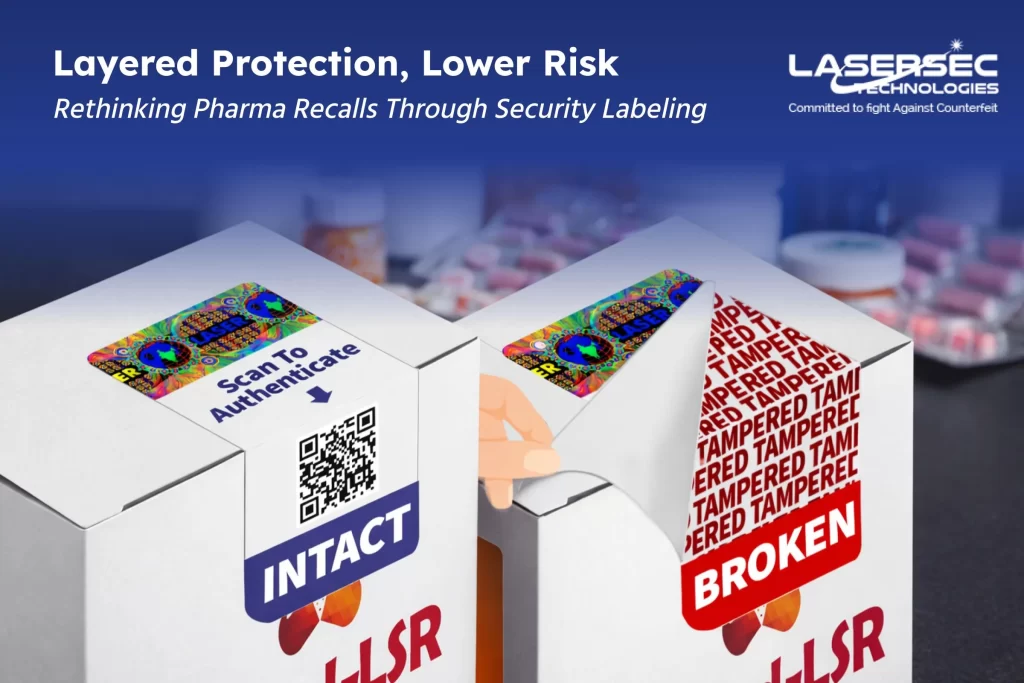
A pharmaceutical product entering regulated markets goes through extensive validation before reaching patients. Manufacturing protocols, quality checks, serialization requirements, and regulatory documentation ensure that the product complies with strict global standards.
Despite these safeguards, pharmaceutical recalls continue to occur across global markets.
In many cases, recalls are not only triggered by manufacturing defects but also by packaging tampering, counterfeit infiltration, labeling inconsistencies, or supply chain diversion.
For pharmaceutical manufacturers operating in highly regulated markets, a recall can have significant consequences.
It disrupts supply chains, affects patient access to essential medicines, triggers regulatory scrutiny, and can cause lasting reputational damage.
To reduce these risks, many pharmaceutical companies are adopting multilayer security labels as part of their packaging strategy.
These advanced labels integrate multiple security technologies—such as tamper-evident features, holographic authentication, serialization layers, and Track & Trace capabilities—creating a powerful system that strengthens product integrity throughout the supply chain.
Understanding Recall Risks in Highly Regulated Pharmaceutical Markets
Pharmaceutical recalls occur when products must be removed from distribution due to safety concerns, regulatory non-compliance, or product authenticity issues.
Common triggers for recalls include:
- Packaging tampering or seal integrity failure
- Counterfeit products entering distribution channels
- Labeling or identification inconsistencies
- Unauthorized product diversion
- Inability to verify product origin or authenticity
Regulatory authorities require manufacturers to demonstrate strong product traceability and packaging integrity across the entire supply chain.
If a product cannot be verified quickly or if packaging authenticity becomes questionable, regulators may require precautionary recalls even when the drug itself is safe.
This makes packaging security a critical component of recall prevention.
The Limitations of Single-Layer Packaging Security
Many pharmaceutical products still rely on single-layer security mechanisms such as basic tamper seals or printed authentication elements.
While these measures provide some level of protection, they are often insufficient against modern counterfeiting techniques.
Single-layer packaging security can be vulnerable because:
- Tamper seals can sometimes be removed and replaced
- Printed security features can be copied or replicated
- Labels without serialization cannot provide unique product identification
- Lack of traceability limits supply chain visibility
When packaging security is limited to a single protection mechanism, it becomes easier for counterfeiters or unauthorized distributors to bypass detection.
This increases the likelihood that compromised products may reach distribution networks before being identified.
What Are Multilayer Security Labels in Pharmaceutical Packaging
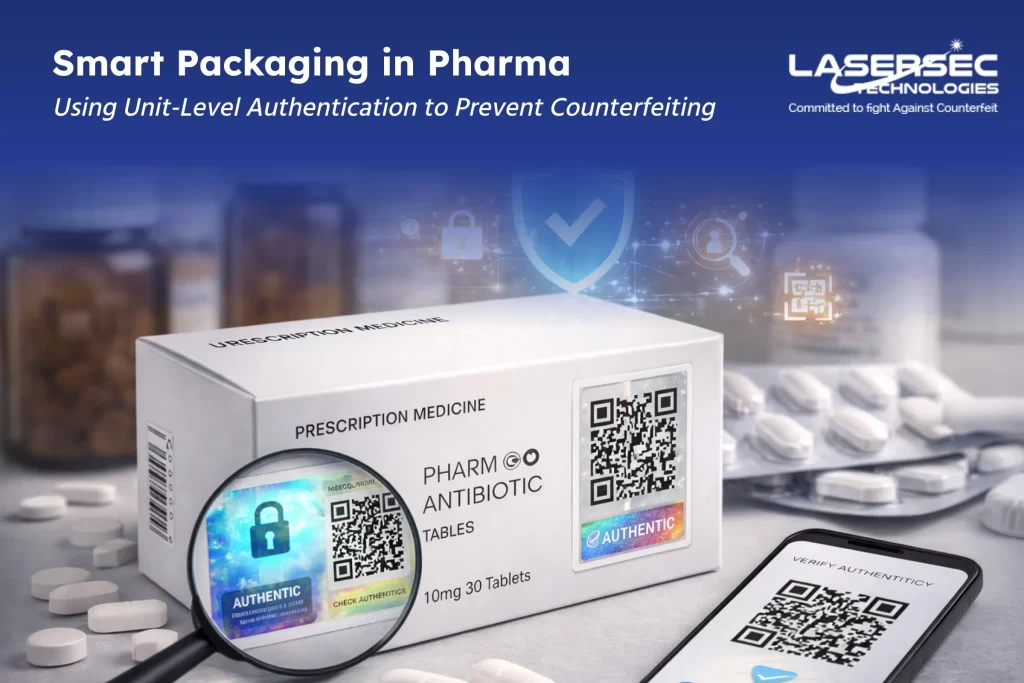
Multilayer security labels combine multiple authentication and protection technologies within a single packaging element.
Instead of relying on one security feature, multilayer labels integrate several layers of protection that work together to safeguard product integrity.
These labels typically include:
- Tamper-evident structures that reveal if packaging has been opened
- Holographic security elements that are extremely difficult to replicate
- Serialized identification codes linked to product data
- Digital authentication through Track & Trace systems
Each layer adds an additional barrier against counterfeiting, tampering, and supply chain manipulation.
Together, these features transform a simple packaging label into a comprehensive security platform.
The Role of Tamper-Evident Features in Preventing Packaging Compromise
Tamper-evident security is one of the most important components of multilayer pharmaceutical labels.
These features are designed to clearly indicate if a package has been opened or altered after leaving the manufacturing facility.
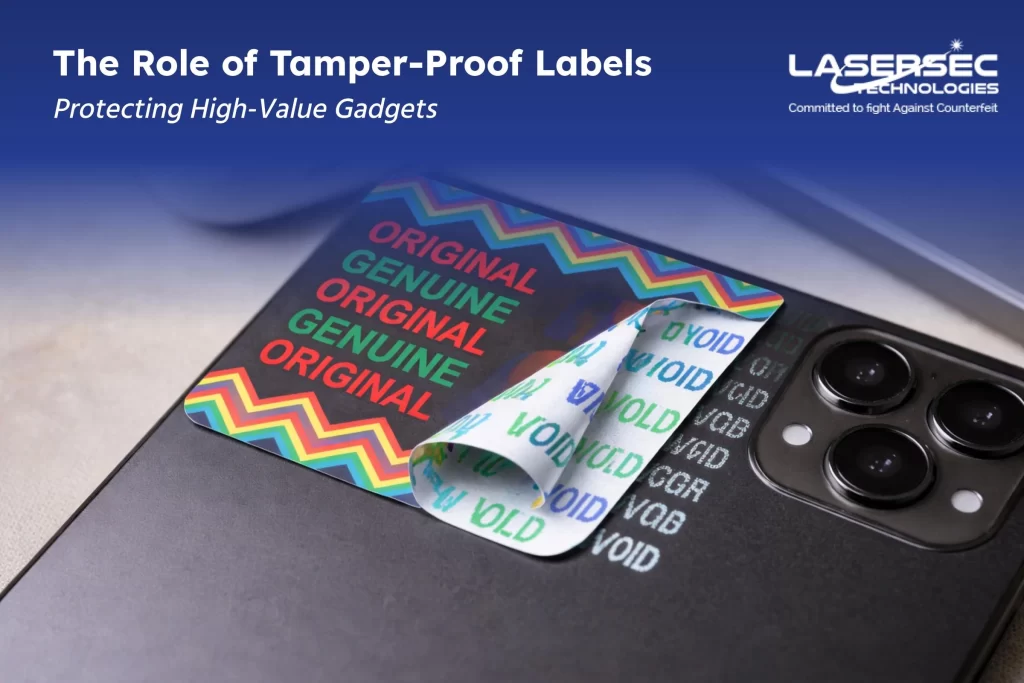
Tamper-evident labels may include mechanisms such as:
- VOID security patterns that appear when labels are removed
- Destructible label materials that break during removal
- Adhesive residue that reveals interference
- Security cuts or structural damage indicators
If tampering occurs, the label cannot be restored to its original condition.
This provides immediate visual evidence that packaging integrity has been compromised.
In regulated pharmaceutical markets, such clear tamper indicators are critical for maintaining product safety and preventing compromised medicines from reaching patients.
Strengthening Authentication with Holographic Security Layers
Holographic security features add an additional layer of authentication to pharmaceutical packaging.
Unlike conventional printing, holograms use complex optical structures that create dynamic visual effects under different lighting conditions.
These features are extremely difficult to reproduce using standard printing technologies.
In pharmaceutical labels, holographic elements help:
- Provide visible authentication for regulators and distributors
- Deter counterfeit replication of packaging
- Enhance brand identification and packaging security
Because holographic technology requires specialized manufacturing processes, counterfeiters find it significantly harder to replicate these security elements accurately.
Serialization: Enabling Unit-Level Pharmaceutical Traceability
Serialization is a regulatory requirement in many pharmaceutical markets worldwide.
Serialized labels assign unique identification codes to each individual product unit, enabling precise tracking throughout the supply chain.
These codes may appear in the form of:
- Serialized QR codes
- Data matrix codes
- Unique product identifiers linked to databases
Serialization allows manufacturers and regulators to verify:
- Product origin
- Manufacturing batch information
- Distribution records
- Product authenticity
If duplicate or invalid codes are detected, the system can immediately flag potential counterfeit activity.
This capability significantly reduces the risk of counterfeit products entering legitimate pharmaceutical distribution channels.
How Track & Trace Systems Improve Recall Management
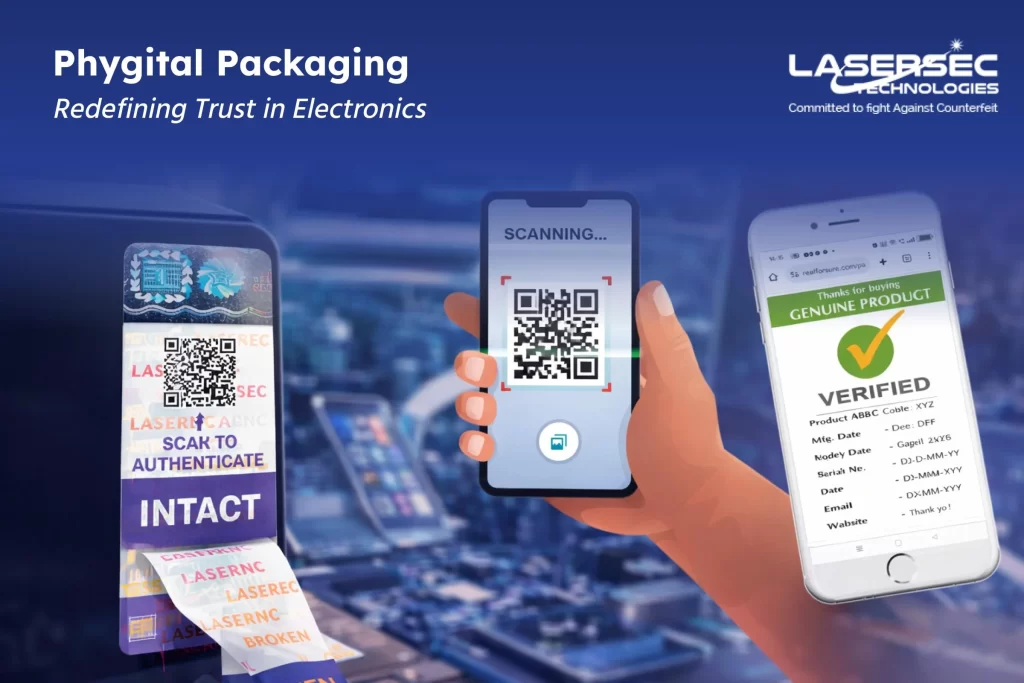
Track & Trace technology provides a digital infrastructure that connects serialized packaging data with supply chain monitoring systems.
Every time a serialized product code is scanned within the supply chain, a verification record can be created.
This provides valuable visibility into product movement across markets.
Track & Trace systems allow pharmaceutical companies to:
- Monitor distribution channels
- Identify unauthorized product diversion
- Detect suspicious product scans
- Verify product authenticity instantly
If a potential issue arises, manufacturers can quickly identify affected product batches and isolate them before they spread through the supply chain.
This precision significantly reduces the scale and impact of potential recalls.
Why Quality and Regulatory Leaders Are Prioritizing Multilayer Security Labels
Quality assurance leaders, regulatory compliance teams, and supply chain managers are increasingly recognizing that packaging security plays a critical role in risk mitigation.
Multilayer security labels offer several advantages for regulated pharmaceutical markets:
- Strong protection against counterfeit infiltration
- Clear tamper evidence for packaging integrity
- Unit-level serialization for traceability
- Integration with Track & Trace compliance systems
- Faster identification and containment of supply chain risks
These benefits help manufacturers maintain compliance while reducing the likelihood of large-scale recalls triggered by packaging authenticity concerns.
How Lasersec Technologies Supports Secure Pharmaceutical Labeling
At Lasersec Technologies, we develop advanced multilayer security labels designed to help pharmaceutical manufacturers protect products in regulated markets.
Our solutions combine tamper-evident label structures, holographic security elements, serialization-ready designs, and authentication capabilities to create a comprehensive packaging protection system.
These multilayer labels help pharmaceutical companies:
- Prevent counterfeit drug infiltration
- Strengthen packaging authentication
- Support serialization and Track & Trace compliance
- Protect supply chain integrity
- Reduce risks associated with product recalls
By integrating multiple security layers into pharmaceutical packaging, we help manufacturers enhance both product safety and regulatory confidence.