We're leading manufacturer of anti-counterfeit solutions and
safeguard brands across industries with cutting-edge security
solutions that prevent counterfeiting and ensure product
authenticity.
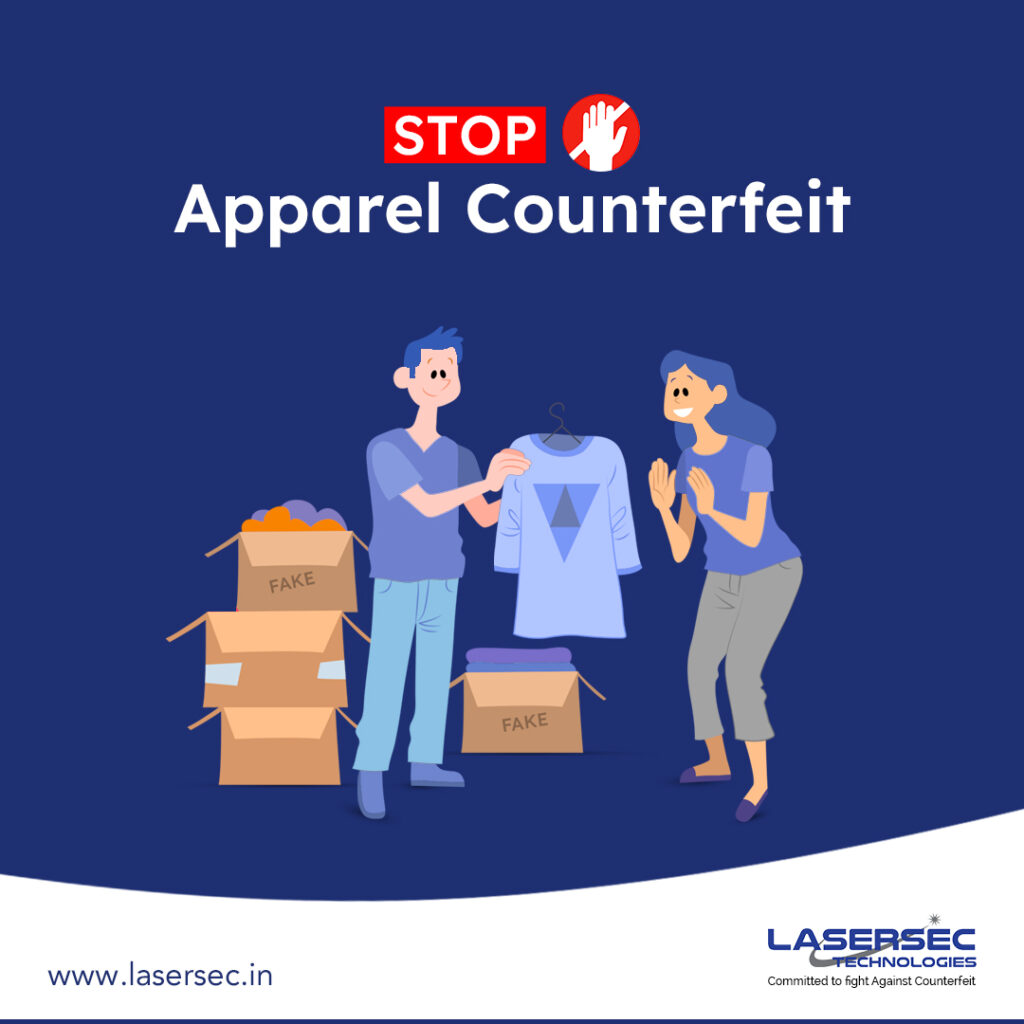
Counterfeit Products are imitations of original products that are often mass produced or sold under the original company’s name but without their permission. Fake products like these have a wide variety of industries which may includeApparel, Medication, Auto Parts, and even Electronics.
But the most sold items areAccessories, Jewelry, Handbags, Computers, Shoes, Personal Care Products, Clothes, and Wallets. There are protocols with which businesses can retaliate.
Some of the steps are as follows:
Register Product Trademarks
Registration of the product trademarks is a significant step in for protecting the brands. Federal registration helps to implement the product brands and also provides a constructive notice reminding the claims of the ownership for the brand. Federal registration also helps to get access to the court in case things go south.
Check Products And Be Vigilant
Protecting the brand is not enough since have to take the steps or follow the protocols to protect the rights. Monitor or Appoint service providers to scrutinize thoroughly which includes both online and retail — to verify if the products sold are genuine or not. There are three (3) simple factors for examining, which include: The Packaging, The Price, and The Location of the products that are being sold.
Use Latest Technology
Technology is and will always be an important tool to protect the brand or products from getting counterfeited.
Technologies can be convenient which can be implemented within the original product. For apparels, example,a very particular thread or any symbol could be added which will indicate the originality of the product. And will only be visible when you keep it under a light of some sort. A plastic hologram can be implemented which can be used for brand-specific logos.
Educate the Masses
Spread Awareness and Educate them about fake products. Ask them to scrutinize, and if found false, they must immediately report to the authorities.
A high-value electronic device leaves the manufacturing facility after extensive quality testing, packaging verification, and distribution planning. The product is genuine, sealed, and ready to enter the global marketplace.
However, once electronics move through international supply chains, they pass through multiple intermediaries — distributors, logistics providers, retailers, service centers, and sometimes unauthorized resellers.
During this journey, products may be exposed to tampering, unauthorized repairs, counterfeit substitution, or component replacement.
In many cases, the packaging may appear intact while the product inside has already been altered.
For manufacturers of high-value gadgets such as smartphones, laptops, gaming devices, and premium electronics, protecting products from tampering is essential not only for brand protection but also for warranty integrity and customer trust.
Why High-Value Electronics Are Frequent Targets for Tampering and Counterfeiting
High-value consumer electronics are among the most commonly targeted products for tampering and counterfeit activities.
Devices such as smartphones, tablets, gaming consoles, and premium accessories command strong resale value and move rapidly across global markets.
This makes them attractive targets for unauthorized activities including:
Product tampering before resale
Replacement of internal components
Refurbished products sold as new
Unauthorized warranty claims
Counterfeit products packaged to resemble genuine devices
These activities can occur at multiple points within the supply chain, especially when products move through parallel distribution channels or unauthorized resellers.
For electronics manufacturers, the consequences include:
Increased warranty fraud
Customer dissatisfaction and returns
Loss of brand credibility
Distribution channel conflicts
Financial losses from counterfeit and tampered devices
Without clear packaging security measures, detecting tampering becomes extremely difficult once the product reaches the market.
The Limitations of Standard Packaging in Protecting Electronic Devices
Traditional electronics packaging is designed primarily to protect devices from physical damage during transportation and storage.
While boxes, seals, and shrink wraps provide basic protection, they are not designed to prevent sophisticated tampering.
Standard packaging elements such as:
Printed seals
Adhesive stickers
Plastic shrink wrap
Standard barcode labels
can often be removed and replaced without leaving visible signs of interference.
This means a device can be opened, modified, and resealed while appearing completely new.
For high-value electronics, manufacturers require packaging solutions that can clearly indicate if a product has been accessed or altered after leaving the factory.
What Are Tamper-Proof Labels and How They Work
Tamper-proof labels are specialized security labels designed to reveal clear evidence when someone attempts to remove, reposition, or tamper with them.
Unlike standard labels, these security labels incorporate advanced adhesive technologies and structural designs that make removal impossible without leaving visible damage.
Once applied, tamper-proof labels create a permanent bond with the product surface.
If someone attempts to peel or remove the label, the label will either:
Break apart
Leave visible residue
Display a hidden security message
This makes it immediately clear that the product seal has been compromised.
Tamper-proof labels are widely used across electronics packaging to protect product integrity and ensure that devices reach consumers exactly as they left the manufacturer.
Understanding VOID Security Seals in Electronics Packaging
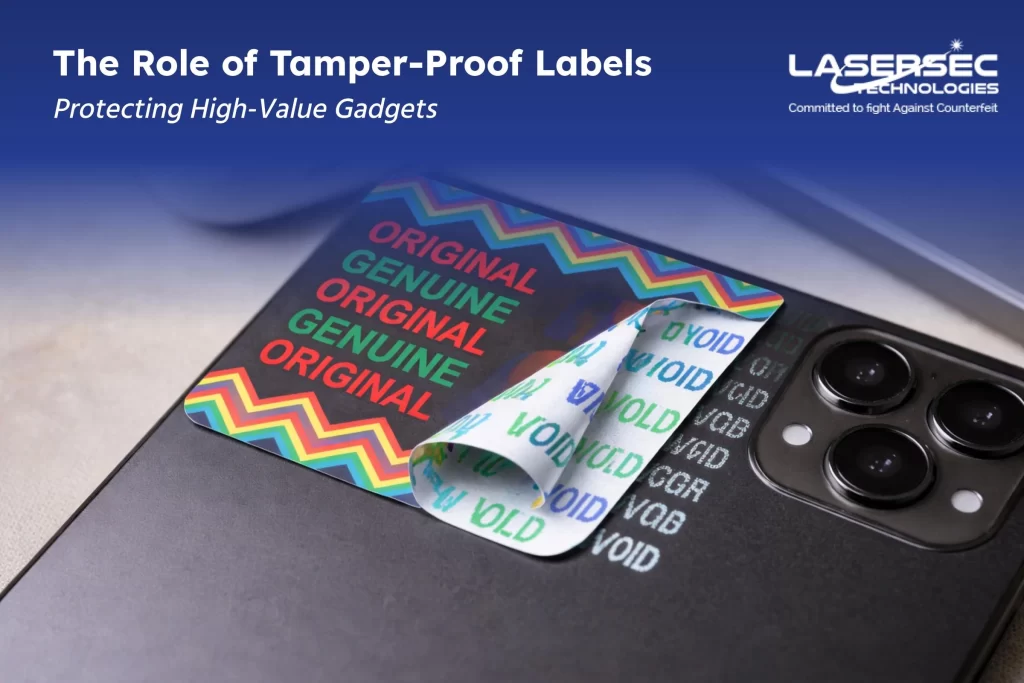
One of the most widely used tamper-evident technologies in electronics packaging is the VOID security label.
VOID labels contain a hidden security pattern embedded within the adhesive layer of the label.
When someone attempts to remove the label, the adhesive separates in a way that reveals a visible message such as:
VOID
OPENED
TAMPERED
This message appears either on the label itself, the product surface, or both.
Once triggered, the VOID pattern cannot be reversed or concealed. This provides immediate visual evidence that the product seal has been broken.
VOID labels are particularly useful for:
Device packaging seals
Warranty protection seals
Electronic device enclosures
Service access points
Because the label cannot be reapplied without visible damage, it becomes a reliable indicator of product tampering.
Preventing Warranty Fraud with Tamper-Evident Security Labels
Warranty fraud is a major concern for electronics manufacturers.
When products are opened or modified by unauthorized service providers, manufacturers may still receive warranty claims if the product appears externally intact.
Manufacturers often place these labels over key access points such as:
Device screws
Internal component panels
Battery compartments
Service access ports
If the label is damaged or removed, it immediately indicates that the product has been opened.
This allows service centers to quickly determine whether the warranty conditions have been violated.
By clearly signaling unauthorized access, tamper-evident labels reduce fraudulent warranty claims and help manufacturers maintain service integrity.
Strengthening Electronics Brand Protection with Tamper-Proof Labels
Tamper-proof labels also play an important role in preventing counterfeit electronics from entering legitimate distribution channels.
Counterfeiters often attempt to repackage fake or refurbished devices to resemble genuine products.
However, when manufacturers integrate secure tamper-evident labels into packaging, it becomes significantly harder to replicate the complete security structure.
Security labels may include additional authentication features such as:
These elements make the labels extremely difficult to reproduce and allow distributors and retailers to verify product authenticity more easily.
Enhancing Supply Chain Security for Electronic Devices
Electronics manufacturers rely on complex global supply chains involving multiple logistics partners, warehouses, distributors, and retailers.
Tamper-proof labels help maintain product integrity throughout this journey.
If a device is opened or interfered with during transit, the tamper-evident label provides immediate evidence.
This enables manufacturers and distributors to quickly identify potential supply chain issues such as:
Unauthorized product access
Product substitution
Refurbished products entering new inventory
Packaging tampering during transportation
This visibility strengthens supply chain security and helps ensure that genuine, untouched products reach consumers. To enhance monitoring and traceability, these solutions are often integrated with Track & Trace systems.
Why Electronics Manufacturers Are Adopting Advanced Tamper-Evident Packaging
As electronics markets continue to grow and devices become more valuable, manufacturers are prioritizing packaging security as part of their overall brand protection strategy.
Tamper-proof labels and VOID seals offer several advantages:
Clear evidence of product tampering
Protection against unauthorized access
Reduced warranty fraud
Stronger packaging security for high-value gadgets
Increased consumer trust
These features make tamper-evident labels a practical and cost-effective security solution for electronics brands operating in competitive global markets.
How Lasersec Technologies Supports Electronics Packaging Security
At Lasersec Technologies, we develop advanced tamper-proof and anti-counterfeit labeling solutions designed to protect high-value electronic devices.
Our tamper-evident labels and VOID security seals integrate specialized adhesive technologies and security printing features that provide reliable evidence of product interference.
These solutions help electronics manufacturers:
Protect high-value gadgets from tampering
Prevent warranty fraud
Strengthen product authentication
Improve packaging security across supply chains
Safeguard brand reputation
By combining advanced label technologies with anti-counterfeit security features, we help electronics brands maintain control and trust throughout the product lifecycle.
A pharmaceutical product moves through years of research, regulatory approvals, clinical validation, and strict manufacturing protocols before it reaches patients.
For critical therapeutic categories such as oncology medicines, anti-infectives, and psychotropic drugs, the stakes are even higher. These medicines are often life-saving, tightly regulated, and distributed through controlled supply chains.
Yet despite these safeguards, counterfeit drugs continue to infiltrate global pharmaceutical markets.
In many cases, counterfeit products replicate packaging so closely that visual inspection alone cannot identify the difference. A blister pack may appear genuine while the tablets inside are ineffective, contaminated, or entirely fake.
For manufacturers of high-risk medicines, this creates a serious challenge. Traditional packaging is no longer sufficient to protect products against sophisticated counterfeiting operations.
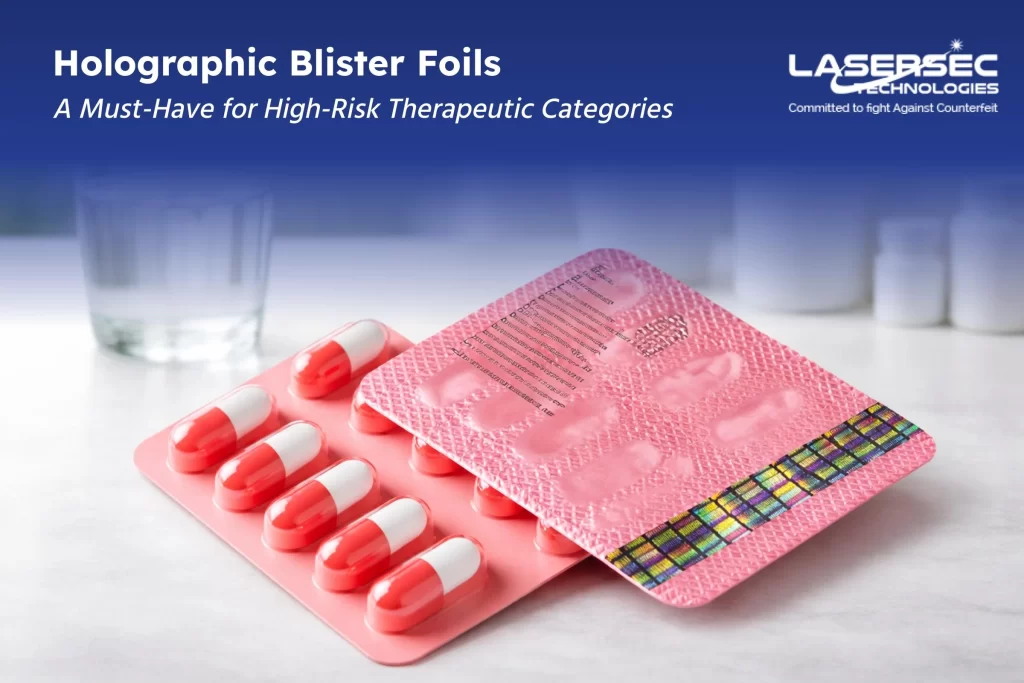
This is why holographic blister foils have emerged as a critical pharmaceutical packaging security solution. By integrating advanced holographic security directly into blister packaging, manufacturers can significantly strengthen product authentication, supply chain integrity, and patient safety.
Why High-Risk Therapeutic Categories Are Prime Targets for Counterfeit Drugs
Counterfeit pharmaceutical products do not affect all drug categories equally. Certain therapeutic segments are more vulnerable due to their high value, global demand, and critical medical importance.
These include:
Oncology drugs
Anti-infective medications such as antibiotics and antivirals
Psychotropic and controlled substances
Specialty and high-value prescription medicines
Counterfeiters often target these medicines because they command higher prices and move through complex international supply chains.
In some cases, counterfeiters attempt to replicate genuine packaging using advanced printing techniques. Without strong security features integrated into packaging, distinguishing genuine products from counterfeits becomes extremely difficult.
The consequences can be severe:
Patients receiving ineffective or dangerous treatments
Regulatory violations and recalls
Loss of trust among healthcare providers
Significant financial and reputational damage for pharmaceutical companies
For high-risk therapeutic categories, packaging security becomes an essential part of patient protection and regulatory compliance.
The Limitations of Standard Blister Packaging in Preventing Counterfeits
Blister packaging has long been a preferred format for pharmaceutical products due to its ability to protect tablets from moisture, contamination, and tampering.
However, standard blister foils without advanced security features primarily serve a protective function, not a security function.
Traditional blister packaging elements such as:
Printed foil designs
Batch numbers
Standard barcodes
Basic branding elements
can be replicated with increasing accuracy using modern printing technologies.
This allows counterfeiters to produce visually convincing packaging that can enter distribution channels unnoticed.
Even trained distributors or pharmacists may struggle to identify counterfeit products if packaging lacks secure authentication features.
As counterfeit methods become more sophisticated, pharmaceutical manufacturers require packaging solutions that provide visible, verifiable, and difficult-to-replicate security layers such as pharma holographic labels.
What Makes Holographic Blister Foils a Powerful Anti-Counterfeiting Solution
Holographic blister foils incorporate advanced optical security elements directly into pharmaceutical packaging materials.
These holographic effects are created using specialized technologies that produce complex light diffraction patterns which are extremely difficult to replicate using conventional printing methods.
Unlike standard foil designs, holographic blister foils include multi-layered security structures that provide both visual authentication and tamper resistance.
Key characteristics include:
Complex holographic patterns that cannot be easily duplicated
Dynamic visual effects visible under light movement
Secure bonding to blister packaging that reveals tampering
These features transform blister packaging from a passive protective layer into an active anti-counterfeit security system.
Healthcare professionals, distributors, and regulators can visually confirm authenticity while manufacturers benefit from stronger packaging protection.
Protecting Oncology Medicines with Secure Holographic Blister Foils
Oncology drugs represent one of the most critical and valuable pharmaceutical segments globally.
These medicines are often expensive, lifesaving, and distributed across multiple international markets. Their high value makes them frequent targets for counterfeiting networks.
Counterfeit oncology drugs can have devastating consequences because patients rely on these treatments during life-threatening conditions.
Holographic blister foils help protect oncology medicines by providing:
A highly visible authentication feature on each blister pack
Packaging elements that are extremely difficult for counterfeiters to reproduce
Compatibility with serialization and track-and-trace systems
This ensures that genuine medicines reach hospitals, pharmacies, and patients without interference from counterfeit supply chains.
Securing Anti-Infective Drugs Against Counterfeit Distribution
Anti-infective medications such as antibiotics and antivirals are widely used across healthcare systems and are frequently distributed across international markets.
Because of their global demand, these medicines are particularly vulnerable to counterfeit manufacturing and unauthorized resale.
The distribution of counterfeit anti-infective drugs contributes to serious public health risks, including ineffective treatment and antimicrobial resistance.
Holographic blister foils add a powerful security layer by making packaging authentication easier at multiple points in the supply chain.
Distributors, pharmacists, and regulatory authorities can visually confirm that the blister packaging includes genuine security features before the product reaches patients.
Enhancing Security for Psychotropic and Controlled Substances
Psychotropic medications and controlled drugs are among the most tightly regulated pharmaceutical categories.
These medicines require strict monitoring to prevent misuse, diversion, or illegal distribution.
However, counterfeit versions of these products continue to appear in illegal markets.
Holographic blister foils help pharmaceutical manufacturers strengthen packaging security by ensuring that:
Genuine products include identifiable holographic authentication elements
Counterfeit copies are easier to detect
Tampering or repackaging attempts become visible
By integrating security features directly into blister packaging materials, manufacturers create a stronger defense against both counterfeiting and product diversion.
Combining Holographic Blister Foils with Track & Trace Authentication
While holographic security provides strong visual protection, combining it with digital verification systems creates an even more powerful anti-counterfeit framework.
Modern pharmaceutical brand protection strategies often combine secure packaging technologies with Track & Trace systems.
When holographic blister foils are integrated with serialized QR codes or authentication identifiers, manufacturers gain the ability to:
Verify product authenticity instantly
Track product movement across supply chains
Detect duplicate or suspicious codes
Identify unauthorized market diversion
This hybrid approach creates both physical security and digital traceability, significantly improving pharmaceutical supply chain protection.
Why High-Risk Pharmaceutical Manufacturers Are Adopting Holographic Blister Foils
Pharmaceutical companies manufacturing high-risk medicines are increasingly prioritizing packaging security as part of their broader brand protection and compliance strategies.
Holographic blister foils offer several important advantages:
Strong visual authentication that is difficult to replicate
Integration with serialization and Track & Trace technologies
Tamper-evident packaging protection
Enhanced regulatory confidence
Improved distributor and patient trust
These benefits make holographic blister foils an effective packaging security solution for manufacturers producing high-value or life-critical medicines.
How Lasersec Technologies Supports Secure Pharmaceutical Packaging
At Lasersec Technologies, we specialize in advanced pharmaceutical anti-counterfeit packaging solutions designed to protect high-risk medicines across global markets.
Our holographic blister foil solutions integrate complex holographic security with high-quality pharmaceutical packaging materials, enabling manufacturers to strengthen packaging authentication without disrupting production processes.
These solutions are part of our broader pharmaceutical industry solutions and help companies:
Prevent counterfeit drug infiltration
Protect high-risk therapeutic categories
Strengthen supply chain security
Improve packaging authentication
Support regulatory compliance
By combining advanced holographic technologies with secure packaging design, we help pharmaceutical brands safeguard both their products and their patients.
Taking Pharmaceutical Packaging Security Forward
As counterfeiting methods grow more sophisticated, the need for advanced packaging security is no longer optional — it is a critical requirement for manufacturers of high-risk medicines. Holographic blister foils represent a proven, scalable, and highly effective solution that addresses both the physical and digital dimensions of product authentication.
At Lasersec Technologies, we remain committed to continuous innovation in anti-counterfeit pharmaceutical packaging, helping manufacturers stay ahead of emerging threats while maintaining full regulatory compliance.
Meet Us at CPhI InnoPack Pharma Confex 2026
We are excited to share thatLasersec Technologies will be participating as an Exhibit Partner at the 15th Annual CPhI InnoPack Pharma Confex — one of India’s most significant platforms for pharmaceutical packaging innovation and industry collaboration.
If you are exploring how holographic blister foils or advanced anti-counterfeit packaging solutions can strengthen your product security, this is an excellent opportunity to connect with our team directly and see our latest technologies up close.
Visit us at Booth No. F1 on 18–19 June 2026 at Sahara Star, Mumbai, and let us help you find the right packaging security solution for your therapeutic category.
A pharmaceutical product entering regulated markets goes through extensive validation before reaching patients. Manufacturing protocols, quality checks, serialization requirements, and regulatory documentation ensure that the product complies with strict global standards.
Despite these safeguards, pharmaceutical recalls continue to occur across global markets.
In many cases, recalls are not only triggered by manufacturing defects but also by packaging tampering, counterfeit infiltration, labeling inconsistencies, or supply chain diversion.
For pharmaceutical manufacturers operating in highly regulated markets, a recall can have significant consequences.
It disrupts supply chains, affects patient access to essential medicines, triggers regulatory scrutiny, and can cause lasting reputational damage.
To reduce these risks, many pharmaceutical companies are adopting multilayer security labels as part of their packaging strategy.
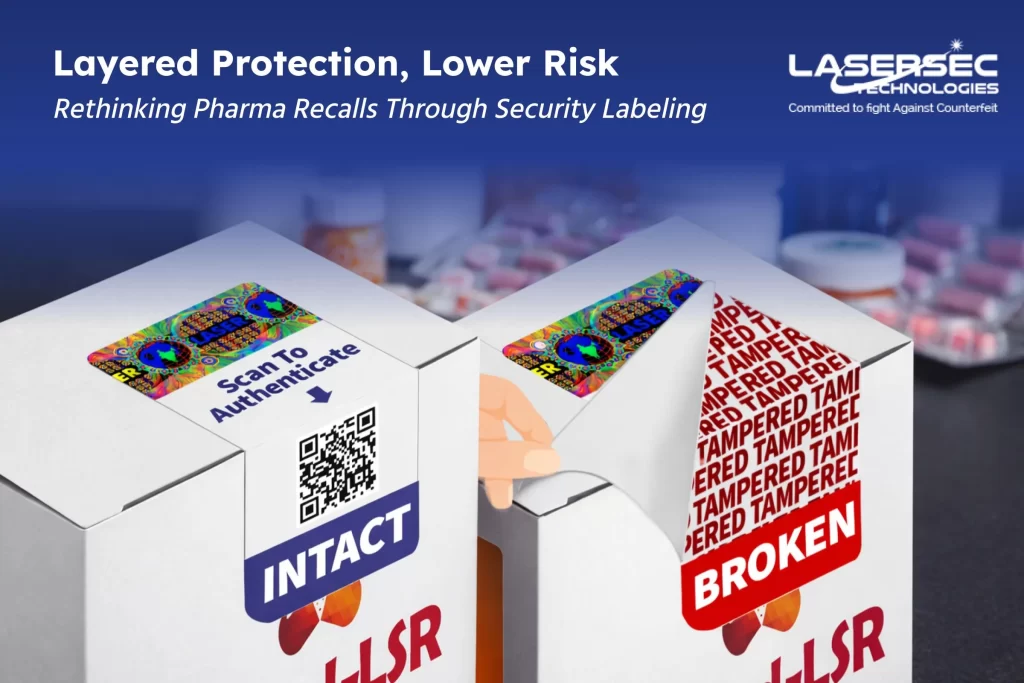
These advanced labels integrate multiple security technologies—such as tamper-evident features, holographic authentication, serialization layers, and Track & Trace capabilities—creating a powerful system that strengthens product integrity throughout the supply chain.
Understanding Recall Risks in Highly Regulated Pharmaceutical Markets
Pharmaceutical recalls occur when products must be removed from distribution due to safety concerns, regulatory non-compliance, or product authenticity issues.
Common triggers for recalls include:
Packaging tampering or seal integrity failure
Counterfeit products entering distribution channels
Labeling or identification inconsistencies
Unauthorized product diversion
Inability to verify product origin or authenticity
Regulatory authorities require manufacturers to demonstrate strong product traceability and packaging integrity across the entire supply chain.
If a product cannot be verified quickly or if packaging authenticity becomes questionable, regulators may require precautionary recalls even when the drug itself is safe.
This makes packaging security a critical component of recall prevention.
The Limitations of Single-Layer Packaging Security
Many pharmaceutical products still rely on single-layer security mechanisms such as basic tamper seals or printed authentication elements.
While these measures provide some level of protection, they are often insufficient against modern counterfeiting techniques.
Single-layer packaging security can be vulnerable because:
Tamper seals can sometimes be removed and replaced
Printed security features can be copied or replicated
Labels without serialization cannot provide unique product identification
Lack of traceability limits supply chain visibility
When packaging security is limited to a single protection mechanism, it becomes easier for counterfeiters or unauthorized distributors to bypass detection.
This increases the likelihood that compromised products may reach distribution networks before being identified.
What Are Multilayer Security Labels in Pharmaceutical Packaging
Multilayer security labels combine multiple authentication and protection technologies within a single packaging element.
Instead of relying on one security feature, multilayer labels integrate several layers of protection that work together to safeguard product integrity.
These labels typically include:
Tamper-evident structures that reveal if packaging has been opened
Holographic security elements that are extremely difficult to replicate
Serialized identification codes linked to product data
Each layer adds an additional barrier against counterfeiting, tampering, and supply chain manipulation.
Together, these features transform a simple packaging label into a comprehensive security platform.
The Role of Tamper-Evident Features in Preventing Packaging Compromise
Tamper-evident security is one of the most important components of multilayer pharmaceutical labels.
These features are designed to clearly indicate if a package has been opened or altered after leaving the manufacturing facility.
Tamper-evident labels may include mechanisms such as:
VOID security patterns that appear when labels are removed
Destructible label materials that break during removal
Adhesive residue that reveals interference
Security cuts or structural damage indicators
If tampering occurs, the label cannot be restored to its original condition.
This provides immediate visual evidence that packaging integrity has been compromised.
In regulated pharmaceutical markets, such clear tamper indicators are critical for maintaining product safety and preventing compromised medicines from reaching patients.
Strengthening Authentication with Holographic Security Layers
Holographic security features add an additional layer of authentication to pharmaceutical packaging.
Unlike conventional printing, holograms use complex optical structures that create dynamic visual effects under different lighting conditions.
These features are extremely difficult to reproduce using standard printing technologies.
In pharmaceutical labels, holographic elements help:
Provide visible authentication for regulators and distributors
Deter counterfeit replication of packaging
Enhance brand identification and packaging security
Because holographic technology requires specialized manufacturing processes, counterfeiters find it significantly harder to replicate these security elements accurately.
Serialization is a regulatory requirement in many pharmaceutical markets worldwide.
Serialized labels assign unique identification codes to each individual product unit, enabling precise tracking throughout the supply chain.
These codes may appear in the form of:
Serialized QR codes
Data matrix codes
Unique product identifiers linked to databases
Serialization allows manufacturers and regulators to verify:
Product origin
Manufacturing batch information
Distribution records
Product authenticity
If duplicate or invalid codes are detected, the system can immediately flag potential counterfeit activity.
This capability significantly reduces the risk of counterfeit products entering legitimate pharmaceutical distribution channels.
How Track & Trace Systems Improve Recall Management
Track & Trace technology provides a digital infrastructure that connects serialized packaging data with supply chain monitoring systems.
Every time a serialized product code is scanned within the supply chain, a verification record can be created.
This provides valuable visibility into product movement across markets.
Track & Trace systems allow pharmaceutical companies to:
Monitor distribution channels
Identify unauthorized product diversion
Detect suspicious product scans
Verify product authenticity instantly
If a potential issue arises, manufacturers can quickly identify affected product batches and isolate them before they spread through the supply chain.
This precision significantly reduces the scale and impact of potential recalls.
Why Quality and Regulatory Leaders Are Prioritizing Multilayer Security Labels
Quality assurance leaders, regulatory compliance teams, and supply chain managers are increasingly recognizing that packaging security plays a critical role in risk mitigation.
Multilayer security labels offer several advantages for regulated pharmaceutical markets:
Strong protection against counterfeit infiltration
Faster identification and containment of supply chain risks
These benefits help manufacturers maintain compliance while reducing the likelihood of large-scale recalls triggered by packaging authenticity concerns.
How Lasersec Technologies Supports Secure Pharmaceutical Labeling
At Lasersec Technologies, we develop advanced multilayer security labels designed to help pharmaceutical manufacturers protect products in regulated markets.
Our solutions combine tamper-evident label structures, holographic security elements, serialization-ready designs, and authentication capabilities to create a comprehensive packaging protection system.
These multilayer labels help pharmaceutical companies:
A customer purchases a premium electronic device expecting authenticity, performance, and reliability. The product box looks genuine, the branding appears correct, and the device functions as expected.
However, in today’s global electronics market, appearance alone is no longer enough to guarantee authenticity.
Counterfeit electronics have become increasingly sophisticated. Fake devices often replicate packaging designs, branding elements, and labeling with alarming accuracy.
This creates uncertainty for consumers and significant challenges for electronics manufacturers trying to protect their products and brand reputation.
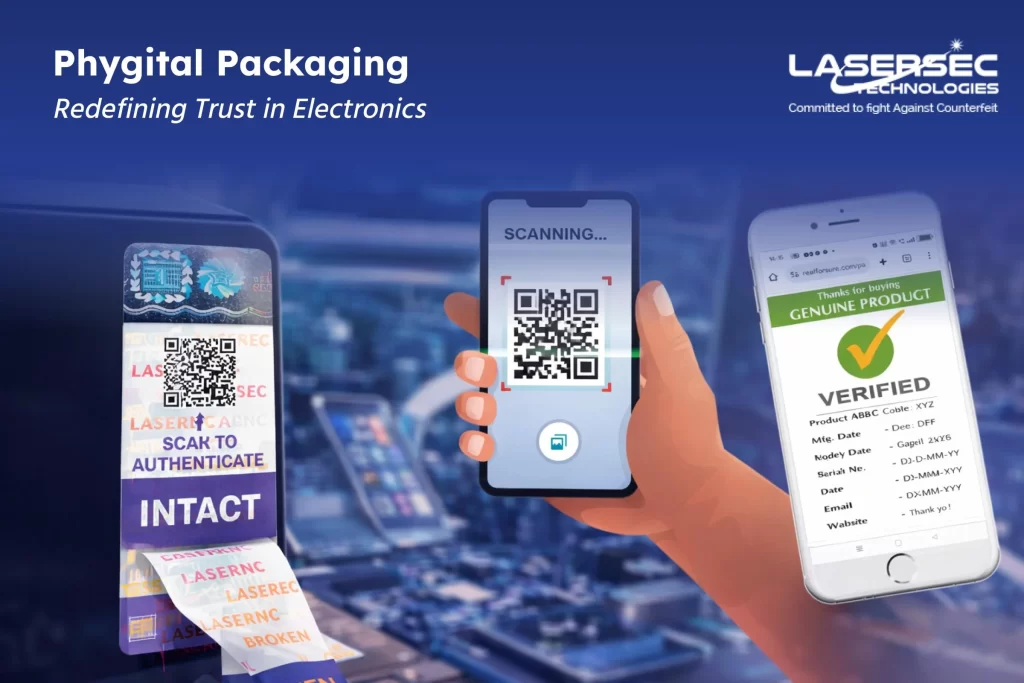
Phygital packaging combines physical security technologies like holograms with digital verification tools such as scannable QR codes. This integration transforms product packaging into a secure authentication gateway using solutions like phygital packaging technology, allowing instant product verification and improving transparency across the supply chain.
The Growing Counterfeit Threat in Consumer Electronics
Consumer electronics is one of the fastest-growing global industries. Products such as smartphones, headphones, smart devices, gaming consoles, and accessories move rapidly across international supply chains.
This high demand and fast product turnover make electronics a major target for counterfeiters.
Counterfeit products often mimic genuine packaging so closely that consumers cannot easily identify the difference. In some cases, counterfeit devices even enter legitimate retail environments.
Common risks in electronics markets include:
Counterfeit devices packaged to resemble genuine products
Unauthorized refurbished products sold as new
Repackaged or modified devices
Parallel market distribution
Fake accessories sold under well-known brand names
These issues damage consumer confidence and create serious brand protection challenges for manufacturers.
As a result, electronics companies are increasingly investing in packaging technologies that allow instant product authentication and transparency.
Understanding the Concept of Phygital Packaging
Phygital packaging refers to the integration of physical packaging security features with digital authentication systems.
The goal is to create a packaging system that not only protects the product physically but also connects consumers, distributors, and brands through a digital verification layer.
In consumer electronics packaging, phygital solutions typically combine:
When these technologies are integrated into packaging, each product unit gains a unique, verifiable identity.
Consumers can scan the code using a smartphone to instantly confirm whether the product is genuine.
How Holography Strengthens Physical Packaging Security
Holographic security elements are widely used in brand protection because they are extremely difficult to replicate using conventional printing methods.
Holograms contain complex optical structures that produce dynamic visual effects when viewed under different lighting angles.
These effects cannot be easily reproduced by counterfeiters.
In consumer electronics packaging, holographic security labels help by providing:
A visible authentication element for consumers and retailers
A strong deterrent against counterfeit replication
Distinctive brand identity integrated into packaging
Security features that are difficult to duplicate
Because holograms rely on specialized manufacturing technologies, counterfeiters find it challenging to reproduce them accurately.
The Role of Scannable QR Codes in Digital Authentication
While holograms provide strong visual security, digital authentication technologies allow deeper verification capabilities.
Scannable QR codes are one of the most widely adopted authentication tools in modern packaging systems.
When integrated into electronics packaging, QR codes can connect consumers directly to secure authentication platforms.
By scanning the QR code, users can instantly verify:
Product authenticity
Manufacturing information
Authorized distribution details
Warranty registration
Product origin and verification status
This creates a transparent authentication process that improves consumer confidence and reduces the risk of counterfeit purchases.
Combining Holograms and QR Codes for Stronger Phygital Security
The real power of phygital packaging emerges when physical and digital security features work together.
A holographic label provides visible authentication that signals product security, while the QR code enables instant digital verification.
This layered approach offers several advantages:
Visual authentication through holographic security
Instant digital verification through QR scanning
Unique product identification for each unit
Data collection on product verification activity
Detection of suspicious or duplicate scans
For electronics brands, this combination significantly strengthens product authentication and counterfeiting prevention.
Building Brand Transparency Through Smart Packaging
Modern consumers increasingly expect transparency from brands, particularly when purchasing premium electronics products.
Phygital packaging helps brands provide this transparency by allowing consumers to interact directly with product authentication systems.
When users scan authentication codes, they can access information such as:
Product origin
Manufacturing authenticity
Product specifications
Warranty details
Brand verification messages
This interaction builds confidence that the product is genuine while also creating a stronger connection between the brand and the consumer.
For electronics manufacturers, this transparency strengthens brand credibility and customer trust.
Improving Supply Chain Visibility with Phygital Authentication
Phygital packaging solutions also provide important benefits beyond consumer authentication.
Because each product unit includes a unique digital identity, brands can track product verification activity across different markets.
This enables manufacturers to:
Detect counterfeit activity in specific regions
Identify unauthorized distribution channels
Monitor product movement across supply chains
Strengthen global brand protection strategies
Track & Trace systems integrated with phygital packaging allow companies to shift from reactive counterfeit detection to proactive supply chain monitoring.
Why Consumer Electronics Brands Are Adopting Phygital Packaging
Electronics manufacturers operate in highly competitive global markets where product authenticity and brand reputation are critical.
Phygital packaging solutions provide a powerful way to protect products while also improving consumer engagement.
Key benefits include:
Strong anti-counterfeit protection
Instant product authentication
Enhanced brand transparency
Improved supply chain visibility
Greater consumer trust
These advantages make phygital packaging an increasingly important tool for electronics brands seeking to secure their products and strengthen customer confidence.
How Lasersec Technologies Enables Phygital Brand Protection
At Lasersec Technologies, we provide advanced phygital packaging solutions designed to help electronics brands protect products and enhance brand transparency.
Our solutions combine holographic security technologies with scannable authentication systems, creating a powerful integration of physical and digital product protection.
These solutions enable electronics manufacturers to:
Prevent counterfeit electronic products
Enable instant product authentication through QR codes
Strengthen brand protection strategies
Improve supply chain monitoring
Build consumer trust through transparent verification
By merging holographic security with digital authentication technologies, we help brands transform packaging into an intelligent brand protection platform.