









Automotive components move through a long and complex supply chain before reaching service centers, distributors, and vehicle owners.
From manufacturing plants to warehouses, distributors, spare parts dealers, and repair workshops, automotive parts often pass through multiple hands before final installation.
While this network enables global distribution, it also creates opportunities for fraud and counterfeit infiltration.
One of the most common challenges in the automotive aftermarket is part swapping and component reuse.
In such cases, genuine components are removed from original packaging and replaced with counterfeit or refurbished parts before resale.
The packaging may appear genuine, but the product inside may not be the original component.
For automotive manufacturers and authorized distributors, this creates serious risks for product quality, brand reputation, and customer safety.
This is why tamper-proof labels are becoming an essential part of automotive packaging security.
These labels provide clear visual evidence if packaging has been opened or altered, helping manufacturers protect genuine components from unauthorized reuse or substitution.
The Rising Risk of Counterfeit and Reused Automotive Parts
The global automotive aftermarket is worth billions of dollars and includes a wide range of spare parts such as filters, brake components, sensors, engine parts, and electrical modules.
This high demand makes the sector particularly vulnerable to counterfeit and fraudulent practices.
Some common risks include:
- Counterfeit components sold in genuine packaging
- Genuine parts removed and replaced with fake substitutes
- Used or refurbished parts resold as new
- Packaging opened and resealed during distribution
- Unauthorized parts entering official supply chains
These practices not only affect brand credibility but can also lead to serious vehicle performance issues and safety risks.
For example, counterfeit brake pads, filters, or engine components can compromise vehicle reliability and increase the likelihood of mechanical failure.
Preventing such risks requires stronger packaging authentication and tamper detection mechanisms.
Why Standard Packaging Cannot Prevent Part Swapping
Traditional packaging used for automotive spare parts is primarily designed for product protection during transport and storage.
Boxes, cartons, and standard labels help identify the product but offer limited protection against deliberate tampering.
Common packaging elements such as:
- Printed labels
- Adhesive stickers
- bar codes
- Shrink wraps
can often be removed and replaced without obvious signs of interference.
This allows fraudulent actors to open packaging, swap components, and reseal the product while maintaining the appearance of authenticity.
As a result, counterfeit or reused parts may reach distributors or customers without immediate detection.
For high-value automotive components, manufacturers require packaging solutions that make any unauthorized access immediately visible.
What Are Tamper-Proof Labels in Automotive Packaging
Tamper-proof labels are specialized security labels designed to reveal clear evidence if someone attempts to remove or reposition them.
Unlike standard labels, tamper-evident labels incorporate materials and adhesives that prevent clean removal.
Once applied, these labels create a permanent bond with the packaging surface.
If someone tries to remove the label, it will typically:
- Break apart
- Leave visible adhesive residue
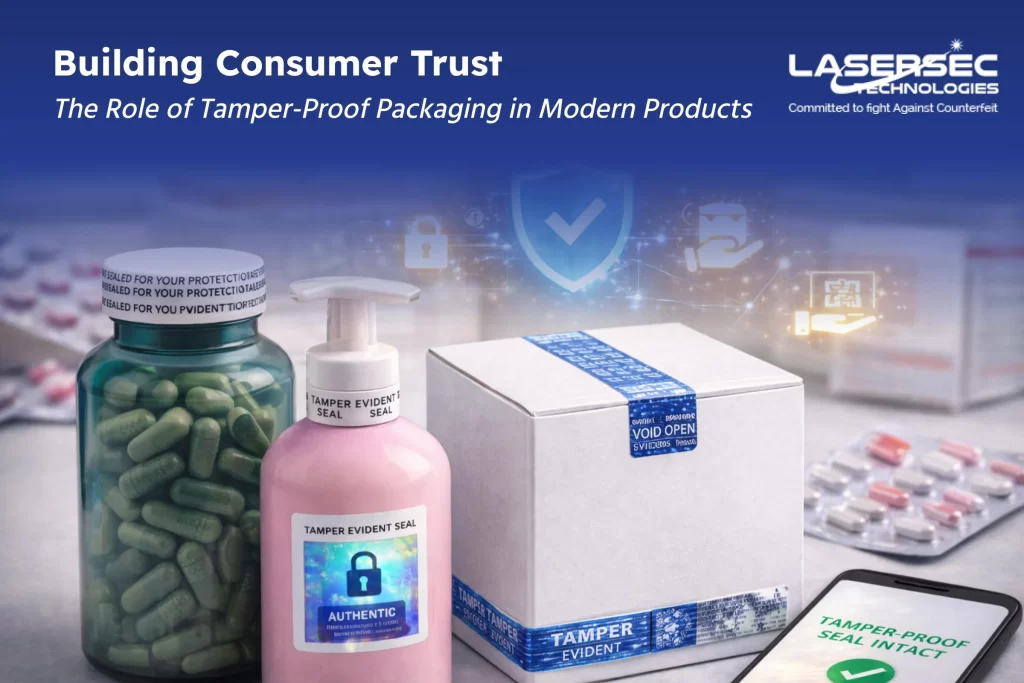
- Display a hidden security message such as VOID
This makes it impossible to open packaging without leaving visible signs of interference.
Tamper-proof labels are widely used in automotive packaging to protect spare parts and ensure that products remain sealed until they reach authorized users.
Preventing Part Swapping and Reuse Fraud
Part swapping is one of the most common forms of fraud in the automotive aftermarket.
A genuine component may be removed from its original packaging and replaced with a counterfeit or low-quality substitute.
The packaging is then resealed and sold as a genuine product.
Tamper-proof labels help prevent this practice by ensuring that packaging cannot be opened without triggering visible damage.
Once someone breaks the label seal, they cannot restore it to its original condition.
This allows distributors, mechanics, and customers to immediately detect whether the packaging has been previously opened.
In addition, tamper-evident labels discourage fraudulent behavior because they increase the likelihood of detection.
Protecting Genuine Automotive Spare Parts
Automotive manufacturers invest heavily in engineering, testing, and quality control to ensure that their components meet strict performance and safety standards.
When counterfeit or substituted parts enter the market, these standards are compromised.
Tamper-proof labels help manufacturers protect genuine spare parts by ensuring that packaging integrity remains intact throughout the distribution process.
These labels may be placed across:
- Carton opening flaps
- Product sealing points
- Spare part containers
- Protective packaging layers
If anyone tries to access the product before delivery, the tamper-evident label clearly reveals the interference.
Strengthening Automotive Supply Chain Security
The automotive supply chain involves multiple intermediaries including logistics providers, warehouses, distributors, and service networks.
Because products move across multiple locations, monitoring packaging integrity becomes challenging.
Tamper-proof labels provide a simple yet effective way to strengthen supply chain security.
If a package arrives with a broken or damaged security label, it immediately signals that the product may have been accessed during transit.
This allows distributors to isolate suspicious products before they reach service centers or customers.
Such visibility improves supply chain control and reduces the risk of counterfeit or reused parts entering authorized networks.
Supporting Brand Protection in the Automotive Aftermarket
Brand reputation is critical for automotive manufacturers.
Customers rely on genuine spare parts to maintain vehicle performance, reliability, and safety.
When counterfeit or substituted components reach the market, the brand may be blamed even if the manufacturer was not responsible for the fraud.
Tamper-proof labels support brand protection by ensuring that genuine packaging cannot be opened or manipulated without detection.
Many manufacturers also integrate additional security features into tamper-evident labels, including:
- Holographic security elements
- Serialized identification codes
- QR-based product authentication
These features make labels harder to replicate and provide additional verification capabilities for distributors and service centers.
Why Automotive Manufacturers Are Adopting Tamper-Evident Packaging
As counterfeit automotive parts become more sophisticated, manufacturers are strengthening packaging security to protect their products.
Tamper-proof labels provide several important advantages:
- Prevention of part swapping and reuse fraud
- Visible evidence of packaging interference
- Protection of genuine spare parts
- Improved supply chain monitoring
- Stronger brand protection in aftermarket channels
These benefits make tamper-evident labels an increasingly important component of modern automotive packaging strategies.
How Lasersec Technologies Supports Automotive Packaging Security
At Lasersec Technologies, we provide advanced tamper-proof labeling solutions designed to protect automotive components throughout the supply chain.
Our tamper-evident labels integrate specialized materials and security features that make packaging interference immediately visible.
These solutions help automotive manufacturers:
- Prevent spare part substitution and reuse fraud
- Protect genuine components from tampering
- Strengthen packaging authentication
- Improve supply chain security
- Safeguard brand reputation in aftermarket channels
By integrating tamper-proof labeling technologies into automotive packaging, we help brands maintain product integrity from manufacturing to installation.