





Lasersec Technologies

Your Guide to Anti-Counterfeiting

Tag: anti-counterfeiting

Tag: anti-counterfeiting

Tamper-proof seals on daily-use products ensuring safety and hygiene

A consumer picks up a bottle of cooking oil, a pack of biscuits, or a personal care product from a store shelf. Before checking the price or brand, there is a quiet, instinctive question:

Has this product been opened before?

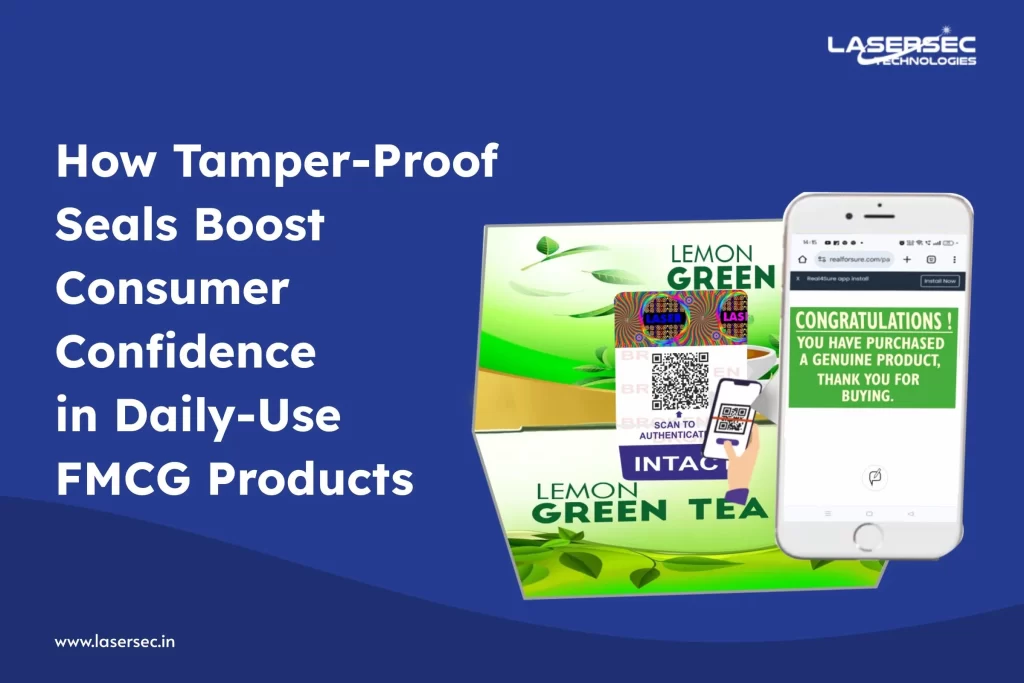
In the FMCG sector, where products are consumed daily and often immediately, consumer trust is built in seconds. Tamper-proof seals play a decisive role in this moment. They provide visible proof of product safety, protect hygiene, and reassure consumers that the brand has taken responsibility seriously.

For FMCG brand owners, packaging professionals, and quality teams, tamper-evident packaging is no longer optional. It is a foundational element of consumer confidence and brand protection.

Why Tamper Evidence Is Critical in the FMCG Industry

Fast-moving consumer goods directly affect health, hygiene, and everyday well-being. Even a small doubt about product integrity can lead to immediate rejection.

Without effective tamper-proof packaging, brands face risks such as:

  • Loss of consumer trust at the point of purchase
  • Product rejection at first use
  • Brand damage amplified through social media and word of mouth
  • Regulatory and retailer compliance challenges

Unlike durable goods, FMCG products allow no margin for uncertainty. A broken seal, loose cap, or unclear opening mechanism can raise concerns about contamination, adulteration, or prior use.

Tamper-evident seals eliminate this uncertainty by providing clear, irreversible evidence of first opening.

What Are Tamper-Proof Seals and How Do They Work?

Tamper-proof seals are packaging features designed to make any unauthorized opening immediately visible and impossible to reverse without detection.

Common tamper-evident packaging mechanisms used in FMCG include:

Once opened, these mechanisms cannot return to their original state. This simple principle—open once, show forever—is what makes tamper-proof seals so effective for consumer safety and trust.

How Tamper-Proof Seals Reassure Consumers at the Point of Purchase

Consumers may not understand packaging technology, but they clearly understand visual safety cues.

Tamper-evident packaging reassures consumers by offering:

  • Immediate visual confirmation that the product is untouched
  • Clear break-to-open indicators signaling first use
  • A consistent safety experience across batches and retail locations

This reassurance is especially important in high-sensitivity FMCG categories such as:

  • Food and beverages
  • Dairy and edible oils
  • Personal care and cosmetics
  • Home hygiene and cleaning products
  • Baby care and wellness items
In these segments, visible packaging safety directly influences buying decisions.

Maintaining Product Safety and Hygiene Across the Supply Chain

From manufacturing facilities to retail shelves, FMCG products pass through multiple touchpoints. Tamper-proof seals act as a silent guardian throughout this journey.

They help brands:

  • Detect unauthorized access during transportation and storage
  • Prevent product substitution, refilling, or partial usage
  • Reduce contamination and mishandling risks
  • Maintain hygiene until final consumption
For quality assurance and compliance teams, tamper-evident packaging provides a built-in control mechanism—one that complements audits, inspections, and process controls.

Protecting Brand Reputation in a Competitive FMCG Market

Brand reputation in FMCG is fragile and hard-earned. A single safety incident—real or perceived—can undo years of trust.

Tamper-proof seals support brand protection by:

  • Demonstrating accountability and transparency
  • Reducing the risk of counterfeit or refilled products entering the market
  • Supporting regulatory and retailer packaging requirements
  • Reinforcing a brand’s commitment to consumer well-being

When consumers repeatedly experience sealed, safe, and reliable packaging, trust becomes habitual—and brand loyalty follows.

Tamper Evidence as a Brand Trust Signal

Modern consumers expect brands to anticipate risks, not react to them. Tamper-proof seals send a subtle but powerful message:

This brand has prioritised your safety before you even asked.

For packaging and brand protection leaders, tamper evidence goes beyond compliance. It becomes a visible signal of responsibility, quality, and care—values that increasingly influence consumer choice.

Building Consumer Confidence Beyond the First Use

Consumer confidence does not end at the point of purchase. It extends to the moment of opening, daily usage, and repeat buying decisions.

A well-designed tamper-proof seal ensures that:

  • The first interaction reinforces trust
  • Product safety expectations are consistently met
  • Consumers feel confident repurchasing the same brand
In a category defined by frequent replacement and intense competition, this consistency is what separates trusted FMCG brands from forgettable ones.

Final Thoughts: Small Seal, Lasting Impact on FMCG Brands

Tamper-proof seals may appear simple, but their impact on FMCG packaging security is significant. They safeguard product integrity, protect hygiene, support compliance, and—most importantly—build consumer confidence where it matters most.

For FMCG brands focused on long-term trust, safety, and sustainable growth, investing in effective tamper-evident packaging is not merely a regulatory step. It is a strategic decision that strengthens the relationship between the brand and the consumer—one seal at a time.

How Lasersec Technologies Supports Smarter Packaging Security

At Lasersec Technologies, we help FMCG brands strengthen consumer trust through tamper-evident andphygital packaging solutions that combine visible security with digital authentication. Our solutions integrate security holograms, tamper-proof labels, QR-based verification, and track-and-trace systems to protect products across the supply chain. Each deployment is designed to meet compliance requirements while reinforcing brand integrity and packaging reliability.

Partner with Lasersec Technologies for Trusted FMCG Packaging

From food and personal care to hygiene and wellness products, Lasersec Technologies works with FMCG brands to build packaging systems that consumers can trust at first glance. Connect with our team to explore how tamper-evident and phygital packaging can strengthen your brand protection strategy.
How Tamper Evident Packaging and Track & Trace Strengthen Anti-Counterfeiting Measures

You trust the seal. So does your customer.
But what if both can be faked?

In today’s hyper-competitive and counterfeit-prone market, trust is no longer a given—it must be earned, secured, and verifiable. One compromised product doesn’t just mean financial loss. It means broken trust, customer complaints, and reputational damage.

For quality assurance teams, brand managers, and packaging heads, the challenge is clear: protecting your product is protecting your brand.

The Dual-Layer Security Model

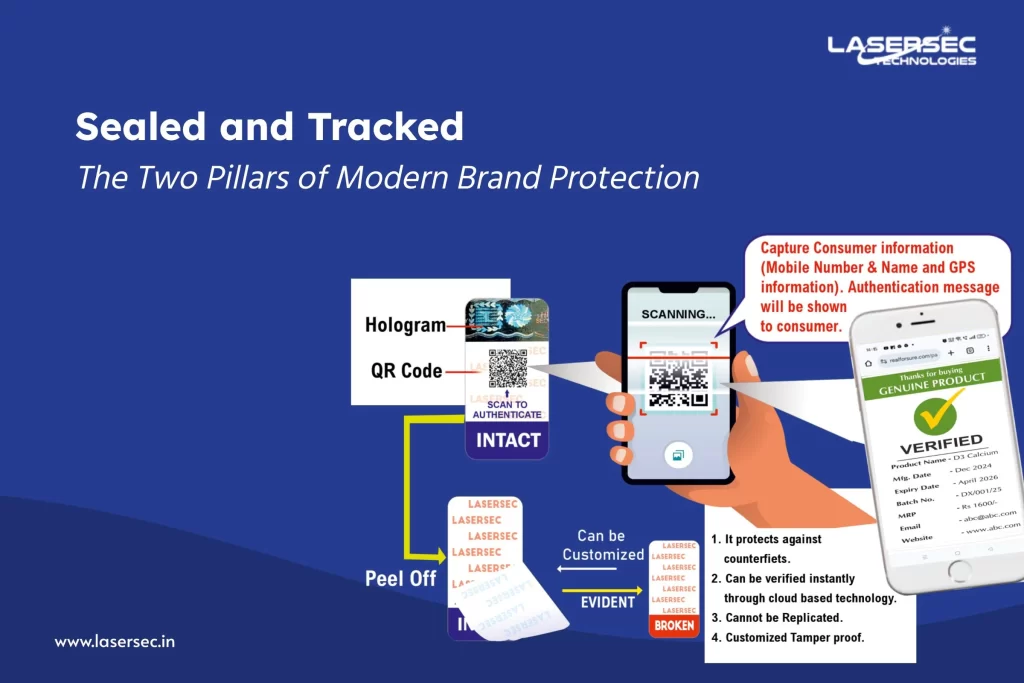
Forward-thinking brands are now adopting a two-pronged security approach: Tamper-Evident Packaging + Track & Trace Technology
One is a physical deterrent. The other is a digital watchdog. Together, they form a resilient shield against fraud.

1. What These Tools Actually Do

Tamper-Evident Packaging

These packaging elements display clear signs of interference.
Think broken seals, VOID labels, or peeled films—immediate red flags for both consumers and supply chain teams.

2. Track & Trace Systems

Every unit is assigned a unique serialized identity, often through GS1 barcodes or QR codes.
Each scan updates the unit’s journey from production to retail, enabling full traceability and real-time monitoring through secure platforms.

Bonus: Advanced T&T systems now integrate with cloud-based dashboards, AI-based alerts, and mobile authentication tools.

Relying on only one method is like locking your front door but leaving the windows wide open.

  • Tamper seals can be replicated.
  • Digital codes can be copied.

But when combined:
Physical evidence + Digital validation = A failsafe authentication system that’s far harder to breach.

Real Time Impacts

  1. Pharmaceuticals: A sealed pack and a scannable QR code validate medication at the pharmacy. Brands using serialization aligned with DSCSA/EU FMD have reduced counterfeit reports and met compliance faster.
  2. Electronics: With encrypted QR codes and tamper seals, brands can detect unauthorized resellers and trace diversion to the source. Less warranty fraud and tighter market control.
  3. FMCG & Personal Care: A beauty brand added tamper-evident seals and scannable codes after fake products emerged online. 38% drop in complaints, increased repurchase rates, and renewed customer trust.

Why This Approach Works

  • Visible Proof:
    Customers know if the product has been tampered with.
  • Digital Traceability:
    Brands know exactly where and when a breach occurred.
  • Rapid Response:
    Identify and contain supply chain risks in real time.
  • Compliance-Ready:
    Stay ahead of evolving global regulations.
  • Brand Loyalty:
    Build trust through transparency, safety, and action.

You don’t need a massive overhaul.

Start small like:

  • Apply tamper-evident holographic labels to premium or high-risk SKUs.
  • Add QR codes connected to a secure backend system.
  • Educate your distributors and customers on scanning and verification.

Then, scale as your confidence and ROI grow.

Your Packaging Is More Than a Box

It’s your handshake, your promise, your presence in places you can’t be.

With tamper-evident packaging and track & trace working in tandem, your packaging becomes a:

  • Silent Guardian
  • Smart Communicator
  • Powerful Brand Asset

Let’s Build Smarter, Safer Packaging – Together

At Lasersec Technologies, we specialize in merging physical security with digital intelligence. Our solutions are tailored for pharma, electronics, FMCG, automotive, and consumer brands looking to stay ahead of counterfeiting risks.

Why Egypt’s Pharma Industry Needs Next-Gen Anti-Counterfeiting Solutions

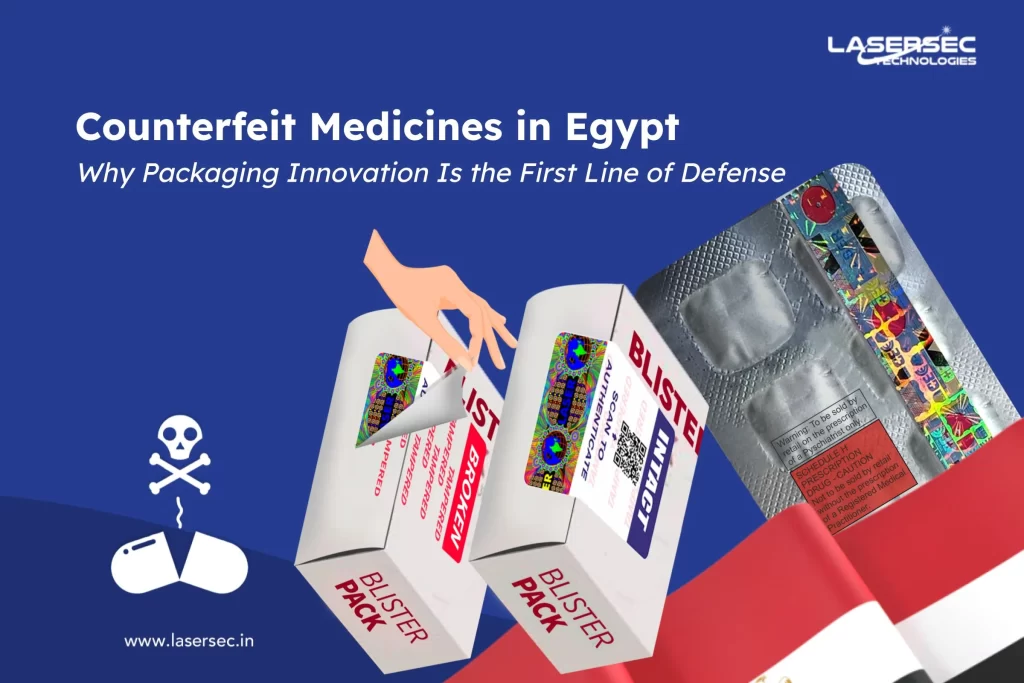
Counterfeit medicines remain one of the biggest threats to Egypt’s healthcare system. Patients depend on genuine drugs not only for recovery but often for survival — yet fake medicines continue to circulate, undermining both trust and safety.

According to the Egyptian Drug Authority (EDA), counterfeit medicines make up nearly 10% of the local market in some therapeutic categories.  

These fakes are often disguised with packaging that looks identical to genuine products, making detection extremely difficult for pharmacists and patients.

The consequences are severe:

  • Reduced treatment effectiveness
  • Dangerous health risks
  • Erosion of public trust in brands and the healthcare system
For Egypt’s rapidly expanding pharmaceutical industry — one of the largest in MENA — counterfeiting is no longer a small-scale issue. It’s a national challenge that demands stronger, smarter solutions.

Why Old Defenses Fail

Traditional methods like basic holograms or packaging updates are no longer enough. Counterfeiters are adapting quickly, often staying just one step behind. Pharma companies in Egypt need solutions that go beyond packaging — ensuring authenticity is protected across the entire supply chain.

Next-Gen Anti-Counterfeiting Solutions for Pharma in Egypt

At Lasersec Technologies, we’ve developed advanced anti-counterfeiting solutions designed to tackle the exact challenges Egypt’s pharma sector faces today:

1. Secure QR Codes for Instant Verification :

Give patients and pharmacists the power to instantly verify authenticity with a smartphone scan. This creates transparency and trust at the point of purchase.

2. Serialization & Track-and-Trace (GS1 Standards):

Ensure every pack carries a unique code, providing unit-level visibility from manufacturer to pharmacy. This strengthens regulatory compliance and blocks counterfeit infiltration.

3. Phygital Security Features for Tamper-Proof Packaging:

A powerful combination of physical security elements (holograms, special inks, tamper-evident labels) with digital verification ensures packaging is nearly impossible to replicate.

Together, these solutions protect patients, brands, and supply chains — ensuring only genuine medicines reach the hands of consumers.

Why Egypt Needs to Act Now

With exports on the rise, Egyptian pharmaceutical companies must meet international compliance norms to compete globally. Beyond regulations, the real need is trust — both at home and abroad.

Companies that adopt next-gen anti-counterfeiting today will:

  • Become pioneers of safety and reliability in Egypt’s pharma market.
  • Win stronger patient loyalty through visible safety measures.
  • Improve global competitiveness by aligning with international standards.

Showcasing Next-Gen Anti-Counterfeiting at Egypt’s Pharma Exhibition

At the recent exhibition in Cairo, Lasersec Technologies had the opportunity to showcase our next-gen anti-counterfeiting solutions to Egypt’s pharma leaders. Through live demonstrations of secure QR codes, serialization, and phygital features, we highlighted how brands can strengthen patient trust and safeguard supply chains.

The response reinforced one thing clearly: Egypt’s pharma industry is ready to embrace advanced solutions to fight counterfeiting and lead with confidence in both local and global markets.

Moving Forward: Partnering with Egypt’s Pharma Industry

For those who couldn’t attend or want to continue the discussion, our team is here to help. Whether you need a detailed consultation, solution roadmap, or samples tailored to your products, we’re ready to support you.

Because protecting patients — and protecting your brand — is not just a one-time exhibition showcase, it’s a long-term partnership.

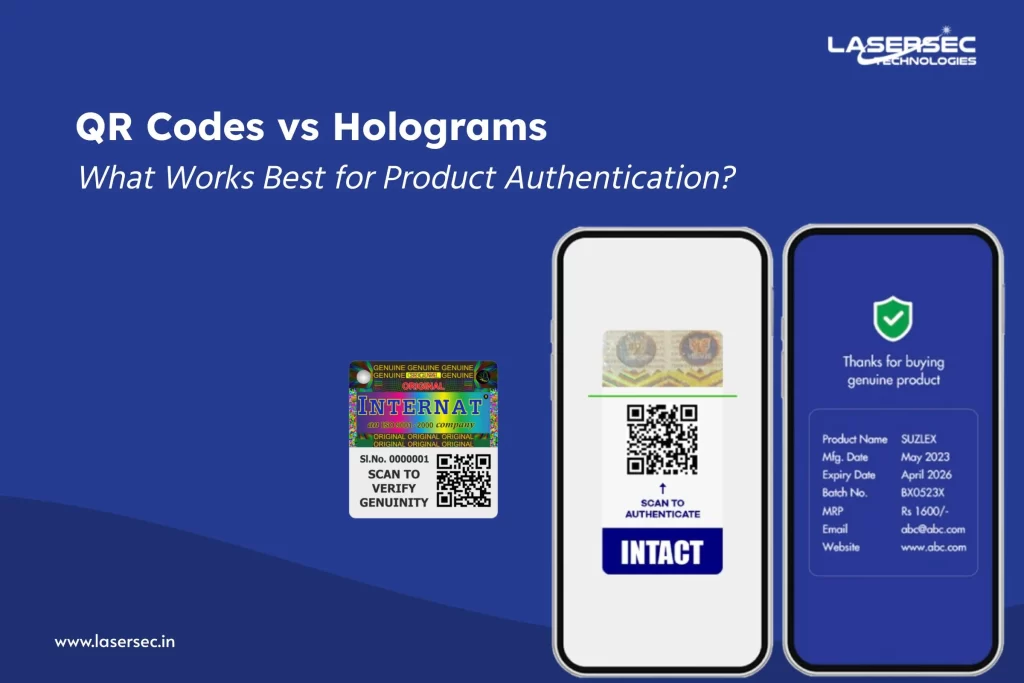
QR Codes vs Holograms: What Works Best for Product Authentication?

In a world flooded with counterfeits and cautious consumers, product authentication is no longer optional—it’s essential. Brands today face the growing challenge of proving that their products are genuine.

Two powerful tools lead the fight: QR codes and holograms. But here’s the truth—it’s not about choosing one over the other. The strongest brands use both to build layers of trust and security.

The Real Problem: Proving What’s Genuine

Think about this:

A customer scans the code on your product but lands on a counterfeit website.  In seconds, you don’t just lose a sale—you lose their trust.

Counterfeit threats are real and rising:

  • Fake chargers.
  • Diluted skincare.
  • Counterfeit medicines.
Each fake puts your customers at risk and damages your brand’s reputation. Customers no longer accept promises—they demand proof. That’s where smart authentication solutions step in.

QR Codes: Instant Digital Authentication

QR codes are like digital keys. One quick scan can unlock:

  • Product origin and supply chain journey.
  • Manufacturing and packaging dates.
  • Serial numbers and unique IDs.
  • Loyalty programs, customer feedback, or recall alerts.

Benefits:

  • Instant scanning with smartphones
  • Enables track and trace
  • Connects to real-time, dynamic information
  • Boosts post-purchase engagement
But Beware: QR codes can be copied by counterfeiters if not properly secured.

Holograms: Immediate Physical Proof

Holograms are visual security tools. Their shine, texture, and complexity make them almost impossible to duplicate.

Benefits:

  • Tamper-evident, adding immediate trust
  • Easy visual verification in stores
  • Adds premium appeal to packaging
  • Works without smartphones or internet
But Note: Holograms don’t store traceable or dynamic data.

The Smartest Solution: Combine Both for Maximum Security

The smartest brands are moving beyond “either-or.” They combine QR codes and holograms for multi-layered protection.

ScenarioBest SolutionWhy
In-store purchasesHologram + QR CodeImmediate visual check and scannable proof
E-commerce ordersQR Code + HologramDigital traceability with physical security
High-value pharma & electronicsQR Code + HologramFull track & trace + tamper-evident packaging
Luxury goods & collectiblesHologram + QR CodePremium appearance + consumer engagement
Customer loyalty campaignsQR CodeDirects buyers to secure apps, rewards, and feedback portals


Why You Should Always Use Both

  • Holograms protect the packaging.
  • QR codes confirm traceability and digital proof.

Together, they:

  • Strengthen your product’s first impression.
  • Provide layered security across the supply chain.
  • Protect both your physical goods and digital authenticity.

You’re not just safeguarding products—you’re securing:

  • Customer trust
  • Brand value
  • Supply chain integrity

Authentication is more than a feature—it’s your brand’s promise.

Trust Isn’t Automatic—You Have to Build It

  • QR Codes – Digital trust and smart traceability
  • Holograms – Visual security and tamper protection
  • Together – The strongest anti-counterfeit shield

At Lasersec Technologies, we specialize in tailored, multi-layered anti-counterfeiting solutions that protect your brand at every touchpoint—from the factory floor to the consumer’s hand. Ready to secure your products with next-gen authentication?

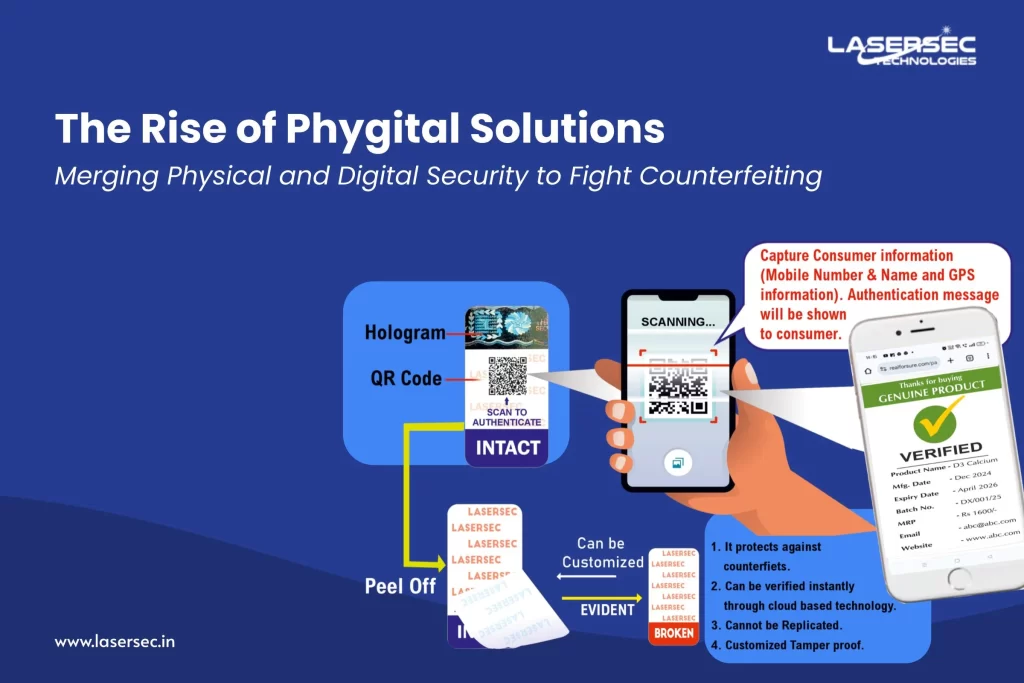
The Rise of Phygital Solutions: Merging Physical and Digital Security to Fight Counterfeiting

Did you know counterfeit products cause over $200 billion in losses globally each year?

From life-saving medicines to high-end electronics, the threat is real—and growing. For brands, it’s not just about lost revenue; it’s about trust, compliance, and survival in a competitive market.

But there’s a game-changing solution at the intersection of innovation and security: Phygital.

What is a Phygital Solution?

Phygital security blends physical features (like holograms or tamper-evident labels) with digital verification (QR codes, blockchain, cloud traceability).

Physical layer:

Visible, hard-to-replicate elements

Digital layer:

Mobile-enabled product validation, backed by secure databases

Together, they create a dual-layer defense that’s:

  • Simple for consumers
  • Impossible for counterfeiters to fake
  • Scalable for global brands

Why Phygital is a Game-Changer in Anti-Counterfeiting

Counterfeiters have become smarter—mimicking barcodes, logos, and packaging. Basic security isn’t enough.

Phygital raises the bar with:

  • Tamper-proof physical markers
  • Real-time digital authentication
  • Track-and-trace capability across the supply chain
  • Data analytics for scan location, frequency, and user engagement
It moves your strategy from reactive detection to proactive protection.

Real-World Applications Across Industries

1. Pharmaceuticals (TGA/WHO-Ready)

Each medicine pack carries a secure hologram + QR code. A single scan reveals:

  • Batch details
  • Expiry info
  • Regulatory ID (e.g., TGA, EU FMD, DSCSA)
  • Live cloud verification

2. Fashion & Apparel

Luxury labels now include NFC tags or secure QR codes. Consumers can:

  • Confirm product authenticity
  • Access brand and sustainability info
  • Report counterfeits instantly

3. Electronics

Serialized holograms linked to a secure database ensure that:

  • Warranty status is confirmed on scan
  • Brands track geographic distribution
  • Service centers validate genuine repairs

Why Brands Should Invest in Phygital

Phygital isn’t just a security tool—it’s a business enabler:

  • Build Trust Instantly: Reinforce confidence from the first scan
  • Gain Market Intelligence: Capture scan data, regions, behavior
  • Stay Global: Compatible across devices, languages, and markets
  • Stay in Control: Monitor grey markets, manage recalls, and validate returns
It also integrates seamlessly with existing ERP and warehouse systems, reducing operational friction.

Building the Right Phygital Ecosystem

One-size-fits-all won’t work. A winning solution requires:

  • Selecting the right physical features per product type
  • Designing intuitive digital experiences
  • Collecting actionable data that supports both security and business KPIs
At its core, phygital design isn’t just about protection—it’s about building trust into the product.

The Future Is Phygital

As physical and digital lines blur, brands that adopt phygital now will lead the market in:

  • Regulatory compliance
  • Digital consumer engagement
  • Smart, secure global supply chains

Because in today’s market, trust isn’t a luxury—it’s a necessity. And phygital helps you deliver it, scan by scan.

Partner with Lasersec Technologies

At Lasersec Technologies, we engineer end-to-end phygital authentication systems—customized for your industry, product, and compliance needs.

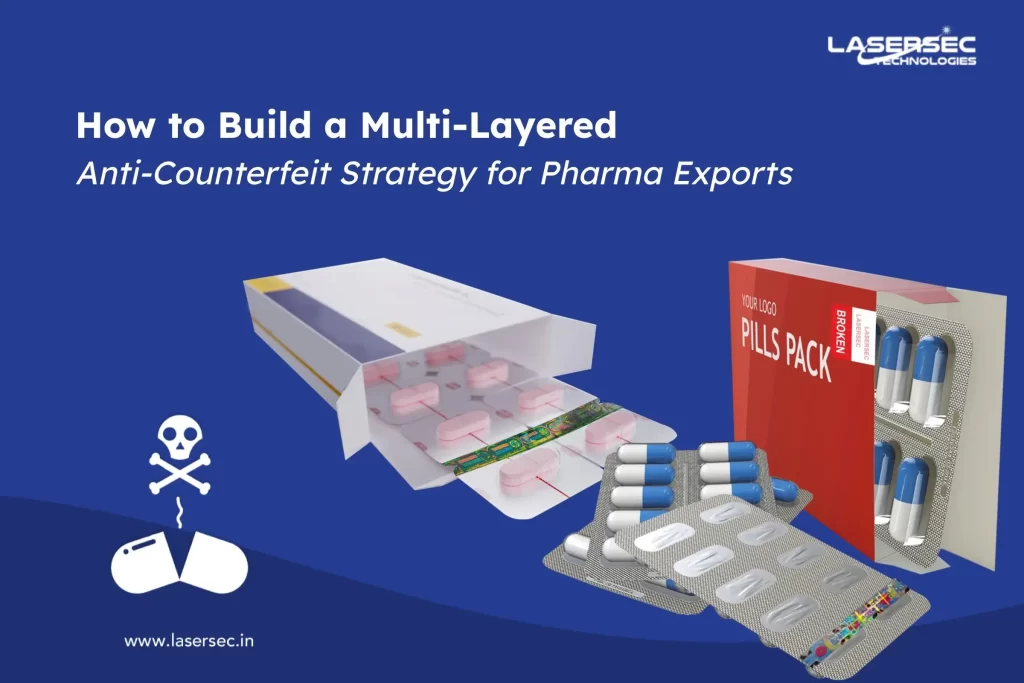
How to Build a Multi-Layered Anti-Counterfeit Strategy for Pharma Exports

Exporting pharma products? Here’s how to create a robust, multi-layered security system that protects your brand and saves lives.

In the pharmaceutical industry, counterfeit products aren’t just a financial threat—they endanger lives. As a pharma exporter, your responsibility goes beyond compliance; you must safeguard your products against the increasingly sophisticated methods counterfeiters use.

According to the World Health Organization (WHO), 1 in 10 medical products in low- and middle-income countries is substandard or falsified—a statistic that underscores the urgent need for robust anti-counterfeit strategies. To protect your brand, your reputation, and most importantly, patient safety, a multi-layered anti-counterfeit approach is essential.

Why a Multi-Layered Protection Strategy Is Critical

Counterfeit medicines harm more than just profits—they jeopardize public health, create regulatory nightmares, and damage trust in your brand. When exporting, your products pass through multiple hands, each presenting a new vulnerability.

A multi-layered protection system is designed to eliminate these vulnerabilities by implementing multiple lines of defense—ensuring that if one fails, others will catch the threat. Each layer acts as a backup, strengthening the security of your pharmaceutical products.

Step-by-Step: Building a Strong Anti-Counterfeit Strategy

Step 1: Use Visible Security Features to Deter Fakes at First Glance

Visible security features are the first line of defense. These can include:

  • Holograms
  • Color-shifting inks
  • Tamper-evident packaging

These elements make it easy for customs officers, pharmacists, and even consumers to instantly verify product authenticity.

Tip : Use tamper-evident labels that leave visible traces if tampered with. This acts as a clear deterrent.

Step 2: Add Hidden Layers with Covert Features

Covert features are invisible to the naked eye but offer high-security authentication. Examples include:

  • UV or infrared inks
  • Microtext
  • Forensic taggants

These are extremely difficult to replicate and require specialized tools for verification.

Tip : Keep details about covert features confidential within your trusted network.

Step 3: Leverage Digital Authentication Technologies

Digital tools increase traceability and consumer confidence. Common options:

  • Serialized QR codes
  • Data matrix barcodes
  • GS1-compliant identifiers

Scanning these codes allows quick, real-time verification across the supply chain.

Scenario : A customs officer scans a QR code and instantly verifies authenticity—preventing delays and rejections.

Step 4: Enable Real-Time Tracking and Traceability

A robust Track & Trace system helps you monitor your pharma exports at every stage. Key components include:

  • Serialization
  • Geo-tagging
  • Real-time alerts for irregularities
Example : A product meant for Kenya ends up in Brazil—your system flags the diversion immediately, allowing fast intervention.

Step 5: Train and Empower Your Supply Chain Partners

Everyone from distributors to customs officers should know how to verify your anti-counterfeit features.

Tip : A short training video or printed guide can significantly boost awareness and reduce risks.

Why Multi-Layered Anti-Counterfeit Protection Works

 1. Increased Trust and Long-Term Relationships:

Exporters with proven anti-counterfeit measures build confidence and retain global buyers.

 2. Compliance with Global Standards:

A layered strategy ensures compliance with regulations like FMD (EU), DSCSA (U.S.), and WHO guidelines.

3. Operational Efficiency:

Better verification reduces customs delays and ensures smoother cross-border movement.

4. Future-Proofing Your Supply Chain:

As counterfeiters evolve, your strategy can evolve too—thanks to scalable, adaptable security layers.

Don’t Wait for a Crisis—Act Now

Counterfeiters are becoming more sophisticated. Waiting for a breach can result in financial losses, regulatory penalties, and brand damage.

No product should leave your facility without strong anti-counterfeit protection.

At Lasersec Technologies, we help pharma exporters build strong anti-counterfeit strategies using visible labels, hidden markers, and digital tools that work in real-world supply chains.

Bangladesh is a country that has been struggling with counterfeiting for many years. Counterfeiting in Bangladesh is not limited to any particular industry. It affects everything from pharmaceuticals to electronics to clothing. Counterfeit products are often sold through unauthorized channels such as street vendors, online marketplaces, and even legitimate retail outlets.

(more…)

Counterfeit, Pharma, Pharma Industry, Fake, Duplicate, Medicine, India, Drugs, Drug, Indian Market

Drug counterfeiting is a growing problem in India. As people become more aware of the need to take medication, but can’t afford their prescribed drugs, more consumers are turning to alternative sources. The result? A thriving black market for cheap drugs, as well as a growing number of dangerous and fake drugs finding their way into the legitimate supply chain.

(more…)

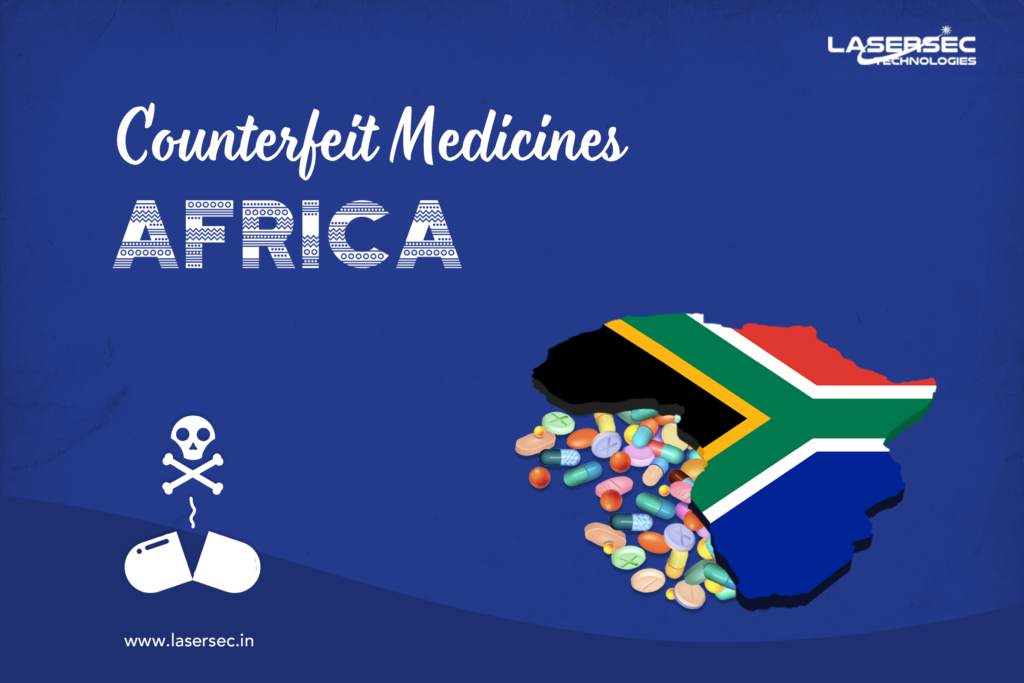
Counterfeit, Pharma, Pharma Industry, Fake, Duplicate, Medicine, Africa, Cause, Drugs, Drug

Counterfeiting has been one of the biggest threats to businesses and can be very costly for businesses selling branded goods—especially in emerging markets such as Africa. If left unchecked, counterfeiters can lead to a decrease in sales and a loss of brand equity. 

This blog will cover the factors contributing to counterfeiting in Africa, its impact on businesses, and solutions to this issue.

(more…)