





Lasersec Technologies

Your Guide to Anti-Counterfeiting

Tag: track and trace

Tag: track and trace

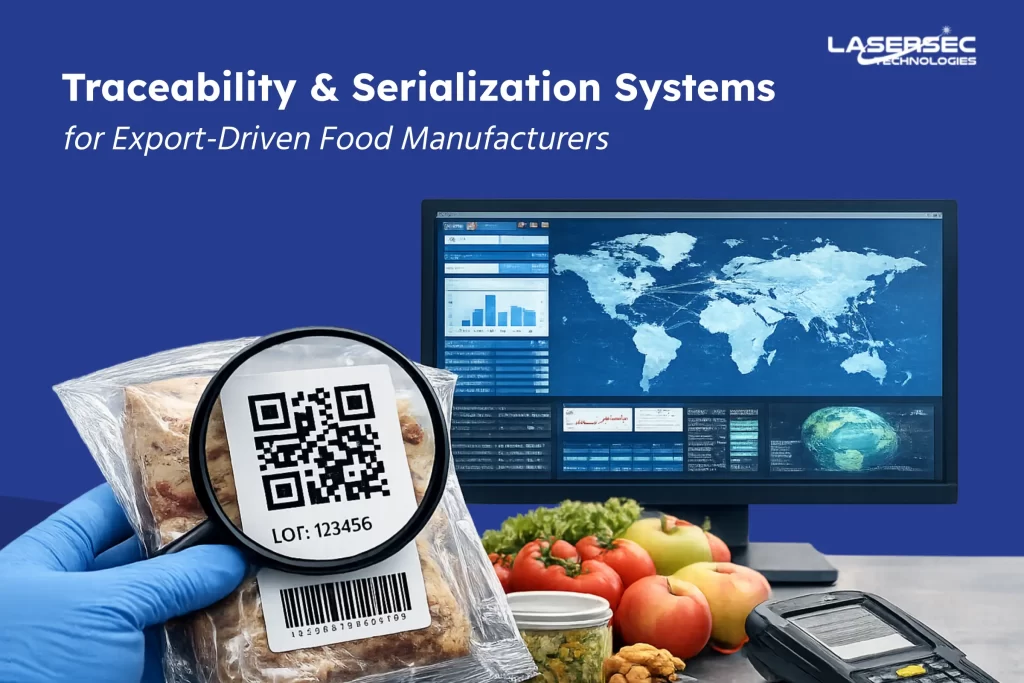
Food authentication technology preventing fake imports and parallel trade in global supply chains

A shipment leaves your facility after months of production planning, quality checks, and export compliance preparation. Every detail has been verified. The product meets international food safety standards, documentation is complete, and authorized distributors are ready.

But weeks later, an unexpected issue arises.

Your distributor reports seeing your product in a country where it was never authorized to be sold. In another instance, customs officials question the authenticity of a shipment carrying your brand name. The packaging appears genuine, but verification is unclear.

This is the growing reality of counterfeit food products, parallel imports, and unauthorized distribution. These risks do more than disrupt a single shipment. They affect regulatory compliance, distributor trust, pricing integrity, and long-term brand reputation.

This is why food authentication solutions have become essential for exporters. Authentication transforms packaging into a secure, verifiable identity system that protects products across global supply chains using technologies like QR code authentication and Track & Trace systems.

Understanding the Rising Risk of Fake Imports and Parallel Trade in Food Exports

As food products move through international supply chains, they pass through multiple intermediaries, distributors, logistics providers, and retailers. This complexity creates opportunities for unauthorized activities such as:

  • Parallel imports into unauthorized countries
  • Relabeling products for resale in different markets
  • Distribution of expired or compromised products
  • Counterfeit food products replicating genuine packaging using security hologram stickers
  • Unauthorized resale outside approved distributor networks

These activities are increasing globally due to sophisticated packaging replication techniques and fragmented supply chain visibility.

For food exporters, the consequences are significant:

  • Loss of brand control
  • Regulatory compliance risks
  • Distributor conflicts
  • Consumer safety concerns
  • Financial and reputational damage

Without a reliable product authentication system, it becomes extremely difficult to verify whether a product is genuine, where it originated, and how it entered a specific market.

Why Traditional Packaging and Labels Cannot Prevent Counterfeit Food Products

Traditional packaging elements such as printed labels, barcodes, and batch numbers were designed for identification and logistics—not for security and authentication.

These elements can be easily:

  • Copied
  • Reprinted
  • Duplicated
  • Reapplied to counterfeit products

Even standard holographic labels without secure authentication layers can be visually imitated if not integrated with verification technologies.

Counterfeiters can replicate packaging visually, making manual inspection unreliable.

Regulators, distributors, and retailers cannot confirm authenticity based on appearance alone. This creates delays, uncertainty, and compliance risks during export inspections and market verification.

Modern global food exports require secure authentication systems that provide instant, verifiable proof of product authenticity through solutions such as tamper-evident labels and QR code anti-counterfeit labels.

What Is Food Authentication and How Food Authentication Systems Work

Food authentication is a secure process that assigns a unique, traceable identity to each product unit. This identity is integrated directly into packaging using secure authentication technologies such as:

  • Serialized QR codes
  • Unique identification codes
  • Secure digital authentication markers
  • Tamper-evident and anti-counterfeit packaging features like tamper proof hologram stickers

Each authentication code is unique and linked to secure product data, including:

  • Manufacturing origin
  • Production batch information
  • Export destination
  • Product identity and verification status

When the authentication code is scanned, the system instantly verifies whether the product is genuine through secure platforms such as Track & Trace authentication systems.

If duplicate codes appear, or if products are detected in unauthorized markets, the system immediately identifies potential counterfeit or parallel trade activity.

This transforms packaging into an active brand protection and verification tool.

How Food Authentication Prevents Parallel Imports and Unauthorized Distribution

Parallel trade occurs when genuine products are diverted from authorized supply chains and resold in unauthorized markets. This disrupts pricing structures, violates distribution agreements, and creates regulatory complications.

Food authentication solutions prevent parallel imports by enabling unit-level verification using secure packaging such as QR code holograms and anti-counterfeit labels.

Each product unit can be verified to confirm:

  • Whether it was intended for a specific export market
  • Whether it has been duplicated or counterfeited
  • Whether it has been diverted to an unauthorized region
  • Whether the product identity matches manufacturing records

For example, if a product intended for export to one country is scanned in a different region, authentication systems immediately detect the discrepancy.

This allows exporters and brand owners to identify unauthorized distribution channels and take corrective action quickly.

Authentication restores control over products even after they leave the manufacturing facility.

Supporting Export Compliance and Regulatory Requirements with Authentication

Food exporters must comply with strict international regulations related to product origin, safety, traceability, and authenticity.

Regulatory authorities increasingly expect manufacturers to demonstrate supply chain transparency and authentication capability through secure systems such as Track & Trace solutions.

Food authentication systems support compliance by enabling regulators to verify:

  • Product origin
  • Manufacturing authenticity
  • Batch integrity
  • Export destination verification
Authentication provides instant, verifiable proof that the product is genuine and compliant.

This reduces customs delays, improves inspection efficiency, and strengthens regulatory confidence.

It also demonstrates that exporters are implementing proactive brand protection and compliance measures.

How Food Authentication Protects Brand Reputation and Consumer Trust

Brand reputation is one of the most valuable assets for food exporters. However, counterfeit or diverted products can quickly damage consumer confidence—even when the manufacturer is not responsible.

Consumers cannot distinguish between genuine and counterfeit products if packaging appears identical without secure authentication features like security holograms or tamper-evident packaging labels.

Authentication enables distributors, retailers, and consumers to verify product authenticity instantly.

This prevents counterfeit products from circulating undetected and ensures consumers receive genuine, safe products.

Over time, authentication strengthens brand credibility and builds long-term trust across global markets.

Improving Food Supply Chain Visibility with Product Authentication Systems

One of the biggest challenges exporters face is limited visibility after products leave the manufacturing facility.

Food authentication systems improve supply chain transparency by creating verification records whenever a product is scanned through systems such as Track & Trace technology.

This enables exporters to:

  • Monitor product movement across markets
  • Detect unauthorized distribution
  • Identify suspicious activity
  • Prevent counterfeit infiltration
  • Improve supply chain control

This visibility allows faster response to potential risks and prevents widespread distribution of counterfeit or diverted products.

Authentication shifts supply chain management from reactive damage control to proactive prevention.

Why Food Authentication Solutions Are Essential for Modern Food Exporters

Global food trade continues to expand, but so do risks related to counterfeit imports, parallel trade, and unauthorized resale.

Authentication provides critical protection by enabling:

  • Unit-level product verification
  • Anti-counterfeit packaging security using holographic labels and security holograms
  • Supply chain authentication
  • Export compliance support
  • Brand protection across international markets

Authentication transforms packaging into a secure, verifiable proof of authenticity.

It protects exporters, distributors, regulators, and consumers alike.

How We Supports Secure Food Authentication and Brand Protection

At Lasersec Technologies, we provide advanced food authentication and anti-counterfeit packaging solutions designed to protect exporters operating in global markets.

Our solutions integrate secure, unique identifiers directly into packaging, using technologies such as QR code holograms, tamper-evident labels, and Track & Trace authentication systems, enabling reliable product authentication and supply chain verification.

These authentication systems help exporters:

  • Prevent counterfeit food products
  • Detect parallel imports and diversion
  • Strengthen export compliance
  • Protect brand 
  • Improve global supply chain visibility

By combining secure physical packaging with authentication technologies, we help brands maintain control, transparency, and trust throughout the product lifecycle.

To explore relevant solutions for this sector, visit our FMCG anti-counterfeit solutions page.

Strengthening Global Food Export Security Through Authentication

As counterfeit food products and parallel trade continue to rise, authentication has become a critical component of export security and brand protection.

Food authentication systems provide verifiable product identity, improve supply chain transparency, and support regulatory compliance through technologies like secure holographic labels and Track & Trace authentication.

They help ensure that genuine products reach authorized markets safely and securely.

Most importantly, authentication protects brand reputation, consumer safety, and long-term export success.

In today’s global food industry, authentication is no longer optional. It is an essential foundation for secure, compliant, and trusted international food distribution.
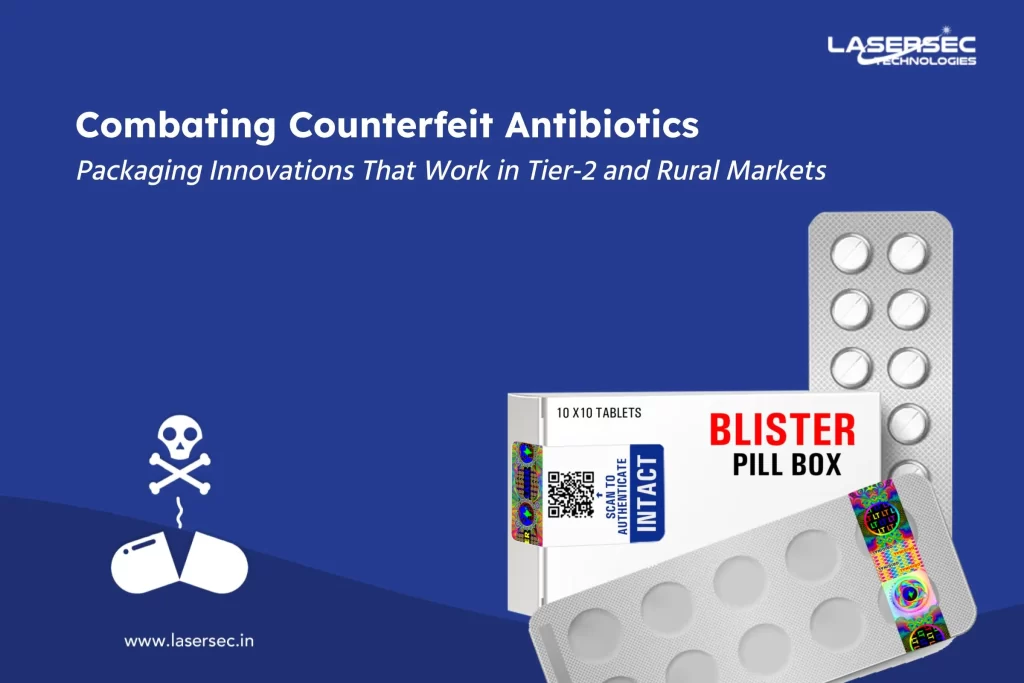
Combating Counterfeit Antibiotics-Packaging Innovations That Work in Tier-2 and Rural Markets

Imagine a patient in a small town buying antibiotics with hope for recovery, only to later discover the medicine was fake. This isn’t just a business challenge; it’s a human crisis that threatens lives and erodes trust in healthcare.

According to the World Health Organization (WHO), about 1 in 10 medical products in low- and middle-income countries is substandard or falsified, with antibiotics among the most commonly counterfeited. In India, this issue is especially severe in tier-2 and rural markets, where patients depend heavily on affordable medicines but have fewer tools to verify authenticity.

For domestic pharma companies with mass-market distribution, protecting these communities goes beyond compliance — it’s about safeguarding public health and protecting brand trust in the very markets where demand is highest.

Why Rural and Tier-2 Markets Face Bigger Risks

Medicines in rural areas often pass through long, complex distribution chains before reaching patients. With fewer regulatory checks, limited pharmacist training, and high demand for low-cost antibiotics, counterfeiters exploit every gap.

Why antibiotics?

  • They are the most prescribed medicines in rural India.
  • Counterfeit versions are easy to circulate undetected.
  • Fake or substandard antibiotics fuel antimicrobial resistance (AMR), making genuine treatments less effective.
The result: 
patients don’t recover, resistance spreads, and pharma brands lose credibility.

Practical Packaging Solutions That Work on the Ground

Domestic pharma leaders don’t need futuristic tech — simple, field-proven solutions can protect both patients and business in high-risk markets:

1. QR Codes for Instant Verification

With smartphone use now above 50% in tier-2 and rural India, secure QR codes allow patients and chemists to scan and confirm authenticity in seconds.

2. Scratch-to-Reveal Codes

A cost-effective feature where patients scratch a panel to uncover a one-time code, then send it via SMS for instant confirmation. Perfect for regions with poor internet but reliable mobile coverage.

3. Toll-Free Number Verification

For areas where smartphones are less common, patients can call a toll-free number, enter the pack code, and receive immediate confirmation.

4. Serialization & Track-and-Trace

For companies looking at scale, serialization (unique pack codes) with Track-and-Trace systems enables full supply chain visibility. While CDSCO already mandates serialization for exports, extending it domestically creates a powerful barrier against counterfeits.

Even the best packaging features work only if people know how to use them. Pharma companies can build trust by:

  • Printing clear calls-to-action on packs like “Scan to Verify” or “Scratch and SMS to Confirm.”
  • Training distributors, chemists, and field staff to explain features.
  • Partnering with health workers and pharmacist associations to promote safe buying practices.

What Pharma Companies Can Do Today

  • Adopt at least one low-cost anti-counterfeit feature suited to your market.
  • Train distributors and field teams to guide chemists on how to use these features.
  • Print simple instructions on every pack to drive patient adoption.
  • Monitor ground feedback and refine your packaging strategy over time.

Beyond Packaging: Partnerships Multiply Impact

Technology works best when paired with collaboration.

Pharma companies can:

  • Partner with local health workers to raise awareness.
  • Work with pharmacist associations to block counterfeit circulation.
  • Align with regulators like CDSCO — and globally with bodies like TGA and USFDA — to meet compliance while building consumer confidence.

Why Acting Now Matters

Counterfeiting in non-urban supply chains is no longer just a rural problem — it’s a nationwide risk. Ignoring it can result in regulatory challenges, lost market share, and, most importantly, lives lost.

By contrast, acting now with practical anti-counterfeit packaging creates an opportunity to:

  • Protect patients where they are most vulnerable.
  • Safeguard your brand in India’s fastest-growing pharma markets.
  • Position your company as a trusted healthcare partner at home and globally.
Because at the end of the day, packaging isn’t just about protecting a product — it’s about protecting people.

Moving Forward with Safer Packaging

At Lasersec Technologies, we help pharma companies design practical anti-counterfeit packaging solutions — from scratch panels and QR codes to serialization and Track & Trace.

Backed by compliance expertise and real-world field success, our goal is simple: to help you protect patients, build trust, and stay ahead of counterfeiters in both rural India and global markets.

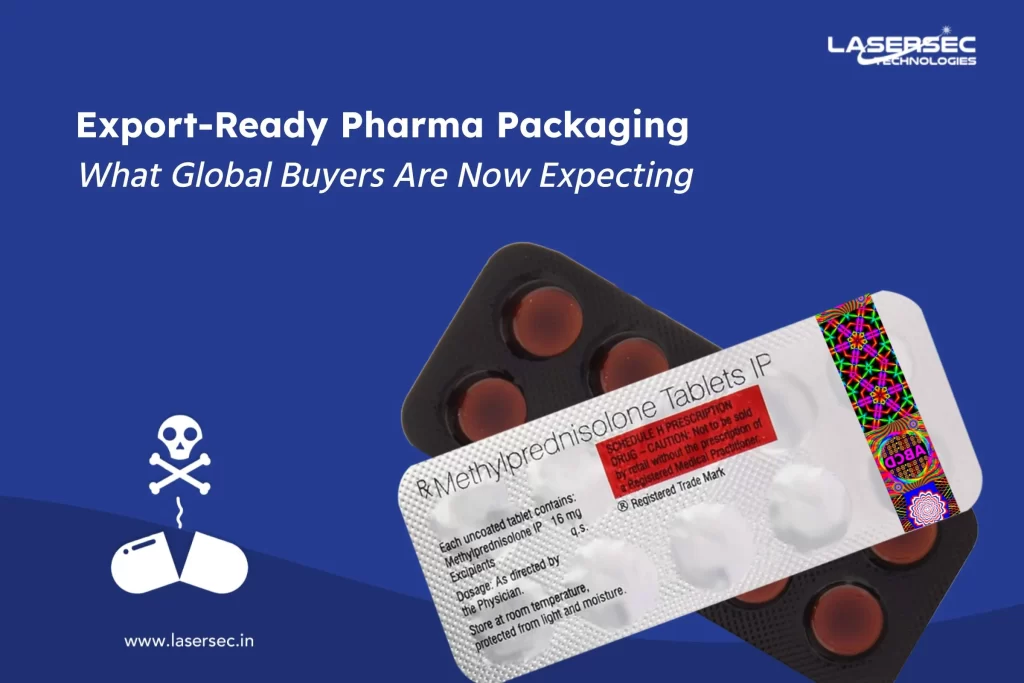
Export-Ready Pharma Packaging- What Global Buyers Are Now Expecting

You’ve secured the order, production is complete, and your shipment is ready to move. But then, just before dispatch, your buyer asks:

“Does your packaging meet serialization and scan-based proof requirements?”

Imagine losing a million-dollar contract — not because of your medicine, but because your packaging failed to inspire trust. This is the reality many exporters face today. For global buyers, packaging has become the deciding factor between smooth delivery and a deal falling apart.

Why Packaging Standards Are Now Non-Negotiable

Global buyers are under pressure from regulators, distributors, and patients. They must ensure every product they source is traceable, authentic, and tamper-proof. That means export-ready packaging is no longer optional — it’s the foundation of international trade.

Key compliance must-haves include:

  • Track & Trace Systems – complete product visibility across the supply chain
  • Serialization – unique identifiers that meet global compliance norms
  • Tamper-Evident Features – seals or packaging that immediately reveal interference
  • Scan-Based Proof – QR codes or secure markings enabling instant authentication

Without these, buyers see risk — and in today’s market, risk means rejection. It’s not just about checking compliance boxes. Buyers want reassurance that:

  • Their shipments won’t face customs delays due to packaging gaps
  • They won’t be caught in regulatory disputes in importing countries
  • They can confidently show stakeholders a secure supply chain
For exporters, this transforms packaging into a proof of credibility. It’s no longer just a container — it’s part of your business reputation.

Regional Buyer Expectations: One Size Doesn’t Fit All

Every region enforces its own regulations. Understanding them isn’t just smart — it’s survival.

RegionKey Packaging ExpectationsWhat It Means for Exporters
European Union (EU)Strict serialization under the FMD (Falsified Medicines Directive) with database-driven verification.Packs must be registered and verifiable via EU hub. Non-compliant shipments are rejected at borders.
United StatesDSCSA (Drug Supply Chain Security Act) requires interoperability and traceability beyond serialization.Exporters must ensure their systems “talk” with US buyers’ systems for seamless data exchange.
Middle East & AfricaHigh counterfeit risks demand visible tamper-evidence + secure scan codes.Buyers expect seals and markings they can verify instantly at distributor level.

According to the WHO, 1 in 10 medical products in low- and middle-income countries is substandard or falsified — highlighting why MEA and APAC buyers demand extra layers of security.

Before shipping, ask yourself:

  • Does every pack carry a unique, scannable serialization code?
  • Is there a tamper-evident seal that cannot be replaced unnoticed?
  • Can my systems generate and share serialization data with buyers?
  • Do I have scan-based proof of authenticity ready for customs or audits?

If the answer is “no” to any of these, your packaging isn’t truly export-ready.

Indian pharma is globally respected for high-quality medicines. But as regulations tighten, packaging standards are becoming the new benchmark for trust.

Those who adapt quickly — with serialization, secure QR codes, and tamper-evident solutions — will stand out as reliable partners. On the other hand, exporters who delay risk losing contracts, not because of product quality, but because their packaging didn’t pass the credibility test.

Global buyers are no longer asking if your packaging is compliant — they’re asking how quickly you can prove it.

Export-ready packaging is now a business advantage, not just a compliance step. For exporters preparing to expand globally, investing in the right packaging solutions is no longer optional.

Because in today’s market, packaging isn’t just protecting your product — it’s protecting your growth.

At Lasersec Technologies, we partner with pharma exporters to ensure their packaging meets global serialization, traceability, and anti-counterfeit standards — helping you ship with confidence and win global trust.

Holographic Blister Packaging for CDSCO Compliance

India’s pharmaceutical landscape is undergoing a transformation — and packaging is at the center of it.
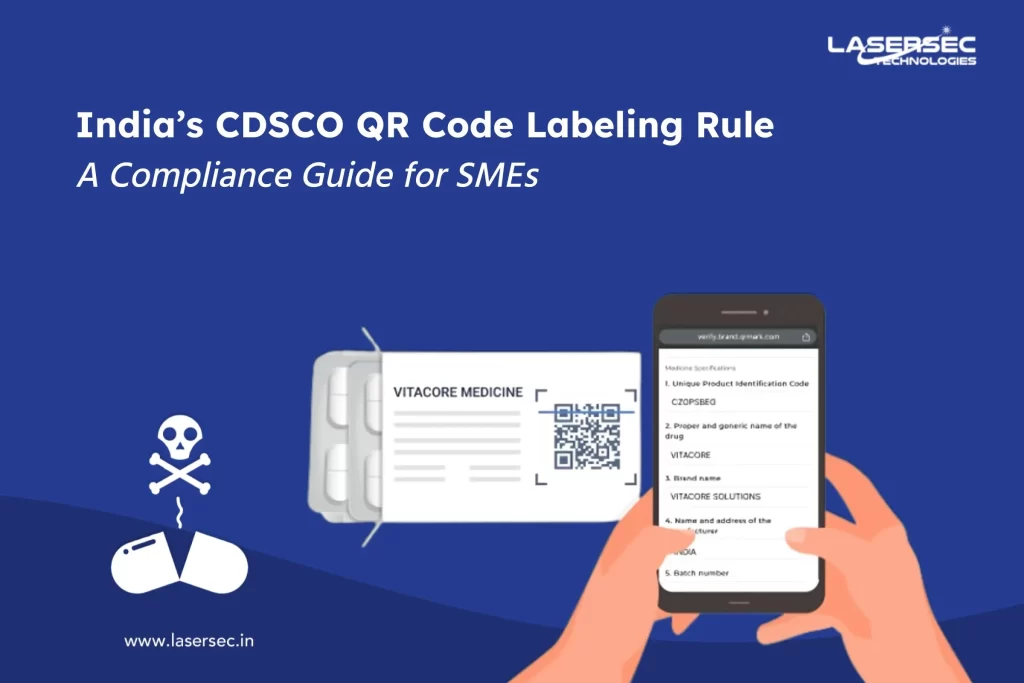
With the CDSCO’s new QR code and serialization mandates, every exported pharma product must now be secure, traceable, and tamper-evident.

For manufacturers, especially SMEs, this can feel like a complex compliance challenge.
But there’s a powerful, proven solution already within reach: Holographic Blister Packaging.

1. The New CDSCO Reality

To curb counterfeit drugs and ensure authenticity across the supply chain, the Central Drugs Standard Control Organization (CDSCO) now requires export-bound pharmaceutical products to carry:

  • Secure and scannable QR codes
  • Unique serialization at batch or unit level
  • Tamper-evident features on primary packaging
This means your packaging must do more than look professional — it must communicate trust, security, and transparency to regulators, distributors, and patients worldwide.

2. Why Holographic Blister Packaging Foils Are the Ideal Fit

Holographic blister foils are designed not just for visual appeal, but for multi-layered protection.
They merge optical security, digital traceability, and physical tamper resistance — all in one compact, cost-effective solution.

Key advantages include:

  • Built-in Anti-Counterfeit Security:
    Complex holographic patterns, diffractive designs, and hidden laser effects make duplication nearly impossible.
  • Tamper-Evident Layering:
    Any attempt to peel or alter the foil leaves visible damage — ensuring that the product cannot be resealed or reused undetected.
  • QR & Serialization Integration:
    Holographic foils can seamlessly integrate dynamic QR codes and serialized data, allowing regulators and end-users to instantly verify product authenticity.
  • Regulatory Compliance:
    They fulfill the CDSCO’s core requirements — secure labeling, traceability, and anti-tampering — without requiring major production line changes.
  • Supply Chain Visibility:
    When linked to digital Track & Trace systems, each blister pack becomes part of a transparent, verifiable export network.

3. How It Works

Each holographic blister foil is embedded with security layers visible and invisible to the naked eye.

When printed with unique serial numbers or QR codes, it creates a dual-authentication system:

LayerFunctionBenefit
Optical Security (Holography)Visually identifiable design that’s impossible to replicateInstant brand and regulatory authentication
Digital Security (QR + Serialization)Unique, scannable identity for every packEnables verification and traceability
Tamper EvidenceIrreversible visual damage on interferencePrevents resealing or counterfeit replacement

This layered approach makes it extremely difficult for counterfeiters to reproduce or reuse packaging — offering compliance with confidence.

4. Why SMEs Should Choose Holographic Blister Packaging

Unlike large-scale digital upgrades, holographic blister foils are scalable, adaptable, and cost-efficient.
For SMEs, this means:

  • No heavy capital investment in new lines
  • Immediate enhancement of regulatory readiness
  • Compatibility with existing packaging formats
  • Added brand value in export markets
It’s a simple way to make your products CDSCO-compliant and globally credible — without the complexity of building new infrastructure.

5. Beyond Compliance: Building Trust Across Borders

The global pharma supply chain thrives on transparency.
By adopting holographic blister foils, Indian exporters not only meet CDSCO and international labeling mandates but also strengthen brand trust with distributors and healthcare professionals abroad.

  • Regulators see transparency.
  • Distributors see authenticity.
  • Patients see safety.

And your brand earns long-term credibility in every market it reaches.

Secure, Scalable, and Future-Ready

The CDSCO’s labeling mandates are here to stay — but compliance doesn’t have to be complicated.

Holographic blister foils bring together the best of physical and digital protection, offering a ready-to-implement, regulation-compliant, and cost-effective solution for Indian pharma exporters.

At Lasersec Technologies, we specialize in custom-designed holographic blister foils that combine optical security, dynamic QR codes, and tamper-evident protection.
Our solutions are trusted by leading pharmaceutical manufacturers to safeguard brands, meet regulatory standards, and ensure patient safety.

Let’s help you make compliance your competitive edge — one blister pack at a time.

How Indian Pharma Exporters Can Prepare for EU’s New Digital Packaging Rules

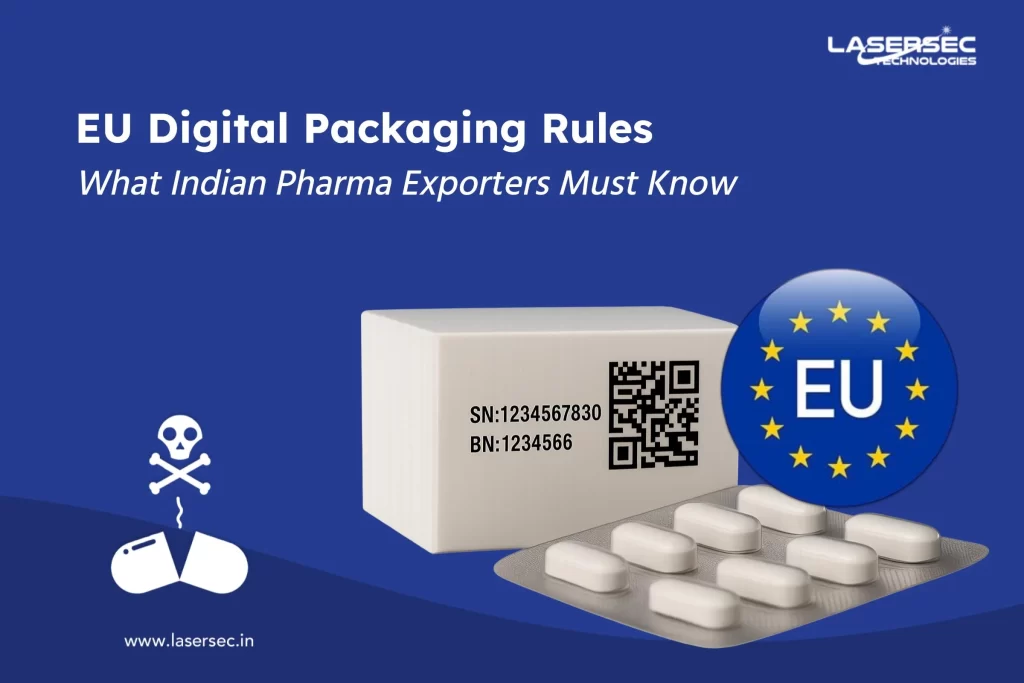
The European Union’s upcoming Digital Product Passport (DPP) and serialization requirements, effective from 2026, are transforming how pharmaceuticals are packaged and traced across the supply chain. For Indian pharma exporters, this means digital-ready packaging is no longer optional — it’s essential for market access, compliance, and trust.

So, how can packaging evolve fast enough to meet these expectations?
The answer lies in QR codes and tamper-evident labels — two smart technologies that bring traceability, authenticity, and transparency directly onto the pack.

1. The New EU Challenge: Digital Transparency at Every Level

Under the EU Eco-design for Sustainable Products Regulation (ESPR), every product entering the EU — including pharmaceuticals — must carry a Digital Product Passport (DPP). This digital record links each pack to verified data such as product origin, batch, composition, and regulatory certifications.

However, achieving compliance requires:

  • Unit-level serialization
  • Scannable digital identifiers
  • Tamper-proof packaging integrity

That’s where smart labeling comes into play.

2. QR Codes: Your Gateway to Digital Product Passports

QR codes have evolved far beyond simple barcodes. Modern secure and dynamic QR codes allow real-time verification, linking every individual pack to its digital passport in the cloud.

With secure QR codes, pharma exporters can:

  • Connect each product to a verified DPP record
  • Enable instant verification for customs officials, distributors, and patients
  • Detect counterfeits or unauthorized diversions
  • Track exports throughout the EU supply chain
When integrated with serialization, these QR codes become digital fingerprints — unique, tamper-evident, and compliant with EU’s interoperability standards.

3. Tamper-Evident Labels: The Physical Layer of Trust

While QR codes protect digital identity, tamper-evident labels safeguard physical authenticity. These labels reveal visible signs — such as “VOID” marks or holographic breaks — if anyone tries to remove or alter them.

Why they’re essential for compliance:

  • They ensure product integrity during transit
  • Serve as proof of non-interference and genuine origin
  • Complement serialization and DPP data by confirming physical security
Together, tamper-evident and QR-enabled labels bridge the physical and digital worlds, creating a robust defense against counterfeiting and regulatory breaches.

4. How These Technologies Work Together

When integrated, QR codes and tamper-evident labels deliver a two-tier protection model:

LayerFunctionBenefit
Digital Layer (QR Code)Links each pack to live data and DPPEnables authentication and traceability
Physical Layer (Tamper-Evident Label)Shows visible signs of tamperingEnsures product safety and compliance integrity

This hybrid approach enables exporters to prove compliance instantly — both digitally and physically — meeting EU’s dual requirement of traceability and security.

5. Implementation Blueprint for Exporters

To align with the EU’s 2026 standards, Indian exporters should begin adopting these steps today:

  • Adopt Dynamic QR Codes:
    Implement secure, serialized QR codes linked to live cloud databases or blockchain.
  • Upgrade Labeling Infrastructure:
    Ensure your packaging lines support tamper-evident label application and QR code printing at the unit level.
  • Integrate with Track & Trace Systems:
    Synchronize label data with your ERP or MES to enable full supply chain visibility.
  • Partner with Trusted Solution Providers:
    Choose technology partners experienced in anti-counterfeit, serialization, and pharma-grade packaging.

6. Beyond Compliance: Building Trust and Value

Compliance may be the starting point, but smart labeling delivers much more:

  • Builds trust with regulators, distributors, and patients
  • Enhances brand reputation through transparency
  • Reduces counterfeit and recall risks
  • Positions your company as a future-ready exporter
By embracing smart packaging now, Indian pharma manufacturers can turn regulatory pressure into a competitive advantage.

Secure, Smart, and Ready for 2026

The EU’s digital packaging regulations are reshaping global pharma trade — and Indian exporters who act early will lead the way. By combining secure QR codes and tamper-evident labels, you can ensure every shipment is authentic, traceable, and regulation-ready.

At Lasersec Technologies, we specialize in pharma-grade anti-counterfeit solutions — from dynamic QR codes to tamper-evident holographic labels and complete Track & Trace integration. Let’s help you make your exports compliant, secure, and globally trusted.

Future-proof your packaging — one secure label at a time.

How Tamper Evident Packaging and Track & Trace Strengthen Anti-Counterfeiting Measures

You trust the seal. So does your customer.
But what if both can be faked?

In today’s hyper-competitive and counterfeit-prone market, trust is no longer a given—it must be earned, secured, and verifiable. One compromised product doesn’t just mean financial loss. It means broken trust, customer complaints, and reputational damage.

For quality assurance teams, brand managers, and packaging heads, the challenge is clear: protecting your product is protecting your brand.

The Dual-Layer Security Model

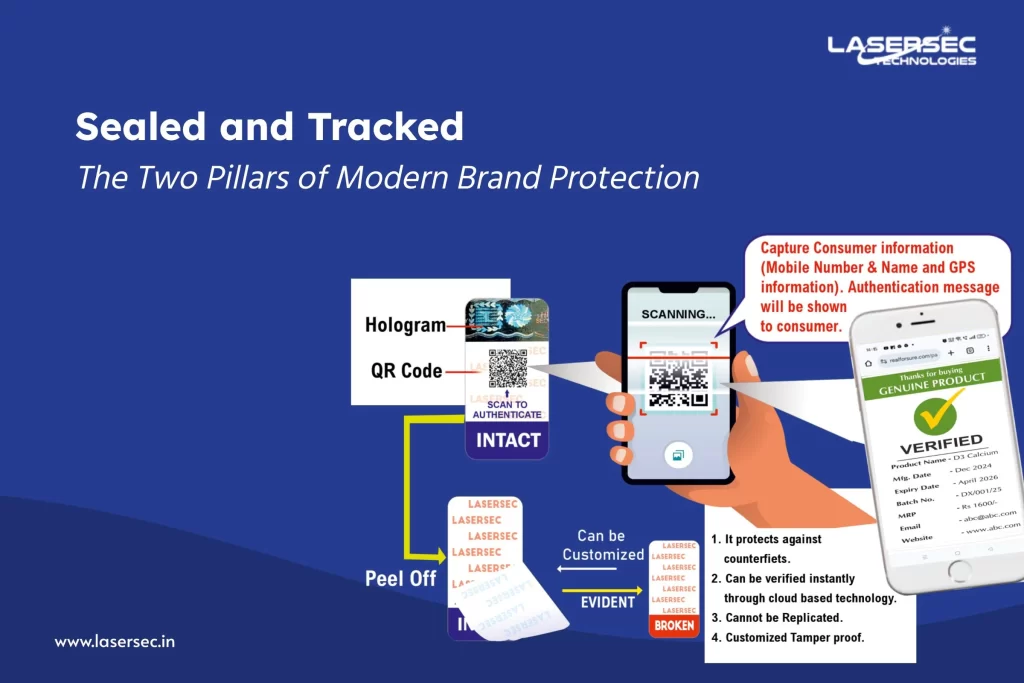
Forward-thinking brands are now adopting a two-pronged security approach: Tamper-Evident Packaging + Track & Trace Technology
One is a physical deterrent. The other is a digital watchdog. Together, they form a resilient shield against fraud.

1. What These Tools Actually Do

Tamper-Evident Packaging

These packaging elements display clear signs of interference.
Think broken seals, VOID labels, or peeled films—immediate red flags for both consumers and supply chain teams.

2. Track & Trace Systems

Every unit is assigned a unique serialized identity, often through GS1 barcodes or QR codes.
Each scan updates the unit’s journey from production to retail, enabling full traceability and real-time monitoring through secure platforms.

Bonus: Advanced T&T systems now integrate with cloud-based dashboards, AI-based alerts, and mobile authentication tools.

Relying on only one method is like locking your front door but leaving the windows wide open.

  • Tamper seals can be replicated.
  • Digital codes can be copied.

But when combined:
Physical evidence + Digital validation = A failsafe authentication system that’s far harder to breach.

Real Time Impacts

  1. Pharmaceuticals: A sealed pack and a scannable QR code validate medication at the pharmacy. Brands using serialization aligned with DSCSA/EU FMD have reduced counterfeit reports and met compliance faster.
  2. Electronics: With encrypted QR codes and tamper seals, brands can detect unauthorized resellers and trace diversion to the source. Less warranty fraud and tighter market control.
  3. FMCG & Personal Care: A beauty brand added tamper-evident seals and scannable codes after fake products emerged online. 38% drop in complaints, increased repurchase rates, and renewed customer trust.

Why This Approach Works

  • Visible Proof:
    Customers know if the product has been tampered with.
  • Digital Traceability:
    Brands know exactly where and when a breach occurred.
  • Rapid Response:
    Identify and contain supply chain risks in real time.
  • Compliance-Ready:
    Stay ahead of evolving global regulations.
  • Brand Loyalty:
    Build trust through transparency, safety, and action.

You don’t need a massive overhaul.

Start small like:

  • Apply tamper-evident holographic labels to premium or high-risk SKUs.
  • Add QR codes connected to a secure backend system.
  • Educate your distributors and customers on scanning and verification.

Then, scale as your confidence and ROI grow.

Your Packaging Is More Than a Box

It’s your handshake, your promise, your presence in places you can’t be.

With tamper-evident packaging and track & trace working in tandem, your packaging becomes a:

  • Silent Guardian
  • Smart Communicator
  • Powerful Brand Asset

Let’s Build Smarter, Safer Packaging – Together

At Lasersec Technologies, we specialize in merging physical security with digital intelligence. Our solutions are tailored for pharma, electronics, FMCG, automotive, and consumer brands looking to stay ahead of counterfeiting risks.

Why Egypt’s Pharma Industry Needs Next-Gen Anti-Counterfeiting Solutions

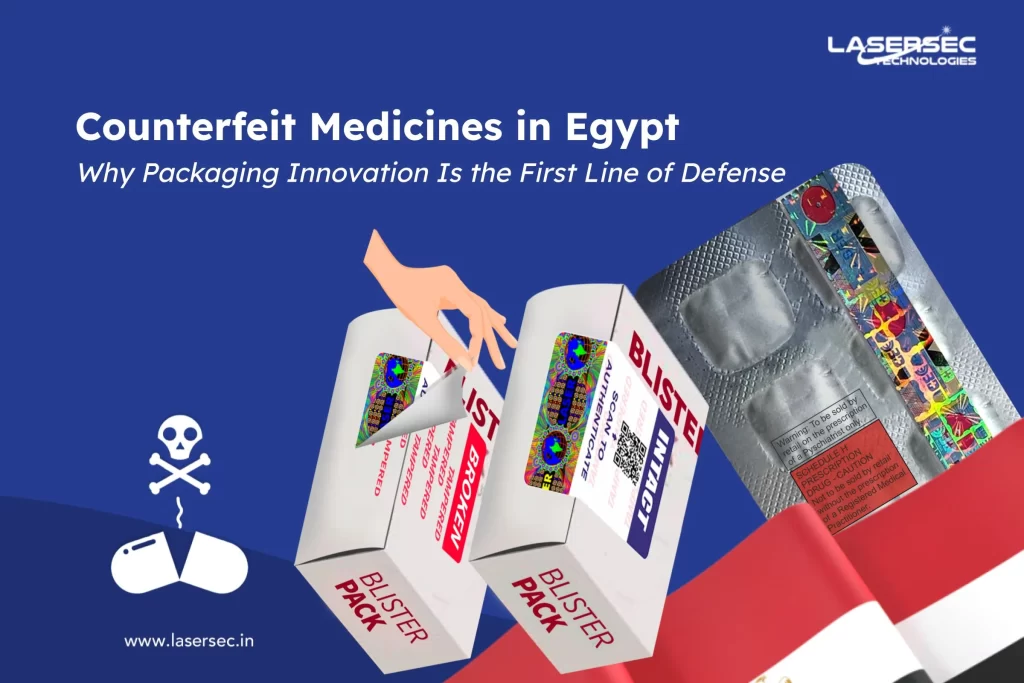
Counterfeit medicines remain one of the biggest threats to Egypt’s healthcare system. Patients depend on genuine drugs not only for recovery but often for survival — yet fake medicines continue to circulate, undermining both trust and safety.

According to the Egyptian Drug Authority (EDA), counterfeit medicines make up nearly 10% of the local market in some therapeutic categories.  

These fakes are often disguised with packaging that looks identical to genuine products, making detection extremely difficult for pharmacists and patients.

The consequences are severe:

  • Reduced treatment effectiveness
  • Dangerous health risks
  • Erosion of public trust in brands and the healthcare system
For Egypt’s rapidly expanding pharmaceutical industry — one of the largest in MENA — counterfeiting is no longer a small-scale issue. It’s a national challenge that demands stronger, smarter solutions.

Why Old Defenses Fail

Traditional methods like basic holograms or packaging updates are no longer enough. Counterfeiters are adapting quickly, often staying just one step behind. Pharma companies in Egypt need solutions that go beyond packaging — ensuring authenticity is protected across the entire supply chain.

Next-Gen Anti-Counterfeiting Solutions for Pharma in Egypt

At Lasersec Technologies, we’ve developed advanced anti-counterfeiting solutions designed to tackle the exact challenges Egypt’s pharma sector faces today:

1. Secure QR Codes for Instant Verification :

Give patients and pharmacists the power to instantly verify authenticity with a smartphone scan. This creates transparency and trust at the point of purchase.

2. Serialization & Track-and-Trace (GS1 Standards):

Ensure every pack carries a unique code, providing unit-level visibility from manufacturer to pharmacy. This strengthens regulatory compliance and blocks counterfeit infiltration.

3. Phygital Security Features for Tamper-Proof Packaging:

A powerful combination of physical security elements (holograms, special inks, tamper-evident labels) with digital verification ensures packaging is nearly impossible to replicate.

Together, these solutions protect patients, brands, and supply chains — ensuring only genuine medicines reach the hands of consumers.

Why Egypt Needs to Act Now

With exports on the rise, Egyptian pharmaceutical companies must meet international compliance norms to compete globally. Beyond regulations, the real need is trust — both at home and abroad.

Companies that adopt next-gen anti-counterfeiting today will:

  • Become pioneers of safety and reliability in Egypt’s pharma market.
  • Win stronger patient loyalty through visible safety measures.
  • Improve global competitiveness by aligning with international standards.

Showcasing Next-Gen Anti-Counterfeiting at Egypt’s Pharma Exhibition

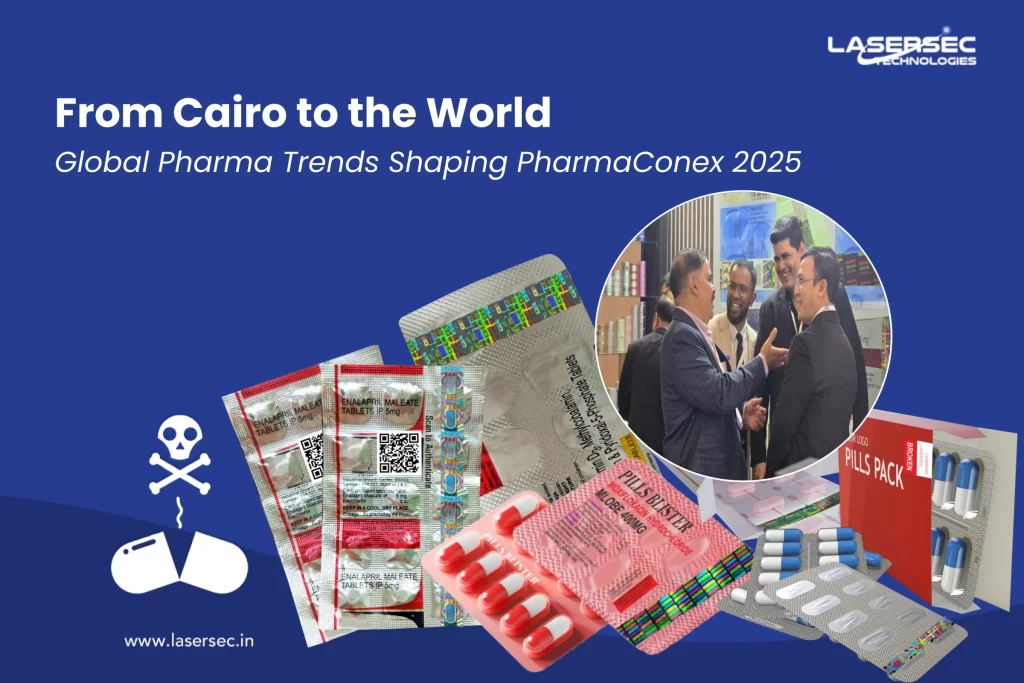
At the recent exhibition in Cairo, Lasersec Technologies had the opportunity to showcase our next-gen anti-counterfeiting solutions to Egypt’s pharma leaders. Through live demonstrations of secure QR codes, serialization, and phygital features, we highlighted how brands can strengthen patient trust and safeguard supply chains.

The response reinforced one thing clearly: Egypt’s pharma industry is ready to embrace advanced solutions to fight counterfeiting and lead with confidence in both local and global markets.

Moving Forward: Partnering with Egypt’s Pharma Industry

For those who couldn’t attend or want to continue the discussion, our team is here to help. Whether you need a detailed consultation, solution roadmap, or samples tailored to your products, we’re ready to support you.

Because protecting patients — and protecting your brand — is not just a one-time exhibition showcase, it’s a long-term partnership.

What You’ll Experience at Lasersec’s Booth in Pharmaconex 2025

When PharmaConex 2025 opens in Cairo this September, Hall 4, Booth No. J32 won’t just be another exhibition stand—it’ll be your gateway to Egypt’s most advanced pharmaceutical packaging security and compliance solutions.

Egypt’s pharmaceutical sector is evolving fast, with growing demand for serialization, patient safety, and counterfeit prevention. Lasersec Technologies is here to show you—live—how our anti-counterfeit, track & trace, and phygital authentication solutions can protect your brand, patients, and profits.

What You’ll See Up Close

1. Next-Generation Anti-Counterfeit Solutions:

Explore our latest holographic security features designed for instant, in-field authentication. These aren’t just visual effects—they’re engineered with nano-optical structures, covert taggants, and forensic-level markers that make duplication impossible.

A recent partnership with a leading generic drug manufacturer cut counterfeit reports by 78% in just one year.

2. Track & Trace in Action:

Watch live demonstrations of serialization and secure coding integrated seamlessly into a pharmaceutical supply chain. From batch-level aggregation to unit-level GS1-compliant data capture, see how we deliver real-time product visibility, enabling end-to-end traceability from manufacturing through distribution.

Our traceability framework helped a global vaccine brand reduce supply chain discrepancies by 60%.

3. Phygital Authentication:

Discover how we bridge physical packaging with the digital world—allowing every stakeholder in your chain, right down to the patient, to verify authenticity via secure cloud-based checks. Our encrypted QR codes and NFC-enabled labels offer instant access to verification data, patient engagement tools, and even recall alerts—helping you improve safety and brand trust.

Why You’ll Want to Stop By

  • Real Demos – Experience the technology live, not just read about it.
  • Industry Insights – Stay updated on evolving serialization mandates and anti-counterfeit regulations.
  • Custom Solutions – Work directly with our technical experts to solve your packaging and supply chain challenges.

This is not just about seeing products—it’s about exploring how those products can solve your real-world problems, from patient safety to market protection.

Let’s Talk at PharmaConex 2025

We believe innovation matters most when it’s practical, accessible, and tailored to your reality. Whether you want to:

  • Meet global serialization requirements
  • Add tamper-evident and tamper-proof packaging
  • Create digital engagement channels for patients

Yes, our team will be ready to walk you through every step.

Save the Date: 7–9 September 2025
Location: Egypt International Exhibition Center, Cairo
Booth: Lasersec Technologies – Hall 4, #J32

Your brand’s reputation is priceless.
At Pharmaconex 2025, let’s make sure it stays that way.

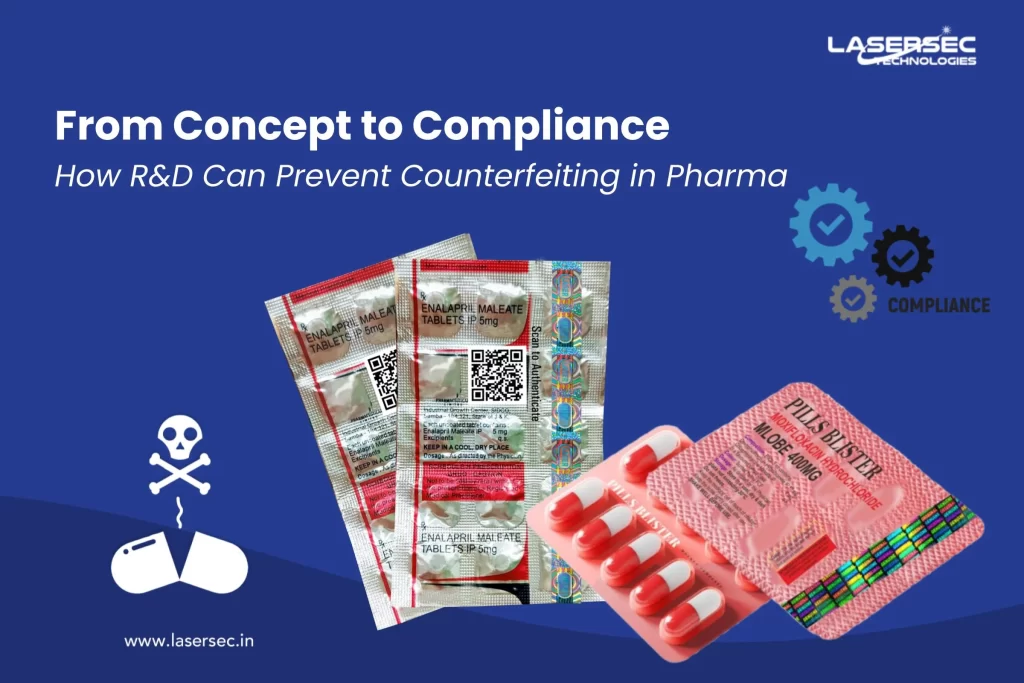
From Concept to Compliance: How R&D Can Prevent Counterfeiting in Pharma

In the world of healthcare, trust isn’t optional—it’s foundational. When a patient takes medicine, they aren’t just consuming a formulation—they’re placing their lives in the hands of pharmaceutical brands, regulators, and science.

But what happens when that trust is betrayed by counterfeit drugs?

Counterfeit medicines are more than a regulatory challenge; they’re a human crisis. From causing patient harm to disrupting supply chains and damaging brand credibility, the consequences are staggering. That’s why the fight against counterfeiting must begin far earlier than many companies realize—not in the warehouse or the pharmacy, but in the research lab.

Why R&D Is the First Line of Defense

For decades, anti-counterfeit strategies have been reactive—focused on packaging tweaks or post-launch investigations. But by that stage, the product is already in circulation, and risks have multiplied.

Integrating anti-counterfeiting measures at the R&D stage enables pharma companies to design products that are inherently secure. It’s about embedding protection within the DNA of the drug—from formulation to packaging. Early intervention ensures that a product isn’t just therapeutic, but tamper-proof, traceable, and trusted.

The Hidden Dangers of Delayed Protection

Delaying brand protection until after production or during distribution creates opportunities for counterfeiters. Once a fake medicine reaches a patient:

  • Regulatory penalties may follow.
  • Patient safety is compromised.
  • Brand trust takes a lasting hit.
Proactive protection, on the other hand, makes it far harder for bad actors to replicate or manipulate your products. It transforms the product into a self-verifying tool, not just a commodity.

Compliance Begins at the Research Table

With global regulatory frameworks tightening—like EU Falsified Medicines Directive (FMD), U.S. Drug Supply Chain Security Act (DSCSA), and TGA requirements in Australia—companies must demonstrate authenticity, traceability, and security from the outset.

Embedding regulatory compliance during R&D enables:

  • Easier serialization integration
  • Accurate data capture for global traceability
  • Faster approval and fewer redesign costs
When compliance is an afterthought, retrofitting solutions becomes expensive and error-prone. But when it’s embedded in development, it becomes a strength—not a stress.

Cost Today, Savings Tomorrow

Some stakeholders fear that early-stage protection adds unnecessary cost. In reality, the opposite is true.

Preventive measures are far more cost-effective than damage control:

  • A single counterfeit scandal can cost millions in recalls, legal fees, and brand damage.
  • Investing early reduces downstream risks, from litigation to loss of market share.
  • Robust products attract regulatory and consumer confidence—accelerating approvals and adoption.

Advanced anti-counterfeit technologies are now versatile, scalable, and R&D-friendly. By integrating these tools into the development phase, pharma companies create products that are resilient and verifiable:

1. Invisible Security Inks –

Embedded directly on blister packs or tablets for covert verification.

2. Tamper-Evident Packaging –

Custom seals that reveal breaches before reaching the end-user.

3. Blockchain & Track-and-Trace Systems –

Enabling immutable supply chain transparency.

4. Secure QR Codes & Digital Twins –

Real-time authentication via mobile scans.

Lasersec Technologies offers R&D-compatible solutions that support pharma brands in building layered, invisible protection—right from Day One.

Anti-counterfeiting isn’t just a packaging or compliance task—it’s a cross-functional mission. When R&D, compliance, packaging, marketing, and logistics teams collaborate early, the outcomes are:

  • Integrated protection strategies
  • Stronger risk mitigation frameworks
  • Faster innovation cycles

This shared responsibility creates a culture of accountability across the entire product lifecycle.

Looking Ahead: Prevent Early, Not Late

Counterfeiters are using smarter methods—AI-generated packaging, high-res replication, and fake serialization. The pharmaceutical industry must be one step ahead.

Embedding anti-counterfeit strategy during R&D is a future-focused, patient-centric move. It empowers companies to:

  • Reduce regulatory risks
  • Enhance product integrity
  • Build long-term trust

R&D is not just about drug discovery—it’s the first frontier of product protection.

At Lasersec Technologies, we empower pharma brands to build security into science. From secure inks and serialization systems to phygital authentication tools, we help you embed trust into every dose—starting from the concept phase.

Let’s talk.
Reach us at mktg@lasersec.in or call +91-9810213127 to explore R&D-ready brand protection solutions.