






Lasersec Technologies

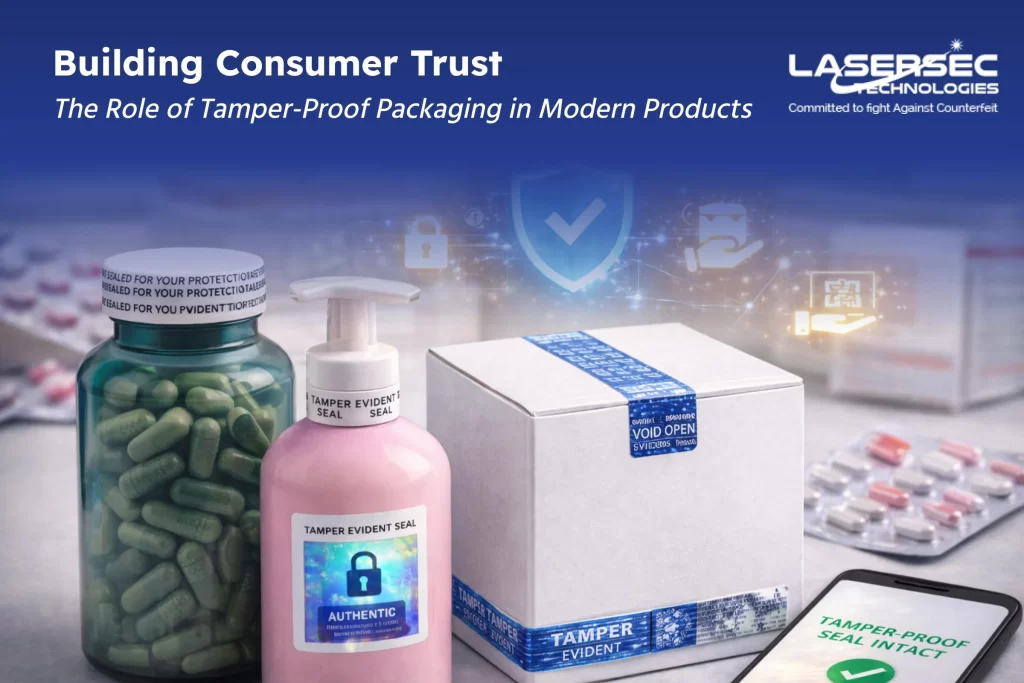
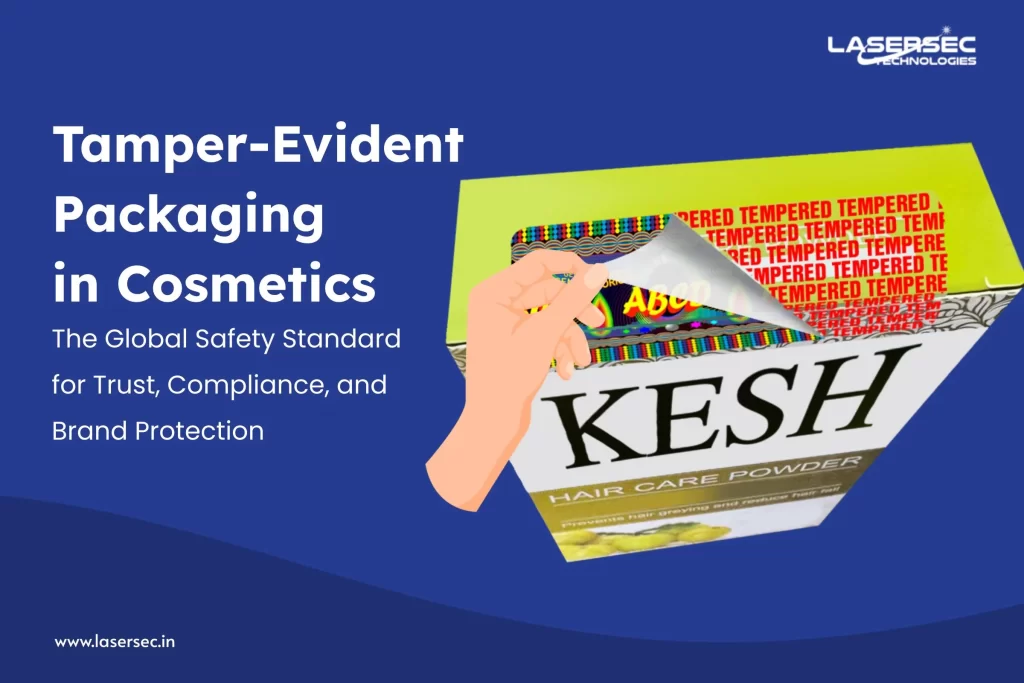
Tamper-evident packaging protecting cosmetic products from contamination

A consumer picks up a face cream, unscrews the lid, and pauses.

Has this been opened before? Has it been refilled, diluted, or contaminated?

In the cosmetics industry, this moment defines trust. Products are applied directly to the skin, lips, and eyes—leaving no margin for doubt. Today, brand reputation alone is no longer enough. Consumers, regulators, and retailers expect visible, verifiable safety at first interaction.

This is why tamper-evident packaging has evolved from an optional feature into a global safety standard for cosmetics brands.

What Is Tamper-Evident Packaging in Cosmetics?

Tamper-evident packaging is a packaging system designed to provide clear, irreversible visual evidence if a cosmetic product has been opened, altered, or compromised after manufacturing.

Once breached, tamper-evident features cannot be restored to their original state—ensuring consumers can immediately identify product integrity before first use.

Why Tamper-Evident Packaging Is Critical in the Cosmetics Industry

Cosmetics are inherently sensitive products. Even minor interference can result in:

  • Microbial contamination
  • Skin irritation or allergic reactions
  • Reduced product efficacy
  • Serious consumer safety risks

At the same time, cosmetic brands globally face rising exposure to:

  • Product refilling and reuse of original containers
  • Unauthorized opening during transit or retail handling
  • Counterfeit or diluted formulations entering grey markets
  • Increasing regulatory scrutiny on packaging integrity and labeling

Tamper-evident packaging directly addresses these risks by making interference immediately visible.

If a product has been compromised, the packaging itself communicates it—without instructions or explanation.

Common Tamper-Evident Solutions Used in Cosmetic Packaging

  • Tamper-Proof Seals : Applied on caps or closures, these seals break or tear irreversibly upon first opening. Once damaged, they cannot be resealed, clearly indicating prior access.
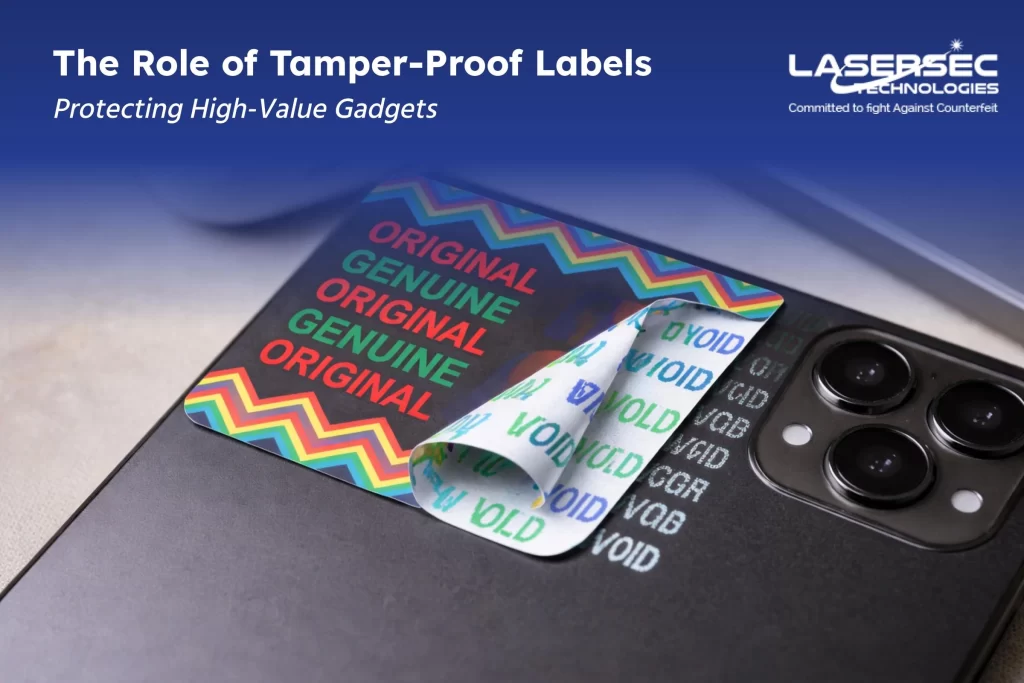
  • Void and Destructible Labels : Void & Tamper Proof Labels reveal a permanent message or pattern when removed. Destructive labels fragment on tampering, preventing reuse and eliminating the possibility of concealment.
  • Inner Seals and Liners : Placed beneath caps of creams, lotions, and serums, inner seals protect formulations from exposure while offering immediate visual assurance of freshness and safety.
These solutions are intentionally intuitive. Consumers instantly know whether a product is safe—without reading instructions or relying on assumptions.

How Tamper-Evident Packaging Builds Consumer Trust

Trust in cosmetics begins before texture, fragrance, or results. It begins with safety perception.

Tamper-evident features help brands:

  • Reassure consumers that the product is untouched
  • Reduce hesitation at the point of purchase
  • Strengthen confidence during first use
  • Reinforce a brand’s commitment to consumer well-being

For both premium and mass-market cosmetics, this visible layer of protection directly influences repeat purchases, reviews, and long-term loyalty.

Is Tamper-Evident Packaging Mandatory for Cosmetics?

While regulations vary by region, global regulatory bodies increasingly expect preventive packaging safety measures, especially for products applied directly to the body.

Tamper-evident packaging supports compliance with:

  • US FDA cosmetic safety and labeling expectations
  • EU Cosmetic Regulation (EC) No 1223/2009
  • ASEAN Cosmetic Directive (ACD)
  • Middle East and GCC cosmetic compliance frameworks

For quality assurance and regulatory teams, tamper-evident packaging demonstrates:

  • Proactive risk mitigation
  • Control over post-manufacturing interference
  • Audit readiness and quality accountability

It is no longer only about compliance—it is about responsibility.

Beyond Safety: Protecting Cosmetic Brand Reputation

A single compromised cosmetic product can undo years of brand trust.
Negative reviews, safety complaints, or regulatory actions often spread faster than corrective responses.

Tamper-evident packaging acts as a frontline brand protection mechanism by:

  • Reducing the likelihood of altered products reaching consumers
  • Limiting reputational damage caused by external supply chain manipulation
  • Protecting brands from liability linked to misuse or contamination
In an era of instant social proof and rapid information sharing, prevention is significantly more effective than damage control.

How We Support Cosmetic Brands with Tamper-Evident Solutions

We work closely with cosmetic manufacturers, packaging developers, and compliance teams to integrate tamper-evident packaging solutions that align with product design, regulatory requirements, and consumer expectations.

Our approach focuses on:

  • Selecting the right combination of seals, labels, and liners
  • Ensuring clear tamper visibility without disrupting aesthetics
  • Supporting scalability across global markets and SKUs
Explore our range of tamper-evident holographic labels designed for sensitive consumer products.

By embedding protection directly into the packaging journey, we help cosmetic brands strengthen safety, consistency, and trust—quietly and effectively.

The Future of Cosmetic Packaging Safety

As consumer awareness rises and regulations continue to evolve, tamper-evident packaging will increasingly define responsible cosmetic brands.

It is no longer a secondary feature.
It is a signal of integrity, accountability, and commitment to consumer safety.

For cosmetics—where trust, safety, and experience intersect—tamper-evident packaging sets the standard that consumers now expect and remember.
Share :

Related Blogs

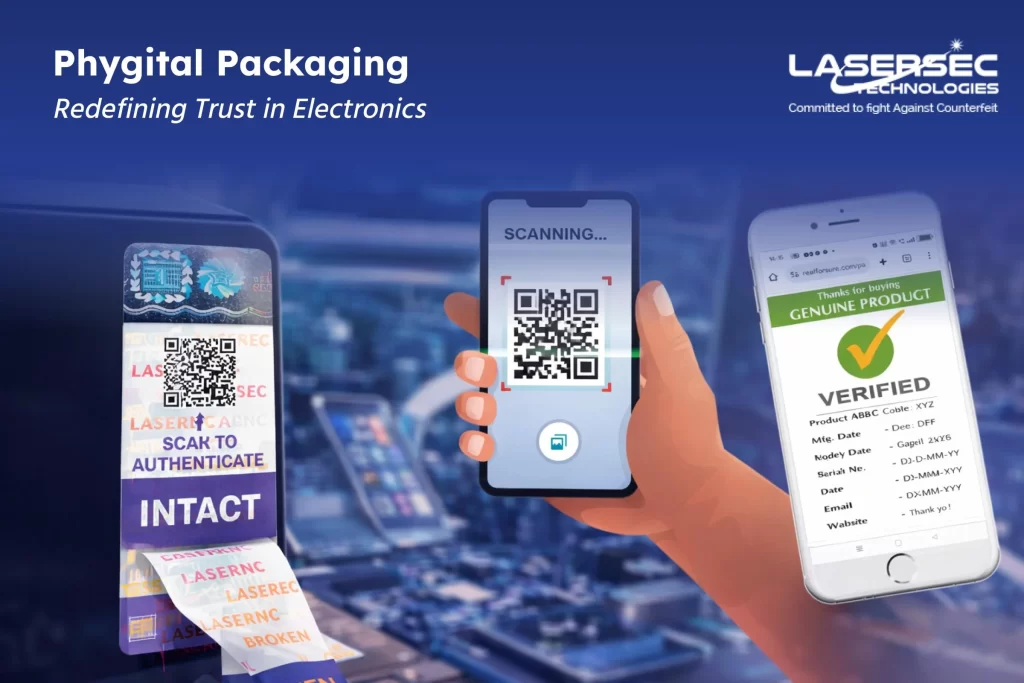
Phygital packaging system connecting factory to pharmacy for brand trust

A pharmaceutical product leaves the manufacturing facility only after passing strict quality checks, regulatory approvals, and packaging inspections. Every batch is verified, sealed, and prepared for distribution through authorized supply chains.

But once the product enters the market, maintaining control becomes more challenging. Pharmaceutical companies must rely on distributors, pharmacies, and healthcare providers to ensure the medicine reaching patients is genuine.

In many markets, counterfeit medicines and unauthorized distribution make this difficult. Packaging may appear authentic, yet visual inspection alone cannot always confirm whether the product is legitimate.

This is why pharmaceutical manufacturers are increasingly adopting phygital packaging solutions. By combining secure physical packaging features with digital verification technologies, phygital packaging enables products to be authenticated instantly through smartphone scanning.

This approach strengthens product security, improves transparency, and helps pharmaceutical companies maintain trust from the factory to the pharmacy.

The Growing Risk of Counterfeit Medicines in Pharmaceutical Supply Chains

Pharmaceutical supply chains often involve multiple intermediaries before a product reaches the patient.

These may include:

  • Manufacturers
  • Exporters
  • Distributors
  • Wholesalers
  • Pharmacies

Each stage introduces potential risks related to counterfeiting or unauthorized product diversion.

Common threats include:

  • Counterfeit medicines replicating genuine packaging using security hologram stickers
  • Unauthorized resale through unapproved distributors
  • Product diversion into unintended markets
  • Repackaging or relabeling of pharmaceutical products
  • Difficulty verifying authenticity at the pharmacy level
These risks create serious consequences for pharmaceutical companies.

They can result in:

  • Patient safety concerns
  • Regulatory compliance challenges
  • Distributor conflicts
  • Brand reputation damage
  • Financial losses from counterfeit circulation

Without reliable authentication systems, confirming product authenticity becomes extremely difficult once medicines leave the manufacturing facility.

Why Traditional Pharmaceutical Packaging Security Is No Longer Enough

Traditional pharmaceutical packaging includes elements such as printed labels, barcodes, batch numbers, and expiry information. These features help identify products and support logistics, but they were not designed to prevent modern counterfeiting.

Today, counterfeiters can replicate packaging designs with increasing accuracy. Even simple security labels can sometimes be visually imitated if they are not supported by authentication systems.

Traditional packaging elements can often be:

  • Copied or reproduced
  • Reprinted on counterfeit products
  • Removed and applied to fake packaging
  • Visually replicated using advanced printing technologies

Even standard holographic labels without authentication layers may not provide sufficient protection against modern counterfeiting.

Because of this, appearance alone cannot reliably confirm authenticity.

This is why pharmaceutical companies are moving toward multi-layered packaging security systems that combine physical anti-counterfeit features with digital verification.

What Is Phygital Packaging in the Pharmaceutical Industry

Phygital packaging integrates physical packaging security with digital authentication systems to create a stronger protection mechanism.

Instead of relying only on visual security features, phygital packaging adds a digital verification layer directly to the product packaging.

In pharmaceutical packaging, this often includes:

Each product unit receives a unique digital identity linked to secure manufacturing and distribution data.

When the code is scanned, the authentication system can instantly verify:

  • Whether the product is genuine
  • Where the product was manufactured
  • The production batch details
  • The intended distribution market

This transforms pharmaceutical packaging into a secure authentication point for verifying product legitimacy.

How Phygital Packaging Enables Patient-Level Product Verification

One of the most valuable advantages of phygital packaging is that it allows verification directly at the pharmacy or patient level.

When a medicine package includes a secure hologram integrated with a QR code authentication or authentication marker, users can verify the product by scanning the code with a smartphone.

The system checks the unique identifier against secure product records and confirms authenticity instantly.

If suspicious activity occurs, such as duplicate scans or verification from unexpected regions, the system can immediately flag potential counterfeit or diversion risks.

This enables:

  • Pharmacists to verify medicines before dispensing
  • Patients to confirm product authenticity
  • Regulators to investigate suspicious products
  • Pharmaceutical companies to monitor verification activity

By enabling verification at the point of use, phygital packaging significantly reduces the chances of counterfeit medicines reaching patients.

Supporting Pharmaceutical Compliance and Regulatory Requirements

Pharmaceutical regulations around the world are increasingly focused on improving traceability and product authentication.

Many markets now require manufacturers to implement systems that support:

  • Product serialization
  • Track and Trace capability
  • Supply chain transparency
  • Authentication verification

Phygital packaging helps meet these expectations by integrating physical anti-counterfeit packaging with digital authentication systems such as Track & Trace solutions.

These systems enable regulators and supply chain partners to verify:

  • Product origin
  • Manufacturing authenticity
  • Batch integrity
  • Distribution pathways

Authentication capabilities also improve inspection efficiency by providing instant verification during regulatory checks.

For pharmaceutical companies operating across global markets, this transparency strengthens compliance and improves regulatory confidence.

Protecting Pharmaceutical Brand Trust Through Secure Packaging

Trust plays a critical role in the pharmaceutical industry. Patients, healthcare professionals, and regulators must have confidence that medicines are safe and genuine.

When counterfeit medicines appear in the market, they can quickly damage both patient safety and brand credibility.

Phygital packaging helps pharmaceutical companies protect brand trust by enabling reliable product authentication.

Secure holographic packaging such as security holograms combined with digital verification allows genuine products to be distinguished quickly from counterfeit copies.

This capability helps:

  • Prevent counterfeit medicines from circulating undetected
  • Strengthen trust among healthcare professionals
  • Protect pharmaceutical brand reputation
  • Ensure patients receive genuine medicines

Over time, authentication systems reinforce long-term trust in pharmaceutical products.

Improving Pharmaceutical Supply Chain Visibility with Phygital Authentication

Pharmaceutical manufacturers often have limited visibility once products leave the factory.

Phygital authentication systems improve supply chain transparency by generating verification records whenever products are scanned using Track & Trace technology.

These records allow pharmaceutical companies to:

  • Monitor product movement across regions
  • Detect unauthorized distribution channels
  • Identify suspicious verification patterns
  • Investigate potential counterfeit activity
  • Improve supply chain oversight

This visibility allows companies to identify risks earlier and respond quickly before counterfeit products spread widely in the market.

Phygital authentication shifts supply chain protection from reactive response to proactive prevention.

How We Support Secure Phygital Packaging for Pharmaceutical Brands

At Lasersec Technologies, we provide advanced anti-counterfeit packaging solutions designed for pharmaceutical manufacturers operating in complex global markets.

Our phygital packaging solutions combine secure physical packaging with digital authentication technologies, including:

By integrating these technologies directly into pharmaceutical packaging, we help manufacturers create reliable product authentication systems that work across the entire supply chain.

Our solutions help pharmaceutical companies:

  • Prevent counterfeit medicines
  • Enable pharmacy-level product authentication
  • Strengthen regulatory compliance
  • Protect brand reputation
  • Improve global supply chain visibility

To explore industry-specific solutions, visit our Pharma anti-counterfeit solutions page.

Strengthening Pharmaceutical Trust from Factory to Pharmacy

Pharmaceutical supply chains continue to grow more complex, and the risks associated with counterfeit medicines remain significant.

Phygital packaging offers a powerful solution by combining secure holographic packaging with digital authentication technologies. This approach enables instant product verification, improves supply chain transparency, and strengthens compliance with evolving regulations.

Most importantly, it helps ensure that genuine medicines reach pharmacies and patients safely.In today’s pharmaceutical industry, phygital packaging is not just a packaging innovation. It has become an essential strategy for protecting patient safety, brand integrity, and long-term trust in pharmaceutical products.

Food authentication technology preventing fake imports and parallel trade in global supply chains

A shipment leaves your facility after months of production planning, quality checks, and export compliance preparation. Every detail has been verified. The product meets international food safety standards, documentation is complete, and authorized distributors are ready.

But weeks later, an unexpected issue arises.

Your distributor reports seeing your product in a country where it was never authorized to be sold. In another instance, customs officials question the authenticity of a shipment carrying your brand name. The packaging appears genuine, but verification is unclear.

This is the growing reality of counterfeit food products, parallel imports, and unauthorized distribution. These risks do more than disrupt a single shipment. They affect regulatory compliance, distributor trust, pricing integrity, and long-term brand reputation.

This is why food authentication solutions have become essential for exporters. Authentication transforms packaging into a secure, verifiable identity system that protects products across global supply chains using technologies like QR code authentication and Track & Trace systems.

Understanding the Rising Risk of Fake Imports and Parallel Trade in Food Exports

As food products move through international supply chains, they pass through multiple intermediaries, distributors, logistics providers, and retailers. This complexity creates opportunities for unauthorized activities such as:

  • Parallel imports into unauthorized countries
  • Relabeling products for resale in different markets
  • Distribution of expired or compromised products
  • Counterfeit food products replicating genuine packaging using security hologram stickers
  • Unauthorized resale outside approved distributor networks

These activities are increasing globally due to sophisticated packaging replication techniques and fragmented supply chain visibility.

For food exporters, the consequences are significant:

  • Loss of brand control
  • Regulatory compliance risks
  • Distributor conflicts
  • Consumer safety concerns
  • Financial and reputational damage

Without a reliable product authentication system, it becomes extremely difficult to verify whether a product is genuine, where it originated, and how it entered a specific market.

Why Traditional Packaging and Labels Cannot Prevent Counterfeit Food Products

Traditional packaging elements such as printed labels, barcodes, and batch numbers were designed for identification and logistics—not for security and authentication.

These elements can be easily:

  • Copied
  • Reprinted
  • Duplicated
  • Reapplied to counterfeit products

Even standard holographic labels without secure authentication layers can be visually imitated if not integrated with verification technologies.

Counterfeiters can replicate packaging visually, making manual inspection unreliable.

Regulators, distributors, and retailers cannot confirm authenticity based on appearance alone. This creates delays, uncertainty, and compliance risks during export inspections and market verification.

Modern global food exports require secure authentication systems that provide instant, verifiable proof of product authenticity through solutions such as tamper-evident labels and QR code anti-counterfeit labels.

What Is Food Authentication and How Food Authentication Systems Work

Food authentication is a secure process that assigns a unique, traceable identity to each product unit. This identity is integrated directly into packaging using secure authentication technologies such as:

  • Serialized QR codes
  • Unique identification codes
  • Secure digital authentication markers
  • Tamper-evident and anti-counterfeit packaging features like tamper proof hologram stickers

Each authentication code is unique and linked to secure product data, including:

  • Manufacturing origin
  • Production batch information
  • Export destination
  • Product identity and verification status

When the authentication code is scanned, the system instantly verifies whether the product is genuine through secure platforms such as Track & Trace authentication systems.

If duplicate codes appear, or if products are detected in unauthorized markets, the system immediately identifies potential counterfeit or parallel trade activity.

This transforms packaging into an active brand protection and verification tool.

How Food Authentication Prevents Parallel Imports and Unauthorized Distribution

Parallel trade occurs when genuine products are diverted from authorized supply chains and resold in unauthorized markets. This disrupts pricing structures, violates distribution agreements, and creates regulatory complications.

Food authentication solutions prevent parallel imports by enabling unit-level verification using secure packaging such as QR code holograms and anti-counterfeit labels.

Each product unit can be verified to confirm:

  • Whether it was intended for a specific export market
  • Whether it has been duplicated or counterfeited
  • Whether it has been diverted to an unauthorized region
  • Whether the product identity matches manufacturing records

For example, if a product intended for export to one country is scanned in a different region, authentication systems immediately detect the discrepancy.

This allows exporters and brand owners to identify unauthorized distribution channels and take corrective action quickly.

Authentication restores control over products even after they leave the manufacturing facility.

Supporting Export Compliance and Regulatory Requirements with Authentication

Food exporters must comply with strict international regulations related to product origin, safety, traceability, and authenticity.

Regulatory authorities increasingly expect manufacturers to demonstrate supply chain transparency and authentication capability through secure systems such as Track & Trace solutions.

Food authentication systems support compliance by enabling regulators to verify:

  • Product origin
  • Manufacturing authenticity
  • Batch integrity
  • Export destination verification
Authentication provides instant, verifiable proof that the product is genuine and compliant.

This reduces customs delays, improves inspection efficiency, and strengthens regulatory confidence.

It also demonstrates that exporters are implementing proactive brand protection and compliance measures.

How Food Authentication Protects Brand Reputation and Consumer Trust

Brand reputation is one of the most valuable assets for food exporters. However, counterfeit or diverted products can quickly damage consumer confidence—even when the manufacturer is not responsible.

Consumers cannot distinguish between genuine and counterfeit products if packaging appears identical without secure authentication features like security holograms or tamper-evident packaging labels.

Authentication enables distributors, retailers, and consumers to verify product authenticity instantly.

This prevents counterfeit products from circulating undetected and ensures consumers receive genuine, safe products.

Over time, authentication strengthens brand credibility and builds long-term trust across global markets.

Improving Food Supply Chain Visibility with Product Authentication Systems

One of the biggest challenges exporters face is limited visibility after products leave the manufacturing facility.

Food authentication systems improve supply chain transparency by creating verification records whenever a product is scanned through systems such as Track & Trace technology.

This enables exporters to:

  • Monitor product movement across markets
  • Detect unauthorized distribution
  • Identify suspicious activity
  • Prevent counterfeit infiltration
  • Improve supply chain control

This visibility allows faster response to potential risks and prevents widespread distribution of counterfeit or diverted products.

Authentication shifts supply chain management from reactive damage control to proactive prevention.

Why Food Authentication Solutions Are Essential for Modern Food Exporters

Global food trade continues to expand, but so do risks related to counterfeit imports, parallel trade, and unauthorized resale.

Authentication provides critical protection by enabling:

  • Unit-level product verification
  • Anti-counterfeit packaging security using holographic labels and security holograms
  • Supply chain authentication
  • Export compliance support
  • Brand protection across international markets

Authentication transforms packaging into a secure, verifiable proof of authenticity.

It protects exporters, distributors, regulators, and consumers alike.

How We Supports Secure Food Authentication and Brand Protection

At Lasersec Technologies, we provide advanced food authentication and anti-counterfeit packaging solutions designed to protect exporters operating in global markets.

Our solutions integrate secure, unique identifiers directly into packaging, using technologies such as QR code holograms, tamper-evident labels, and Track & Trace authentication systems, enabling reliable product authentication and supply chain verification.

These authentication systems help exporters:

  • Prevent counterfeit food products
  • Detect parallel imports and diversion
  • Strengthen export compliance
  • Protect brand 
  • Improve global supply chain visibility

By combining secure physical packaging with authentication technologies, we help brands maintain control, transparency, and trust throughout the product lifecycle.

To explore relevant solutions for this sector, visit our FMCG anti-counterfeit solutions page.

Strengthening Global Food Export Security Through Authentication

As counterfeit food products and parallel trade continue to rise, authentication has become a critical component of export security and brand protection.

Food authentication systems provide verifiable product identity, improve supply chain transparency, and support regulatory compliance through technologies like secure holographic labels and Track & Trace authentication.

They help ensure that genuine products reach authorized markets safely and securely.

Most importantly, authentication protects brand reputation, consumer safety, and long-term export success.

In today’s global food industry, authentication is no longer optional. It is an essential foundation for secure, compliant, and trusted international food distribution.