







Lasersec Technologies

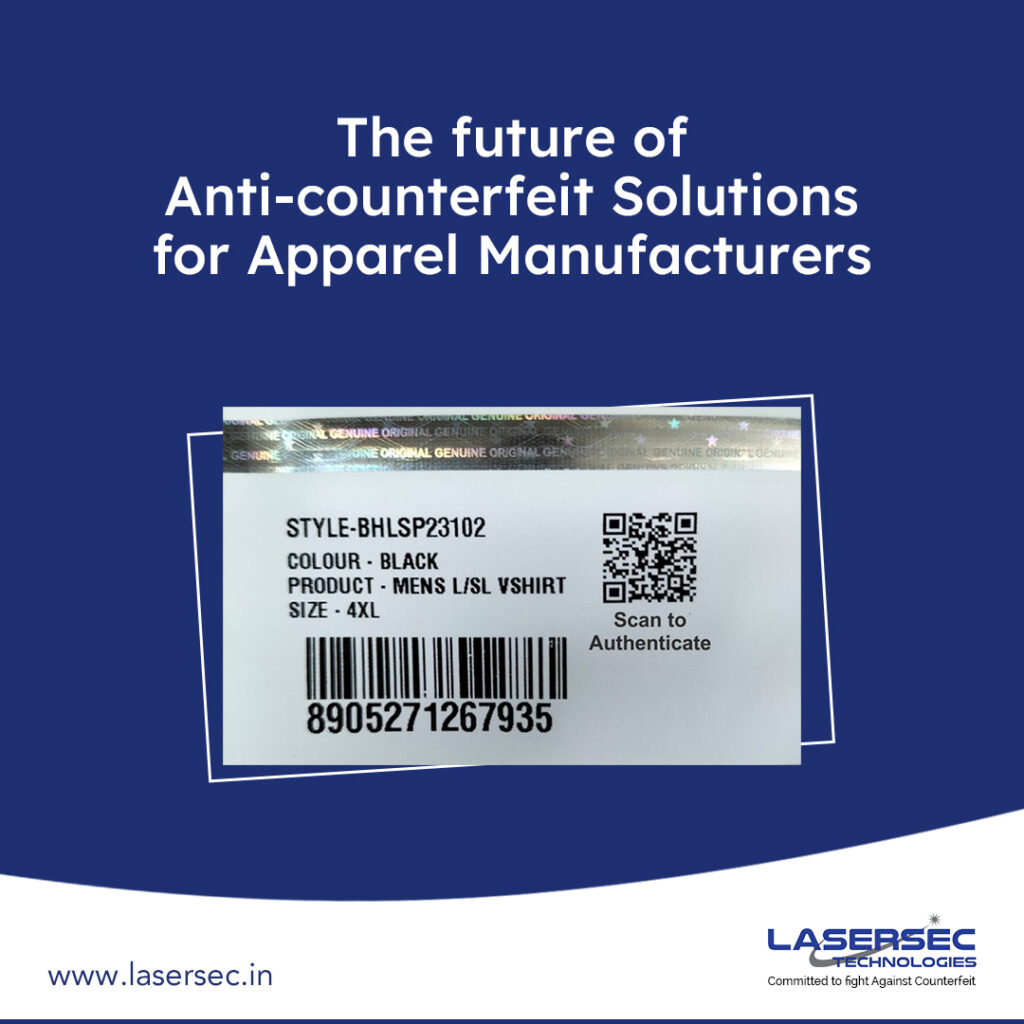
The future of Anti-counterfeit Solutions for Apparel Manufacturers

As the apparel industry continues to evolve, so do the methods used by counterfeiters to produce and sell fake clothing and accessories. This is a major concern for apparel manufacturers, as it results in lost revenue and damage to their brand reputation.

To combat this problem, manufacturers have been turning to various anti-counterfeit solutions. However, as technology advances, it is important for them to stay informed about the latest trends and developments in the innovation in order to stay ahead of the game.

The anti-counterfeit solutions are constantly evolving, and manufacturers must be prepared to adapt and adopt new technologies and methods to keep up with the changing landscape. And it is very important for us to innovate latest holographic solutions to effectively combat counterfeiting. 

Fight against with Your Brand Fake Clothing with Lasersec Technologies

Recently, our company introduced the newest and most cutting-edge solutions to enable clothing manufacturers and the packaging of their products add an extra layer of security against tampering, authentication, and helps to monitor products.

The holographic clothing tags that we offer are all-in-one and can be customized to meet your needs. 

Let’s know more in detail about the products and how it can help your brand.

1. Holographic Tags with QR Code

  • Holographic Tags with QR Code, blockchain technology code which enable apparel manufacturers like you to trace their products from production to purchase. It also helps your distributors, your dealers, and your customers valid code to confirm the clothes are original and authentic.
  • Holographic tags are small, tamper-evident labels that are attached to the clothing. They feature a holographic image or design that is difficult to replicate, making it easier to identify counterfeit products.
  • Whereas, QR codes are two-dimensional barcodes that can be scanned using a smartphone camera. We can add customized QR codes to the holographic tag or can even print directly onto the clothing. These codes can contain information about the clothes, such as its authenticity, origin, and manufacturing details.

Apparel Manufacturers can use the product inside or outside of the clothing.

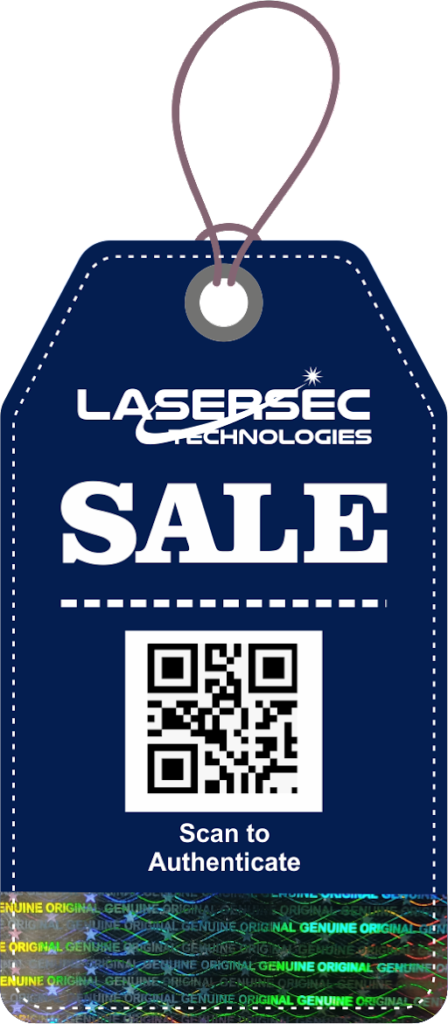
Tags can be tied with clothing to secure the clothing product. As shown in the image here.
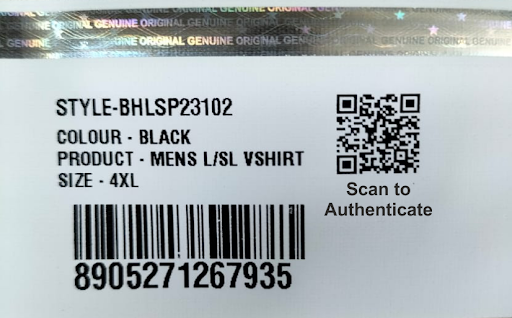
Same can be printed on the Polyester Labels with barcodes, QR codes, or text for easy scanning and data entry in a variety of sizes and shapes to suit different labeling needs. These can be applied inside the clothing tagging where hologram is already present in built which cannot be removed.
Let’s understand how our innovative product helps to fight counterfeit as follows: 

Manufacturer: The manufacturer should attach a unique QR code to holographic label to each original clothing. The QR code must contains product information such as origin, manufacturing details, and authenticity verification. 
Even, we can implement multi-factor authentication (TOTP). Even, a proprietary watermark feature and a different visual look from standard barcodes distinguish these holographic tags with QR codes. The holographic label serves as a tamper-evident mark and provides an added layer of protection against counterfeits.

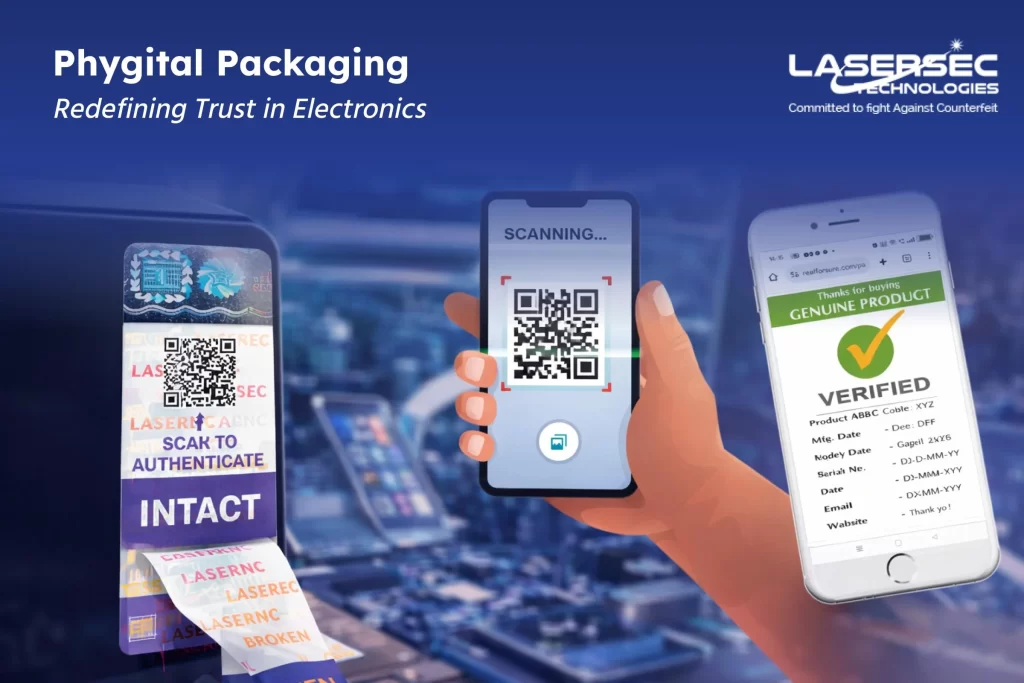
Consumer: Consumers should scan the QR code using their smartphone camera. The QR code links to a database that contains the clothing information. By scanning the QR code, consumers can verify the originality of the clothing. A “success notification,” which signifies that the product has been authenticated, is given to the user after scanning. The user receives a warning if the QR code is tampered, letting them know that the code has been confirmed and the product is probably a counterfeit.

The blockchain-based anti-counterfeit code contains tamper-proof data, enabling flawless supply chain tracking.

Therefore, both manufacturer and consumers are benefited with this technology. You as Manufacturer can track the products and reduce the risk of counterfeits entering the market and also protect the company’s brand and revenue. Whereas Consumers can have confidence in their purchases and avoid the spread of counterfeit products. The use of QR codes and holograms provides a quick and easy way for consumers to verify the authenticity of a product.

2. VOID LABELS

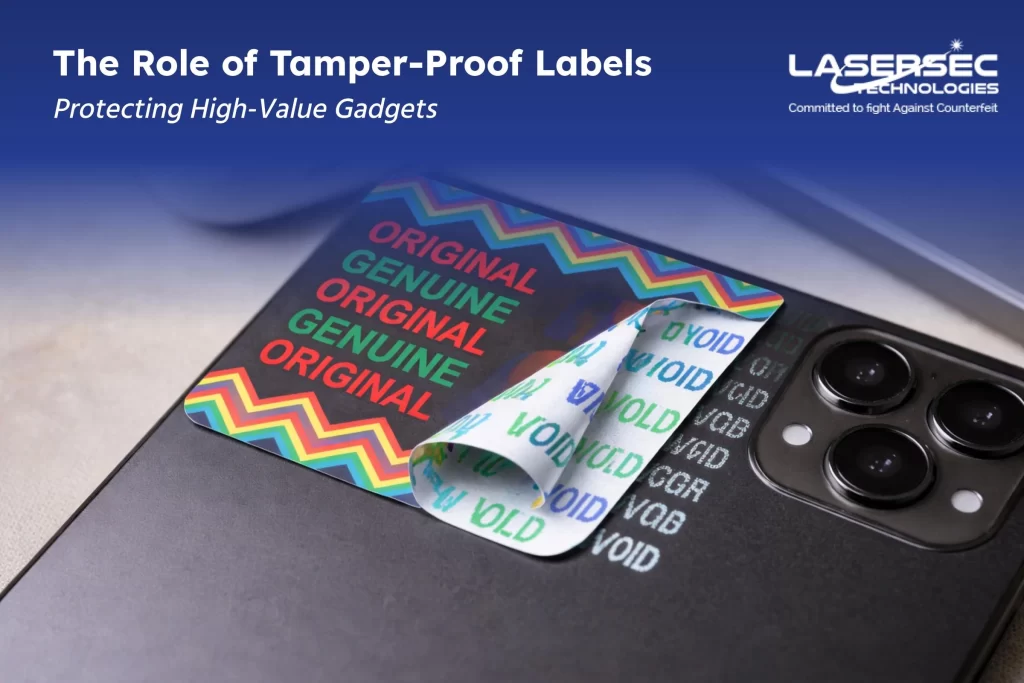
  • VOID LABELS, an anti-tampering product, are made with customized void label patterns to assist and safeguard against tampering. A difficult-to-replicate light-colored pattern is produced, and the halftone screens used in the printing process are adjusted to create a dot pattern that is invisible to the human eye but detectable by a variety of scanners and copiers.
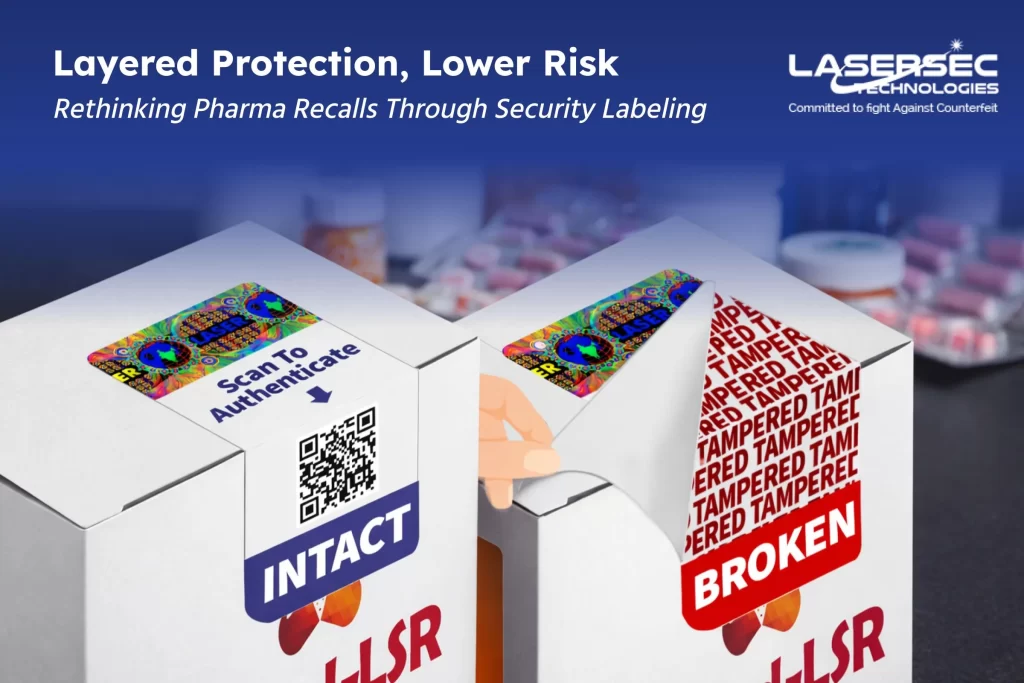
  • To deter theft, we make these substrates to function as tapes for the final outer corrugated cartons. Once the carton has been opened, these labels are taken off. 

Our latest products not only helps to combat counterfeit goods but also increases brand value:

  • Connects with customers
  • Real-time anomaly detection
  • Provides product details
  • Differentiate originals from fake
  • Provides satisfaction to customers
  • Higher Customer Engagement

Reach out to us to discuss your specific needs and concerns. Our team will provide you with tailored solutions and support to make the process as smooth as possible. We also offer free samples and demonstrations to ensure you are confident in your decision. Join with us to fight against counterfeit and create a more secure environment for your garment business. With less counterfeiting, you can maintain sales and increase customer trust.

Shield your business with our advanced technology solutions

About Lasersec Technologies

We are one of the top and most reliable producers of anti-counterfeiting goods, as well as an innovator who continually identifies any need from many facets of the apparel business and offers workable solutions. Based on the needs of a garment industry, we create and adapt product, sustained research and development carried out by a competent team of experts assisted by well-equipped facilities, staying up to date with cutting-edge technology, and developing ground-breaking new goods and applications.

You can reach us via email at mktg@lasersec.in or by phone at +91 -11-45637955.
Share :

Related Blogs

Food authentication technology preventing fake imports and parallel trade in global supply chains

A shipment leaves your facility after months of production planning, quality checks, and export compliance preparation. Every detail has been verified. The product meets international food safety standards, documentation is complete, and authorized distributors are ready.

But weeks later, an unexpected issue arises.

Your distributor reports seeing your product in a country where it was never authorized to be sold. In another instance, customs officials question the authenticity of a shipment carrying your brand name. The packaging appears genuine, but verification is unclear.

This is the growing reality of counterfeit food products, parallel imports, and unauthorized distribution. These risks do more than disrupt a single shipment. They affect regulatory compliance, distributor trust, pricing integrity, and long-term brand reputation.

This is why food authentication solutions have become essential for exporters. Authentication transforms packaging into a secure, verifiable identity system that protects products across global supply chains using technologies like QR code authentication and Track & Trace systems.

Understanding the Rising Risk of Fake Imports and Parallel Trade in Food Exports

As food products move through international supply chains, they pass through multiple intermediaries, distributors, logistics providers, and retailers. This complexity creates opportunities for unauthorized activities such as:

  • Parallel imports into unauthorized countries
  • Relabeling products for resale in different markets
  • Distribution of expired or compromised products
  • Counterfeit food products replicating genuine packaging using security hologram stickers
  • Unauthorized resale outside approved distributor networks

These activities are increasing globally due to sophisticated packaging replication techniques and fragmented supply chain visibility.

For food exporters, the consequences are significant:

  • Loss of brand control
  • Regulatory compliance risks
  • Distributor conflicts
  • Consumer safety concerns
  • Financial and reputational damage

Without a reliable product authentication system, it becomes extremely difficult to verify whether a product is genuine, where it originated, and how it entered a specific market.

Why Traditional Packaging and Labels Cannot Prevent Counterfeit Food Products

Traditional packaging elements such as printed labels, barcodes, and batch numbers were designed for identification and logistics—not for security and authentication.

These elements can be easily:

  • Copied
  • Reprinted
  • Duplicated
  • Reapplied to counterfeit products

Even standard holographic labels without secure authentication layers can be visually imitated if not integrated with verification technologies.

Counterfeiters can replicate packaging visually, making manual inspection unreliable.

Regulators, distributors, and retailers cannot confirm authenticity based on appearance alone. This creates delays, uncertainty, and compliance risks during export inspections and market verification.

Modern global food exports require secure authentication systems that provide instant, verifiable proof of product authenticity through solutions such as tamper-evident labels and QR code anti-counterfeit labels.

What Is Food Authentication and How Food Authentication Systems Work

Food authentication is a secure process that assigns a unique, traceable identity to each product unit. This identity is integrated directly into packaging using secure authentication technologies such as:

  • Serialized QR codes
  • Unique identification codes
  • Secure digital authentication markers
  • Tamper-evident and anti-counterfeit packaging features like tamper proof hologram stickers

Each authentication code is unique and linked to secure product data, including:

  • Manufacturing origin
  • Production batch information
  • Export destination
  • Product identity and verification status

When the authentication code is scanned, the system instantly verifies whether the product is genuine through secure platforms such as Track & Trace authentication systems.

If duplicate codes appear, or if products are detected in unauthorized markets, the system immediately identifies potential counterfeit or parallel trade activity.

This transforms packaging into an active brand protection and verification tool.

How Food Authentication Prevents Parallel Imports and Unauthorized Distribution

Parallel trade occurs when genuine products are diverted from authorized supply chains and resold in unauthorized markets. This disrupts pricing structures, violates distribution agreements, and creates regulatory complications.

Food authentication solutions prevent parallel imports by enabling unit-level verification using secure packaging such as QR code holograms and anti-counterfeit labels.

Each product unit can be verified to confirm:

  • Whether it was intended for a specific export market
  • Whether it has been duplicated or counterfeited
  • Whether it has been diverted to an unauthorized region
  • Whether the product identity matches manufacturing records

For example, if a product intended for export to one country is scanned in a different region, authentication systems immediately detect the discrepancy.

This allows exporters and brand owners to identify unauthorized distribution channels and take corrective action quickly.

Authentication restores control over products even after they leave the manufacturing facility.

Supporting Export Compliance and Regulatory Requirements with Authentication

Food exporters must comply with strict international regulations related to product origin, safety, traceability, and authenticity.

Regulatory authorities increasingly expect manufacturers to demonstrate supply chain transparency and authentication capability through secure systems such as Track & Trace solutions.

Food authentication systems support compliance by enabling regulators to verify:

  • Product origin
  • Manufacturing authenticity
  • Batch integrity
  • Export destination verification
Authentication provides instant, verifiable proof that the product is genuine and compliant.

This reduces customs delays, improves inspection efficiency, and strengthens regulatory confidence.

It also demonstrates that exporters are implementing proactive brand protection and compliance measures.

How Food Authentication Protects Brand Reputation and Consumer Trust

Brand reputation is one of the most valuable assets for food exporters. However, counterfeit or diverted products can quickly damage consumer confidence—even when the manufacturer is not responsible.

Consumers cannot distinguish between genuine and counterfeit products if packaging appears identical without secure authentication features like security holograms or tamper-evident packaging labels.

Authentication enables distributors, retailers, and consumers to verify product authenticity instantly.

This prevents counterfeit products from circulating undetected and ensures consumers receive genuine, safe products.

Over time, authentication strengthens brand credibility and builds long-term trust across global markets.

Improving Food Supply Chain Visibility with Product Authentication Systems

One of the biggest challenges exporters face is limited visibility after products leave the manufacturing facility.

Food authentication systems improve supply chain transparency by creating verification records whenever a product is scanned through systems such as Track & Trace technology.

This enables exporters to:

  • Monitor product movement across markets
  • Detect unauthorized distribution
  • Identify suspicious activity
  • Prevent counterfeit infiltration
  • Improve supply chain control

This visibility allows faster response to potential risks and prevents widespread distribution of counterfeit or diverted products.

Authentication shifts supply chain management from reactive damage control to proactive prevention.

Why Food Authentication Solutions Are Essential for Modern Food Exporters

Global food trade continues to expand, but so do risks related to counterfeit imports, parallel trade, and unauthorized resale.

Authentication provides critical protection by enabling:

  • Unit-level product verification
  • Anti-counterfeit packaging security using holographic labels and security holograms
  • Supply chain authentication
  • Export compliance support
  • Brand protection across international markets

Authentication transforms packaging into a secure, verifiable proof of authenticity.

It protects exporters, distributors, regulators, and consumers alike.

How We Supports Secure Food Authentication and Brand Protection

At Lasersec Technologies, we provide advanced food authentication and anti-counterfeit packaging solutions designed to protect exporters operating in global markets.

Our solutions integrate secure, unique identifiers directly into packaging, using technologies such as QR code holograms, tamper-evident labels, and Track & Trace authentication systems, enabling reliable product authentication and supply chain verification.

These authentication systems help exporters:

  • Prevent counterfeit food products
  • Detect parallel imports and diversion
  • Strengthen export compliance
  • Protect brand 
  • Improve global supply chain visibility

By combining secure physical packaging with authentication technologies, we help brands maintain control, transparency, and trust throughout the product lifecycle.

To explore relevant solutions for this sector, visit our FMCG anti-counterfeit solutions page.

Strengthening Global Food Export Security Through Authentication

As counterfeit food products and parallel trade continue to rise, authentication has become a critical component of export security and brand protection.

Food authentication systems provide verifiable product identity, improve supply chain transparency, and support regulatory compliance through technologies like secure holographic labels and Track & Trace authentication.

They help ensure that genuine products reach authorized markets safely and securely.

Most importantly, authentication protects brand reputation, consumer safety, and long-term export success.

In today’s global food industry, authentication is no longer optional. It is an essential foundation for secure, compliant, and trusted international food distribution.

Anti-counterfeit packaging for export-focused cosmetic brands ensuring product authenticity

Exporting cosmetic products reflects growth, global acceptance, and rising consumer trust. However, international markets also bring stricter regulatory requirements and increased counterfeiting risks. Today, cosmetic exporters must ensure their packaging not only protects the product but also proves its authenticity and compliance.

Anti-counterfeit packaging has become essential for cosmetic brands expanding globally. It protects products from duplication and tampering, supports regulatory compliance, and ensures safe distribution across complex international supply chains.

What Is Anti-Counterfeit Packaging in Cosmetic Exports?

Anti-counterfeit packaging refers to the integration of security features such as holographic labels,tamper-evident seals,destructible labels, and digital authentication codes to prevent product duplication, tampering, and unauthorized replacement.

These packaging authentication solutions help cosmetic exporters:

  • Verify product authenticity across supply chains
  • Prevent counterfeit cosmetic products from entering markets
  • Ensure compliance with international packaging regulations
  • Protect consumers from unsafe or fake formulations
  • Strengthen brand protection and global credibility
Secure packaging acts as the first layer of defense against counterfeiting.

Why Secure Cosmetic Packaging Is Critical for Export Markets

Exported cosmetic products pass through multiple checkpoints, including customs authorities, distributors, warehouses, and retailers. At every stage, packaging serves as proof of product authenticity and integrity.

Without anti-counterfeit packaging, cosmetic brands may face:

  • Customs clearance delays or shipment rejection
  • Regulatory compliance issues
  • Product substitution or tampering risks
  • Authentication challenges for distributors
  • Increased exposure to counterfeit activities
Secure packaging helps regulators and partners quickly verify product authenticity, ensuring smoother export processes.

Counterfeiting Risks in Global Cosmetic Distribution

Counterfeit cosmetic products are a growing global concern, especially for premium and export-focused brands. High demand and complex supply chains create opportunities for counterfeiters to introduce fake products.

Common counterfeiting methods include:

  • Replicating cosmetic packaging designs
  • Refilling original containers with unauthorized formulations
  • Reusing genuine packaging for counterfeit products
  • Replacing products during storage or transit

These incidents can result in financial losses, shipment rejection, regulatory penalties, and long-term damage to brand reputation.

Anti-counterfeit packaging solutions help prevent these risks by making tampering visible and duplication difficult.

Key Anti-Counterfeit Packaging Solutions for Cosmetic Brands

Effective cosmetic anti-counterfeit packaging uses multiple security features to provide layered protection.

1. Tamper-Evident Labels and Seals

Tamper-evident labels provide visible proof if a product has been opened or altered. These seals break, tear, or show visible damage when tampered with.

Benefits include:

  • Immediate tamper detection
  • Increased consumer confidence
  • Improved regulatory compliance
  • Protection against unauthorized access

Tamper-evident labels are widely used on cosmetic bottles, jars, and cartons.

2. Holographic Security Labels

Holographic security labels are highly effective anti-counterfeit packaging solutions due to their complex optical structure, which is difficult to replicate.

Key advantages include:

  • Instant visual authentication
  • Strong counterfeit deterrence
  • Improved brand protection
  • Easy verification by distributors and regulators

Security holograms enhance both authentication and brand credibility.

3. Void and Destructible Labels

Void labels and destructible labels prevent unauthorized removal or reuse. When tampered with, they leave behind a permanent mark or break apart.

These features help:

  • Prevent label reuse
  • Detect tampering instantly
  • Maintain packaging integrity
  • Protect against product substitution

They are especially useful for cosmetic cartons and sealed packaging.

4. QR Codes and Digital Authentication

QR code-based authentication enables real-time product verification. Distributors, regulators, and consumers can scan codes to confirm authenticity.

Benefits include:

  • Improved supply chain traceability
  • Fast and reliable authentication
  • Increased transparency
  • Enhanced brand protection

Digital authentication strengthens anti-counterfeit protection throughout global distribution.

Supporting Compliance with International Cosmetic Regulations

Global cosmetic markets increasingly require packaging that supports authentication, safety, and traceability. Regulatory authorities expect cosmetic brands to implement preventive measures against tampering and counterfeiting.

Anti-counterfeit packaging helps cosmetic exporters:

  • Meet international packaging authentication requirements
  • Strengthen product traceability
  • Reduce customs inspection delays
  • Improve regulatory compliance readiness
  • Demonstrate commitment to consumer safety
Secure packaging simplifies regulatory verification and supports smoother export operations.

Protecting Cosmetic Brand Reputation in Global Markets

When cosmetic brands enter new markets, packaging plays a critical role in building trust. Any counterfeit or tampered product can damage brand credibility and consumer confidence.

Anti-counterfeit packaging helps brands:

  • Ensure only genuine products reach customers
  • Protect products across unfamiliar supply chains
  • Strengthen distributor confidence
  • Maintain brand integrity globally
  • Support long-term market expansion
Secure packaging reinforces trust among regulators, distributors, and consumers.

Anti-Counterfeit Packaging Solutions for Cosmetic Exporters

Implementing anti-counterfeit packaging solutions helps cosmetic brands strengthen product security and compliance across international markets. These solutions integrate with existing packaging formats while providing clear authentication and tamper evidence.

Security packaging enables cosmetic exporters to:

  • Prevent counterfeiting and product tampering
  • Improve authentication across supply chains
  • Support global regulatory compliance
  • Protect brand reputation and product integrity
  • Ensure safe and secure international distribution
By securing packaging, cosmetic brands reduce export risks and improve operational reliability.

How Lasersec Technologies Supports Cosmetic Brands with Secure Export Packaging

At Lasersec Technologies, we help cosmetic brands strengthen export readiness through advanced anti-counterfeit packaging solutions designed for global distribution. Our expertise includes holographic security labels, tamper-evident seals, destructible labels, and secure QR code authentication—each engineered to prevent tampering, enable product authentication, and support regulatory compliance.

Our solutions integrate seamlessly with existing cosmetic packaging formats while providing visible and verifiable protection across the supply chain. This helps brands reduce the risk of shipment rejection, improve authentication confidence among distributors and regulators, and protect product integrity in international markets.

By combining physical security features with authentication technologies, we enable cosmetic exporters to build trust, meet compliance expectations, and protect their brand reputation across global markets. You can also explore our complete anti-counterfeit product portfolio or contact our team for guidance.