






Lasersec Technologies

Counterfeit, Pharma Industry, Fake, Duplicate, Medicine, Anti-Counterfeit Solution, Pharma, Innovative, Original


Looks can be illusory! If created, they’re being counterfeited.

If you discover an incredible online deal for a branded bag or a branded watch, the maximum chance is, it’s not real – that’s the cautionary issued by the Better Business Bureau officials. Legal authorities declare that the world of web is teeming with luxury counterfeits.

From bags, jewelry and watches to electric cables, cosmetics, healthcare supplies and even pharmaceuticals – fraudsters leave no goods categories intact. If you think that there’s nothing bad with shopping to get an attractive deal, you are unknowingly supporting impostors, which can have severe consequences to your money and can provide funding to other immoral activities.

In fact, the counterfeits that are being recognized by most of us as fake, account for only 4 percent of the counterfeit problem, which signifies that the remaining 96 percent of the counterfeit problem comprises the hazardous replicas that can harm us.

Top 5 Ways to Ensure Originality of Products

Currently, although the problem of fake products has become more threatening; however, there are certain precautionary ways that can help you to avoid purchasing counterfeits; the top protection is to be vigilant, alert and to understand ways to spot forgeries yourself.

Beware of Too Good Deals: Be careful about deals that seem to be too good to be real. Although, not all counterfeits are sold at lower prices compared to their original counterparts; however, a dreamlike deal is one of the guaranteed signs of a fake product. 

Look for Authenticity Seals: To ensure the genuineness of products, many companies sell their products in original packaging that bear their corporate identity. Moreover, they are equipped with “authenticity seals”. By entering the security code, the label ID, and examining the seal, all consumers can check the authenticity of any product at any time on the company’s product authenticity platform.

 Beware of Poorly Made Products: Look out for products that appear implausible or are visibly poorly made. Mostly, it is seen that quality control in counterfeiting products is absent, and thus, you may possibly be capable to identify a counterfeit purely based on its craftsmanship.

 Check the Packaging Cautiously: Respectable companies characteristically take extreme care in their product packaging process. Watch out packaging with inferior printing or fading colors, flimsy packaging, or packages that seem to have been damaged.

Furthermore, take a minute to care to read the package. Spelling mistakes or grammatical errors can be commonly seen on the packaging of counterfeit products. Look out for the model number on the packaging and compare it to the model number of the product, and cautiously inspect tags or labels on clothing. Try to find the contact information of the manufacturer. Genuine companies provide a contact number(s) or at least an address of communication at which customers can contact them.

 Search for a Safety Certification Label: All electrical products along with several other products that may possibly pose some kind of safety threat will have at least one or more safety certification label on its packaging if it is manufactured by a genuine company. In the United States, the most common label is the UL (Underwriters Laboratory); its major competitor ETL mark is also a significant certification in the United States.

Similarly, the CE mark in Europe is mandatory on all electrical products, and the CSA (Canadian Standards Association) mark in Canada is common. Search for at least one of these labels on the electrical products you buy. But you should keep in mind that counterfeiters might often incorporate false marks on their fake products; thus, you need to take a closer look at them to identify counterfeit products.

Get acquainted with these marks by looking at the original products in your home and in shops. You should remember that the marks for a particular certification are not every time of the same size; however, they will always have the identical design and font, and they come equipped with a control number for that particular product.

Always remember that even if you have bought a counterfeit branded product for a price far lesser than that of a genuine product; if it’s counterfeit, it’s still not a good deal. What’s worse?


Buying of a counterfeit product could be funding illegitimate activities, comprising child enslavement. If you have bought fake luxury products, you must file a consumer grievance with the Better Business Bureau, or you can also file an online complaint with the Consumer Product Safety Commission.
Share :

Related Blogs

Holographic blister foil for high-risk pharmaceutical drugs

A pharmaceutical product moves through years of research, regulatory approvals, clinical validation, and strict manufacturing protocols before it reaches patients.

For critical therapeutic categories such as oncology medicines, anti-infectives, and psychotropic drugs, the stakes are even higher. These medicines are often life-saving, tightly regulated, and distributed through controlled supply chains.

Yet despite these safeguards, counterfeit drugs continue to infiltrate global pharmaceutical markets.

In many cases, counterfeit products replicate packaging so closely that visual inspection alone cannot identify the difference. A blister pack may appear genuine while the tablets inside are ineffective, contaminated, or entirely fake.

For manufacturers of high-risk medicines, this creates a serious challenge. Traditional packaging is no longer sufficient to protect products against sophisticated counterfeiting operations.

This is why holographic blister foils have emerged as a critical pharmaceutical packaging security solution. By integrating advanced holographic security directly into blister packaging, manufacturers can significantly strengthen product authentication, supply chain integrity, and patient safety.

Why High-Risk Therapeutic Categories Are Prime Targets for Counterfeit Drugs

Counterfeit pharmaceutical products do not affect all drug categories equally. Certain therapeutic segments are more vulnerable due to their high value, global demand, and critical medical importance.

These include:

  • Oncology drugs
  • Anti-infective medications such as antibiotics and antivirals
  • Psychotropic and controlled substances
  • Specialty and high-value prescription medicines

Counterfeiters often target these medicines because they command higher prices and move through complex international supply chains.

In some cases, counterfeiters attempt to replicate genuine packaging using advanced printing techniques. Without strong security features integrated into packaging, distinguishing genuine products from counterfeits becomes extremely difficult.

The consequences can be severe:

  • Patients receiving ineffective or dangerous treatments
  • Regulatory violations and recalls
  • Loss of trust among healthcare providers
  • Significant financial and reputational damage for pharmaceutical companies
For high-risk therapeutic categories, packaging security becomes an essential part of patient protection and regulatory compliance.

The Limitations of Standard Blister Packaging in Preventing Counterfeits

Blister packaging has long been a preferred format for pharmaceutical products due to its ability to protect tablets from moisture, contamination, and tampering.

However, standard blister foils without advanced security features primarily serve a protective function, not a security function.

Traditional blister packaging elements such as:

  • Printed foil designs
  • Batch numbers
  • Standard barcodes
  • Basic branding elements

can be replicated with increasing accuracy using modern printing technologies.

This allows counterfeiters to produce visually convincing packaging that can enter distribution channels unnoticed.

Even trained distributors or pharmacists may struggle to identify counterfeit products if packaging lacks secure authentication features.

As counterfeit methods become more sophisticated, pharmaceutical manufacturers require packaging solutions that provide visible, verifiable, and difficult-to-replicate security layers such as pharma holographic labels.

What Makes Holographic Blister Foils a Powerful Anti-Counterfeiting Solution

Holographic blister foils incorporate advanced optical security elements directly into pharmaceutical packaging materials.

These holographic effects are created using specialized technologies that produce complex light diffraction patterns which are extremely difficult to replicate using conventional printing methods.

Unlike standard foil designs, holographic blister foils include multi-layered security structures that provide both visual authentication and tamper resistance.

Key characteristics include:

  • Complex holographic patterns that cannot be easily duplicated
  • Dynamic visual effects visible under light movement
  • Integration with security printing technologies such as security holograms
  • Compatibility with serialized QR codes or authentication systems like QR code authentication labels
  • Secure bonding to blister packaging that reveals tampering

These features transform blister packaging from a passive protective layer into an active anti-counterfeit security system.

Healthcare professionals, distributors, and regulators can visually confirm authenticity while manufacturers benefit from stronger packaging protection.

Protecting Oncology Medicines with Secure Holographic Blister Foils

Oncology drugs represent one of the most critical and valuable pharmaceutical segments globally.

These medicines are often expensive, lifesaving, and distributed across multiple international markets. Their high value makes them frequent targets for counterfeiting networks.

Counterfeit oncology drugs can have devastating consequences because patients rely on these treatments during life-threatening conditions.

Holographic blister foils help protect oncology medicines by providing:

  • A highly visible authentication feature on each blister pack
  • Packaging elements that are extremely difficult for counterfeiters to reproduce
  • Tamper-evident indicators that reveal unauthorized access using tamper-evident holographic labels
  • Compatibility with serialization and track-and-trace systems
This ensures that genuine medicines reach hospitals, pharmacies, and patients without interference from counterfeit supply chains.

Securing Anti-Infective Drugs Against Counterfeit Distribution

Anti-infective medications such as antibiotics and antivirals are widely used across healthcare systems and are frequently distributed across international markets.

Because of their global demand, these medicines are particularly vulnerable to counterfeit manufacturing and unauthorized resale.

The distribution of counterfeit anti-infective drugs contributes to serious public health risks, including ineffective treatment and antimicrobial resistance.

Holographic blister foils add a powerful security layer by making packaging authentication easier at multiple points in the supply chain.

Distributors, pharmacists, and regulatory authorities can visually confirm that the blister packaging includes genuine security features before the product reaches patients.

Enhancing Security for Psychotropic and Controlled Substances

Psychotropic medications and controlled drugs are among the most tightly regulated pharmaceutical categories.

These medicines require strict monitoring to prevent misuse, diversion, or illegal distribution.

However, counterfeit versions of these products continue to appear in illegal markets.

Holographic blister foils help pharmaceutical manufacturers strengthen packaging security by ensuring that:

  • Genuine products include identifiable holographic authentication elements
  • Counterfeit copies are easier to detect
  • Tampering or repackaging attempts become visible
By integrating security features directly into blister packaging materials, manufacturers create a stronger defense against both counterfeiting and product diversion.

Combining Holographic Blister Foils with Track & Trace Authentication

While holographic security provides strong visual protection, combining it with digital verification systems creates an even more powerful anti-counterfeit framework.

Modern pharmaceutical brand protection strategies often combine secure packaging technologies with Track & Trace systems.

When holographic blister foils are integrated with serialized QR codes or authentication identifiers, manufacturers gain the ability to:

  • Verify product authenticity instantly
  • Track product movement across supply chains
  • Detect duplicate or suspicious codes
  • Identify unauthorized market diversion
This hybrid approach creates both physical security and digital traceability, significantly improving pharmaceutical supply chain protection.

Why High-Risk Pharmaceutical Manufacturers Are Adopting Holographic Blister Foils

Pharmaceutical companies manufacturing high-risk medicines are increasingly prioritizing packaging security as part of their broader brand protection and compliance strategies.

Holographic blister foils offer several important advantages:

  • Strong visual authentication that is difficult to replicate
  • Integration with serialization and Track & Trace technologies
  • Tamper-evident packaging protection
  • Enhanced regulatory confidence
  • Improved distributor and patient trust
These benefits make holographic blister foils an effective packaging security solution for manufacturers producing high-value or life-critical medicines.

How Lasersec Technologies Supports Secure Pharmaceutical Packaging

At Lasersec Technologies, we specialize in advanced pharmaceutical anti-counterfeit packaging solutions designed to protect high-risk medicines across global markets.

Our holographic blister foil solutions integrate complex holographic security with high-quality pharmaceutical packaging materials, enabling manufacturers to strengthen packaging authentication without disrupting production processes.

These solutions are part of our broader pharmaceutical industry solutions and help companies:

  • Prevent counterfeit drug infiltration
  • Protect high-risk therapeutic categories
  • Strengthen supply chain security
  • Improve packaging authentication
  • Support regulatory compliance
By combining advanced holographic technologies with secure packaging design, we help pharmaceutical brands safeguard both their products and their patients.

Taking Pharmaceutical Packaging Security Forward

As counterfeiting methods grow more sophisticated, the need for advanced packaging security is no longer optional — it is a critical requirement for manufacturers of high-risk medicines. Holographic blister foils represent a proven, scalable, and highly effective solution that addresses both the physical and digital dimensions of product authentication.

At Lasersec Technologies, we remain committed to continuous innovation in anti-counterfeit pharmaceutical packaging, helping manufacturers stay ahead of emerging threats while maintaining full regulatory compliance.

Meet Us at CPhI InnoPack Pharma Confex 2026

We are excited to share that Lasersec Technologies will be participating as an Exhibit Partner at the 15th Annual CPhI InnoPack Pharma Confex — one of India’s most significant platforms for pharmaceutical packaging innovation and industry collaboration.

If you are exploring how holographic blister foils or advanced anti-counterfeit packaging solutions can strengthen your product security, this is an excellent opportunity to connect with our team directly and see our latest technologies up close.

Visit us at Booth No. F1 on 18–19 June 2026 at Sahara Star, Mumbai, and let us help you find the right packaging security solution for your therapeutic category.

Tamper-evident packaging and secure seals protecting pharmaceutical and consumer products for brand protection

Across many industries today, product safety and authenticity have become critical priorities for regulators, manufacturers, and consumers.

From pharmaceuticals and food products to cosmetics and electronics, companies are expected to ensure that their products reach customers without interference or tampering. However, global supply chains often involve multiple distributors, logistics providers, and retailers before a product reaches the end user.

This complexity creates opportunities for product tampering, repackaging, and counterfeit substitution.

To address these risks, regulators around the world increasingly require tamper-evident or tamper-proof packaging systems that clearly indicate whether a product has been opened or altered.

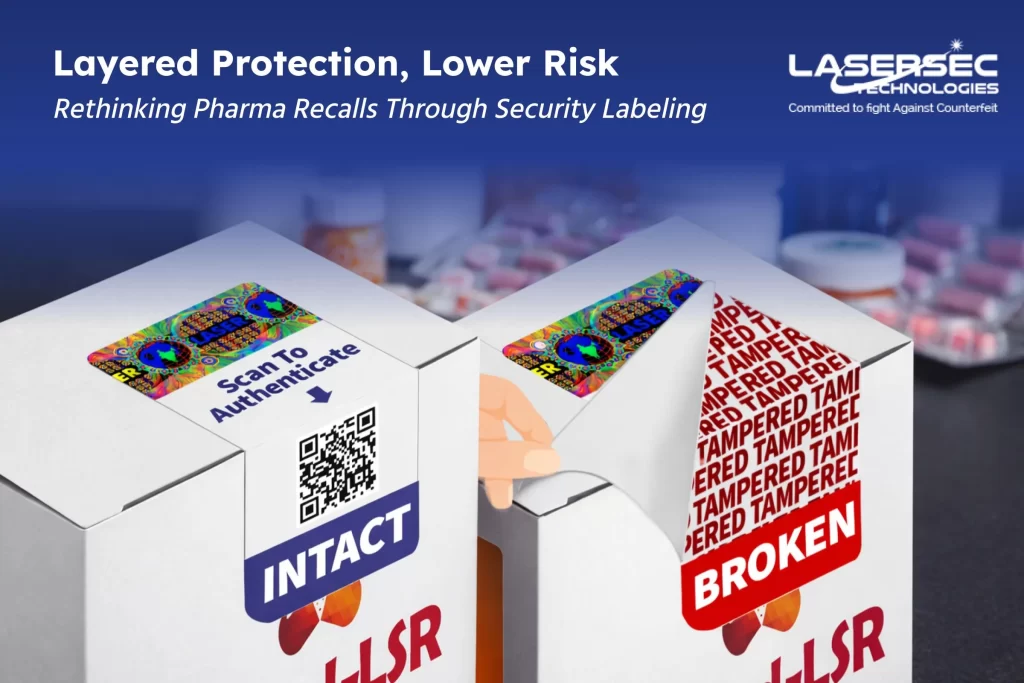
Tamper-proof packaging has therefore evolved from being a packaging enhancement to becoming a global compliance standard for product safety and brand protection using solutions like tamper proof hologram stickers and tamper-evident labels.

The Growing Importance of Tamper-Evident Packaging

Consumers today expect transparency and safety when purchasing products, especially those that affect health or personal use.

If packaging shows signs of tampering, customers immediately question the product’s safety and authenticity.

Because of this, tamper-evident packaging has become a critical requirement across many sectors.

Tamper-evident packaging solutions help ensure that:

  • Products cannot be opened without visible damage
  • Unauthorized repackaging becomes difficult
  • Counterfeiters cannot easily reuse genuine packaging
  • Consumers can identify potential tampering quickly

These protections provide an important safety layer for both manufacturers and consumers.

When tampering can be easily detected, the risk of unsafe or counterfeit products reaching the market is significantly reduced.

Industries Where Tamper-Proof Packaging Is Becoming Mandatory

Regulatory authorities and industry standards organizations are increasingly encouraging or mandating tamper-evident packaging in several sectors.

Some of the most prominent industries include:

1. Pharmaceuticals

Pharmaceutical regulators worldwide require packaging systems that protect medicines from tampering and counterfeit substitution.

Tamper-evident seals, serialized packaging, and authentication labels such as pharma holographic labels help ensure that medicines reaching patients remain safe and genuine.

2. Food and Beverage

Food safety regulations often require packaging that clearly shows whether a product has been opened before purchase.

Tamper-evident caps, seals, and labels help prevent contamination and protect consumer health. Explore more in our FMCG anti-counterfeit solutions.

3. Cosmetics and Personal Care

Cosmetic brands increasingly use tamper-evident packaging to assure consumers that products have not been opened or altered before purchase.

This helps maintain product safety and brand credibility.

4. Electronics and Consumer Goods

High-value electronics and accessories are frequently targeted by counterfeiters or repackagers.

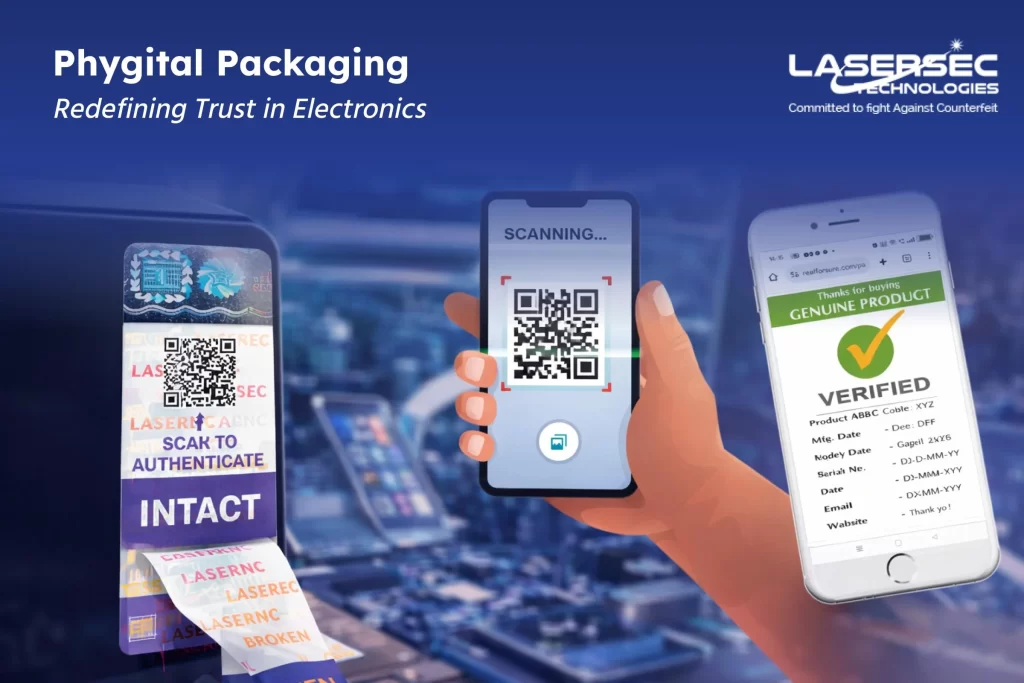
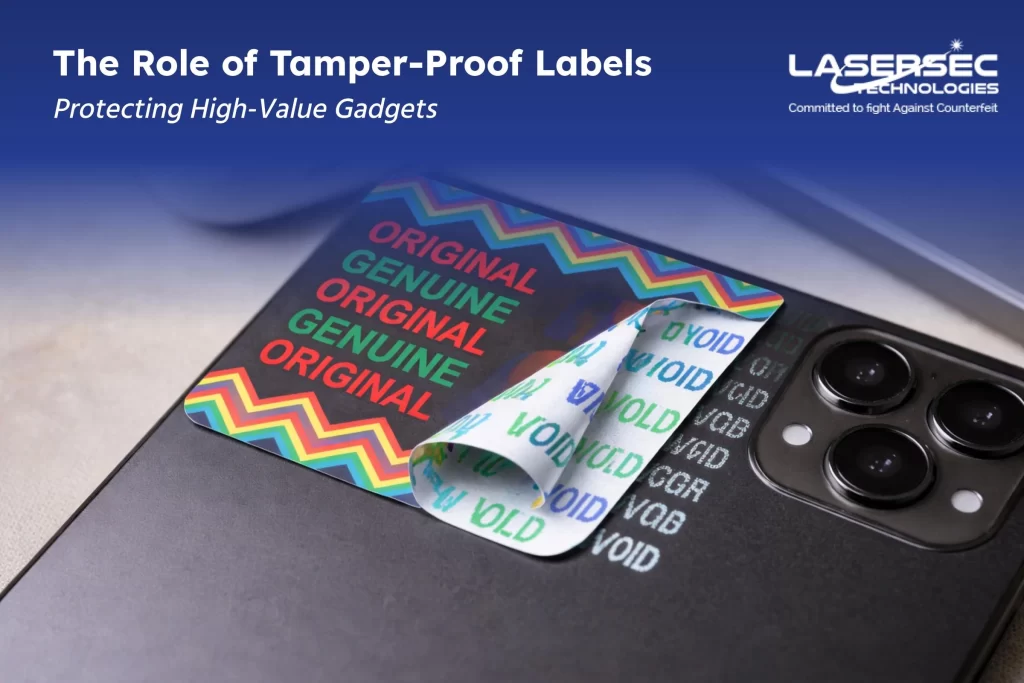
Tamper-evident labels help ensure products remain sealed and authentic throughout distribution. Learn more in our Electronics industry solutions.

How Tamper-Proof Packaging Prevents Counterfeiting and Repackaging

Tamper-proof packaging introduces visible or structural indicators that show whether a product has been opened or altered.

Unlike traditional packaging seals, tamper-evident security features cannot be removed or reapplied without leaving clear signs of interference.

Common tamper-evident packaging technologies include:

These features make it extremely difficult for counterfeiters to open packages, replace the contents, and reseal them without detection.

As a result, tamper-proof packaging acts as a first line of defense against product tampering and counterfeit substitution.

Supporting Regulatory Compliance Through Secure Packaging

Governments and regulatory bodies are increasingly strengthening packaging requirements to improve product safety and traceability.

Many regulatory frameworks now emphasize:

  • Tamper-evident packaging requirements
  • Product authentication mechanisms
  • Supply chain transparency
  • Protection against counterfeit products

Tamper-proof packaging supports these requirements by providing a clear visual indication if a product has been interfered with.

This allows regulators, distributors, and retailers to quickly identify suspicious products during inspections.

For manufacturers exporting products across international markets, implementing tamper-evident packaging also helps demonstrate proactive compliance with global safety standards.

Strengthening Consumer Trust Through Tamper-Evident Protection

Consumer trust plays a critical role in purchasing decisions.

If customers suspect that a product has been opened, altered, or replaced, they are unlikely to use it and may avoid the brand entirely.

Tamper-evident packaging provides a simple but powerful reassurance mechanism.

When consumers see intact security seals or holographic labels such as hologram stickers, they gain confidence that the product has not been compromised.

This helps manufacturers:

  • Strengthen customer confidence in product safety
  • Reduce complaints related to product tampering
  • Protect brand credibility in competitive markets
  • Improve customer loyalty over time

Visible packaging security features also signal that the brand takes product protection seriously.

Combining Tamper-Proof Packaging with Authentication Technologies

While tamper-evident packaging prevents unauthorized opening, combining it with digital authentication technologies further strengthens product security.

For example, tamper-evident labels can be integrated with:

This combination enables both physical protection and digital verification.

Even if a product is tampered with or copied, authentication systems can help detect suspicious activity and identify counterfeit products quickly.

Together, these layers provide stronger protection across the entire product lifecycle.

How We Support Tamper-Proof Packaging and Brand Protection

At Lasersec Technologies, we provide advanced anti-counterfeit packaging solutions designed to help manufacturers implement reliable tamper-proof protection.

Our solutions integrate secure packaging features directly into product labels and packaging materials.

These include:

By combining physical tamper-evident features with authentication technologies, we help manufacturers strengthen product security across global supply chains.

To explore more solutions, visit our Product Gallery.

Why Tamper-Proof Packaging Is Essential in Modern Global Supply Chains

As global supply chains continue to expand, the risks associated with product tampering and counterfeiting are also increasing.

Tamper-proof packaging has become a critical component of modern packaging strategies because it ensures that products reach consumers in their original, uncompromised condition.

By implementing tamper-evident security features, manufacturers can strengthen compliance with global safety standards while protecting both consumers and brand reputation.

In today’s market environment, tamper-proof packaging is no longer optional. It is an essential foundation for product safety, regulatory compliance, and long-term brand protection.