






Lasersec Technologies

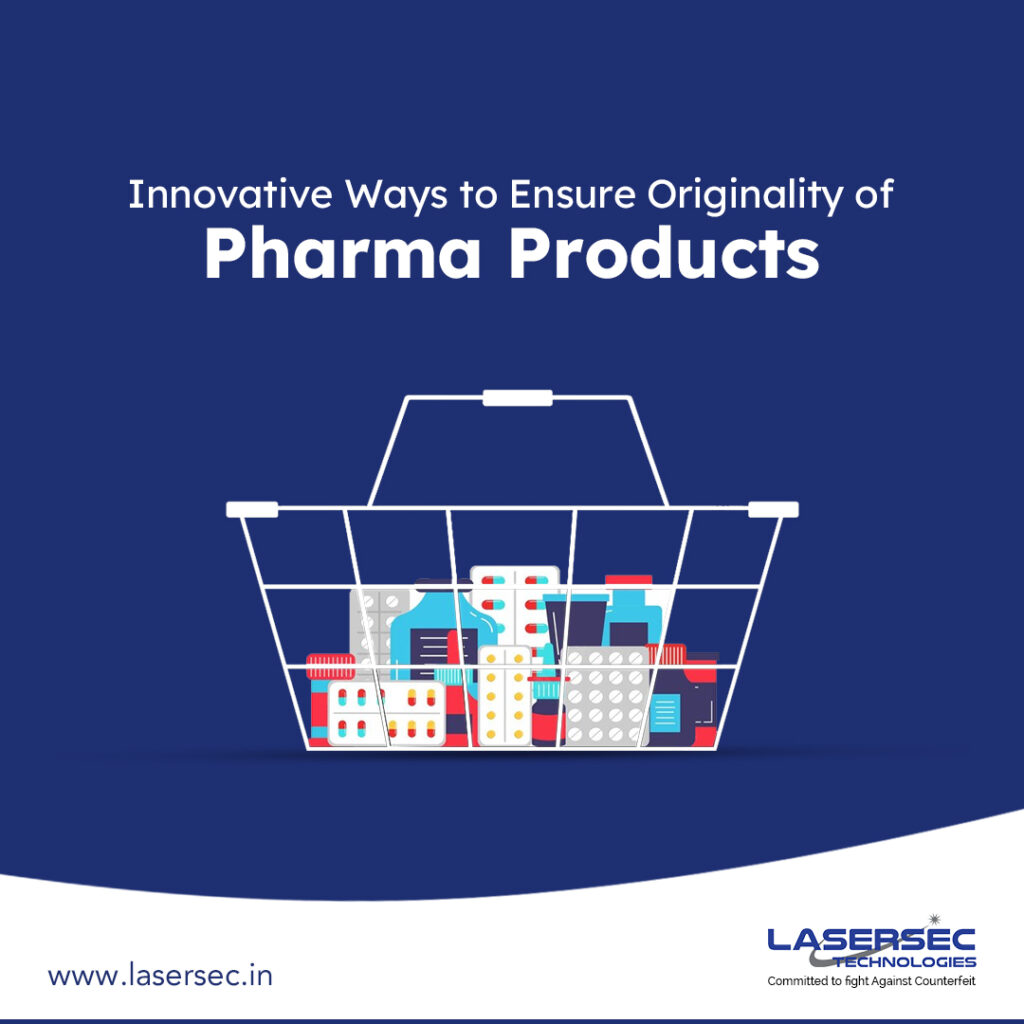
Latest & Innovative Ways to Ensure Originality of Pharma Products

Counterfeit, Pharma Industry, Fake, Duplicate, Medicine, Anti-Counterfeit Solution, Pharma, Innovative, Original


Looks can be illusory! If created, they’re being counterfeited.

If you discover an incredible online deal for a branded bag or a branded watch, the maximum chance is, it’s not real – that’s the cautionary issued by the Better Business Bureau officials. Legal authorities declare that the world of web is teeming with luxury counterfeits.

From bags, jewelry and watches to electric cables, cosmetics, healthcare supplies and even pharmaceuticals – fraudsters leave no goods categories intact. If you think that there’s nothing bad with shopping to get an attractive deal, you are unknowingly supporting impostors, which can have severe consequences to your money and can provide funding to other immoral activities.

In fact, the counterfeits that are being recognized by most of us as fake, account for only 4 percent of the counterfeit problem, which signifies that the remaining 96 percent of the counterfeit problem comprises the hazardous replicas that can harm us.

Top 5 Ways to Ensure Originality of Products

Currently, although the problem of fake products has become more threatening; however, there are certain precautionary ways that can help you to avoid purchasing counterfeits; the top protection is to be vigilant, alert and to understand ways to spot forgeries yourself.

Beware of Too Good Deals: Be careful about deals that seem to be too good to be real. Although, not all counterfeits are sold at lower prices compared to their original counterparts; however, a dreamlike deal is one of the guaranteed signs of a fake product. 

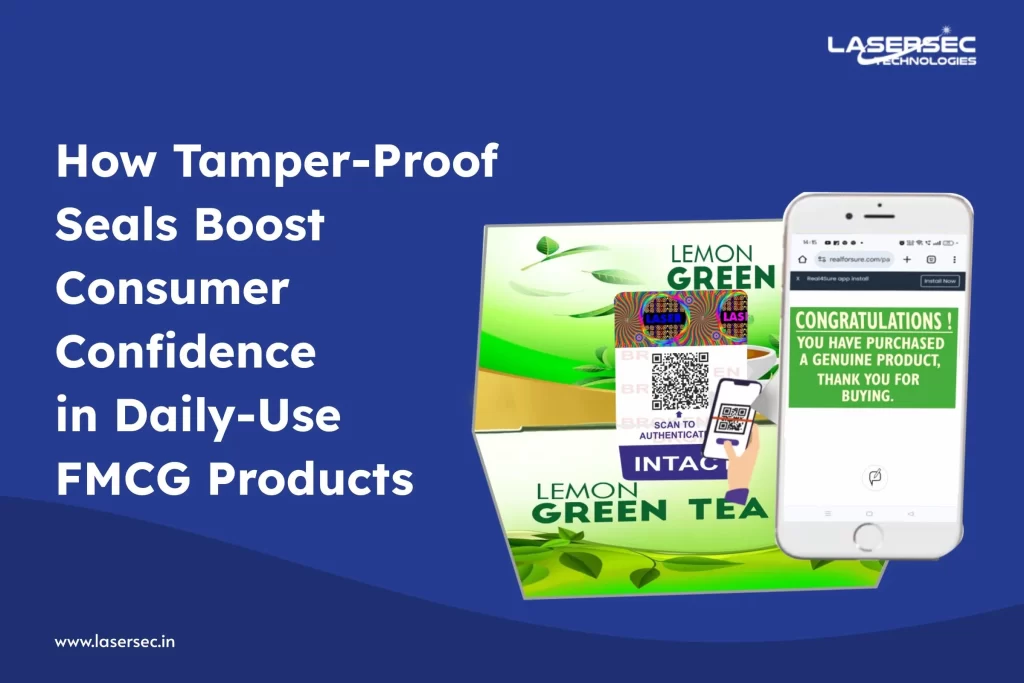
Look for Authenticity Seals: To ensure the genuineness of products, many companies sell their products in original packaging that bear their corporate identity. Moreover, they are equipped with “authenticity seals”. By entering the security code, the label ID, and examining the seal, all consumers can check the authenticity of any product at any time on the company’s product authenticity platform.

 Beware of Poorly Made Products: Look out for products that appear implausible or are visibly poorly made. Mostly, it is seen that quality control in counterfeiting products is absent, and thus, you may possibly be capable to identify a counterfeit purely based on its craftsmanship.

 Check the Packaging Cautiously: Respectable companies characteristically take extreme care in their product packaging process. Watch out packaging with inferior printing or fading colors, flimsy packaging, or packages that seem to have been damaged.

Furthermore, take a minute to care to read the package. Spelling mistakes or grammatical errors can be commonly seen on the packaging of counterfeit products. Look out for the model number on the packaging and compare it to the model number of the product, and cautiously inspect tags or labels on clothing. Try to find the contact information of the manufacturer. Genuine companies provide a contact number(s) or at least an address of communication at which customers can contact them.

 Search for a Safety Certification Label: All electrical products along with several other products that may possibly pose some kind of safety threat will have at least one or more safety certification label on its packaging if it is manufactured by a genuine company. In the United States, the most common label is the UL (Underwriters Laboratory); its major competitor ETL mark is also a significant certification in the United States.

Similarly, the CE mark in Europe is mandatory on all electrical products, and the CSA (Canadian Standards Association) mark in Canada is common. Search for at least one of these labels on the electrical products you buy. But you should keep in mind that counterfeiters might often incorporate false marks on their fake products; thus, you need to take a closer look at them to identify counterfeit products.

Get acquainted with these marks by looking at the original products in your home and in shops. You should remember that the marks for a particular certification are not every time of the same size; however, they will always have the identical design and font, and they come equipped with a control number for that particular product.

Always remember that even if you have bought a counterfeit branded product for a price far lesser than that of a genuine product; if it’s counterfeit, it’s still not a good deal. What’s worse?


Buying of a counterfeit product could be funding illegitimate activities, comprising child enslavement. If you have bought fake luxury products, you must file a consumer grievance with the Better Business Bureau, or you can also file an online complaint with the Consumer Product Safety Commission.
Share :

Related Blogs

Export-Ready Pharma Packaging- What Global Buyers Are Now Expecting

You’ve secured the order, production is complete, and your shipment is ready to move. But then, just before dispatch, your buyer asks:

“Does your packaging meet serialization and scan-based proof requirements?”

Imagine losing a million-dollar contract — not because of your medicine, but because your packaging failed to inspire trust. This is the reality many exporters face today. For global buyers, packaging has become the deciding factor between smooth delivery and a deal falling apart.

Why Packaging Standards Are Now Non-Negotiable

Global buyers are under pressure from regulators, distributors, and patients. They must ensure every product they source is traceable, authentic, and tamper-proof. That means export-ready packaging is no longer optional — it’s the foundation of international trade.

Key compliance must-haves include:

  • Track & Trace Systems – complete product visibility across the supply chain
  • Serialization – unique identifiers that meet global compliance norms
  • Tamper-Evident Features – seals or packaging that immediately reveal interference
  • Scan-Based Proof – QR codes or secure markings enabling instant authentication

Without these, buyers see risk — and in today’s market, risk means rejection. It’s not just about checking compliance boxes. Buyers want reassurance that:

  • Their shipments won’t face customs delays due to packaging gaps
  • They won’t be caught in regulatory disputes in importing countries
  • They can confidently show stakeholders a secure supply chain
For exporters, this transforms packaging into a proof of credibility. It’s no longer just a container — it’s part of your business reputation.

Regional Buyer Expectations: One Size Doesn’t Fit All

Every region enforces its own regulations. Understanding them isn’t just smart — it’s survival.

RegionKey Packaging ExpectationsWhat It Means for Exporters
European Union (EU)Strict serialization under the FMD (Falsified Medicines Directive) with database-driven verification.Packs must be registered and verifiable via EU hub. Non-compliant shipments are rejected at borders.
United StatesDSCSA (Drug Supply Chain Security Act) requires interoperability and traceability beyond serialization.Exporters must ensure their systems “talk” with US buyers’ systems for seamless data exchange.
Middle East & AfricaHigh counterfeit risks demand visible tamper-evidence + secure scan codes.Buyers expect seals and markings they can verify instantly at distributor level.

According to the WHO, 1 in 10 medical products in low- and middle-income countries is substandard or falsified — highlighting why MEA and APAC buyers demand extra layers of security.

Before shipping, ask yourself:

  • Does every pack carry a unique, scannable serialization code?
  • Is there a tamper-evident seal that cannot be replaced unnoticed?
  • Can my systems generate and share serialization data with buyers?
  • Do I have scan-based proof of authenticity ready for customs or audits?

If the answer is “no” to any of these, your packaging isn’t truly export-ready.

Indian pharma is globally respected for high-quality medicines. But as regulations tighten, packaging standards are becoming the new benchmark for trust.

Those who adapt quickly — with serialization, secure QR codes, and tamper-evident solutions — will stand out as reliable partners. On the other hand, exporters who delay risk losing contracts, not because of product quality, but because their packaging didn’t pass the credibility test.

Global buyers are no longer asking if your packaging is compliant — they’re asking how quickly you can prove it.

Export-ready packaging is now a business advantage, not just a compliance step. For exporters preparing to expand globally, investing in the right packaging solutions is no longer optional.

Because in today’s market, packaging isn’t just protecting your product — it’s protecting your growth.

At Lasersec Technologies, we partner with pharma exporters to ensure their packaging meets global serialization, traceability, and anti-counterfeit standards — helping you ship with confidence and win global trust.

Holographic Blister Packaging for CDSCO Compliance

India’s pharmaceutical landscape is undergoing a transformation — and packaging is at the center of it.
With the CDSCO’s new QR code and serialization mandates, every exported pharma product must now be secure, traceable, and tamper-evident.

For manufacturers, especially SMEs, this can feel like a complex compliance challenge.
But there’s a powerful, proven solution already within reach: Holographic Blister Packaging.

1. The New CDSCO Reality

To curb counterfeit drugs and ensure authenticity across the supply chain, the Central Drugs Standard Control Organization (CDSCO) now requires export-bound pharmaceutical products to carry:

  • Secure and scannable QR codes
  • Unique serialization at batch or unit level
  • Tamper-evident features on primary packaging
This means your packaging must do more than look professional — it must communicate trust, security, and transparency to regulators, distributors, and patients worldwide.

2. Why Holographic Blister Packaging Foils Are the Ideal Fit

Holographic blister foils are designed not just for visual appeal, but for multi-layered protection.
They merge optical security, digital traceability, and physical tamper resistance — all in one compact, cost-effective solution.

Key advantages include:

  • Built-in Anti-Counterfeit Security:
    Complex holographic patterns, diffractive designs, and hidden laser effects make duplication nearly impossible.
  • Tamper-Evident Layering:
    Any attempt to peel or alter the foil leaves visible damage — ensuring that the product cannot be resealed or reused undetected.
  • QR & Serialization Integration:
    Holographic foils can seamlessly integrate dynamic QR codes and serialized data, allowing regulators and end-users to instantly verify product authenticity.
  • Regulatory Compliance:
    They fulfill the CDSCO’s core requirements — secure labeling, traceability, and anti-tampering — without requiring major production line changes.
  • Supply Chain Visibility:
    When linked to digital Track & Trace systems, each blister pack becomes part of a transparent, verifiable export network.

3. How It Works

Each holographic blister foil is embedded with security layers visible and invisible to the naked eye.

When printed with unique serial numbers or QR codes, it creates a dual-authentication system:

LayerFunctionBenefit
Optical Security (Holography)Visually identifiable design that’s impossible to replicateInstant brand and regulatory authentication
Digital Security (QR + Serialization)Unique, scannable identity for every packEnables verification and traceability
Tamper EvidenceIrreversible visual damage on interferencePrevents resealing or counterfeit replacement

This layered approach makes it extremely difficult for counterfeiters to reproduce or reuse packaging — offering compliance with confidence.

4. Why SMEs Should Choose Holographic Blister Packaging

Unlike large-scale digital upgrades, holographic blister foils are scalable, adaptable, and cost-efficient.
For SMEs, this means:

  • No heavy capital investment in new lines
  • Immediate enhancement of regulatory readiness
  • Compatibility with existing packaging formats
  • Added brand value in export markets
It’s a simple way to make your products CDSCO-compliant and globally credible — without the complexity of building new infrastructure.

5. Beyond Compliance: Building Trust Across Borders

The global pharma supply chain thrives on transparency.
By adopting holographic blister foils, Indian exporters not only meet CDSCO and international labeling mandates but also strengthen brand trust with distributors and healthcare professionals abroad.

  • Regulators see transparency.
  • Distributors see authenticity.
  • Patients see safety.

And your brand earns long-term credibility in every market it reaches.

Secure, Scalable, and Future-Ready

The CDSCO’s labeling mandates are here to stay — but compliance doesn’t have to be complicated.

Holographic blister foils bring together the best of physical and digital protection, offering a ready-to-implement, regulation-compliant, and cost-effective solution for Indian pharma exporters.

At Lasersec Technologies, we specialize in custom-designed holographic blister foils that combine optical security, dynamic QR codes, and tamper-evident protection.
Our solutions are trusted by leading pharmaceutical manufacturers to safeguard brands, meet regulatory standards, and ensure patient safety.

Let’s help you make compliance your competitive edge — one blister pack at a time.