







Lasersec Technologies

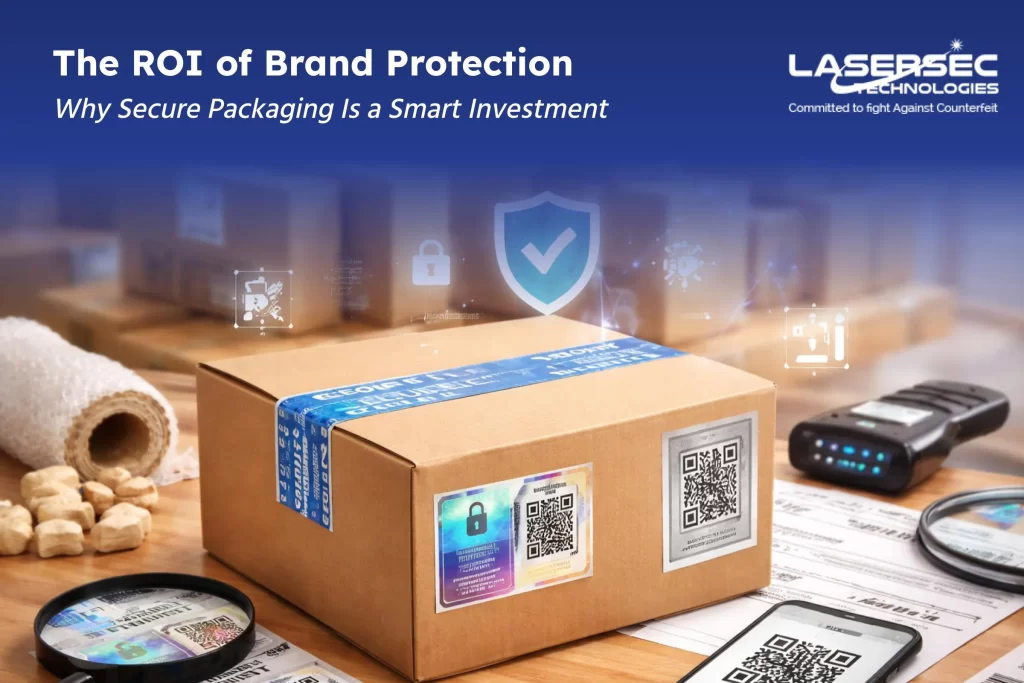
ROI of secure packaging showing cost savings and brand protection

For many manufacturers, brand protection is often viewed as a cost rather than an investment.

Security labels, holographic features, and authentication technologies may appear as additional expenses in packaging budgets. When production volumes are high and margins are tightly managed, companies sometimes question whether these protections are truly necessary.

However, the real cost of counterfeiting often becomes visible only after damage has already occurred.

Counterfeit products do not just affect short-term revenue. They can disrupt distributor networks, damage brand reputation, create regulatory complications, and erode customer trust. In some industries, counterfeit products can even pose serious safety risks.

This is why forward-thinking manufacturers increasingly treat secure packaging and brand protection technologies as strategic investments rather than operational costs.

When implemented correctly, secure packaging delivers measurable returns by preventing revenue loss, protecting brand value, and strengthening supply chain control using solutions like security hologram stickers and Track & Trace systems.

The Hidden Financial Impact of Counterfeit Products

Counterfeiting has become a global challenge across industries including pharmaceuticals, electronics, FMCG, automotive spare parts, and apparel.

While counterfeit products may look similar to genuine ones, their impact on legitimate manufacturers can be significant.

Common consequences include:

  • Direct loss of product sales
  • Price erosion due to counterfeit competition
  • Distributor conflicts in affected markets
  • Increased warranty claims or complaints
  • Customer distrust toward the brand

In many cases, counterfeit products also damage the brand’s long-term reputation.

Consumers who unknowingly purchase counterfeit products often associate poor quality or safety concerns with the original brand. Even if the manufacturer is not responsible, the perception of the brand can suffer.

These indirect costs are often far greater than the initial revenue losses caused by counterfeit sales.

Why Counterfeiting Damages More Than Just Revenue

When counterfeit products enter the market, the impact extends beyond lost sales.

Counterfeiting can create several operational and strategic risks for manufacturers:

  • Regulatory complications if counterfeit products violate safety standards
  • Distributor relationship conflicts when unauthorized products appear in protected markets
  • Loss of market control due to parallel trade or diversion
  • Damage to brand credibility among customers and retailers
  • Increased investigation and enforcement costs

In industries such as pharmaceuticals or food products, counterfeit goods can also pose serious safety risks to consumers.

When customers lose confidence in a brand’s authenticity, rebuilding that trust can take years.

For this reason, the financial impact of counterfeiting should be evaluated not only in terms of lost units, but also in terms of long-term brand damage.

How Secure Packaging Protects Product Authenticity

Secure packaging introduces protective features that make it significantly more difficult for counterfeiters to replicate genuine products.

Instead of relying solely on standard labels or printed information, manufacturers can integrate anti-counterfeit packaging technologies directly into the product packaging.

These technologies may include:

Each of these elements strengthens the ability to verify whether a product is genuine.

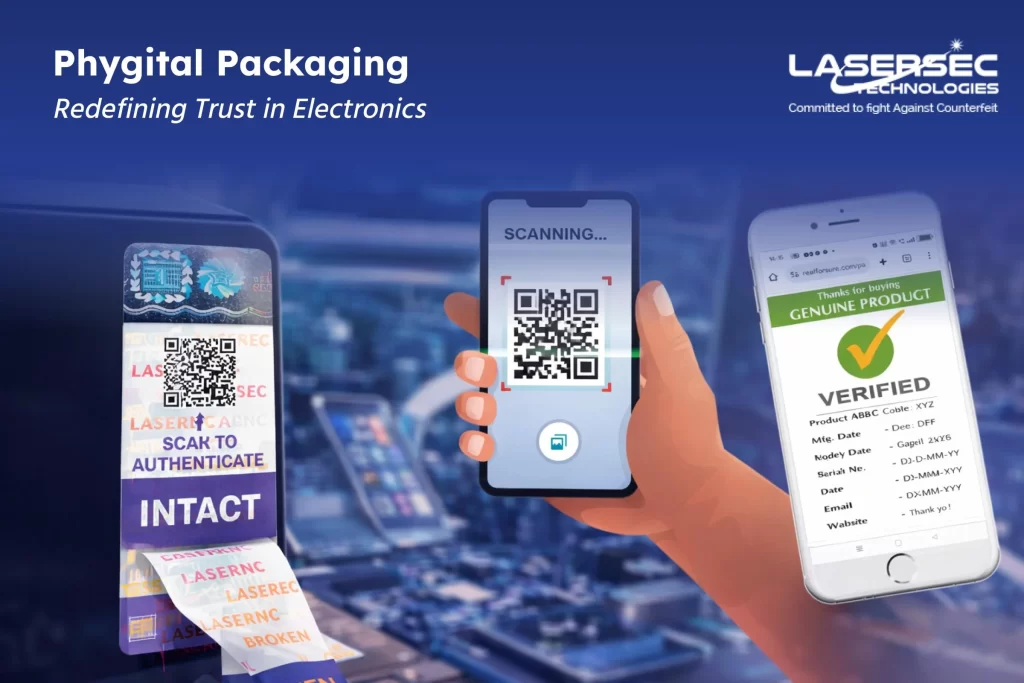
When combined with authentication systems, packaging can provide unit-level product verification, allowing distributors, retailers, or consumers to confirm authenticity instantly.

The Business Value of Authentication and Verification Systems

Secure packaging becomes even more powerful when integrated with digital authentication platforms.

Authentication systems allow manufacturers to verify products through digital scanning technologies such as QR codes or serialization platforms.

This enables companies to:

  • Confirm whether a product is genuine
  • Detect duplicate or suspicious authentication attempts
  • Identify unauthorized product distribution
  • Track product movement across markets
  • Monitor potential counterfeiting activity
By transforming packaging into a verification tool, manufacturers gain better visibility across their supply chains using systems like Track & Trace technology.

This helps companies move from reacting to counterfeit incidents toward proactively preventing them.

Measuring the Return on Investment of Brand Protection

The return on investment (ROI) of brand protection comes from both prevented losses and long-term brand value protection.

Secure packaging investments help manufacturers recover value in several ways:

Revenue Protection

  • Prevents counterfeit products from capturing legitimate market share
  • Protects pricing integrity in key markets
  • Maintains revenue across authorized distribution networks

Brand Reputation Protection

  • Preserves customer trust in product authenticity
  • Prevents negative experiences caused by counterfeit products
  • Maintains brand credibility across markets

Operational Risk Reduction

  • Reduces supply chain disputes caused by diversion or parallel trade
  • Improves product traceability
  • Supports regulatory verification and inspections
When these factors are considered together, the financial value of brand protection often exceeds the cost of implementing secure packaging technologies.

Strengthening Supply Chain Control Through Secure Packaging

Manufacturers often lose visibility over products once they leave the production facility.

Secure packaging combined with authentication systems helps restore that visibility.

By enabling verification at different points in the supply chain through solutions like QR code authentication and Track & Trace systems, companies can:

  • Detect suspicious product movement
  • Identify unauthorized distributors
  • Monitor market-level product activity
  • Investigate potential counterfeit hotspots
This level of transparency strengthens supply chain control and allows manufacturers to respond quickly when irregularities appear.

How We Support Brand Protection Through Secure Packaging

At Lasersec Technologies, we provide advanced anti-counterfeit packaging solutions designed to help manufacturers protect their brands and products across global markets.

Our solutions integrate security features directly into packaging using technologies such as:

These technologies help manufacturers create reliable authentication systems that protect products throughout the supply chain. To explore industry-specific applications, visit ourIndustry Solutions Gallery.

Why Brand Protection Is a Strategic Business Investment

Counterfeiting continues to grow across industries, creating serious risks for manufacturers and brand owners.

Treating brand protection as an optional expense can expose companies to significant financial and reputational damage.

Secure packaging solutions provide a proactive approach to preventing these risks.

By combining anti-counterfeit packaging technologies with authentication systems, manufacturers can protect product integrity, strengthen market trust, and maintain control across their distribution networks.

In the long term, investing in secure packaging is not simply a cost of packaging. It is a strategic investment in protecting brand value, customer trust, and sustainable business growth.
Share :

Related Blogs

Tamper-evident packaging protecting cosmetic products from contamination

A consumer picks up a face cream, unscrews the lid, and pauses.

Has this been opened before? Has it been refilled, diluted, or contaminated?

In the cosmetics industry, this moment defines trust. Products are applied directly to the skin, lips, and eyes—leaving no margin for doubt. Today, brand reputation alone is no longer enough. Consumers, regulators, and retailers expect visible, verifiable safety at first interaction.

This is why tamper-evident packaging has evolved from an optional feature into a global safety standard for cosmetics brands.

What Is Tamper-Evident Packaging in Cosmetics?

Tamper-evident packaging is a packaging system designed to provide clear, irreversible visual evidence if a cosmetic product has been opened, altered, or compromised after manufacturing.

Once breached, tamper-evident features cannot be restored to their original state—ensuring consumers can immediately identify product integrity before first use.

Why Tamper-Evident Packaging Is Critical in the Cosmetics Industry

Cosmetics are inherently sensitive products. Even minor interference can result in:

  • Microbial contamination
  • Skin irritation or allergic reactions
  • Reduced product efficacy
  • Serious consumer safety risks

At the same time, cosmetic brands globally face rising exposure to:

  • Product refilling and reuse of original containers
  • Unauthorized opening during transit or retail handling
  • Counterfeit or diluted formulations entering grey markets
  • Increasing regulatory scrutiny on packaging integrity and labeling

Tamper-evident packaging directly addresses these risks by making interference immediately visible.

If a product has been compromised, the packaging itself communicates it—without instructions or explanation.

Common Tamper-Evident Solutions Used in Cosmetic Packaging

  • Tamper-Proof Seals : Applied on caps or closures, these seals break or tear irreversibly upon first opening. Once damaged, they cannot be resealed, clearly indicating prior access.
  • Void and Destructible Labels : Void & Tamper Proof Labels reveal a permanent message or pattern when removed. Destructive labels fragment on tampering, preventing reuse and eliminating the possibility of concealment.
  • Inner Seals and Liners : Placed beneath caps of creams, lotions, and serums, inner seals protect formulations from exposure while offering immediate visual assurance of freshness and safety.
These solutions are intentionally intuitive. Consumers instantly know whether a product is safe—without reading instructions or relying on assumptions.

How Tamper-Evident Packaging Builds Consumer Trust

Trust in cosmetics begins before texture, fragrance, or results. It begins with safety perception.

Tamper-evident features help brands:

  • Reassure consumers that the product is untouched
  • Reduce hesitation at the point of purchase
  • Strengthen confidence during first use
  • Reinforce a brand’s commitment to consumer well-being

For both premium and mass-market cosmetics, this visible layer of protection directly influences repeat purchases, reviews, and long-term loyalty.

Is Tamper-Evident Packaging Mandatory for Cosmetics?

While regulations vary by region, global regulatory bodies increasingly expect preventive packaging safety measures, especially for products applied directly to the body.

Tamper-evident packaging supports compliance with:

  • US FDA cosmetic safety and labeling expectations
  • EU Cosmetic Regulation (EC) No 1223/2009
  • ASEAN Cosmetic Directive (ACD)
  • Middle East and GCC cosmetic compliance frameworks

For quality assurance and regulatory teams, tamper-evident packaging demonstrates:

  • Proactive risk mitigation
  • Control over post-manufacturing interference
  • Audit readiness and quality accountability

It is no longer only about compliance—it is about responsibility.

Beyond Safety: Protecting Cosmetic Brand Reputation

A single compromised cosmetic product can undo years of brand trust.
Negative reviews, safety complaints, or regulatory actions often spread faster than corrective responses.

Tamper-evident packaging acts as a frontline brand protection mechanism by:

  • Reducing the likelihood of altered products reaching consumers
  • Limiting reputational damage caused by external supply chain manipulation
  • Protecting brands from liability linked to misuse or contamination
In an era of instant social proof and rapid information sharing, prevention is significantly more effective than damage control.

How We Support Cosmetic Brands with Tamper-Evident Solutions

We work closely with cosmetic manufacturers, packaging developers, and compliance teams to integrate tamper-evident packaging solutions that align with product design, regulatory requirements, and consumer expectations.

Our approach focuses on:

  • Selecting the right combination of seals, labels, and liners
  • Ensuring clear tamper visibility without disrupting aesthetics
  • Supporting scalability across global markets and SKUs
Explore our range of tamper-evident holographic labels designed for sensitive consumer products.

By embedding protection directly into the packaging journey, we help cosmetic brands strengthen safety, consistency, and trust—quietly and effectively.

The Future of Cosmetic Packaging Safety

As consumer awareness rises and regulations continue to evolve, tamper-evident packaging will increasingly define responsible cosmetic brands.

It is no longer a secondary feature.
It is a signal of integrity, accountability, and commitment to consumer safety.

For cosmetics—where trust, safety, and experience intersect—tamper-evident packaging sets the standard that consumers now expect and remember.

Phygital Loyalty Programs: Building Consumer Trust through Genuine Rewards

A shopper picks up your product from a neighborhood store. They scan the pack, expecting a reward — loyalty points, cashback, or a small surprise.

But what if the same reward has already been claimed using a counterfeit version of your product?

For FMCG brands operating in high-volume, price-sensitive markets, this is no longer a rare edge case. It is a growing reality that is quietly forcing loyalty programs to evolve.

Today, phygital loyalty programs are emerging as a critical solution — ensuring that consumer rewards are unlocked only through genuine, authenticated FMCG products.

Loyalty in FMCG Is Built on Trust, Not Just Rewards

In fast-moving consumer goods, loyalty is driven by habit, availability, and confidence. Consumers repeatedly choose brands they trust — brands that feel fair, reliable, and transparent.

However, when loyalty programs can be exploited:

  • Genuine consumers feel cheated
  • Counterfeit products benefit from real promotions
  • Marketing spends increase without proportional growth
Over time, promotional excitement turns into doubt. And once trust erodes, loyalty weakens.

This is why FMCG brand loyalty programs must prioritize fairness and authenticity, not just engagement metrics.

Why Traditional Loyalty Programs Fail in FMCG Environments

Most conventional loyalty programs rely on printed QR codes, alphanumeric codes, or digital coupons. While these methods increase participation, they introduce serious vulnerabilities.

Common issues include:

  • Codes being copied, shared, or resold
  • Multiple redemptions from a single code
  • Rewards claimed without a genuine product purchase
For FMCG brands running nationwide or multi-country campaigns, this results in:
  • Misallocated rewards and promotional leakage
  • Inaccurate campaign performance data
  • Increased scrutiny from finance and audit teams

The challenge is not loyalty itself — it is verifying who truly deserves the reward.

What Is a Phygital Loyalty Program?

A phygital loyalty program connects physical product authentication with digital consumer engagement.

Unlike traditional systems, phygital loyalty ensures that:

  1. The physical product is authenticated first
  2. Authenticity is verified through a secure scan
  3. Rewards are unlocked only after verification
By linking product authentication and loyalty rewards, FMCG brands ensure that incentives flow only from genuine products.

This approach builds directly on track and trace authentication systems and transforms loyalty from a volume-driven tactic into a trust-driven strategy.

A Better Loyalty Experience for FMCG Consumers

From the consumer’s perspective, phygital loyalty feels simple yet reassuring.

A single scan provides:

  • Instant confirmation that the product is genuine
  • Access to loyalty rewards or offers
  • Brand-backed product information and guidance

That moment of reassurance matters.

In everyday FMCG categories — food, beverages, personal care, home essentials — this subtle confirmation strengthens confidence and encourages repeat purchases.

Authenticity becomes part of the consumer experience, not an afterthought.

How Phygital Loyalty Helps FMCG Brand and Marketing Teams

For internal stakeholders, phygital loyalty programs deliver measurable value.

They help FMCG brands:

  • Protect promotional budgets from misuse
  • Ensure rewards reach genuine buyers
  • Improve campaign ROI measurement
  • Capture clean, reliable engagement data
When loyalty rewards are tied to secure product authentication technologies, campaigns become auditable, defensible, and scalable.

Loyalty stops being a risk — and starts becoming a strategic asset.

Counterfeiting Is a Mass-Market FMCG Problem

Counterfeiting is no longer limited to premium or luxury categories. In FMCG supply chains, counterfeit products move quickly and blend easily with genuine stock.

When promotions are attached to unauthenticated products, counterfeit circulation accelerates.

Phygital loyalty programs help FMCG brands:

  • Discourage counterfeit participation in campaigns
  • Reduce misuse of brand-funded incentives
  • Reinforce trust at the point of purchase

This is particularly critical in emerging markets across Asia, Africa, the Middle East, and Latin America, where volume, price sensitivity, and complex distribution networks increase risk.

How Lasersec Technologies Enables Phygital Loyalty

At Lasersec Technologies, we help FMCG brands integrate product authentication with loyalty programs through scalable phygital solutions.

Our approach combines:

  • Physical security features embedded into packaging
  • Secure scan-based authentication technologies
  • Digital systems that integrate seamlessly with loyalty platforms

These solutions are built using advanced anti-counterfeit packaging technologies and digital validation layers.

The result is a loyalty ecosystem where rewards are unlocked only through genuine FMCG products — protecting consumers, campaigns, and brand equity.

How Phygital Loyalty Helps FMCG Brand and Marketing Teams

For internal stakeholders, phygital loyalty programs deliver measurable value.

They help FMCG brands:

  • Protect promotional budgets from misuse
  • Ensure rewards reach genuine buyers
  • Improve campaign ROI measurement
  • Capture clean, reliable engagement data

When loyalty rewards are tied to secure product authentication, campaigns become auditable, defensible, and scalable.

Loyalty stops being a risk — and starts becoming a strategic asset.

How Phygital Authentication Powers Secure Loyalty Programs

Phygital loyalty programs only work when the product itself is verified as genuine. Without secure authentication, rewards can still be misused through counterfeit products.

At Lasersec Technologies, phygital authentication is built by integrating physical and digital security into a single, connected ecosystem. This includes holographic foils, tamper-evident seals, dynamic QR codes, and track-and-trace systems embedded directly into FMCG packaging.

Each consumer scan first confirms product authenticity and packaging integrity. Only after successful verification are loyalty rewards unlocked. This prevents duplicate claims, code copying, and reward misuse linked to counterfeit products.

By connecting authentication with loyalty systems, FMCG brands create a transparent, secure, and controlled reward environment — one where incentives are triggered only by genuine products.

Counterfeiting Is a Mass-Market FMCG Problem

Counterfeiting is no longer limited to premium or luxury categories. In FMCG supply chains, counterfeit products move quickly and blend easily with genuine stock.

When promotions are attached to unauthenticated products, counterfeit circulation accelerates.

Phygital loyalty programs help FMCG brands:

  • Discourage counterfeit participation in campaigns
  • Reduce misuse of brand-funded incentives
  • Reinforce trust at the point of purchase

This is particularly critical in emerging markets across Asia, Africa, the Middle East, and Latin America, where high volumes and complex distribution networks increase exposure.

Why Phygital Loyalty Is the Future of FMCG Engagement

As counterfeit risks rise and consumers demand transparency, loyalty programs must evolve.

Phygital loyalty programs enable FMCG brands to:

  • Build long-term consumer trust
  • Reduce promotional fraud
  • Strengthen brand credibility across markets
  • Create fair, data-driven engagement systems

Loyalty is not built by giving more rewards.

It is built by ensuring that the right rewards reach the right consumers — through genuine products.

When authenticity comes first, trust follows naturally. And when trust is sustained, loyalty lasts — across products, campaigns, and years.

Partner with Us to Build a Phygital Future

Whether you’re in pharma, FMCG, apparel, electronics, or automotive, Lasersec Technologies helps your brand stay ahead of counterfeit threats. Connect with us for a consultation or demo to experience how our Phygital Authentication  solutions can transform your brand protection strategy.

Email: mktg@lasersec.in | Phone: +91-9810213127