








Lasersec Technologies

Counterfeiters are all over the field, and they are not leaving any business untouched. It hurts business most in this regard, is the automobile industry for more than one reason. Since its inception, the counterfeit practice has grown to become nearly equal to that of the original in many aspects.

So much so, any authorized dealer will tell you how much loss they incur because somewhere in the supply chain, the counterfeiters enter the scene and complicate the situation. More importantly, little administrative intervention or attention has been given in this regard.

Society of Indian Automobile Manufacturers or SIAM has a staggering statistics for everyone- as much as 47 percent of the total aftersales market is full of counterfeits. It amounts to somewhere roughly between 4,400 crores to 6,300 crores. Given that the total export amounts to 55,300 crores, which is a hefty amount given away to the fake dealers. Surely, it needs to stop, and it must start with counterfeit parts problem.

Fake parts are the biggest possible compromise made in this regard, but not anymore. Not only fake parts cause trouble for the market with the breakdown of customer trust, but it costs a good sum of revenue which makes it no less than a criminal offense.

Locating The Areas Of Concern

Since automobile industry is an extensive network spread across the country, it becomes difficult to track down the fake parts dealers. The dangerous liaisons between the dealers and counterfeit manufacturers are most prominent in small towns and metros. In a country as big as India, it is nearly impossible to trace the unregistered and unorganized channels, street-side vendors who sell from fly-by-night shops and self-proclaimed mechanics.

The problem is so big in the unorganized sector that local auto markets thrive on this practice to expand themselves and often gains legitimacy among certain people because they are cheap alternatives. Hence, the resistance against this has to be twofold.

First, one needs to hunt down these parasitic practices by locating their sources one by one. Secondly, the need to educate dealers and customers is more than ever nowadays. Only by simultaneously addressing these two problems is it possible to curb this growing menace. Another complaint that is often heard is that there is a little availability of original parts in distant places so cheaper and counterfeit alternatives become the order.

Fighting A Growing Concern By Law

Often, the natural assumption in this regard is that fake products are only for smaller brands since big names are not so pervasive. However, you will be surprised that names like BMW and Mercedes-Benz have a vast number of fake parts circulating all around India. In fact, while an original Mercedes-Benz product bears a code, a hologram, and the perfect ring, customers often don’t know how to differentiate the original from the fake.

More importantly, Mercedes has only 26 authorized showrooms across India, but most customers don’t know that, and they end up falling for fake products. It is only the tip of the iceberg to be honest since there are more such practices like this for many other brands.

The most problematic aspect of this practice is that these parts undergo no tests so they can break down any moment. Once fake parts are used, the lifespan of these parts get reduced, and it survives for lesser days. So begins the vicious cycle until one day, your car succumbs to a terrible accident. Obviously, there is a Trade Marks Act, 1999 that states a fine ranging from 50,000 to 2 lakhs for anyone who engages in such practice along with a possible jail time up to three years. But, that hardly seems to deter the practices.

Customers Are The Greatest Force

While it is evident that laws are rarely implemented, and there are plenty of loopholes in the system, the most considerable force of resistance can come from the consumers themselves. Smaller parts such as clutch plates, brake liners are often the easiest to copy and also, hardly detectable. Hence, such practices start from this level and then advances till it absorbs everything. Already, numerous players have come forth in this regard to educate the uninitiated about the intricacies of this fake network. Almost all companies would tell you that their customers are often clueless about brand design and holograms, but they never say anything about the fraudulent practices. Hence, brands have understood that they need to

Almost all companies would tell you that their customers are often clueless about brand design and holograms, but they never say anything about the fraudulent practices. Hence, brands have understood that they need to mobilize customers from all fronts by handing them guidebooks or giving them interactive lessons regarding the practice.

Often, customers think that counterfeit parts are cheap and it does not burn a hole in their pocket. But, they are playing with their and others’ lives without realizing it. This practice can only stop when the customers are given lessons on how fake parts look and what fake parts can do to your car. An awareness campaign, needless to say, is the need of the hour.

Fighting It Together

By joining hands with customers, automobile brands need to ensure that the dealers should also understand the dangers of this problem. Brands need to be stringent regarding this too. They need to blacklist dealers who are continuing this practice knowingly and warn the dealers who inadvertently engaged in it.

Moreover, each brand must note the fake brands that try to replace them and update their database accordingly. They should share their database with dealers as well as customers so that the clients don’t fall for them while buying. When a customer comes to buy a car, then it is imperative to teach him the basic lessons of counterfeit practices. Flimsy packaging, unclear colours, and fonts are hallmarks of such practice.

Nowadays, all big names have started implementing the holographic labels of their own to assure the customer of its genuineness. It is a commendable practice since holograms are the easiest way to tell a client that he or she can buy it without facing safety hazards. Only a combined effort from all quarters can defeat the octopus called counterfeit parts practice.
Share :

Related Blogs

Tamper-proof seals on daily-use products ensuring safety and hygiene

A consumer picks up a bottle of cooking oil, a pack of biscuits, or a personal care product from a store shelf. Before checking the price or brand, there is a quiet, instinctive question:

Has this product been opened before?

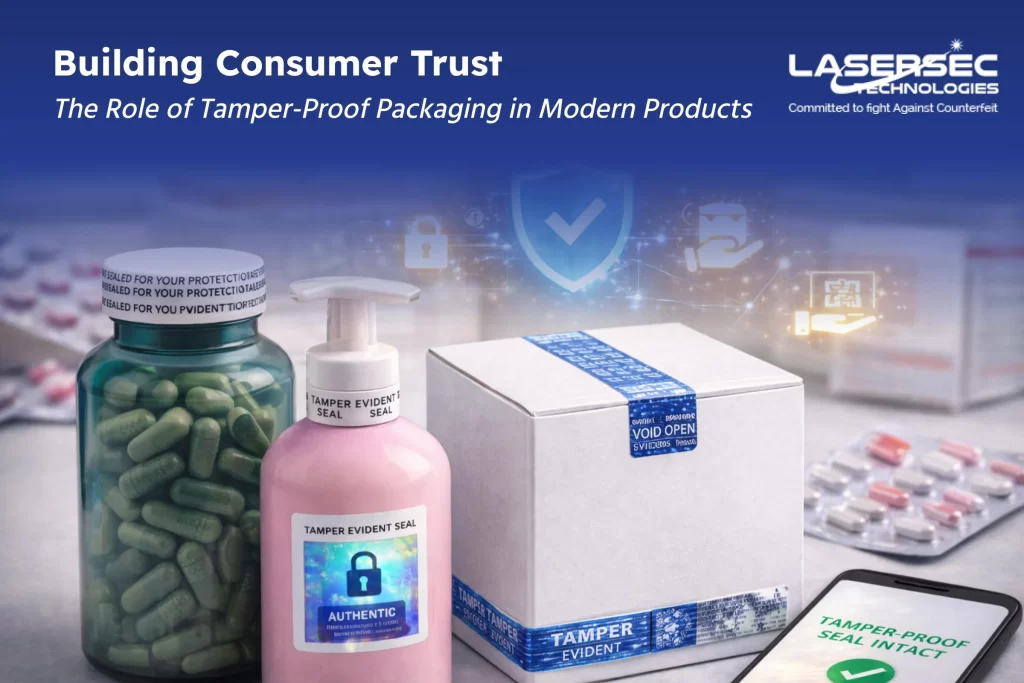
In the FMCG sector, where products are consumed daily and often immediately, consumer trust is built in seconds. Tamper-proof seals play a decisive role in this moment. They provide visible proof of product safety, protect hygiene, and reassure consumers that the brand has taken responsibility seriously.

For FMCG brand owners, packaging professionals, and quality teams, tamper-evident packaging is no longer optional. It is a foundational element of consumer confidence and brand protection.

Why Tamper Evidence Is Critical in the FMCG Industry

Fast-moving consumer goods directly affect health, hygiene, and everyday well-being. Even a small doubt about product integrity can lead to immediate rejection.

Without effective tamper-proof packaging, brands face risks such as:

  • Loss of consumer trust at the point of purchase
  • Product rejection at first use
  • Brand damage amplified through social media and word of mouth
  • Regulatory and retailer compliance challenges

Unlike durable goods, FMCG products allow no margin for uncertainty. A broken seal, loose cap, or unclear opening mechanism can raise concerns about contamination, adulteration, or prior use.

Tamper-evident seals eliminate this uncertainty by providing clear, irreversible evidence of first opening.

What Are Tamper-Proof Seals and How Do They Work?

Tamper-proof seals are packaging features designed to make any unauthorized opening immediately visible and impossible to reverse without detection.

Common tamper-evident packaging mechanisms used in FMCG include:

Once opened, these mechanisms cannot return to their original state. This simple principle—open once, show forever—is what makes tamper-proof seals so effective for consumer safety and trust.

How Tamper-Proof Seals Reassure Consumers at the Point of Purchase

Consumers may not understand packaging technology, but they clearly understand visual safety cues.

Tamper-evident packaging reassures consumers by offering:

  • Immediate visual confirmation that the product is untouched
  • Clear break-to-open indicators signaling first use
  • A consistent safety experience across batches and retail locations

This reassurance is especially important in high-sensitivity FMCG categories such as:

  • Food and beverages
  • Dairy and edible oils
  • Personal care and cosmetics
  • Home hygiene and cleaning products
  • Baby care and wellness items
In these segments, visible packaging safety directly influences buying decisions.

Maintaining Product Safety and Hygiene Across the Supply Chain

From manufacturing facilities to retail shelves, FMCG products pass through multiple touchpoints. Tamper-proof seals act as a silent guardian throughout this journey.

They help brands:

  • Detect unauthorized access during transportation and storage
  • Prevent product substitution, refilling, or partial usage
  • Reduce contamination and mishandling risks
  • Maintain hygiene until final consumption
For quality assurance and compliance teams, tamper-evident packaging provides a built-in control mechanism—one that complements audits, inspections, and process controls.

Protecting Brand Reputation in a Competitive FMCG Market

Brand reputation in FMCG is fragile and hard-earned. A single safety incident—real or perceived—can undo years of trust.

Tamper-proof seals support brand protection by:

  • Demonstrating accountability and transparency
  • Reducing the risk of counterfeit or refilled products entering the market
  • Supporting regulatory and retailer packaging requirements
  • Reinforcing a brand’s commitment to consumer well-being

When consumers repeatedly experience sealed, safe, and reliable packaging, trust becomes habitual—and brand loyalty follows.

Tamper Evidence as a Brand Trust Signal

Modern consumers expect brands to anticipate risks, not react to them. Tamper-proof seals send a subtle but powerful message:

This brand has prioritised your safety before you even asked.

For packaging and brand protection leaders, tamper evidence goes beyond compliance. It becomes a visible signal of responsibility, quality, and care—values that increasingly influence consumer choice.

Building Consumer Confidence Beyond the First Use

Consumer confidence does not end at the point of purchase. It extends to the moment of opening, daily usage, and repeat buying decisions.

A well-designed tamper-proof seal ensures that:

  • The first interaction reinforces trust
  • Product safety expectations are consistently met
  • Consumers feel confident repurchasing the same brand
In a category defined by frequent replacement and intense competition, this consistency is what separates trusted FMCG brands from forgettable ones.

Final Thoughts: Small Seal, Lasting Impact on FMCG Brands

Tamper-proof seals may appear simple, but their impact on FMCG packaging security is significant. They safeguard product integrity, protect hygiene, support compliance, and—most importantly—build consumer confidence where it matters most.

For FMCG brands focused on long-term trust, safety, and sustainable growth, investing in effective tamper-evident packaging is not merely a regulatory step. It is a strategic decision that strengthens the relationship between the brand and the consumer—one seal at a time.

How Lasersec Technologies Supports Smarter Packaging Security

At Lasersec Technologies, we help FMCG brands strengthen consumer trust through tamper-evident andphygital packaging solutions that combine visible security with digital authentication. Our solutions integrate security holograms, tamper-proof labels, QR-based verification, and track-and-trace systems to protect products across the supply chain. Each deployment is designed to meet compliance requirements while reinforcing brand integrity and packaging reliability.

Partner with Lasersec Technologies for Trusted FMCG Packaging

From food and personal care to hygiene and wellness products, Lasersec Technologies works with FMCG brands to build packaging systems that consumers can trust at first glance. Connect with our team to explore how tamper-evident and phygital packaging can strengthen your brand protection strategy.

Tamper-evident packaging protecting cosmetic products from contamination

A consumer picks up a face cream, unscrews the lid, and pauses.

Has this been opened before? Has it been refilled, diluted, or contaminated?

In the cosmetics industry, this moment defines trust. Products are applied directly to the skin, lips, and eyes—leaving no margin for doubt. Today, brand reputation alone is no longer enough. Consumers, regulators, and retailers expect visible, verifiable safety at first interaction.

This is why tamper-evident packaging has evolved from an optional feature into a global safety standard for cosmetics brands.

What Is Tamper-Evident Packaging in Cosmetics?

Tamper-evident packaging is a packaging system designed to provide clear, irreversible visual evidence if a cosmetic product has been opened, altered, or compromised after manufacturing.

Once breached, tamper-evident features cannot be restored to their original state—ensuring consumers can immediately identify product integrity before first use.

Why Tamper-Evident Packaging Is Critical in the Cosmetics Industry

Cosmetics are inherently sensitive products. Even minor interference can result in:

  • Microbial contamination
  • Skin irritation or allergic reactions
  • Reduced product efficacy
  • Serious consumer safety risks

At the same time, cosmetic brands globally face rising exposure to:

  • Product refilling and reuse of original containers
  • Unauthorized opening during transit or retail handling
  • Counterfeit or diluted formulations entering grey markets
  • Increasing regulatory scrutiny on packaging integrity and labeling

Tamper-evident packaging directly addresses these risks by making interference immediately visible.

If a product has been compromised, the packaging itself communicates it—without instructions or explanation.

Common Tamper-Evident Solutions Used in Cosmetic Packaging

  • Tamper-Proof Seals : Applied on caps or closures, these seals break or tear irreversibly upon first opening. Once damaged, they cannot be resealed, clearly indicating prior access.
  • Void and Destructible Labels : Void & Tamper Proof Labels reveal a permanent message or pattern when removed. Destructive labels fragment on tampering, preventing reuse and eliminating the possibility of concealment.
  • Inner Seals and Liners : Placed beneath caps of creams, lotions, and serums, inner seals protect formulations from exposure while offering immediate visual assurance of freshness and safety.
These solutions are intentionally intuitive. Consumers instantly know whether a product is safe—without reading instructions or relying on assumptions.

How Tamper-Evident Packaging Builds Consumer Trust

Trust in cosmetics begins before texture, fragrance, or results. It begins with safety perception.

Tamper-evident features help brands:

  • Reassure consumers that the product is untouched
  • Reduce hesitation at the point of purchase
  • Strengthen confidence during first use
  • Reinforce a brand’s commitment to consumer well-being

For both premium and mass-market cosmetics, this visible layer of protection directly influences repeat purchases, reviews, and long-term loyalty.

Is Tamper-Evident Packaging Mandatory for Cosmetics?

While regulations vary by region, global regulatory bodies increasingly expect preventive packaging safety measures, especially for products applied directly to the body.

Tamper-evident packaging supports compliance with:

  • US FDA cosmetic safety and labeling expectations
  • EU Cosmetic Regulation (EC) No 1223/2009
  • ASEAN Cosmetic Directive (ACD)
  • Middle East and GCC cosmetic compliance frameworks

For quality assurance and regulatory teams, tamper-evident packaging demonstrates:

  • Proactive risk mitigation
  • Control over post-manufacturing interference
  • Audit readiness and quality accountability

It is no longer only about compliance—it is about responsibility.

Beyond Safety: Protecting Cosmetic Brand Reputation

A single compromised cosmetic product can undo years of brand trust.
Negative reviews, safety complaints, or regulatory actions often spread faster than corrective responses.

Tamper-evident packaging acts as a frontline brand protection mechanism by:

  • Reducing the likelihood of altered products reaching consumers
  • Limiting reputational damage caused by external supply chain manipulation
  • Protecting brands from liability linked to misuse or contamination
In an era of instant social proof and rapid information sharing, prevention is significantly more effective than damage control.

How We Support Cosmetic Brands with Tamper-Evident Solutions

We work closely with cosmetic manufacturers, packaging developers, and compliance teams to integrate tamper-evident packaging solutions that align with product design, regulatory requirements, and consumer expectations.

Our approach focuses on:

  • Selecting the right combination of seals, labels, and liners
  • Ensuring clear tamper visibility without disrupting aesthetics
  • Supporting scalability across global markets and SKUs
Explore our range of tamper-evident holographic labels designed for sensitive consumer products.

By embedding protection directly into the packaging journey, we help cosmetic brands strengthen safety, consistency, and trust—quietly and effectively.

The Future of Cosmetic Packaging Safety

As consumer awareness rises and regulations continue to evolve, tamper-evident packaging will increasingly define responsible cosmetic brands.

It is no longer a secondary feature.
It is a signal of integrity, accountability, and commitment to consumer safety.

For cosmetics—where trust, safety, and experience intersect—tamper-evident packaging sets the standard that consumers now expect and remember.